
Elementy obrabiane z PTFE: Kompletny przewodnik po precyzyjnej produkcji polimerowej
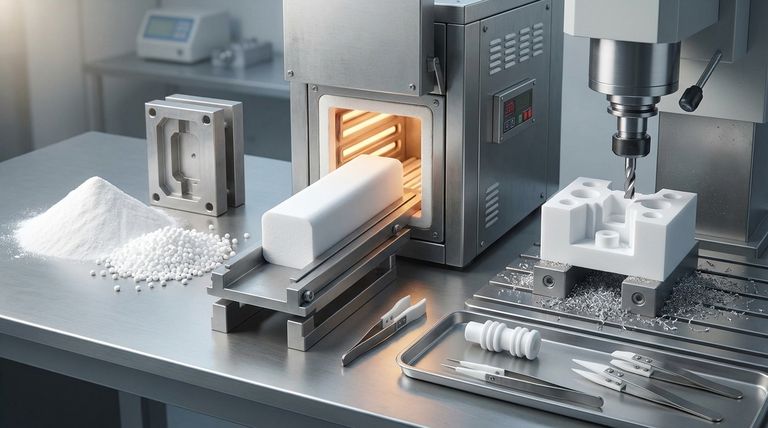
PTFE jest uznawany za jeden z najważniejszych tworzyw konstrukcyjnych we współczesnym przemyśle ze względu na swoją wyjątkową odporność chemiczną, niski współczynnik tarcia oraz stabilność termiczną. Precyzyjna produkcja obejmuje stosowanie obrabianych części z PTFE w sytuacjach, w których elementy metalowe nie działałyby prawidłowo z powodu korozji, zużycia lub zanieczyszczeń. Części z PTFE charakteryzują się wysoką niezawodnością i trwałością oraz znajdują szerokie zastosowanie m.in. w przemyśle lotniczym i kosmicznym oraz w urządzeniach medycznych.
Współczesny przemysł potrzebuje materiałów, które są odporne na ekstremalne warunki środowiskowe, a jednocześnie zachowują dokładność wymiarową i stabilność działania. Właśnie tu do gry wkracza PTFE. Jest to materiał popularny wśród inżynierów na całym świecie ze względu na swoje właściwości nieprzywierające, izolację elektryczną oraz odporność na niemal wszystkie chemikalia przemysłowe. Jednak obróbka PTFE nie jest tak prosta, jak mogłoby się wydawać. Wymaga ona specjalistycznej wiedzy w zakresie procesów CNC, odpowiednich narzędzi oraz dbałości o szczegóły, aby wytwarzać precyzyjne, funkcjonalne części i podzespoły.
W zakładach produkcyjnych wykorzystujących zaawansowane technologie elementy obrabiane z PTFE mogą być specjalnie projektowane tak, aby dostosować je do warunków eksploatacyjnych danego zastosowania. Nie są to jedynie zwykłe elementy z tworzywa sztucznego – są to rozwiązania projektowe o kluczowym znaczeniu dla wydajności, bezpieczeństwa i trwałości kluczowych systemów.
Niezależnie od tego, czy interesują Cię właściwości materiału, proces produkcji, zastosowania, kwestie kosztowe, kontrola jakości czy najnowsze trendy branżowe – ten artykuł zapewni Ci dogłębną, praktyczną i techniczną wiedzę na temat obróbki PTFE. Niniejszy przewodnik jest przeznaczony dla inżynierów, specjalistów ds. zaopatrzenia oraz nabywców technicznych pragnących poznać zasady projektowania, produkcji i optymalizacji elementów z PTFE przeznaczonych do zastosowań przemysłowych.
Czym jest PTFE i dlaczego ma znaczenie w inżynierii
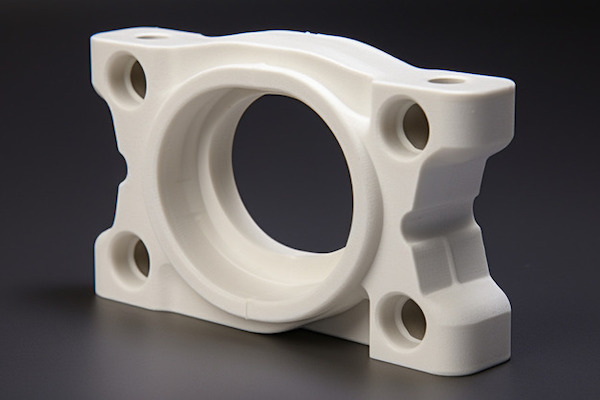
PTFE to fluoropolimer charakteryzujący się wyjątkową obojętnością chemiczną i odpornością termiczną. Znajduje szerokie zastosowanie w obszarach, w których inne tworzywa sztuczne ulegają szybkiemu zniszczeniu. PTFE ma bardzo niski współczynnik tarcia, dzięki czemu nadaje się do zastosowań związanych z poślizgiem i uszczelnianiem.
PTFE znajduje szerokie zastosowanie w systemach inżynieryjnych, ponieważ nie wchodzi w reakcje z kwasami, zasadami ani rozpuszczalnikami. Charakteryzuje się również dobrą wydajnością w ekstremalnie niskich lub wysokich temperaturach. Dzięki temu może być wykorzystywany w wielu różnych zastosowaniach, m.in. w przemyśle chemicznym, farmaceutycznym, motoryzacyjnym i lotniczym.
Różne gałęzie przemysłu zaczęły polegać na obrabianych elementach z PTFE, aby zapewnić precyzyjne działanie uszczelnień, tulei i elementów izolacyjnych. Elementy te będą stosowane w ekstremalnych warunkach, w których nie można wykorzystać materiałów konwencjonalnych.
Przegląd procesów obróbki PTFE
Obróbka PTFE polega na cięciu, kształtowaniu i wykańczaniu surowego PTFE w celu uzyskania gotowych elementów funkcjonalnych i stanowi proces specjalistyczny. Chociaż PTFE jest miękkie i elastyczne, w przeciwieństwie do metali nie da się go łatwo obrabiać bez powodowania jego odkształceń.
Najczęściej stosowane metody w obróbce CNC to toczenie, frezowanie, wiercenie i precyzyjne wykańczanie. Najważniejsze czynniki, na które należy zwrócić uwagę, to kontrola temperatury oraz ostrość narzędzi, a także uzyskanie prawidłowych wyników.
W przypadku produkcji wielkoseryjnej inżynierowie często wolą stosować elementy z PTFE obrabiane metodą CNC ze względu na ich dokładność wymiarową i powtarzalność.
Szczegółowa analiza właściwości materiałowych PTFE (tabela techniczna)
| Nieruchomość | Wartość | Znaczenie inżynieryjne |
| Gęstość | 2,1–2,3 g/cm³ | Lekki, a jednocześnie wytrzymały |
| Temperatura topnienia | 327 °C | Wysoka odporność termiczna |
| Wytrzymałość na rozciąganie | 20–35 MPa | Umiarkowana wytrzymałość mechaniczna |
| Współczynnik tarcia | 0.05–0.10 | Niezwykle niskie tarcie |
| Wytrzymałość dielektryczna | Wysoki | Doskonała izolacja elektryczna |
| Odporność chemiczna | Doskonały | Odporny na niemal wszystkie substancje chemiczne |
Unikalne połączenie właściwości PTFE sprawia, że materiał ten idealnie nadaje się do zastosowań w inżynierii precyzyjnej. Termin elementy obrabiane z PTFE są wykorzystywane w wielu gałęziach przemysłu do doboru części, ponieważ są w stanie wytrzymać ekstremalne warunki.
Element z PTFE jest wytwarzany w procesie obróbki CNC
Podczas obróbki CNC PTFE należy zachować kilka środków ostrożności. Pod wpływem nacisku PTFE jest na tyle miękkie, że ulega odkształceniu.
Proces krok po kroku:
- Wybór zastosowanego materiału (czysty PTFE lub PTFE z wypełniaczem)
- Tworzenie i symulowanie modeli 3D w programach CAD. Projektowanie i symulowanie obiektów 3D w programach CAD.
- Programowanie CNC
- Obróbka zgrubna
- Precyzyjne wykończenie
- Kontrola wewnętrzna sprzętu i kontrola jakości
Aby zapewnić najwyższą jakość usług, procesy są optymalizowane na każdym etapie, między innymi dzięki wykorzystaniu takich obiektów, jak fabryka elementów z PTFE obrabianych metodą CNC.
Tabela parametrów produkcyjnych
| Parametr | Zalecany zakres | Uwagi |
| Prędkość cięcia | 200–500 m/min | Zapobiega topnieniu |
| Prędkość posuwu | 0,1–0,3 mm/obr. | Zapewnia dokładność powierzchni |
| Materiał narzędzia | Węglik | Ogranicza zużycie |
| Metoda chłodzenia | Air / Dry | Avoids contamination |
| Tolerance Level | ±0.01–0.05 mm | High precision standard |
For more sophisticated applications, cnc machined ptfe parts are manufactured in automated systems that help minimize human error and improve batch-to-batch consistency.
The use of PTFE components in industry
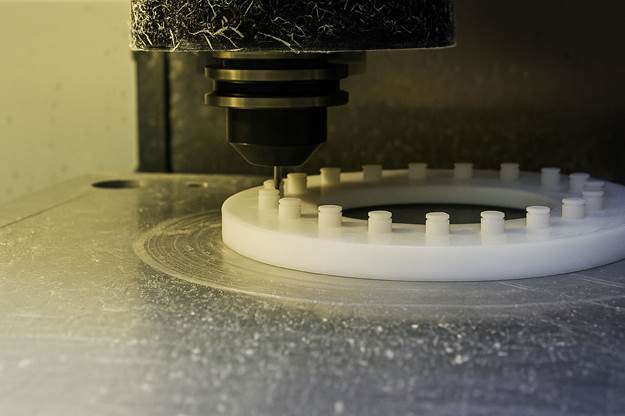
Overview of PTFE in Industry
PTFE has a wide range of applications in the modern industry as it can serve the purpose of many other materials in tough conditions. It has high resistance to heat, chemicals and rubbing, thus is a good material for precision elements. Thus, PTFE parts are used in various critical systems that require safety and durability.
Chemical Processing Industry
PTFE is used in the chemical industry since it does not react with most acids, alkalis or solvents. It is commonly used in the following ways:
- Pipe linings
- Seals and gaskets
- Valve seats
- Pump components
These components help to prevent corrosion and safe chemical handling.
Electrical and Electronics Industry
PTFE has excellent electrical insulating properties, making it very useful in the electronics industry. It is used in:
- The insulation of wires and cables is done.
- Connectors and sockets
- Circuit board components
- High-frequency equipment
It enhances safety and performance of electrical systems.
Przemysł motoryzacyjny
In the automotive industry, PTFE is employed in automotive components where low friction and extremely long-lasting properties are required, including:
- Bushings
- Bearings
- Seals in Engine and Transmission Parts
- Elementy układu paliwowego
Such components decrease wear and increase the efficiency.
Przemysł lotniczy i kosmiczny
The use of PTFE in aerospace applications is another area of its use, as it will resist extreme temperature and pressure conditions. It is used in:
- Hydraulic seals
- Insulation components
- Fuel system parts
- Bearing surfaces
This provides assured performance in flight critical systems.
Przemysł medyczny
PTFE is applied in medical industry due to its safety, non-reactive and biocompatibility. Common applications include:
- Surgical instruments coatings
- Catheters and tubing
- Implantable devices
- Laboratory equipment
It assists to maintain hygiene and chemistry safety in medical settings.
Food Processing Industry
The non-stick and non-toxic nature of PTFE makes it suitable for a wide range of applications for food. It is used in:
- Food conveyor systems
- Mixing equipment linings
- Seals and gaskets
- Processing machinery parts
It keeps things clean and doesn’t allow for contamination.
Advantages and Limitations of PTFE
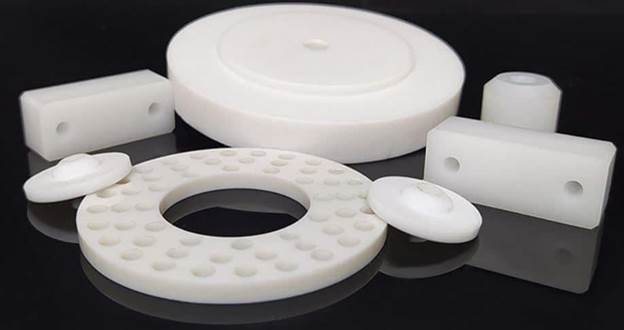
Advantages of PTFE
Due to its excellent performance in various conditions, PTFE is a very useful engineering material. It is known for its very low friction, which ensures that parts move easily and smoothly over time, and minimizes wear. It is also highly resistant to chemicals such that it does not react with most acids, bases and harsh industrial chemicals. One of its other great advantages is the remarkable thermal stability, which means that it can operate in environments with extremely hot and cold temperatures without affecting performance. PTFE also possesses very good anti-stick properties, meaning that materials will not stick on it. Further, it is a very good electrical insulator and is suitable for electrical and electronic applications.
Limitations of PTFE
Although it is beneficial, there are some drawbacks to PTFE. It is less resistant mechanically than metals, and so can’t be used for heavy load applications. It also has a high thermal expansion rate which may cause a change in critical dimensions as the temperature changes. Limited Assembly Options—PTFE is challenging to bond or to glue to other materials. Last but not least, it needs high precision machining to ensure accuracy and reliability of the components.
Even with these drawbacks, cnc machined ptfe parts are indispensable in industries where performance reliability is paramount.
Tolerances and Quality Control
One of the main parts of PTFE machining is the quality control. In a high-pressure system, even slight dimensions can cause failure of the system.
Quality inspection methods:
Coordinate Measuring Machine (CMM):
- It is a machine designed to measure the size of parts.
- Surface roughness testing
- Weryfikacja wymiarów
Microscopic examination; using a magnifying glass to look closely at something.
Tolerance Standards Table
| Feature Type | Standard Tolerance | Precision Grade |
| Outer Diameter | ±0,02 mm | High precision |
| Inner Bore | ±0,01 mm | Ultra precision |
| Flatness | 0.03 mm | Engineering grade |
| Wykończenie powierzchni | Ra 0.8–1.6 µm | Smooth finish |
The machined ptfe parts are produced with strict quality control, which can ensure that the parts have high performance and no risk of failure in the industrial production process.
Prices and costs of goods and services
The price of PTFE machining varies according to type of material, complexity of design, tolerances, and quantity of items produced. Here are some important considerations to take into account when it comes to pricing:
- The type of material used (virgin vs filled PTFE)
- CNC machining time
- The maintenance and wear of tools.
- Design complexity
- Batch size
When understanding the term best cnc machined ptfe parts price, one must take into account both efficiency in production, and quality of the materials. When considering the best cnc machined ptfe parts price, it is important to consider the overall performance of the part in the procurement process for an industrial component.
There are several suppliers that provide competitive ‘best cnc machined ptfe parts price’ options as per the customisation requirement. However, the following also needs to be taken into account when looking for the best cnc machined ptfe parts price: quality and manufacturing precision. Shipping, tooling and lead time are also factors in the global sourcing best cnc machined ptfe parts price.
Wybór odpowiedniego partnera produkcyjnego
Selecting a reliable supplier is crucial for ensuring product quality and consistency.
A professional cnc machined ptfe parts factory will offer you:
- Advanced CNC machinery
- Skilled engineering teams
- Tight Quality Management procedures
- Custom design support
- Scalable production capacity
As you check out a cnc machined ptfe parts factory, check their certifications, production capabilities, and industry experience. When the parts are made in a trusted cnc machined ptfe parts factory, timely delivery and precise quality are guaranteed. Furthermore, a certified cnc machined ptfe parts factory minimizes risks when purchasing on a large scale in the industrial field. The selection of the suitable cnc machined ptfe parts factory can have significant effects on the performance and cost efficiency of the product.
The future of PTFE Machining
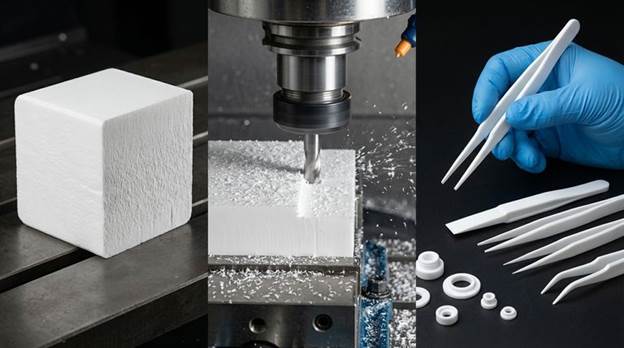
Automation, AI-enabled CNC programming, and cutting-edge material science are leading the way for the future of PTFE machining.
Key trends include:
- Smart CNC machining systems
- Hybrid polymer composites
- Micro-precision components
- Sustainable manufacturing practices
These innovations are enhancing the precision, durability, and applicability of modern cnc machined ptfe parts.
Często zadawane pytania (FAQ)
PTFE machined components is used for what?
They find applications in sealing and insulating, chemical processing and high performance mechanical systems.
Why can’t PTFE be easily machine?
Due to its softness, flexibility and tendency to being compressed under pressure.
Is the price of parts with PTFE high?
The cost may vary with complexity of the design and the grade of the material.
Is it possible to use PTFE in high temperature?
Yes, it will work up to 327C.
The applications of the PTFE parts are most in what industry?
Industries such as aerospace, medical, chemical, automotive and electronics.
In conclusion, a summary of the main points
PTFE is a material with the greatest versatility among engineering materials for today’s manufacturing. Because of its exceptional chemical resistance, thermal stability and low friction properties it is essential for critical industrial uses. CNC precision machining can manufacture detailed parts with higher precision, which can meet the strict requirements of engineering.
To conclude, machined ptfe parts are an essential component in guaranteeing productivity and reliability throughout industries. They are used in sealing systems or as electrical insulation and still outperform others under extreme conditions. Likewise, ptfe machined parts are still a popular choice for engineers looking for durability and precision when operating in harsh conditions.
The demand for superior quality PTFE parts is progressively increasing as manufacturing technology progresses, with innovation, automation and advanced engineering needs driving these demands.


Dodaj komentarz
Chcesz się przyłączyć do dyskusji?Zapraszamy do udziału!