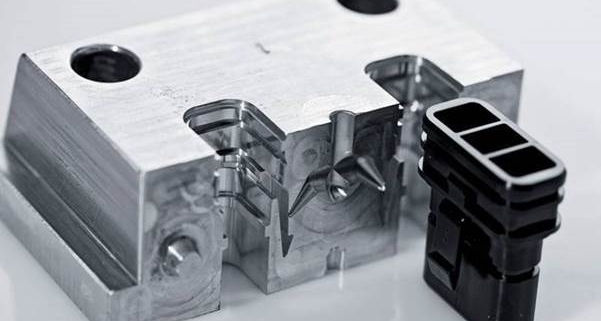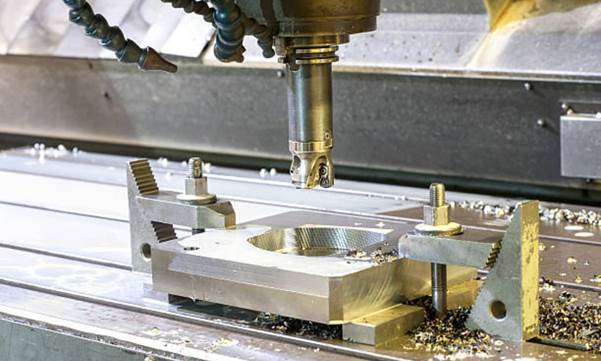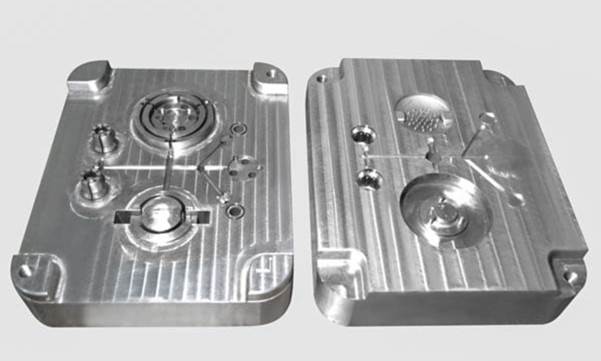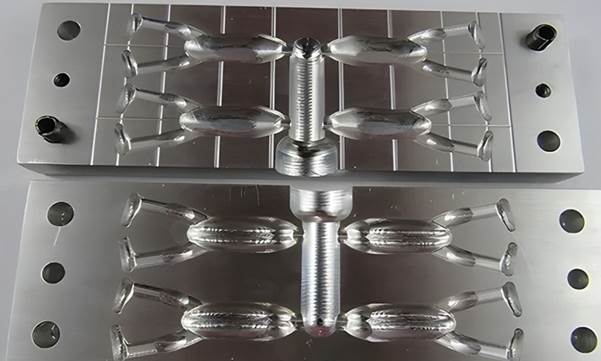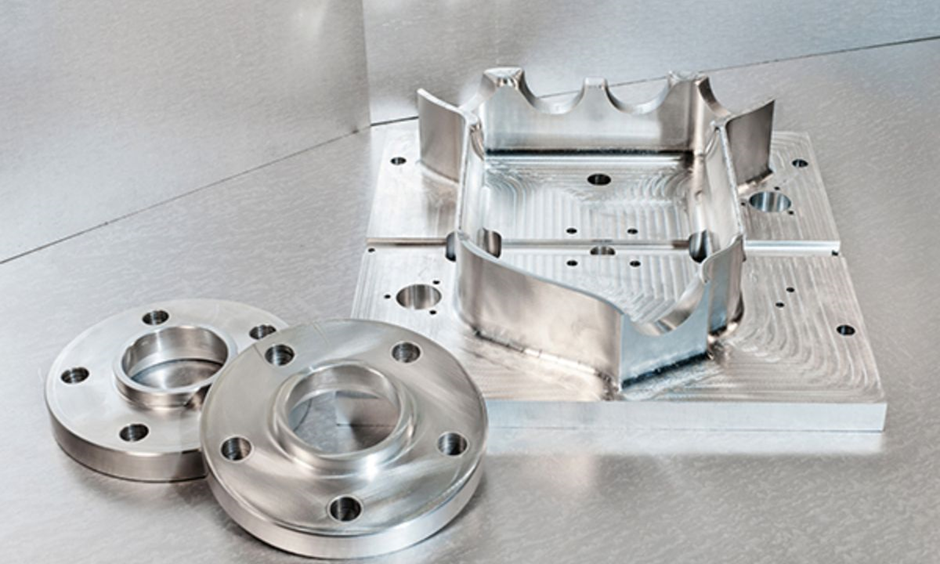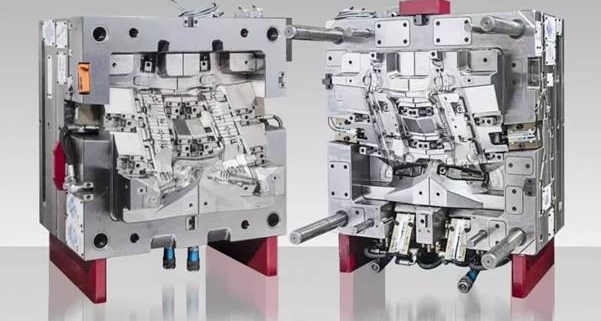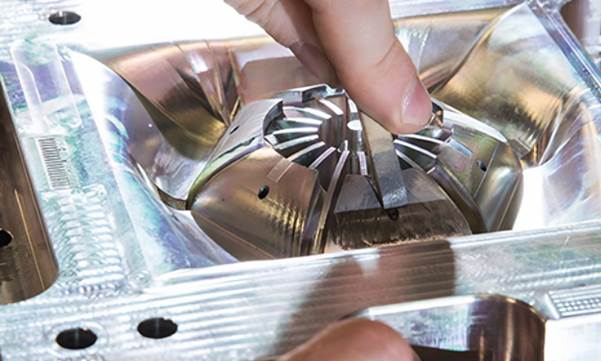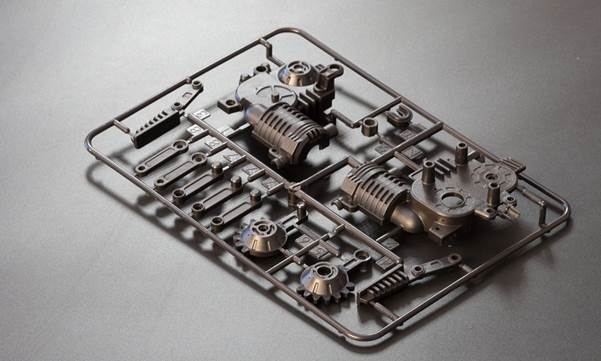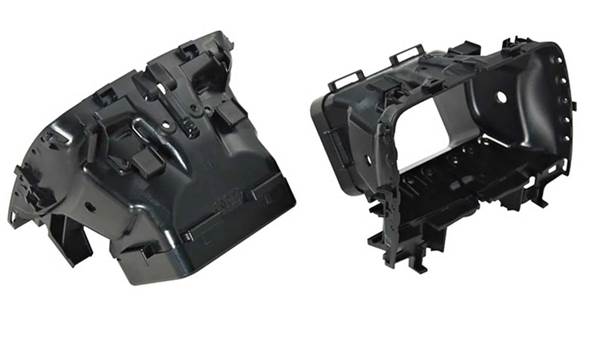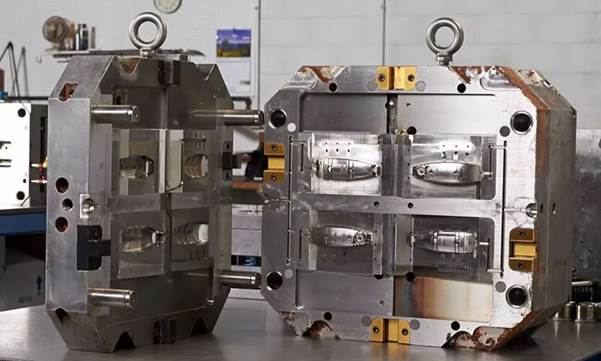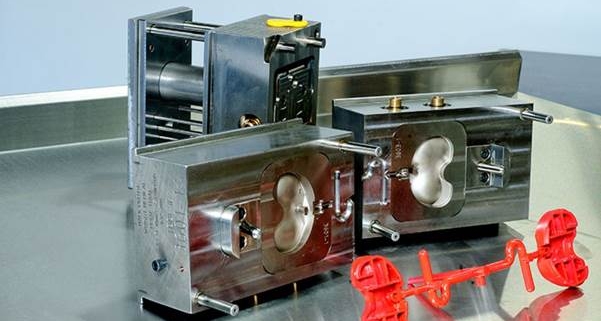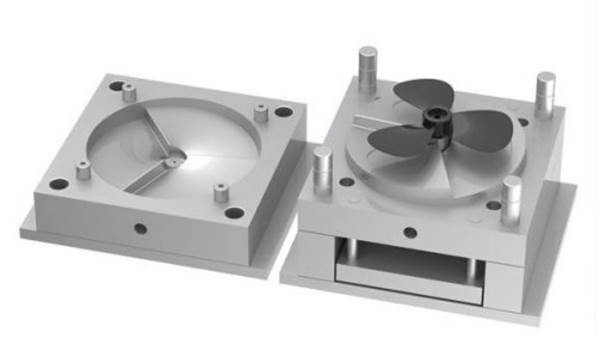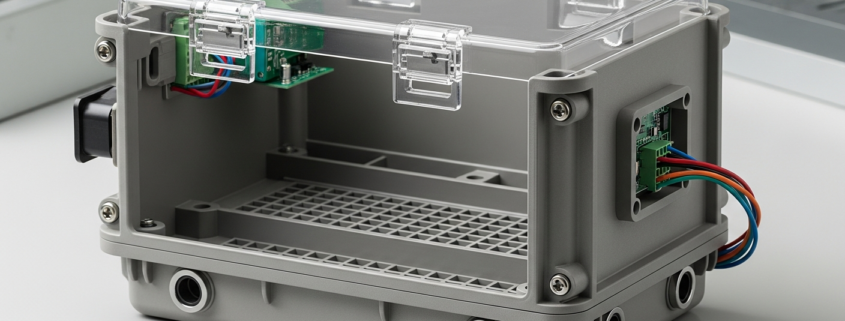
Aluminiowa forma wtryskowa

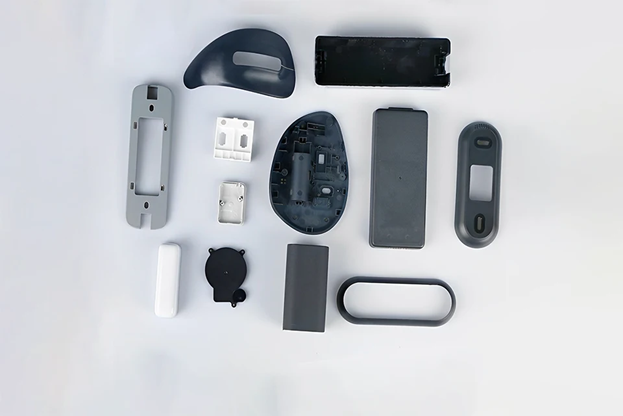
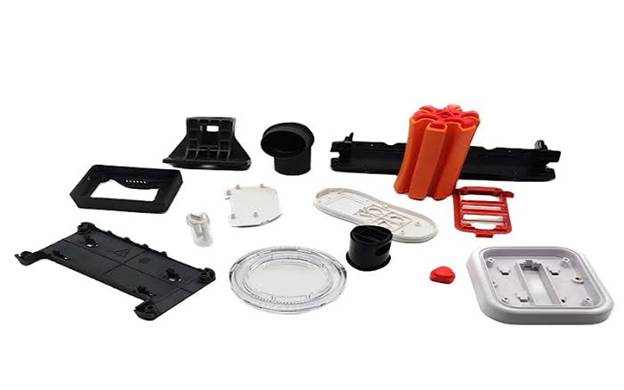
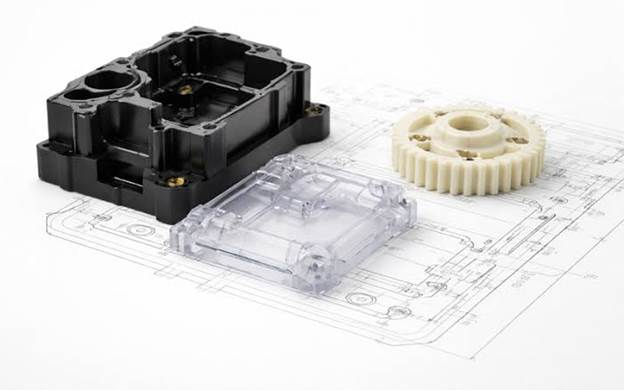
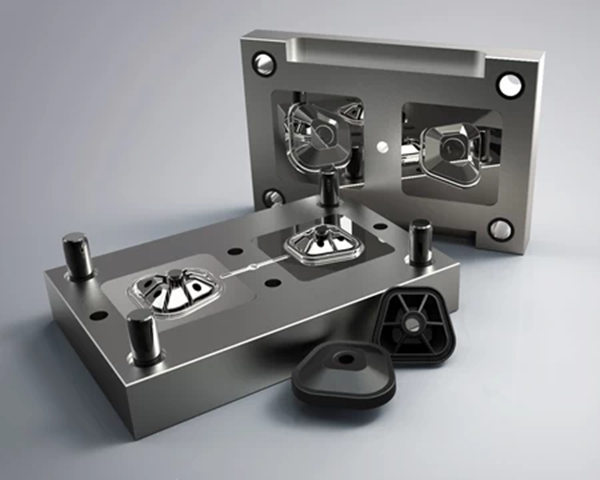
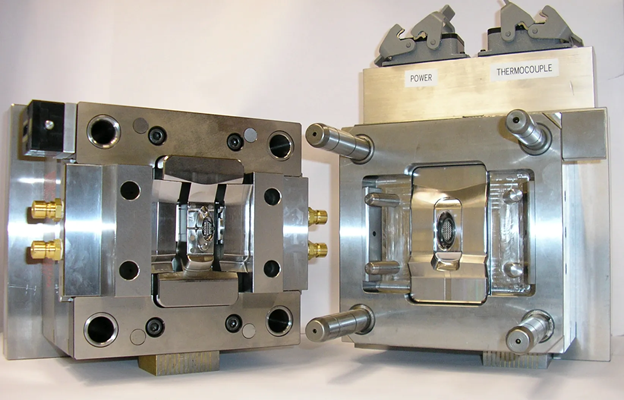
The aluminum injection mold is a key part of the manufacturing industry today due to its speed, efficiency and affordability. With the need for faster production cycles and flexibility of design, industries have found aluminum molds to be useful. The plastic pieces are created by injecting the melted plastic material into a cavity precisely made, and the plastic material assumes the shape of the cavity while cooling. Aluminum molds have a much shorter lead time, are easier to machine and are significantly lighter in weight than steel molds. This is a great option for prototypes and low and medium production runs. This is a preferred method for companies, since it saves them time in constructing their application and guarantees that the routine is developed with high quality. With the improvement of technology, the application of aluminum injection molds is rapidly increasing in various industries including automotive, medical, electronics and consumer goods.

What is an Aluminum Injection Mold?

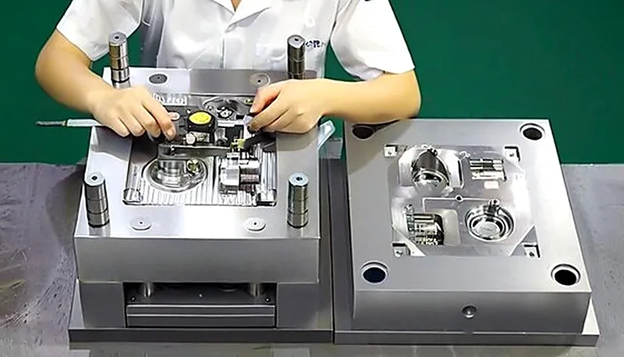
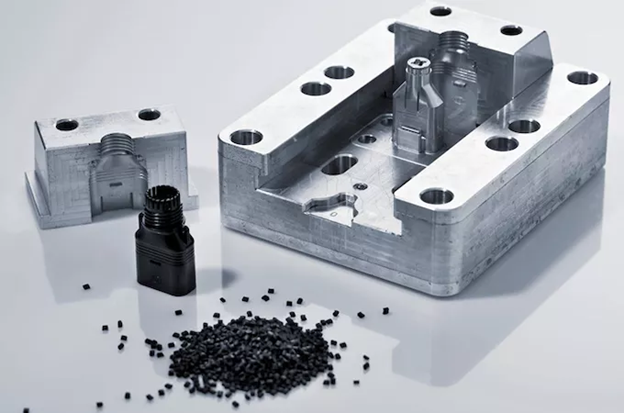
An aluminum injection mold is a mould that is utilized to form plastic parts. It is made out of aluminum and not steel. In this, the plastic is melted and then injected into a mold cavity. The material cools then replicate the shape of the mould. After it’s cooled, the final product is removed. Occurs in numerous repetitions in production process. The greatest benefit is that it cools faster and produces faster than other materials, such as plastic. The most important benefit is that it cools down quickly, and produces faster than plastic materials. That’s why today, aluminum injection molds are used.

How Aluminum Molds Work in Injection Molding?

Aluminum injection molding molds need to have a specific procedure to undertake and they are fairly efficient. Every step is dependent on the others and is crucial to producing high quality plastic components in a fast and reliable manner.

Step 1: Material Selection and Preparation

The first thing to do is to select a suitable plastic. ABS, polypropylene and polyethylene are typical materials used. There are a number of materials with different characteristics, such as strength, flexibility and resistance to heat. This is normally given in the pellets form in a hopper above the machine. Prior to use the material must be clean and dry, otherwise moisture can cause defects in the product.

Step 2: Feeding the Plastic into the Machine

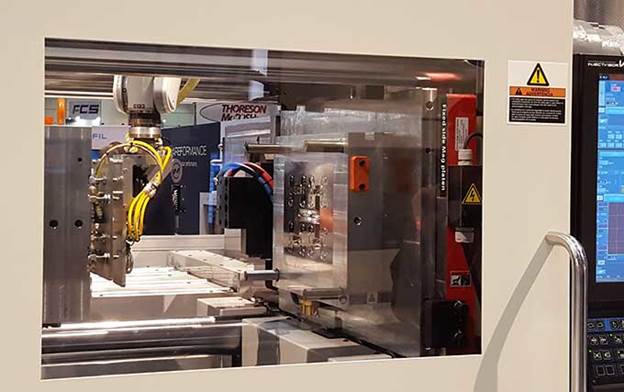
Then the mould is set up and plastic pellets are placed in the injection molding machine. These are fed into the hopper where they are heated in a barrel. A screw which rotates inside the barrel pushes plastic forward. While moving, the material starts to heat up which begins to melt the material.

Step 3: Melting the Plastic

The heat and pressure generated by the screw, melts the plastic in the barrel. As time goes on, solid pellets will slowly be converted into a thick substance known as “molten plastic”. It is very important to have control on temperature here. Too hot could cause damage to material while too cool could cause a problem with melting.

Step 4: Injection into the Aluminum Mold

When it is completely dissolved, the plastic will be injected. The screw imparts a high pressure on being pushed. The molten plastic is forced into the aluminum injection mould with the help of a nozzle. The shape of the mold cavity is determined by the shape of the product to be produced, in order to get accurate results.

Step 5: Filling the Mold Cavity

The plastic is melted and poured into the mould to completely fill in all of the spaces. Fills out all the information and forms, and makes all the shapes completely. To prevent an air bubble and void, the proper pressure is applied. This step is very significant as it is otherwise the product will be faulty.

Step 5: Filling the Mold Cavity

After being filled, the cooling process begins. Aluminum has a very high heat transfer, thus the plastic cools rapidly. The temperature is kept constant by using cooling channels. The plastic hardens and the shape of the mold is created as the plastic cools. The colder the metal, the quicker will the cycle take and the quicker will production be.

Step 7: Mold Opening

When the plastic material is completely set, the mould is carefully and slowly removed from the plastic. This is to ensure that there will be no damage to the mold. At this stage the mold consists of two parts which separate. Once the part is molded, it is easily ejected from the mold. This process is very time sensitive. It is important that the mold is not opened too early, as the product could bend or lose its shape. Manufacturers always wait until the plastic is solid before opening the mold that is why.

Step 8: Ejection of the Finished Part

When the part is molded, the ejector pins act to eject the molded part from the mold. Careful removal of component – no damage. It is then to be taken away for the next procedure. If you have a well-designed ejection system, then no marks or defects will be left on the surface.

Step 9: Inspection and Finishing

They are quality checked after being removed from the plant. Manufacturers test for any shape defect, bubbles or cracks. Some finishing (cutting and/or smoothing) is done as needed (minor). Aluminum moulds provide a good surface quality, and generally require minimal finishing.

Step 10: Repeat the Cycle

The mold will be ejected and the cycle repeated when the mold is closed. This allows for parts to be produced from one-off to mass production. Faster cooling of aluminum results in reduced cycle time, which makes the process more efficient and helps to reduce production costs.

Why Choose Aluminum Instead of Steel Molds?

There are a number of people who have made the comparison between aluminum mold and steel mold. Steel molds are expensive, time consuming and difficult to make. Compared to aluminum molds, they are more quickly, cheaply and easily modifiable. These are perfect for testing, as well as for short production runs. For modern day industry, thus, it is recommended to use aluminium injection moulds.

Key Benefits of Aluminum Injection Molds

The advantage of aluminium injection molds is among the largest, which is speed. The production time is reduced as compared to steel because of the quick cooling speed of Aluminum. Another major advantage—COST! Cost of aluminium injection mold is much low as compared to the cost of steel molds which can help the businesses in the cost cutting process. In addition, if there is a change in design, then the aluminum molds can be easily replaced. They also provide a superb surface finish; therefore, enhancing the quality of the products.

Understanding Aluminum Injection Mold Cost

The prices of the aluminum injection mould can be determined by several factors. The size of the mold is important since larger molds will need more material. The cost is also influenced by the design of the mold: A simple mold requires less expensive than a complex one. Also, the number of cavities is important. Multi-cavity moulds will cost more, but will yield a greater number of parts. Despite these expenses, aluminum molds are still more cost effective than steel molds.

When to Use Aluminum Injection Molds

Aluminum molds are the best recommended for a low to medium production run. They are excellent to be used for prototyping and testing products. These are generally used by companies desiring to sell the product quickly or companies that think they will have to make design changes in the product. If the production steel mould is desired, it may be more appropriate than aluminium moulds as the steel moulds are more durable. For most projects however, an aluminum mold for injection molding can be used to great effect.

Industries Using Aluminum Injection Molds

Aluminum injection molds are used to produce a number of industries. They have been employed to test parts in the automotive industry. They also have applications in medicine for the development of equipment. They’re employed by electronics companies for speedy product production. They are utilized in packaging for consumer goods and household goods by companies. They are fairly flexible and can be used in a multitude of ways.

Materials Used in Aluminum Injection Molding

Depending on the product type and the performance requirements of the product, other plastic materials can be used with the aluminum injection mold. Materials can have different properties such as being strong, flexible, durable and resistant to heat. The quality of the product will be very dependent on the selection of material.

Common materials used

ABS (akrylonitryl-butadien-styren): ABS is a high-impact, strong plastic that is used in a variety of industries. Very popular due to its durability and toughness. It is found in electronic enclosures, toys and vehicle components. Has a fair amount of strength and rigidity, so it is very strong for use every day.

  • Polipropylen (PP): This is a soft, low cost and flexible plastic. It is chemically resistant, thus well suited for a variety of applications. It is widely used in packaging, storage containers and consumer products. It is also very light and is easy to shape, making it suitable for large scale production.
  • Polyethylene (PE): Polyethylene is a tough, strong and durable plastic. It can be employed in packaging films, plastic bottles and pipes. It is one of the main benefits as it is effective at low temperatures. This makes it ideal for industrial and domestic purposes.
  • Nylon (poliamid): Engineering Plastic; strong. Resistant and long lasting to heat. Used in mechanical component & industrial parts.

A very durable clear plastic such as polycarbonate (PC). It is used for lenses and in protective covers, safety equipment, due to its high impact resistance.

Limitations of Aluminum Injection Molds

While there are a number of advantages to aluminum injection molds, there are also some drawbacks. They are not as durable as steel molds, and may be worn out earlier. Not recommended for very complicated productions or very high pressure (HP). But most uses don’t have these disadvantages and the benefits are more. Aluminium should be used with a good surface quality, which can be affected over time in long runs. May also be more susceptible to scratching than steel. Thus, the use of it is limited to low or medium levels of production, primarily. It will work extremely well for prototypes and testing, however.

Tips to Reduce Aluminum Injection Mold Cost

It’s possible to save money on aluminum injection mold. Less machining time is achieved with simple designs. It also lowers the costs of standard parts. Clean up any unnecessary features, it helps to save time and money. It can also be improved to a more efficient process if it’s done with experienced manufacturers. When designing for production, an important tip is to complete the design process prior to the beginning of production. The expenses may be higher if design changes are made thereafter. The other significant factor is to use the appropriate material for the product requirement. As long as one is properly prepared, the overall budget is always decreased.

Aluminum Injection Mold vs Steel Mold

Depending on the production needs, each of the aluminum moulds and steel moulds will be chosen. Aluminum molds are the fastest and least expensive of the various types of molds. Steel molds are more durable, longer production runs and last longer. Aluminum molds are less expensive and stronger than steel molds, but are also easier to machine and lighter, and take longer to make.

Aluminum molds make excellent market testing molds as they are easy to make and are excellent quality. Steel molds are more suitable for mass production – millions of parts produced. If flexibility and speed are key, then use of aluminum is better. When long life is desired, steel is the material that is preferred.

Rozważania projektowe

The design of the aluminium injection mould plays an important part. Simple designs are best. In good wall thickness, their strength will depend on their cooling. Angles to make it easy to remove parts. The design of cooling channel makes it more efficient. A good mould minimises mistakes and enhances the product quality. It also helps to minimize stress in the mold when it’s time to make the part. Preventing the formation of hair pin turns or air traps or crack in smooth flow paths. Engineers always have to determine the cost, speed and strength. Mold life and performance is enhanced by proper design.

Production Speed and Efficiency

Aluminum molds are made at a high speed. This is because aluminum cools plastic faster than steel, thus decreasing cycle time. This will help to increase productivity and efficiency. Faster production also assists companies to fulfil deadlines and boost profit. Cycle time can be shortened in many instances to a great extent. This translates to increased number of parts in shorter production times. It also can reduce the energy use of each component. The reason for the extensive use of aluminum mold for injection mold in the fast-growing industry is that it is an excellent choice.

Maintenance and Lifespan

Aluminum injection mould needs to be maintained. The grease and cleaners are used on a regular basis to extend the life of the parts. They can be used to make thousands of parts, and are not quite as durable as steel molds. They are a great choice for low to medium production. When not in use, molds need to be stored properly along with their correct use. Moisture and dust will help to preserve the surface. Inspection will aid and inhibit early wear. If used correctly it will last a long time.

Environmental Benefits

Aluminium moulds do not cause as much damage to the environment. They need less production/operating energy. Aluminium is also sustainable being recyclable! In addition, the increased production also leads to less energy use. They are appropriate for business that are green manufacturing. Reducing energy consumption translates to reduced carbon footprint. The other benefit is that during recycling of the aluminum, less industrial waste is produced. This is an added value to the modern sustainable production systems.

Typowe zastosowania

The Aluminium injection moulds are used in different industries. They are employed in the automotive industry as prototypes. They are employed in the medical sector in the creation of devices. Reputable and adopted by electronics firms for speedy manufacturing. They’re utilized by consumer goods manufacturers for consumer goods. They also have application in packaging, house-hold and industrial applications. They can be used in small and medium projects due to their versatility. For many start-ups, they are the preferred option for testifying their product launch. This gives them a greater value in today’s markets.

Wyzwania

Some problems with the aluminium moulds. Not as long lasting as steel and can be subject to wear and tear. Not recommended for highly large amounts. But, with proper design and use, these issues can be minimized. The others are that it has a weak strength at high pressures and it is not waterproof. Very complicated designs can lead to a loss of performance with time. Overall, however, they are able to perform well in the typical use cases. They can be well maintained and if used appropriately, perform very effectively.

Przemyślenia końcowe

The times are intelligent and efficient production methods for the aluminum injection molding. It provides quickness, versatility, and savings. Ideal for rapid product development, low volume production and prototypes. Lower price point of the aluminum forma wtryskowa allows it to be affordable for startups and scaling businesses. Meanwhile, it also performs perfectly and can be utilized in huge industries. With all these advantages and disadvantages that are known to their business they can then take the benefit of it to the full extent. With the technology development, the influence on the future production will even be more on aluminum molds.

Często zadawane pytania

What is an aluminum injection mold and why is it important?

Aluminium Injection Moulding is a press which can be utilized to inject softened plastic in the shape cavity to make plastics products. The importance of it is because it could enable them to produce in a short time, reduce production cost and also produce good quality products. It is a favorite material for prototyping and for the demands of speed and flexibility in short production runs and is used in a variety of industries.

What are the influencing factors of the price of aluminum injection mold?

The various factors that might impact aluminum injection mold cost include mold size, the complexity of the mold design, the number of molds and the type of mold material. The price will vary based on the complexity of the mold – simple molds will be less expensive than more complicated molds. The price also varies depending on the number of the production and the specifications of the finished product.

Why are aluminium moulds faster to use in injection moulding than the steel moulds?

Since the conductivity of aluminium is high, the aluminium type molds used for injection molding are fast. It has high thermal conductivity, making plastic quickly cool in mold cavity. This not only decreases the cycle time, but also speeds up the production rate, which in turn is more efficient.

When choosing between Aluminium injection molding die and Steel molding die, which one to use?

Aluminum injection molds are a good option to be considered when it comes to speed of production, low cost and flexibility of design. They can be used to prototype, test and for low to medium volumes. Even if many items are to be created, steel moulds could be more effective, as they last longer too.

What is the best thing about the Aluminium Injection Mold?

The major advantages of aluminium injection molds are: They are faster in production, cheaper, very versatile and offer a good surface finish. All these benefits make them an attractive option for companies seeking efficient and flexible manufacturing solutions.

Krótkoseryjne formowanie wtryskowe tworzyw sztucznych

Short run plastic injection molding is an effective manufacturing technology that is employed to manufacture a few plastic parts. It is best suited to businesses, which do not require a lot of production, but would like to achieve high-quality outcomes. This technique is very popular in testing of products, prototyping and small-scale manufacturing.

This process is popular among many companies as it will ensure that there is less initial investment and flexibility. Businesses are able to produce smaller quantities and have better control as opposed to producing thousands of units. This renders short run injection molding to be viable in startups and companies in their growth phase.

What is Short Run Plastic Injection Molding?

In short run plastic injection molding, a few plastic parts are produced by applying the injection molding technology. It is normally associated with reduced volumes of production as opposed to the mass production. This is appropriate in projects which have to be completed within a short time, and a small amount. This is accomplished by producing a short run injection mold that is designed to efficiently make parts without the big tooling that would be required in long-term tooling. The design of these molds usually has shorter life-cycle which assists in cutting down costs generally without compromising on the quality of the product.

What a Short Run Injection Molding Works?

This starts with the designing of the product and designing of a mold. Engineers come up with a design, which satisfies the product specifications but at low production costs. Then the mold is produced out of such materials as aluminum or soft steel. After having prepared the mold, plastic material is melted and injected into the mold. The material solidifies and becomes the shape that is desired. The same is repeated to yield a low number of parts through short run plastic injection molding.

Benefits of Short Run Plastic Injection Molding

Plastic injection molding (Short run) has numerous benefits to the companies. It is an adaptable and affordable approach which facilitates innovations and quicker product development. The process enables companies to start with small productions but without investing a lot. It is also useful in testing their products prior to large scale production. Short run injection molding is less risky and decision making is enhanced.

Key Points

  • Reduced initial cost of tools.
  • Faster production time
  • Perfect when it comes to prototypes, and testing.
  • Reduced financial risk
  • Ability to change design.

Short Run Injection Moulding Cost

One of the most significant or important factors to businesses is cost. Small-scale production is usually cheaper than the large-scale production in terms of cost incurred in injection molding as the little tooling and set up is required. Nevertheless, its price per unit might be a bit more than a mass production. The reason behind this is that this fixed cost will be spread among a lesser number of parts. Nonetheless, with this amount, this technique is economical and feasible.

Key Points

  • Lower initial investment
  • Higher unit cost as compared to mass production.
  • Design and material of the mold would depend on the cost.
  • Suited to a low volume production.
  • Cost effective on minor projects.

Materials Used in Short Run Injection Molding

The use of various kinds of plastic materials varies in accordance to the needs of the product. Commonly used are ABS, polypropylene, polyethylene and polycarbonate. It has certain properties of each material which include strength, flexibility and heat resistance. The correct choice of the material is a factor of product performance. In short run injection molding of plastics, selection of the material assists in the attainment of the desired quality without going too high in terms of cost.

Applications of Short Run Plastic Injection Molding

It is flexible in various industries and is employed in this process. It is appropriate in projects which demand low amounts and high-speed production. Short run injection molding is used in industries such as the automotive industry, medical, electronics and consumer goods in prototyping and production of small production runs. It assists the businesses to fulfill the demand in the market without having to make substantial investments.

Key Points

  • Product prototyping
  • Medical device components
  • Automotive parts testing
  • Consumer product development
  • Low-volume production

Benefits of the 3D printing as compared to conventional production

Plastic injection molding can be used in short run mode which has a number of benefits over the conventional manufacturing techniques. It enables a quicker product development and simplifies a product design change. This technique does not involve huge commitments, as it is in the case of mass production. Companies have the capability to make small batches, and modify designs according to feedback. This renders short run injection molding a very flexible process.

Injection Mold Design considerations- Short Run

Design is one of the important factors of the successful production. Properly designed short run injection mold guarantees a seamless production process and the quality of the product. Engineers are concerned with simplicity and efficiency in order to save on the cost. A well-designed mold is also useful in enhancing the durability and performance of the mold in the production process.

Key Points

  • Clearly and straightforward design.
  • Proper material selection
  • Balanced mold structure
  • Less complicated to be less expensive.
  • Easy maintenance

Difficulties of short run injection molding

As much as this process has numerous advantages, there are a few challenges that come along with it. Higher unit cost can be experienced as a result of low volume of production. The durability of mold can also be reduced as opposed to long run molds. These issues can be overcome by proper planning and design. Through collaborating with experienced manufacturers, companies will have a greater success with short run plastic injection molding.

Selecting the proper Manufacturer

There is a great deal to do with picking the appropriate manufacturer. A manufacturer with a good reputation guarantees that there is quality, on time delivery and cost efficiency. The important ones in selecting a partner are experience and technology. An experienced short run injection moulding supplier would be able to streamline production, minimizing mistakes.

When to opt to use short run Plastic Injection Molding

The most suitable type of plastic injection molding would be short run plastic injection molding where the production volume is low and speed is a concern. It is effective when a startup is being launched, when testing a product or when launching a product with a small market. This technique is popular with businesses which wish to minimize risk. It can also be applied in cases where the designs of products are yet to be perfected. Companies can easily change performance and make any changes without investing in long-term injection molds, as a short run injection mold can be used to test the performance. This contributes towards the saving of time and money.

Key Points

  • Suited to a low volume production.
  • Good in product testing/prototyping.
  • Economical with start-ups and small-businesses.
  • Reduces financial risk
  • Helps develop designs fast.

Comparison with Long Run Injection Molding

Also very different is the short run injection molding of plastics as opposed to long run production. Large scale production with large quantities is done using long run molding. It has high-cost molds but has a lesser unit cost. Short run injection molding, on the other hand is concerned with limited numbers, which have less initial expenditure. The unit cost might be more expensive, but is more flexible and can be produced more quickly. This renders it to be appropriate in short term projects.

Tooling Options for Short Run Injection Mold

Tooling is one of the significant elements. Molds that are to be used in short run production are typically made out of aluminium or lighter steel. Less costly and expeditiously machineable are these materials. A short run injection mold is not meant to be used extensively and therefore, it does not require as long as production molds. This can be used to minimize the tooling cost and yet achieve a good quality to small batches.

Key Points

  • Cost saving aluminium moulds.
  • Reduced time of production of moulds.
  • Appropriate in the small production cycles.
  • Lower maintenance cost
  • Quick adjustments possible

Lead Time and Speed of production

The benefit of shorter lead time is one of the greatest of this method. Molds are also simpler to produce and low quantities of production result in parts that are produced in haste. This assists companies in adhering to deadlines, and in responding to the market need in a shorter time. With short run plastic injection molding, companies are able to introduce products within a short period as opposed to the traditional methods.

Part in Product Development

Increasingly, short run plastic injection molding is significant in the development of products. It enables companies to experiment with designs under the real-world conditions before it is taken to mass production. Companies can in this way create small batches to refer to feedback and enhance their products. This renders short run injection molding to be a useful innovation and development tool.

Key Points

  • Supports product testing
  • Assists in enhancing quality of the design.
  • Reduces development risk
  • Allows market feedback
  • Accelerates innovation of products.

Quality- Short Run Production

Although the volume of production is low, quality nevertheless should be ensured. The right design, choice of materials and control of the process is needed. Testing and inspection are done to provide uniformity to manufacturers. Short run formowanie wtryskowe tworzyw sztucznych can be done using high standards to give high quality results.

Cost Optimization Strategies

With clever choices in the design and production, businesses can minimize short run injection molding cost. Easy designs, correct choice of materials can contribute to reduction of costs. It also works with the experienced manufacturers which enhances efficiency. Cost optimization is to provide the improved results without any compromising of product quality.

Key Points

  • Simplify product design
  • Choose cost-effective materials
  • Optimize mold design
  • Collaborate with a team of competent manufacturers.
  • Minimise wastage and inaccuracies.

Environmental Advantages

Sustainable production can also be supported by the short run production. Manufacturing the exact number of products saves on wastage, and the unnecessary consumption of materials. The use of energy is also reduced as opposed to mass production. This renders the short run plastic injection molding, more eco-friendly in some situations.

Common Mistakes in Short Run Plastic Injection Molding

When short run production is initiated by many companies, they end up making a lot of mistakes. Mistakes that could be made include bad design of moulds. Otherwise, the short run injection mold may lead to defects and inconsistency of quality products, when it is not properly designed. The other error is that of selecting the inappropriate material. Spoilage of plastic of low quality or otherwise inappropriate can lead to more failures. Short run injection molding is very critical in proper planning to prevent wastage and re-work.

Importance of Proper Mold Maintenance

Although the molds are not used on long production cycles, maintenance is also considered even though the short run molds are used. Washing and good storage can assist in increasing the life of moulds and quality. A molded item can have issues with the surface finish and accuracy of products, unless a mold is kept. Scanning, routinely, guarantees a smooth operation in short run plastic injection molding ventures.

The use of Technology in Short Run Production

The short run manufacturing has been enhanced with the use of modern technology. The computer-aided design (CAD) and computer-assisted manufacturing (CAM) software can be used to create accurate molds. This minimizes mistakes, and enhances productivity. Less human error is also guaranteed by automated machines in ensuring consistency in production. This causes short run injection molding to be quicker, more precise and dependable than the conventional ones.

Short run injection molding Customization

Customization happens to be one of the largest benefits of this process. Changes of designs by businesses need not be greatly invested. This proves quite handy whereby alternative version of product needs to be tested. Quickly, a short run injection mold can be modified and hence the manufacturers can make product development improvements, based on customer feedback. It is flexible and helps in innovation and success in the market.

Supply Chain Benefits

Another way in which short run production enhances the supply chain management is through supply chain management. There is no need of companies to hold large inventories. They are able to generate just what is needed. This saves on storage cost and wastes. Businesses can be able to respond to market demand more quickly, and minimize the risk of overproduction using short run plastic injection molding.

Market Trends and Development of the industry

The need to produce in small scales and customized is on the rise. The companies are desiring quicker production and versatile manufacturing options. This is creating an expansion in short run injection molding towards the global markets. This practice is becoming a popular way of remaining competitive and innovative by more companies.

Outlook in short run plastic injection molding

The future of this process has a good prospect. With the growth in demand of customized products, there is an increasing number of companies, which use small-batch production methods. High technologies are enhancing productivity and decreasing the expenses. This will render short run plastic injection molding even more popular in the next couple of years.

Summary

Plastic injection molding (short run) is a convenient and versatile manufacturing process. It enables companies to make small amounts at a low initial investment and quicker turnaround. Through short run injection mold, companies are able to test products, make it better and eliminate risks prior to the large-scale production. The approach aids innovation and assists companies to react swiftly to any market changes.

The Krótkoseryjne formowanie wtryskowe cost per unit might be more expensive, but it can be a worthwhile investment by most industries because of the overall benefits. It is particularly applicable in case of startups, product development and a limited production requirement. In the current dynamic market, short run plastic injection molding offers the flexibility and efficiency required in order to be successful.

Najczęściej zadawane pytania

What is the short run plastic injection molding?

It is a process employed in manufacturing a few plastic components that are cheaper to tool, and possess reduced time to manufacture.

What do we use short run injection molding?

It finds its primary application in prototyping, testing of the product and small-scale production in industries.

What is the cost of short run injection moulding?

The cost of short run injection molding is influenced by the design of the mold, the material and the number of the molds. It is normally less in the case of small projects.

In short run injection molding what materials do we use?

Some of the common materials used are ABS, polypropylene and polycarbonate based on the need of the product.

What does mean a short run injection mold?

It is a mold intended to be used to produce small production runs. It can be typically constructed with less expensive materials and has a reduced life span.

Pomieszczenie czyste do formowania wtryskowego

One of the most significant technologies in the contemporary manufacturing is injection molding cleanroom technology. It is applied in the situations when the products have to be of the utmost purity and free of any contamination. The industries such as medical, pharmaceutical, electronics and healthcare cannot do away with this process.

A clean space that is controlled is necessary as opposed to normal production environments. This will make sure that there are no dust, particles or bacteria that will be able to influence the end product. Cleanroom injection molding is used in many industries to ensure that there are high standards of quality.

Understanding Injection Molding Cleanroom

An injection molding cleanroom is a manufacturing facility that is controlled, with a high degree of cleanliness and it is used to create plastic components. The air is clean; there is regulation of temperature and minimization of contamination. It is a completely different process as compared to normal molding. It is applicable to products whose safety and hygiene is important. This is the reason why cleanroom injection molding services are mainly in demand in medical and precision industries.

Why Cleanroom Injection Molding is Important?

Sensitive products are to be manufactured with clean manufacturing. A single particle can have an impact on the performance or safety. The reason why controlled environments are applied is because of this. When it comes to products such as healthcare and pharmaceuticals, the purity of the products is of paramount importance. The cleanroom injecting molding guarantees that the products are up to international standards and regulations in terms of safety.

How Injection Molding Cleanroom Works?

Injection molding cleanroom is a controlled production that is employed in products which need contamination-free environment. It is typically applied in the medical, pharmaceutical and electronic fields. Each of the steps is handled with utmost care to ensure hygiene, precision and safety of the products.

Step 1: Raw Material choice and Preparation

It starts with the choice of plastic materials which are high quality and according to the needs of the product. The materials are normally in the form of pellets and have to be highly pure. Pellets are stored in capped containers before use, to avoid dust or contamination. All these are done in a controlled environment to ensure that it remains clean at all times.

Step 2: Work to Cleanroom

The materials after preparation are moved into the cleanroom. This is through sealed systems and airlocks so as not to be exposed to the outside air. This step is followed by workers employing stringent hygienic practices. They also put on protective attires including gloves, masks and cleanroom suits in order to have a sterile environment.

Step 3: Plastic Material is Melting

The plastic pellets are used inside the cleanroom to inject them in the injection molding machine. The material is heated and melts down to be in the form of liquid. This melting is cautiously monitored so as to be consistent. The environment is clean and stable to avoid contamination of the environment in case of production.

Step 4: Injection into Mold

After melting the plastic, it is then pressurized into an accurately designed mold. This is already in the mold within the cleanroom. The controlled conditions also guarantee an absence of dust or particles to the process. This is an essential step towards a high-quality production in injection molding cleanroom.

Step 5: Cooling and Solidification

Once the injection of molten plastic is completed, the plastic begins to cool in the mold. The cooling system is well controlled to ensure the accuracy of shape and strength of products. As the material is cooled it becomes hard and assumes the precise shape of the cavity of the mold. This measure makes certain accuracy and longevity in the end product.

Step 6: Mold Opening and Removal of products

After the product is completely solidified, the mold will automatically or manually (depending on the system) open it. The completed portion is scraped away. This step is done with special consideration so as not to be contaminated. The cleanroom environment will make sure that products are sterile upon their removal.

Step 7: Check and Quality Control

All the products are subjected to careful inspection after removal. The quality control departments examine the defects, contamination or any error in manufacturing. Products which are not up to standard are not allowed to be further used. This guarantees cleanroom production of injection molding.

Step 8: Clean Packing and storage

Packaging of the products will be the last procedure in a sterile environment. Cleanliness and safety is ensured by using special packaging materials. Products are then stored or shipped and under controlled conditions. This makes them not contaminated even up to the time they are used by the end user.

Cleanroom Classification Levels

Various classes of cleanrooms are classified according to the air quality. The number of particles to be in the air is decided by each level. Less level of particles implies an increased cleanliness. High-class cleanrooms are often needed when it comes to medical devices. This guarantees accuracy and safety of cleanroom injection molding.

Industries which employ cleanroom Injection Molding

Clean manufacturing processes are important to many industries. All industries have stringent standards on product hygiene and safety. It is used in medical industry as a syringe, implants and surgical instruments. It is used in sensitive parts in electronics industry. Cleanroom injection molding services are of great importance in these industries.

Medical Industry Applications

Medical is another sector that has the highest usage of cleanroom molding. The products should be sterile and fit to be used by humans. The controlled environment is used to manufacture items such as IV components, surgical instruments and diagnostic tools. This guarantees the high level of safety in injecting molding of the clean rooms.

Electronics Industry Applications

Dust and contaminations are very sensitive to electronic components. Damaging performance can be done by even small particles. The reliability and durability are guaranteed by cleanroom production. It assists in creating micro-elements and accuracy devices with the help of injection molding cleanroom.

Advantages of Cleanroom Injection Molding

Manufacturers and industries have numerous benefits with this process. It is safe, accurate and of high-quality production.

Key benefits include:

  • Good level of cleanliness.
  • Reduced contamination risk
  • Better product safety
  • High precision manufacturing
  • Meeting the industry standards.

All these advantages render cleanroom injection molding essential to the critical industries.

Materials Used in Cleanroom Molding

Depending on the needs of the products special materials are utilized. These are materials which have to be of high quality. Typical materials are plastics, of medical grade, and high-purity polymers. They guarantee cleanroom injection molding services which are safe.

Comparison of normal and cleanroom Molding

Normal molding in a normal factory atmosphere where there is no total control of air is done. The dust, particles and small impurities may be involved throughout the production. This is tolerable in the case of general plastic products, in which there is no need of high sterility. Cleanroom molding, however is done in a fully filtered and controlled setting. Air is constantly purified and any risk of contamination is kept to minimum. This renders it very appropriate to medical, pharmaceutical as well as electronic products.

The other major distinction is with regard to handling and hygiene control. Normal moulding gives an opportunity to have more people in the production. To ensure purity of products, cleanroom molding minimizes contact, and observes high safety standards.

Key Points

  • The open-air conditions at the factory are normal.
  • Cleanroom molding involves use of filtered and controlled air.
  • Increased risk of contamination of normal molding.
  • Stringent cleanroom hygienic regulations.
  • Sensitive and medical products are cleaned in cleanroom.

In Cleanroom Injection Molding, Equipment is Utilized

Cleanroom injection molding involves special equipment which is used to provide sterile environment. Machines are enclosed and are designed in such a way that they minimize the chances of contamination during manufacturing. To ensure that the air is kept clean at all times air filtration systems such as HEPA filters are employed. Temperature, and humidity are also regulated to ensure that everything is at constant. To prevent the entry of particles to the cleanroom, operators have protective clothing.

Key Equipment Points

  • Sealed high-precision molding machines with high precision.
  • Clean air HEPA air filters.
  • The units of temperature and humidity control.
  • Clean room protective clothes and gloves.
  • Controlled access airlocks.

All these tools and systems are combined to assist injection molding cleanroom requirements and production quality to remain high and contamination free.

Cleanroom Production of Quality Control

There is high level of quality control in clean rooms. All products are checked at the correctness and safety. The inspection procedures make sure that none of the defective or contaminated products are discharged. This is one of the important components of cleanroom injection molding services.

Cleanroom Injection Molding price

More costly than regular molding, this procedure is involved. This is due to sophisticated machines and test conditions. Nevertheless, the price is compensated by quality and safety of the products. Precision-based industries opt to use cleanroom injection molding although it is expensive.

Injection Molding Cleanroom Problems

Despite being very successful, there are challenges of this process. Strict rules and monitoring of the environment are needed to maintain a controlled environment. Challenges are high costs of operation and technical needs. Nonetheless cleanroom injecting molding is still used in the critical applications of industries.

Standards and Compliance Requirements of Cleanrooms

Cleanroom injection molding is based on the strict international standards in order to guarantee the safety of products and their consistency. These criteria indicate the level of cleanliness that the environment should be and the level of control in production. The facilities should have common checks on the quality of air, temperature and humidity. Even the minimal contamination risks have to be controlled. This is necessary to industries which have critical products that are injected in a cleanroom.

Air Filtration and Control of the environment

The most significant aspect in cleanroom manufacturing is air quality. Dust, particles and bacteria are removed by the use of special HEPA and ULPA filters to clean the air. Humidity and temperature are also kept at a low level. The stable conditions also aid in ensuring that there is no contamination of a product during the cleanroom production of injection molding. This will avoid flaws and pollution.

Safety and Hygiene measures of the operators

Cleanroom workers have to abide by stringent hygiene regulations. To avoid contamination, they put on special suits, gloves, masks as well as shoe covers. Air showers and cleaning processes are implemented on operators prior to getting into the production area. These measures guarantee safe injecting molding activities in the cleanroom, without the introduction of external particles.

Automation Cleanroom injection molding

In cleanroom production, automation has a significant role to play in the contemporary world. Most of the production process is done by machines and there is minimum human contact. This minimizes risk of contamination and boosts efficiency. The cleanroom injection molding services are also enhanced by automated systems particularly in high volume production.

Precision and Accuracy in making

The cleanroom is a facility that is developed to produce very precise manufacturing. The slightest mistakes can have an impact on the safety and performance of products. The use of advanced machinery makes every part to be specific to the specifications. Such accuracy is among the primary reasons why industries would choose cleanroom injection molding to sensitive applications.

Cleanroom Facility cleaning

To maintain cleanroom environments, regular maintenance is needed. Air systems, filters and machines should be periodically checked. The smallest failure can have an impact on the product quality. Clean injection molding cleanrooms are properly maintained to guarantee a smooth operation and reliability.

Cleanroom Systems – Energy Efficiency

Advanced systems that use energy are necessitated in cleanroom facilities. But with the new technology we have in use energy consumption is being minimized. The effectiveness of machines and intelligent systems is enhancing sustainability. This assists in minimizing the cost of operation in the clean room injection molding service whilst still producing high quality.

Cleanroom Injection Molding Demand all over the world

Cleanroom manufacturing is on the upswing throughout the world. Industries are prioritizing on safety, hygiene and precision. The high medical and electronics industries of these countries are also investing on cleanroom injecting molding technologies in order to support the increased demands.

Cleanroom Technology Innovation

The technology of cleanrooms is advancing fast with the new automation and electronic systems. One of the areas that manufacturers are currently preoccupying is the ability to produce more precise, safe and highly controlled production environment. The above enhancements are useful in minimizing chances of contamination and enhancing the quality of products in sensitive sectors.

Cleanroom production has become largely a part of automation. Machines have replaced a lot of the work which was done manually. This minimizes human interaction, minimizes the possibility of contamination and enhances uniformity of the production process.

Modern cleanrooms also have a high usage of smart sensors and monitoring systems. These systems monitor the air quality, temperature, humidity and pressure at all times. In case any change has been identified, automatic changes are done in order to keep the conditions within the environment stable.

The technologies based on AI are also enhancing output and identifying possible problems in the early stages and facilitating the efficient manufacturing process. All these innovations are collectively transforming formowanie wtryskowe cleanroom systems to be efficient, reliable and advanced.

The future of Cleanroom Injection Molding

Cleanroom injection molding has great potential to continue to grow in the future as the need in a variety of industries rises. Such industries as medicine, electronics, and pharmaceutical are becoming more and more in need of clean, and precise production facilities. This is propelling an expedited progress in cleanroom technologies.

Even more automated and intelligent production systems are likely to be implemented in the next few years. Most processes will be done with little human intervention as machines will help in speeding up processes, providing accuracy and efficiency and minimizing errors.

Another significant part of the enhancement of the cleanroom operations will be digital technologies. The systems based on data will assist with monitoring the production in real time and aid the improved decision making. This will streamline manufacturing and make it cost effective.

Meanwhile, the world industries are facing a trend towards even more stringent cleanliness requirements. This trend is on the rise and is creating a need of injection molding cleanroom solutions across the globe. With the ever-growing technological advancements, cleanroom systems are bound to be more efficient, reliable and a necessity in current manufacturing.

Making a decision in Favor of Cleanroom Injection Molding Services

It is quite crucial to choose the appropriate manufacturer. Care should be taken in terms of experience, technology and certifications. A good supplier will guarantee quality production and adherence. It is ensured that professional cleanroom injection molding services are offered and this ensures enhanced performance as well as safety.

Przemyślenia końcowe

The clean room technology of injection molding is vital to the present day precision manufacturing. It guarantees safe, clean and high-quality production. It is very important to industries such as medical and electronics. As demand increases, cleanroom injection molding will proceed to grow all over the world. It is still considered one of the surest techniques of manufacturing sensitive and high precision plastic products.

Frequently Asked questions

What is the use of injection molding cleanroom?

Plastic parts are manufactured in a most controlled and sterile environment in injection molding cleanroom. It is primarily utilized in medical equipment, pharmaceutical products and highly sensitive electronic parts in which cleanliness is highly valued.

What is the significance of cleanroom in injection molding?

The significance of a cleanroom is that the space where production is done is free of dust, particles and contamination. This will guarantee high quality, safe and products that are appropriate in sensitive applications such as healthcare and electronics.

What are some of the industries where cleanroom injection molding is applicable?

Medical, pharmaceutical, electronics and food packaging industries are the common applications of this process. These industries need high hygienic conditions and accuracy in the production process in order to guarantee safety and performance of the product.

Is it costly to do cleanroom injection molding?

Yes, it is typically costly as compared to normal injection molding. This is because of sophisticated equipment, stringent environmental procedures and special safety needs which make it more expensive. Nonetheless, it is of better quality and reliability.

What is a normal and cleanroom injection molding?

Normal injection molding occurs under normal factory conditions that may have dust, and particles. The injection molding is carried out under a cleanroom environment that is filtered with minimal contamination and results in high purity of products.

Rodzinne formowanie wtryskowe

One of the intelligent manufacturing solutions that are adopted today by most industries is family mold injection molding. It enables various components to be cast in one mold. This renders the process of production cheaper and quicker to businesses.

This is the choice of many manufacturers, as it is a time- and cost-saving method that lowers the tooling costs. Using family tool injection molding, the companies are able to make various parts during a single cycle. This enhances efficiency and productivity.

What is Family Mold Injection Molding?

Family mold injection molding is a process in which various parts are made out of a single mold. These components tend to be associated and are consumed together in a product. This renders the process more effective than individual molds. This technique has several cavities of the parts in a single mold. The cavities are created with great care so as to guarantee an adequate filling and cooling of the cavities. That is why, family mold injection molding is very popular in the contemporary production.

How Family Mold Injection Molding Works?

The family mold injection molding is a process that is structured. It is made to make several related parts at a time. Every step is valuable to guarantee a smooth production and quality assurance.

1. Product Design and Planning

This begins with the design of all the parts to be manufactured as one. Each component is designed in 3D detail by the engineers. These components tend to be interrelated and are employed together in the same product. With good planning, it is possible to have all the components molded together. This is a crucial step to a successful family mold injection molding and prevent production problems in the future.

Step 2: Mold Design Multiple Cavities

Once the design of the product is completed, a mold is made which has several cavities. Each hole is in the shape of a different part. Engineers ensure that there is balance in all cavities. The design needs to enable the same amount of flow of material into each cavity. This can be compared to family tool injection molding where a number of parts is made together cost-effectively.

Step 3: Mold Manufacturing

After the design is prepared, the mold is made of powerful materials such as steel or aluminum. It is done by high-precision machines to guarantee accuracy. This is tested on the mold prior to production. This guarantees that family parts are all manufacturable with the right injection molding through family molding.

Step 4: Material Preparation

The choice of plastic material depends on the requirements of the product. It is normally in the shape of small pellets. The injection molding machine is fed with these pellets. The same material is used for all parts in the mold. This is done to provide smooth processing of the tool and uniform results of the family tool injection molding.

Step 5: Melting and injection

The plastic is melted into liquid by heating the plastic pellets. High pressure is then applied to inject this molten plastic in the mold. The flow of the material is simultaneous in all cavities. This enables two or more components to be fabricated in family mold injection molding.

Step 6: Cooling and Solidification

Once injected the plastic starts cooling in the mold. When it is cooled, it solidifies and assumes precisely the shape of every cavity. It should be properly cooled in order to prevent defects. This measure will guarantee good and robust parts in family tool injection molding.

Step 7: Discard of Parts

As soon as the material is completely cooled, the mold is opened. Ejector pins are used to remove the finished parts. Each of the parts is ejected within a single cycle. This renders family mold injection molding quick and effective.

Step 8: Finalisation and Checking

The parts might require trimming or finishing after being ejected. Any additional material is done away with to make it look better. The quality checks are done to make sure that all parts are up to standard. This process provides uniformity of family tool injection molding.

Step 9: A Cycle Repetition

This is repeated to produce the mass production. The identical mould is reused to make the same sets of parts. This process goes on until the desired amount is obtained. This renders family mold injection molding very effective when it comes to high volume production.

The major advantages of Family Mold Injection Molding

There are numerous benefits that family mold injection molding is beneficial to manufacturers. It assists in lowering the cost of production as well as enhancing efficiency. This renders it a favorite in various sectors. A significant advantage is time savings in the production. Fewer cycles are required since a variety of components are manufactured simultaneously. This renders family mold injection molding an economic choice to conduct mass production.

Economy in the Production

Cost savings is one of the greatest benefits of this technique. A single mold is utilized in producing more than one part as opposed to producing individual molds. This saves tooling and maintenance expenses. China family mold injection molding services find a wide range of companies as they have competitive prices. It is also a favorable choice to businesses across the world due to the low labor costs and high level of manufacturing.

Design to Family Molds

Design is very significant in this process. The material and processing of all parts used in the mold should be similar. This guarantees quality uniformity. The flow of substance on the inside of every cavity should be well balanced by engineers. Successful family tool injection molding and easy production relies on proper design.

Difficulties with Family Mold Injection Molding

Despite numerous advantages of this way, there are certain difficulties. Balancing of the flow of plastic is one of the primary issues. Otherwise, not all parts might fill in. The other problem is to sustain uniform quality of all parts. It needs finely expertise engineering and machine settings. Nevertheless, family mold injection molding is very successful despite these difficulties.

Applications of Family Mold Injection Molding

Due to its efficiency and cost-saving nature, family mold injection molding is being extensively applied in various industries. It enables manufacturers to create various related components in a single cycle. This renders it a viable option when it comes to products which need a number of components.

1.     Automotive Industry

This process can be used in the automotive industry to manufacture interior and small functional parts. Products such as clips, covers, connectors and fasteners are usually produced as a combination. These parts are required in the same system hence it is more efficient to manufacture them in a single mold. This renders family mold injection molding quite convenient in vehicles production.

2.     Electronics Industry

This approach is also beneficial to the electronics industry. Smaller components such as casings, buttons, switches and connectors are usually made in large quantities. This guarantees quality uniformity and less production time. Family tool injection molding assists manufacturers in being consistent throughout all the parts.

3.     Consumer Products

This process is used to manufacture many of the things that people use on their daily activities. Packaged products such as bottle caps, lids, containers and packaging parts are usually manufactured in a single cycle. The approach assists businesses to minimize the cost and enhance the rate of production. It is particularly applicable to consumer goods that are in high demand.

4.     Packaging and Managing Industry

There are various related components that may be required in the packaging industry. Family molds enable the manufacturers to manufacture these parts in two ways: with maximum efficiency. China family mold injection molding services are used by many businesses to make packaging components quickly, and at a lower cost without compromising on quality.

Family Mold vs Single Cavity Mold

Single cavity molds do not resemble family molds. Only one part is formed with a single cavity mold. Family molds on the other hand develop more than one part at a time. This renders family tool injection molding more effective when it comes to products that have many parts. Nevertheless, it will have to be designed and planned so that it can deliver good results.

China Injection Molding role in Family Mold Injection Molding

China has a significant contribution in injection molding industry of the world. Chinese manufacturers are the preferred vendors in many companies due to their low-cost solution. They provide high-tech solutions and professional workforce. This is the reason why China family Mold injection molding is so popular. Companies are able to save money as well as uphold high quality standards.

Choice of Materials in Family Molds

It is quite important to select the correct material in this process. The same material should be used in all parts of a family mold. This guarantees uniform melting and solidifying. Some of the common materials are ABS, polypropylene and polyethylene. Family mold injection molding can be enhanced by proper selection of materials.

Speed and Efficiency of Production

The main benefits of this approach are the speed of production. Several components are made per cycle, which saves on time of production. This effectiveness makes family tool injection molding the ideal one in high volume production. It assists companies to address the demand in the market in a timely manner.

Family Mold Injection Molding Quality Control

It is important to maintain quality in manufacturing. All the components should fit the necessary standards and requirements. Testing and inspection is one of the techniques used by manufacturers to guarantee quality. Mold injection of family moulds should be properly controlled so as to provide reliable and consistent products.

Success tips in Family Mold Projects

This process requires a lot of planning to achieve success. Evident design specifications and effective communication with the manufacturers is critical. Experienced professionals aid in avoiding mistake. An experienced team makes family tool injection molding the most effective.
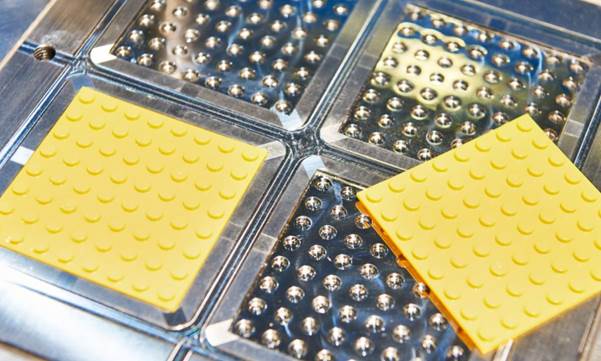
In-depth Dynamics of Mold Injection into Family

It is not just family mold injection molding that is concerned with cost saving. It also enhances planning of production and minimizes the use of machines. This technique is employed by many companies to deal with numerous elements within a process. This will provide a better inventory control. It also minimizes the time and handling of production. This is why complex products are more likely to be molded using family mold injection molding as preferred by many manufacturers.

The main Favourable Family Mold Injection Molding

The approach has a number of key advantages to business. It assists in enhancing efficiency and lower manufacturing cost.

Kluczowe punkty:

  • Several components are being manufactured in a cycle.
  • Less expensive tooling than single molds.
  • Reduced production time
  • Improved conformity of related components.
  • Less machine usage and energy consumption

These benefits make family tool injection molding an excellent option to the contemporary manufacturing.

When Family Mold Injection Molding is to be used?

This method is not suitable to all projects. It is most effective in cases where components are interrelated and are used in a single product. In cases where component parts are of nearly equal size, content and manufacturing needs, this technique is quite efficient. China family mold injection molding is favored by lots of companies that have products with various parts.

Restrictions You ought to be aware

Although it has numerous advantages, there are certain limitations. To prevent production problems, there must be proper planning.

Kluczowe punkty:

  • The entire sections should be made of the same material.
  • The imbalance can be due to the use of different part sizes.
  • Mold cost can be raised by the complexity of the design.
  • Maintaining it may be a little bit challenging.

Knowing these, it can be better used in family mold injection molding.

Design Principles to achieve the best

A well-designed design guarantees a smooth production and quality production. Planning of every cavity in the mold should be done with care by the engineers.

Kluczowe punkty:

  • Maintain similar size parts.
  • Make sure that there is an equal flow of the material in every cavity.
  • Employ adequate system design of cooling.
  • Avoid over-complicated shapes

These hints enhance success in family tool injection molding undertakings.

Comparison Family Mold and Multi-Cavity Mold

Family molds are mists that many people mix with multi-cavity molds. They both differ in design and functionality. Family Molds make various components in a single mold. Multi-cavity molds are used to make the same part in more than one mold. China family mold injection molding companies usually select according to the need of the product.

Comparison of costs and efficiency

Molds in the family lower the cost of tooling but need to be carefully designed. The first design can be complicated, yet in the long-term the savings are high. Family mold injection molding is one of the preferred businesses that aim at cutting down costs. It offers a trade off between the cost and production efficiency.

Industrial Use Cases

This technique is common in sectors in which a combination of several parts is required. It enhances the speed of assembly and shortens the production time.

Kluczowe punkty:

  • Automotive parts production
  • Electronic components manufacturing
  • Packaging products
  • Household plastic items

Family tool injection molding is very beneficial in these industries.

The Future Challenges of Family Mold injection Molding

The prospects of this process are quite positive. The new technologies are enhancing precision of designs and efficiency in production. Automation is making a significant contribution too. Organizations are embracing new innovative ways of enhancing performance. This will further enhance the benefits of China family Mold injection molding in the coming years.

Summary

Family mold injection molding is a high-tech manufacturing solution that is more efficient and cost-effective. It enables the companies to manufacture numerous parts related to each other within a cycle. Properly designed and planned, this method produces great results. China family mold injection molding is important to many companies in order to remain competitive in the global market.

With knowledge of its advantages, disadvantages, and uses, businesses will be able to apply family mold formowanie wtryskowe successfully and be successful in the long-term.

Frequently asked questions

1. What does family mold injection molding mean?

Family mold injection molding is a process in which various different parts are made in one mold. These components tend to be interrelated and are employed together in the same product. This process is useful in saving time and lessening the cost of production.

2. What problems do I need to use family mold injection molding?

This is the most appropriate when you require a number of related parts that are composed of the same material. It is effective when the components of the products are of similar dimensions and manufacturing specifications.

3. What is the difference of family mold and multi-cavity mold?

A family mold is used to manufacture various components in a single mold, whereas a multi-cavity mold manufactures the same component many times. They are both effective however they are applied to various production requirements.

4. Is it cost effective to use family mold injection molding?

Yes, it is economical in producing more than one part. It minimizes tooling expenses, and saves time in production. Nevertheless, it is necessary to design it properly to obtain the maximum outcomes.

5. What is the industries of family mold injection molding?

The application of this process is prevalent in the automotive, electronic, packaging and consumer goods sectors. It is perfect in products which have several plastic parts.

Niestandardowe formowanie tworzyw sztucznych: Kompletny przewodnik po nowoczesnej produkcji

One of the most significant processes of manufacturing that is applied nowadays is custom plastic molding. It assists companies in developing plastic products which are unique according to their needs. It is applied extensively in such industries as automotive, medical, electronics and packaging.

Most businesses are willing to use custom solutions as it is flexible and has higher quality products. Using the assistance of a custom plastic molding company, companies are able to make your ideas come to life. This streamlines the production process and makes it more dependable.

What does Custom Plastic Molding mean?

Custom plastic molding involves the use of plastic material, which is molded into a particular design by the use of a mold. The mold is particularly designed depending on the product needs. This will enable manufacturers to come up with distinct and quality products.

Custom molding in comparison to standard molding is geared towards particular designs and functions. A custom plastic mold would be designed in a way that would guarantee accuracy and consistency. This is the reason why it is popular in the current production systems.

How Custom Plastic Molding Works?

Custom plastic molding consists of a series of steps to be followed. All steps are significant in order to achieve high-quality production and the correct results. Being informed about such steps would assist business in planning to prevent some expensive mistakes.

Step 1 Product Design and Planning

The initial one is to design the product in line with certain requirements. The engineers are able to produce a 3D model of the product by use of sophisticated software. This design will contain size, shape and all technicalities. It is important that it is well planned at this stage. An illustrative design will minimize mistakes and create a smooth production. It assists in making a powerful and precise mould as well.

Step 2: Mold Design and Development

Once the product design has been complete, then the mold design is to be developed. The mold is precisely designed so as to fit perfectly into the shape of the product. The mold is made out of materials such as steel or aluminum. The material selected will be based on the quantity of production and its longevity. A properly designed mold will guarantee uniformity.

Step 3: Mold Manufacturing

After the design is prepared, the mold is made out of the precision machines. It is very precise as any little error can have an impact on the end product. Post-manufacturing testing of the mold is done to ensure that it is within all specifications. This measure will make sure that the mold is ready to be used in the production.

Step 4: Selecting and preparing the materials

The selection of the appropriate plastic material is extremely crucial. Strength, flexibility and heat resistance are some of the properties of different materials. The plastic chosen is normally in a form of tiny pellets. These pellets are ready and put through the injection molding machine to be processed.

Step 5: Melted and Injection

The plastic pellets are heated in the machine until they melt to the form of a liquid. High pressure is then applied to high pressure injection into the mold with this molten plastic. The pressure is high enough to make sure that the material occupies all the components of the mold. This is essential in order to obtain the correct shape and fineness.

Step 6: Cool and Solidify

Following the injection of the molten plastic, it starts cooling in the mold. It solidifies as it cools, and assumes the shape of the cavity of the mold. The time to cool is dependent on the size of the product and the material. They should be cooled properly in order to prevent defects and provide strength of products.

Step 7: Squeezing out the Product

After the material is completely cooled and solidified the mold opens. The end product is then taken away with the help of ejector pins. This should be done with caution so as not to destroy it. The product will not lose its shape or quality, as a result of having a smooth ejection process.

Step 8: Finishing Check and Quality Check

The product can undergo finishing processes after it has been ejected. These also involve the trimming, polishing or surface treatment where necessary. Quality tests are also conducted so as to maintain all the standards of the product. This will ensure that all the pieces are uniform and can be used.

Step 9: Repeat of Production Cycle

After the process has been completed, the process is repeated to move to mass production. The identical products are manufactured with the help of the same mold. This is repeated, making the process quick and economical. It enables manufacturers to come up with large production volumes that are of the same quality.

Types of Custom Plastic Molding Processes

Custom plastic molding has various processes that are applied depending on the nature of the product, material and the production needs. The processes are each with their advantages and are selected depending on complexity of design, cost and volume of production. The knowledge of such techniques assists companies in choosing the most appropriate one.

1.Injection Molding

The most popular technique in the production of plastics is injection molding. It is a process of applying high pressure to molten plastic in a mold, to produce finely detailed and precise parts. It is the most suitable way to manufacture more complicated designs and a large production volume. It possesses very high accuracy, reproducibility and surface finish. It is used in high accuracy industries such as automotive, medical and electronics hence its popular use.

2. Blow Molding

Hollow plastic products are the major products made via blow molding. In this, molten plastic is blown into air to create the shape such as bottles and containers. It is very effective in production of light, and homogenous products. This is an affordable technique when producing on a large scale. It is widely applied in the packaging sector in the provision of products like water bottles, storage containers and fuel tanks.

3. Thermoforming

Thermoforming is a low cost and easy to use molding process. It is a technique that uses the heating of plastic sheets and pressing the sheets over a mold to form products. This technique is appropriate in designs that are not very expensive and intricate. It finds extensive application in creation of packaging trays, disposable containers and basic plastic products. Its cost of tooling is low thus it can be used in small production runs.

Benefits of Custom Plastic Molding

Custom plastic molding has numerous benefits to companies. It enables businesses to develop products that suit their very needs. This enhances performance of the products and customer satisfaction. The other significant advantage is the cost efficiency with high production. After designing the mold, then the manufacturing process is quick and inexpensive. An efficient custom plastic molding firm can aid in minimizing waste and enhance efficiency.

Importance of Custom Plastic Mold Design

One of the most important steps of the process is the design of the mold. An effective mold design will guarantee easy production and quality products. The lack of design might translate to flaws and high expenses. Designs are developed by engineers using sophisticated software to come up with perfect designs. The firm and accurate custom plastic mold may be used thousands of times. This renders it a worthy investment to use in the long run.

Raw Materials in Custom Molding of Plastic

The plastic materials are of different types, which are used based on the product needs. Each of the materials possesses some special characteristics including strength, flexibility or heat resistance. The typical materials are ABS, polypropylene, polyethylene and polycarbonate. Such materials are very popular in manufacturing custom molded plastics to the various industries. The correct material should be selected to have a durable product.

Custom plastic Molding Uses

The flexibility and efficiency of custom plastic molding make it applicable in most industries. It assists in developing a variety of products of various shapes and sizes. It is applied in the automotive industry, in dash boards and interior components. It is applied in the medical industry in terms of devices and equipment. A large number of companies are dependent on a custom plastic molding company in order to have a high quality of components.

Custom Plastic Molding with the Small Businesses

Custom plastic molding can also be used among the small businesses. It enables them to produce distinct products and be able to compete in the market. Even small-scale production is cost-effective, with proper planning. With custom molding plastic, businesses are able to come up with new innovative products that address customer needs.

Before selecting a manufacturer, there are factors to be taken into consideration. It is crucial to select an appropriate manufacturer to be successful in production. A good manufacturer is one that is quality, timely and cost conscious. Find experience, technology and customer reviews and then make a choice of a custom plastic molding company. Having a trustworthy partner can mean a lot in the success of the product.

Price of Custom Molding Plastic

Custom plastic molding is a cost that is determined by a number of factors. These are the design of the molds, choice of materials and volume of production. The production cost per unit will be less in large production although the initial cost of developing a custom plastic mold may be high. This will make it a long-term cost-effective solution.

Custom Plastic Molding-Quality Control

It is necessary to have quality control in the production process. It makes sure that all the products are at the standards and specifications required. Testing and inspection are some of the measures that manufacturers employ to uphold quality. Good quality molded plastics are customized which enhances customer trust and minimizes failure of products.

Environmental Effectiveness and Sustainability

In manufacturing, sustainability is an emerging significant aspect. A large number of corporations are currently recycling and making the use of environmentally friendly procedures. Less wastage and use of energy help to sustain the environment. A conscientious custom plastic molding company is oriented on the sustainable production practices.

Typical Problems of Making custom plastic moulds

Although it has its advantages, there exist a few difficulties in making custom plastic moulds. The process can be subject to design errors, problems with the choice of materials and delays in production. These issues may be prevented by collaborating with the professionals. With good planning the production of custom molded plastics will go on smoothly.

Best practices in successful molding projects of custom plastics

The most important thing about a project in molding is planning. It is very important that there are clear design requirements and that there be the appropriate choice of materials. Your manufacturer also makes a great contribution to communication. An expert custom plastic molding firm can help in taking you through the process, and guarantee maximum outcomes.

The way to select the appropriate custom plastic molding company

It is very important to select the appropriate partner in order to be successful in production. A professional manufacturer knows what you need, and provides quality work. In this, experience and technical skills hold a significant role.

Before deciding on something, it is always a good idea to review previous projects and review with the clients. An established custom plastic making firm will help you in designing, through to the final production. This guarantees a well flowing work process and quality products.

Prototyping plays a role in Custom Plastic Molding

Before full production is carried out, prototyping is very crucial. It enables the companies to experiment on the design of their products and correct in case they are required. This is to prevent expensive mistakes in the future. A prototype provides a good understanding of the final product and how it will appear and operate. Through testing at an early stage, companies are in a position to enhance their custom plastic mold design and attain better outcome in production.

Importance of Precision and Accuracy

One of the most crucial issues of plastic molding is precision. Any little mistake in designing can make a difference to the product. This is the reason why they need sophisticated machines and competent workers. Proper production guarantees all the products to be the same. Medical, electronics and other industries that require high precision of the plastics molded need to be of high precision.

Speed and Efficiency of production

The major benefit of this is its rapid production rate. After having prepared the mold, it is possible to make a lot of them within a short period of time. This is what makes it suitable to mass production.

Efficiency assists in lowering the general expenses as well. When done well, molding plastic can provide high volume production but at the same time, produce quality.

Plastic Molding of products- Custom

Custom molding assists companies to develop innovated products. It enables a firm to make distinct shapes and features, which cannot be made using the conventional methods. This is flexible and puts a business at an advantage. The new ideas of products can be developed swiftly and efficiently with the assistance of an experienced custom plastic molding company.

Major Success Factors Necessary over Time

Businesses require being quality-driven, consistent and well planned in order to achieve long-term success. The material and design used is a significant factor in attaining good results. The moulds should also be taken care of regularly, which means an extended life and high performance. A custom plastic mold of high quality which is well maintained can yield thousands of products of high quality without any problems.
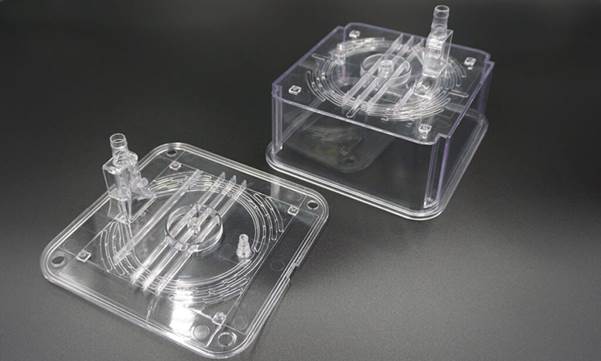
Plastic Molding of Custom Products in the various industries

There are various applications of custom plastic molding in various industries. There is a standard of requirement and standards per industry. This renders the process to be very versatile. Custom molded plastics are found everywhere, in the automotive parts, as well as medical devices. This extensive application demonstrates the significance of this process in today manufacturing.

Creating less waste during Plastic Molding

Less wastage is a current day objective of manufacturers. The effective production processes will reduce the amount of loss of materials and enhance sustainability. Recycling of used materials is also a norm. A lot of companies that have been employing the custom molding plastic are now targeting at environmentally friendly solutions to conserve the environment.

Improvement in Product Quality by improving design

The high-quality products are orchestrated by good design. Having a proper design will facilitate a smooth production and minimize defects. The advanced tools and software can be used to enhance accuracy. An aptly made custom plastic mold will also lead to a superior finish, strength and durability.

The future of Custom Plastic Molding

The prospects of custom plastic molding are bright. The procedure is being expedited by new technologies and made more efficient. The automation and smart production are enhancing the quality of production. High-tech custom molding plastic methods are being embraced by many companies, in a bid to remain competitive in the market.

Final Extended Conclusion

Plastic molding is a crucial process in the contemporary manufacturing industry. It allows flexibility, efficiency and creates high quality production to various industries. It is used by businesses to develop individual and trusted products. Companies can get the best results by concentrating on the right design, selection of materials and selecting the appropriate custom plastic molding company. This will not only enhance the quality of the products but also minimize the costs in the long-run.

Even more efficient and sustainable, in the future, will be custom molding plastic with the help of advanced technologies. Companies that embrace such practices will remain competitive and be successful in satisfying the rising market expectations.

Najczęściej zadawane pytania

1. What do you use custom plastic molding?

Unique plastic products are produced through custom plastic molding, which is employed to produce products according to certain designs and needs. It is widely applied in such industries as automotive, medical, packaging and electronics to achieve high quality and precision of components.

2. What kind of molding process is suitable to complex products?

Complex and detail products are the best that should be injection molded. It has a high level of precision, consistency and smooth finishing; thus, it is suitable in an advanced and high-volume production requirement.

3. What does it mean by blow molding and injection molding?

H hollow products such as bottles, containers, etc are made through blow molding. Solid and detailed parts that have complex shapes are molded over injection molding. The two processes have various applications depending on the design of products.

4. Is it costly to custom plastic mold?

The price is determined by the factors such as the shape of mould, material and quantity of production. Although the initial cost may be expensive, it would prove to be cost effective in large production as the cost per unit will reduce.

5. What is the correct molding process that I pick?

The selection of the process is dependent on your product design, type of material and quantity of productions. Being aware of your needs and talking to an expert manufacturer can make them make the most optimal choice.

Ile kosztuje forma wtryskowa? Kompletny przewodnik cenowy

Knowledge of the cost of an injection mold is highly significant in business and newcomers who would wish to venture into plastic product manufacturing. Many industries use injection molding due to the speed and trustworthiness of injection molding. However, the prices of molds may be baffling to new customers.

Before one embarks on an injection molding project, many people will ask: How much does injection molding cost? The solution varies depending on various criteria such as design, material and volume of production. You will come to know all in easy and simple words in this guide.

Czym jest formowanie wtryskowe?

Injecting a hot material into a cavity is a production technique of plastic components called injection molding. The mixture is left to dry and it takes the form of the mold. The latter process is common since it provides precise and reproducible results. It finds application especially in the automotive, packaging and electronic industries. A mold needs to be produced prior to production. That is the reason why many people would inquire on how much does a plastikowa forma wtryskowa cost when they are planning to do a project.

What Does an injection Mold Cost?

It might depend on the project greatly as cost. Generally, the cost of injection mold can be between 1,000 and above 100,000. The molds that are small and simple are less expensive whereas large and complex molds are costly. As an example, a simple mold can be between 1,000-5,000. A medium-level mold may cost $5,000 to $25,000. Molding in the industrial industry can exceed 50 000. That is why it is recommended to comprehend the extent to which injection molding cost is before the start.

Factors That Affect Injection Mold Cost

The amount that a plastic injection mold will cost is determined by a number of factors. All the factors contribute significantly to the end price. Knowing these aspects will assist you to make a more budget-friendly plan. We can consider the factors which have the greatest influence on the cost of a particular injection mold in real projects.

1. Mold Size and Complexity

The cost is dependent on the size of the mold. Large molds require additional material and time to be manufactured. This adds up to the aggregate price. Complex designs are also costly as it makes use of sophisticated tools and labour. Hence, the extent to which injection molding cost may vary depending on the design complexity.

2. Material Used for Mold

Molds are typically produced out of steel or aluminum. Steel molds are tough and have a better life span. They are however pricier than aluminum molds. The molds made of aluminum are less expensive and quicker to make. They are however not applicable towards high production. The decision you make will determine the amount of cost of a plastic injection mold.

3. Production Volume

It also depends on the quantity of parts that you wish to manufacture. The molds need to be strong and durable in order to produce a lot. These are more expensive molds that have a long life. In case of low production, low-cost molds can be used. That is why the cost of an injection mold varies according to your objectives of production.

4. Design and Engineering

A design has to be crafted and tried prior to the creation of a mold. The design and its design are checked by engineers to prevent any mistakes. This will be an additional cost. In case of a complex design, it will be time-consuming and more laborious. This adds to the overall costs of injection molding.

5. Mold Cavities

There may be a cavity or many cavities in a mold. Multi-cavity molds are able to make numerous parts simultaneously. This improves efficiency. They are however, more costly to construct. Therefore, the number of cavities has an influence on the cost of a plastic injection mold too.

What is the Cost of Injection Molding a Part?

Other than the cost of the mold, you should know the cost of production per part. Much of the population would like to have an idea of the cost of injection molding per unit. Smaller, plastic components may be as cheap as a few cents each. Bigger ones will require a couple of dollars. The cost is lower with the increase in the volume of production hence less costly.

Cost Breakdown of injection Molding

In order to grasp the extent of a cost of an injection mold, it is worthwhile to review various elements of the cost. All these are a contribution to the overall price. These expenses consist of tooling, materials, labor and the operation of the machine. All these factors add up to find out the extent to which injection molding will cost in total.

1.Tooling Cost

The largest cost of injection molding is tooling cost. It involves designing and making of the mold. The expensive molds are of high quality, which extend their life. This is the reason why tooling contributes significantly in determining the extent of cost of a plastic injection mold.

2.Material Cost

The cost of materials varies according to the plastic. There are those that are cheap and expensive depending on the properties of the plastics. The selection of the appropriate material can regulate the extent to which an injection mold costs as well as quality of the product.

3.Labor Cost

Staff with expertise is required to design molds and run machines. Their experience provides a smooth running of the process. The cost of labor is a significant aspect of the cost of injection molding of any project.
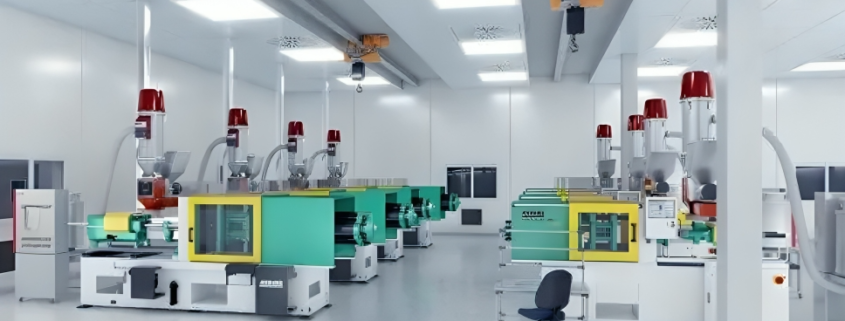
4.Machine Cost

The cost of acquiring as well as maintaining injection molding machines is high. They also use electricity when working. When determining the cost of a plastic injection mold, as well as the total production cost, these costs are accounted.

Inexpensive vs. Expensive Injection Molds

Inexpensive molds are applicable to smaller projects, and shorter production cycles. They are simple to manufacture, but can be worn out. More durable and better quality results are offered by expensive molds. This is why the amount of money to spend on an injection mold should be regarded as a long-term investment.

Reducing Cost of Injection Mold

It can be done to lower the extent to which injection molding is costly, without compromising quality. Prudent planning will save money. Simple design decisions as well as choosing the appropriate materials could be used to reduce the amount the plastic injection mold would cost.

Simplify Design

The straightforward designs are less complicated and less expensive to manufacture. Don’t use irrelevant information that complicates the matter. This will minimize the cost of an injection mold, as well as accelerate the production.

Select the appropriate Media

It is highly important to choose the appropriate material. It ought to be compatible with your product requirements and costs. This choice impacts performance and the extent to which is injection molding expensive.

Reduce Mold Cavities

Initial cost of mould can be reduced using lesser cavities. Single cavity molds are less expensive and not as difficult to maintain. It is an ideal choice when the quantity of production runs is small, and assists in managing the amount of inquiry a plastic injection mold cost.

Work with Experts

The accomplished manufacturers are able to mentor you to better decisions. They assist in the prevention of expensive errors. The collaboration with professionals will make sure that the amount of money needed by an injection mold does not exceed the budget.

Injection Molding vs. other techniques

A lot of individuals contrast injection molding to other forms of manufacturing. They would also wish to know how much injection molding cost is as compared to the other alternative. Large-scale production is more suitable to injection molding. Although the cost of a plastic injection mold is very expensive, the cost per unit is lowered as time goes by.

Should we Injection Mold?

Businesses which require high production of products are good candidates of injection molding. It is fast, accurate and reliable. The initial cost might be high but knowing how much does an injection mold cost, will aid in making smart decisions.

Typowe błędy, których należy unikać

Numerous inexperienced individuals commit errors which raise the cost of injection molding. With good planning, such errors can be avoided. Some of the common errors made are intricate designs, improper choice of materials and lack of proper planning. Preventing them will lower the cost that a plastic injection mold costs.

Real-Life Cost Examples

Live cases can be used to learn more about the extent to which an injection mold is more cost-effective. The prices are subject to change depending on the size and complexity of project. Small molds may cost $1,000 to $3,000. Medium molds can cost $5,000 to $15,000. Big molds are over 50, 000.

What is the Time Taken to make an injection Mold?

The other significant consideration when discussing how much does an injection mold cost. It is not an immediate process of making a mold. This may require a couple of weeks or even months based on complexities. It can take 2 to 4 weeks to be simple molds. Intricate molds that are elaborately designed may require up to 8 to 12 weeks or more. This time also influences how much does injection molding cost since the longer the project, the more the labor and resources that would be required.

Custom Injection Mold Price

Custom molds are custom made to particular products. The cost of these molds is higher since it entails special designs and design engineering. It is the reason why most people may tend to inquire how much does a plastic injection mold cost a custom project.

Custom molds can range from $5,000 to over $100,000. The cost is determined by size, material and complexity of the design. When developing a custom product then it is quite important to know how much the cost of an injection mold is.

Differences by country in cost

Injection molding is also influenced by the country of manufacture, thus its cost varies. There is a difference in the costs of labor and production in various areas. This directly influences the extent of the cost of injection molding.

As an illustration, the molds produced in China tend to be less expensive as compared to molds produced in the USA or Europe. But quality and communication must also be perceived to determine the extent to which a plastic injection mold costs.

Cost of Prototype vs Production Mold

Testing and low-volume production is done by using prototype molds. They are less expensive, and quicker to manufacture. This assists companies in trying out their concepts prior to the entire production. Molds of production are made to be long-lasting and in large quantity. They cost more, but are more durable. This variation is very important in determining the extent to which an injection mold costs.

The upkeep of Injection Molds

When determining the cost of injection molding many people forget the maintenance calculation. Molds should be regularly cleaned and repaired to work well. The cost of maintenance is dependent on the use and the quality of materials. Careful treatment enhances growth of moulds and minimizes cost in the long run. This too influences the amount of money a plastic injection mold would cost in the long run.

Effect of Design Change on cost

Design modifications have the potential to make a project more expensive. In case of alterations implemented to the mold after the creation, it might have to be reworked or possibly a new mold. This can go a long way in determining the amount of cost of injection mold. This is the reason why one should design the final product prior to starting the production process in order to control the extent to which injection molding is expensive.

Use of Technology in Cost saving

The technology of today is aiding in the cost reduction in manufacturing. The use of advanced software enhances accuracy of designs and minimizes errors. This is beneficial in saving time and money. Production is also speeded up and is more efficient with automation. In most industries, these advancements are gradually lowering how much does a plastic injection mold cost.

Large vs Small Volume Production

The amount of production is also important in determining the cost. Mold cost is diffused among high volume production. This will lower the cost per part. High cost per unit is experienced in low volume production due to the lack of a wide distribution of the mold cost. This is a big consideration in estimating the cost of how much an injection mold cost.

Selecting the proper Manufacturer

It is quite crucial to choose the appropriate manufacturer. An excellent manufacturer is one who offers quality work and assists to manage expenses. This makes sure that results are improved. The knowledgeable manufacturers will be able to advise you regarding the cost of injection molding as well as recommend how to save money. It also aids in controlling the extent of the cost of a plastic injection mold.

Small Business injection Molding cost

High start-up costs are a concern to small businesses. However, the injection molding can be an option as well with appropriate planning. To begin with basic patterns and small amounts of molds may aid in reducing the cost of an injection mold, how much does an injection mold cost? It is now easier to enter the market by small businesses.

Environmental Impact and Cost

Environmentally-friendliness is making its way into the production process. A lot of businesses are currently employing recyclable materials and energy saving machines. Such developments could have minor impacts on how much does injection molding cost, but they contribute to safeguarding the environment. They are also able to minimize the cost of a plastic injection mold, in the long-term, by efficiency.
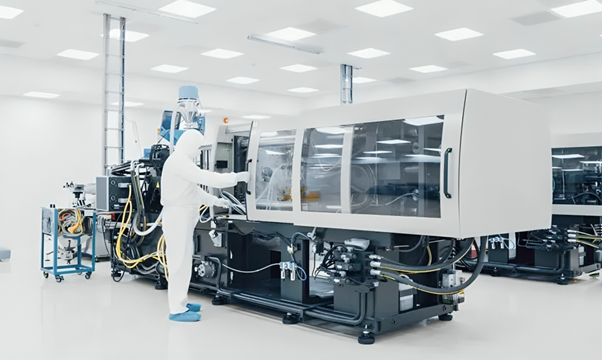
Trends in Injection Molding in the future

Injection molding is getting enhanced with the help of technology. Labor costs and efficiency are being decreased and increased with automation. The degree to which injection molding cost can be reduced in the future due to improved technology is yet to be determined. Nevertheless, there will always be quality molds that will demand investment.

Przemyślenia końcowe

You now have a clear picture of how much does an injection mold cost, and how it depends on various factors. The price varies as per design, material and production requirements. Never take any chance and collaborate with specialists. This will assist in controlling the extent to which is injection molding cost effective and achieve improved results.

Ultimately, put emphasis on value rather than price. An investment made today will be able to save money in future, as it will be able to see how much a plastikowa forma wtryskowa costs.

Najczęściej zadawane pytania

1. What is the average cost of injection mold?

The injection mold depends on size and complexity and has a wide range of cost per injection mold. The average price of injection moulding could be between 1,000 and more than 100,000. Simple molds are less expensive in comparison to complex industrial molds, which are very expensive.

2. Why injection molding is so costly initially?

This is primarily because of the mold. Prior to production, a tool of high accuracy has to be produced. This is the reason why the amount of costs to be incurred in injection molding is high at first, but as large quantities of production run it would be cheaper per unit.

3. What is the cost of a plastic injection mold of small scale projects?

The average cost of a plastic injection mold varies between $1,000 and 5,000 depending on the type of small or simple projects. These types of molds are applied in low volume production or simple parts of plastic that contain simple designs.

4. Is it possible to decrease injection mold cost?

Yes, it is possible to decrease the cost by simplifying the design, decreasing the number of cavities and selecting appropriate materials. The right planning also assists in reducing the amount that an injection mold costs without compromising on the quality of products.

5. Is it cost effective to use injection molding to produce in mass?

Injection molding is indeed very economical at large scale production. Despite the high initial cost, the cost of injection molding, per unit, is very low when producing in the thousands of parts.

Formowanie wtryskowe o dużej objętości

High volume injection molding is an extensive manufacturing procedure that is applied in large production of plastic parts. It is recognized to be efficient, consistent and cost effective. This approach is used by many industries to address the increasing demand of the products. High volume injection molding is a process that is preferred by businesses that are interested in scaling their production since it is a reliable way of producing the results.

This is suitable in companies which require mass production and do not compromise on quality. It is also useful in minimizing the expenditure in the long run. This guide will tell you all about the high volume injection molding, its process, advantages, material, as well as its use.

What is High Volume Injection Molding?

High volume injection molding is a production method, which is applied to manufacture thousands or even millions of similar plastic parts. Molten plastic is injected in a mold in this process, which cools down and solidifies to shape into the required shape. This process is repeated several more times in order to produce uniform products.

The high volume plastic injection molding is normally applied when bulk production is necessary. It makes certain that all of the parts are of the same size, shape and quality. High volume custom injection molding is normally used by such businesses where they need the unique product design, but at the same time, the production volume needs to be large. The china high volume injection molding is also favored by many companies since it is cost effective and has large scale production.

Operation of the Process

The high volume injection molding requires a number of crucial steps. The first stage involves the selection of the plastic material that is to be used depending on the requirements of the products. The various materials have varying strength, flexibility and durability.

The plastic is then heated till it is melted. This liquid plastic is next forced into a mold at a high pressure. The mold is made to have a shape that is the same as that of the final product. After the mold is filled with the plastic material, it is then left to cool down and harden.

The complete part is ejected out of the mold after it is cooled. The process is repeated in order to create additional components. The high volume plastic injection molding is very efficient and suitable in the mass production as it is a continuous process.
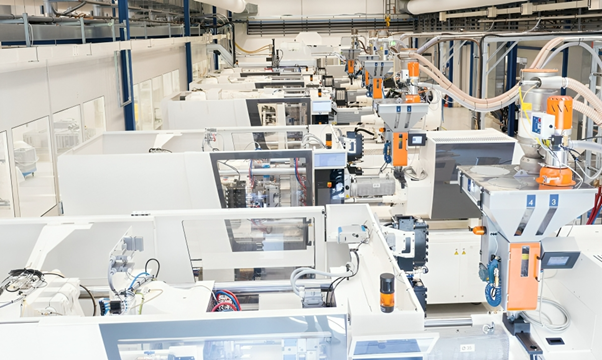
Advantages of the High Volume Injection Molding

Cost effectiveness is one of the largest benefits of high volume injection molding. Its initial set up cost may be expensive but the unit cost is very low in the case of large production of the products. This ensures that it is a cost-effective solution to the businesses. The other advantage is that of quality consistency. The high volume plastic injection molding is used to produce each part, and this way the part is almost the same and hence reliable and consistent. This is particularly crucial to those industries that are concerned with precision.
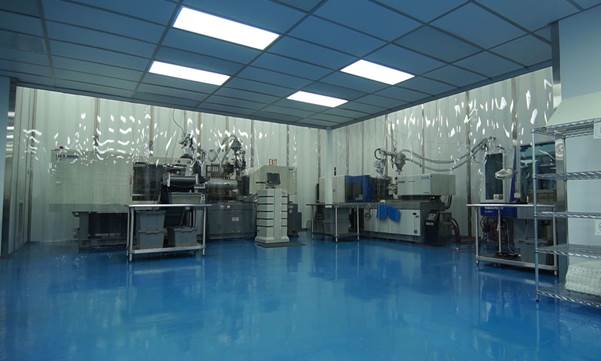
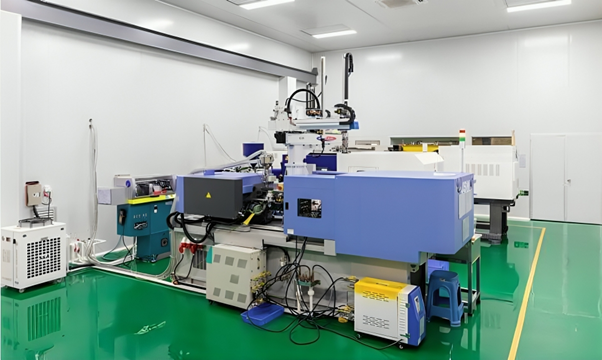
It is also very fast in the production speed. The contemporary machines are capable of making thousands of parts within a short period of time. This will enable the businesses to satisfy rigid deadlines and demand. Flexibility of design is the other strength. High volume custom injection molding enables the companies to produce an intricate and detailed design. It becomes easier to come up with unique and innovative products.

Moreover, wastage of materials is also minimal due to the fact that sometimes it is possible to reuse the surplus plastic. This renders the process to be more environmentally friendly than other manufacturing processes.

Uses of High Volume Injection Molding

The injection molding is done in high volume in most industries. It is also employed in the manufacture of parts like dashboards, panels as well as covers in the automotive industry. Such elements have to be very precise and durable. High volume plastic injection molding is applied in the production of small plastic elements in the electronics industry. These components find application in smartphones, computers and home appliances.

This also is applied in the medical industry to manufacture products such as syringes, containers, and medical tools. Such products demand great amount of cleanliness and precision. Another significant area of use is the consumer goods. The high volume injection molding is usually used in production of everyday products like bottles, containers and packaging materials.

Why Should High Volume Custom Injection Molding be chosen?

There are numerous companies where products have to be unique and brand oriented. High volume custom injection molding makes companies be able to produce customized design and still enjoy the mass production.

This allows the business to retain brand identity in the way that they can design the products that are unique in the market. It will also make sure that certain requirements are fulfilled without being at cost to production. Consequently, the high volume custom injection molding is ideal in cases where firms wish to have the customization as well as scalability.

Why Should China High Volume Injection Molding?

The manufacturing outsourcing is not a new trend and china high volume injection molding is a favored option to many companies. Reduction in the cost of production is among the primary causes. The cost of labor and operation in most cases is less and this saves the companies money. The other competitive edge is availability of advanced technology. Modern machinery is applied in most of the manufacturing industries in China that dictate high quality production.

The other advantage is a large production capacity. China high volume injection molding is appropriate when dealing with international companies since factories have the capacity of dealing with bulk orders. Furthermore, China boasts of great supply chain and logistics network. This facilitates to deliver products to different parts of the world in good time.

Plastics of High Volume Injection Molding

High volume injection molding is carried out using different forms of plastic materials based on the needs of the products. ABS is a brand of choice as it is durable and strong. It is generally applied in the automotive and electronic products. The other material that is commonly used is polypropylene. It is also light and elastic hence it is applicable in packaging and consumer goods. Nylon is also a strong material that is resistant to heat and this fact has rendered it suitable in industrial use.

Polycarbonate is also commonly applied in the production of items that need to be transparent and have impact resistance like safety gears. The material used should be chosen well since it has a direct influence on the performance and the durability of the product.

Design Hints to greater Success

High volume injection molding is highly dependent on good design. The simple designs tend to be less expensive and the production is simpler. Complicated designs may raise the cost and time. The thickness of the walls should be uniform, due to the fact that it avoids defects and enhances the product strength. Lack of evenness of the thickness may create problems when cooling.

The design is aided with addition of draft angles to assist in easy extraction of the parts out of the mold. This minimizes the chances of being damaged. One should also avoid sharp edges since rounded edges will be more durable and will contain fewer stress points. These design tips should enhance the quality of products produced through high volume plastic injection molding.

Difficulties in High Volume Injection Molding

The high volume injection molding has several challenges even though it has many advantages. Making molds may be expensive, and this might be an issue of concern to small businesses. Nevertheless, this is normally offset in the long run by large production.

Problems can also be generated by design errors. Failure to optimize the design in the right way may result in defects and delays in production. Another major consideration is the choice of materials. The performance and quality of the end product can be influenced by the incorrect choice of material.

It is also necessary to maintain the machines. Timely maintenance also means smooth running and avoidance of the untimely breakdown in high volume injection molding operations.

The Question of Selecting the appropriate Manufacturer

It is important to select the manufacturer in order to have a successful high volume injection molding. One should choose the company that is experienced and skilled in the sphere. Proficiency in manufacturing will give more credible manufacturers a higher chance of producing quality outcomes.

The quality standards must also be looked into. A quality manufacturer will be dependent on a strict quality control. The other factor is pricing. Competitive rates should be found, but quality must not be lost. Capacity of production is also important. The manufacturer ought to have the capabilities of managing large orders particularly where there is a high volume plastic injection molding project.

High Volume Injection Molding Factors of Cost

It is extremely important to the businesses to know the cost structure. The injection molding can be performed in high volume which can be costly initially, but in the long run it will prove to be cost effective. The main cost factor is the mold. The manufacturing and the design of molds involve a lot of money particularly when dealing with a complicated part.

Material cost is another factor that is important. Various plastics carry different prices basing on their properties and quality. The correct material selection can be used in the high volume plastic injection molding to manage the overall costs.

Operation of machines and workforce also add to the overall cost. Automation has however minimized the labor dependency of contemporary production. This is because high volume injection molding is more efficient and cost effective.

The volume of production is also important in pricing. The more the units the less the cost per unit. That is the reason why most companies would use high volume custom injection molding to produce in large quantity. China high volume injection molding is usually adopted by companies because it is relatively cheap and has high capacity of production.

High volume injection molding Quality Control

In high volume injection molding it is critical to maintain quality. This means that production runs are large and therefore any minor mistake may result in a huge loss. This is why the quality control should be on strict measures. Manufacturers have high-technology inspection instruments to test size and functionality of products. The high volume plastic injection molding is normally done by automated systems to identify defects at the initial stage. This will enable uniformity in all products.

There is also the importance of the material testing. It makes sure that the plastic chosen is of the desired standards. The quality checks are even more of critical concern in the high volume custom injection molding since the products are designed to be used to fulfill particular needs. A number of manufacturers in the china high volume injection molding practice international quality standards. This will guarantee that products are in line with the demands of the world and expectations of the customers.

Injection Molding High Volume Tooling

One of the most significant issues of high volume injection molding is tooling. The final shape and quality of the product is dependent on the mold. Good quality molds may have millions of cycles. The design of the tooling should be accurate. Any minor mistake will have an impact on the whole production process. In large volume plastic injection molding, there is the need to have durable molds so that production can run over a long period of time.

Molds are used in manufacturing of different types. Single-cavity molds are used to produce a part at a time and multi-cavity molds are used to produce many parts within a cycle. Multi cavity molds are usually applied in high volume custom injection molding since they enhance efficiency.

China high volume injection molding is always used by many companies to have tools due to the cost benefit and technical experience. Properly made molds enhance faster production and minimize the defects.

High Volume Injection Molding: Automation

The manufacturing industry is undergoing a change with automation. The injection molding processes have been increased to a higher volume and the machines and robotic systems are used to enhance efficiency. The parts are handled by robots; the products are removed out of molds and quality checks performed. This minimizes the human error and maximizes the speed of production. Automation is highly beneficial when it comes to the high volume plastic injection molding since it must be operating at all times.

Intelligent machines have the ability to check temperature, pressure and cycle time. This guarantees stability and minimizes poor performance. Automation in high volume custom injection molding is used in keeping accuracy in customized designs. Due to the need to remain competitive in the world arena, most of the factories with china high volume injection molding are embracing automation. This results in increased speed of production and quality products.

Practicality of Sustainability in High Volume Injection Molding

One of the concerns that are taking center stage in manufacturing is sustainability. High volume injection molding is developing in the direction of environmental safeguarding. Minimal waste of the material is one of the primary benefits of this process. Unnecessary plastic may be recycled and reused. Plastic injection molding of high volume is used to promote eco-friendly production.

Most firms are currently adopting biodegradable and recyclable substances. This minimizes pollution and sustenance objectives. With the high volume custom injection molding, businesses are able to select materials that will conform to their environmental policies. The China high volume injection molding producers are also going green. They are adopting the environmentally friendly machines and minimizing emissions. This assists in developing a more sustainable production process.

Troublesome flaws and the ways to prevent them

High volume injection molding has defects even with the advanced technology. The awareness of these problems assists in the enhancement of the quality of products. Warping is one of the defects. This occurs due to uneven cooling of parts. This can be avoided in high volume plastic injection molding by proper designing of the mold and ensuring there is uniformity in the wall thickness.

The other problem is sinking marks. These come in form of tiny dents on the product surface. They tend to be as a result of poor cooling or shrinkage of materials. This problem can be resolved by changing the parameters of the processes. The other common defect is flash. It takes place when there is a leakage of excess material in the mold. This problem is avoided in high volume custom injection molding by ensuring that the molds are aligned correctly.

The manufacturers operating in the china high volume injection molding employ superior mechanisms in order to identify and correct flaws within a short period of time. This guarantees quality production.

A comparison of High Volume and Low Volume Injection Molding

One should know the difference between high volume and low volume production. The high volume injection molding is geared towards mass production whereas low volume is applied to the smaller quantity. Injection molding of plastics can be done in high volumes to provide low cost per unit because of high volumes of production. It suits well with products which have a steady demand.

Low volume production on the other hand is appropriate in prototypes or small batches. It is cheaper in terms of initial costs but expensive in terms of unit costs. High volume custom injection molding is most preferred in a business that would like to increase production and yet retain individual design. China high volume injection molding is preferred by many companies and is applied in cases where quantities are required in large numbers and at competitive costs.

Most Benefiting industries

High volume injection molding is very useful in a number of industries. This is a process that is used in the automotive industry to come up with durable and precise components. Electronics industry is the sector that depends on the high volume plastic injection molding of small and complicated parts. These are the elements of the modern devices.

This is also the method used in the packaging industry. Goods such as bottles, caps and containers are done in bulk. The high volume custom injection molding is applied in the medical industry to produce safe and sterile products. This makes sure that they are in line with strict regulations.

China high volume injection molding does a significant contribution towards provision of products to such industries across the world.

The Future of High Volume Injection Molding

High volume injection molding has a brighter future. Automation is getting prevalent and this makes the work smoother and less human error. The production processes are being enhanced with the use of smart machines. It is also developing new materials that can be used to improve the performance of products. These are more powerful, flexible and sustainable materials.

The concept of sustainability is taking center stage. Recyclable plastics in high volume injection molding are now being put into high use in many companies where environment impacts are to be minimized.

Wnioski

High volume injection molding is a critical production procedure that is necessary to companies that need to produce in mass. It has numerous benefits such as being cost effective, fast and of the same quality. High volume plastic injection molding is more suitable when producing large numbers of the same product where high volume custom injection molding can be used to have unique and customized designs. China high volume injection molding is affordable and has a high production volume thus many companies prefer it.

Having the knowledge of the process, materials and best practices, business can make a more informed decision and attain positive production results. Formowanie wtryskowe o dużej objętości is still a major aspect of the contemporary production and will still be significant in the future.

Najczęściej zadawane pytania

5. What are the saved costs which are high volume injection molding?

The initial set up costs are also quite expensive, but the unit cost reduces in large quantities of productions. There are also advantages on automation and effective use of materials which help in minimizing the costs in general.

What does high volume injection molding mean?

High volume injection molding is a manufacturing technique which is employed in the manufacturing of majority of plastic components according to a brief duration of time. It entails the use of melted plastic that is injected in the mold to produce the same products that are of the same quality.

2. Why does the business have high volume injection molding?

This is the one that the businesses would like since it consumes less time and it is not costly per unit in case of mass production. It further makes all products to appear and work in the same way.

3. In what are the common areas where high volume injection molding is applied?

This has been applied majorly in the automobile sector, electronics, health and house goods. It is best when it comes to the manufacture of products that require mass production.

4. Does it possess high volume injection molding that is cost effective?

Yes, it is very cost effective in cases where large batches of production are taken. Although the initial arrangement might be costly, the general cost is reduced with increase in the production of the units.

Termoplastyczne formowanie wtryskowe

Termoplastyczne formowanie wtryskowe jest jednym z takich materiałów, które nadal cieszą się popularnością w światowym przemyśle wytwórczym ze względu na zwiększone zapotrzebowanie na lekkie i wysokiej jakości materiały. Wydajność, dokładność i efektywność kosztowa to niektóre z czynników sukcesu w dzisiejszym świecie szybkiej produkcji. Jednym z najpopularniejszych procesów spełniających wszystkie te wymagania jest formowanie wtryskowe tworzyw termoplastycznych. Jest to wysoki poziom produkcji, ponieważ umożliwia firmom wytwarzanie elementów z tworzyw sztucznych o wymaganej jakości w spójny i dokładny sposób.

Proces ten jest stosowany w innych firmach z sektora dóbr konsumpcyjnych, części samochodowych i innych. Firmy będą w stanie podejmować lepsze decyzje produkcyjne, ponieważ będą wiedzieć, jak to działa i jakie są korzyści.

Czym jest termoplastyczne formowanie wtryskowe?

Termoplastyczne formowanie wtryskowe Formowanie wtryskowe to proces produkcyjny polegający na wtłaczaniu termoplastu w postaci stopionej do formy, a następnie formowaniu do wymaganego kształtu. Po ostygnięciu i zastygnięciu formy produkt końcowy jest siłą usuwany z formy.

Jest również bardzo wydajny, jeśli chodzi o produkcję masową. Umożliwia producentom opracowanie szczegółowych projektów, które są bardzo dokładne. Termoplastyczne formowanie wtryskowe jest również dobrą metodą produkcji na dużą skalę ze względu na możliwość ponownego użycia form.

Tworzywa termoplastyczne to materiały, które można wielokrotnie topić i formować bez utraty ich właściwości. To sprawia, że są one bardzo wszechstronne i mogą być dostosowane do innych zastosowań.

Proces produkcji termoplastycznych form wtryskowych

1. Wybór materiału

Pierwszym krokiem w procesie formowania wtryskowego tworzyw termoplastycznych jest proces wyboru odpowiedniego materiału, np. polipropylenu, ABS, poliwęglanu, zwykle granulatu termoplastycznego. Takie materiały są wybierane w zależności od ich właściwości, takich jak wytrzymałość, plastyczność, odporność na ciepło i koszt. Formowane wtryskowo tworzywo termoplastyczne jest odpowiednim materiałem, który zapewnia optymalną funkcjonalność i wytrzymałość części.

2. Topienie tworzywa termoplastycznego

Pociąga to za sobą stopienie tworzywa termoplastycznego w celu uzyskania wymaganego kształtu i objętości do wypełnienia maszyny formującej. Topienie termoplastu: odbywa się w celu stopienia termoplastu do wymaganego kształtu i objętości oraz wlania do maszyny formującej.

W gorącej beczce wtryskarki umieszczane są surowe granulki tworzywa sztucznego. Bezpiecznik granulek w beczce jest jednorodny i lepki. Temperatura na tym etapie jest bardzo istotna, aby zapewnić degradację i płynny przebieg procesu formowania.

Forma służy do wprowadzania nowego produktu na rynek.

3. Wtrysk do formy

Gdy tworzywo termoplastyczne jest wystawione na działanie odpowiedniej temperatury, jest prasowane w gnieździe formy o pożądanym rozmiarze. Kształt i charakter części jest określany przez formę. Bramy, otwory wentylacyjne i kanały zostaną skonstruowane w prawidłowy sposób, który spowoduje równomierny przepływ stopionego materiału do formy w celu zminimalizowania wad. Jest to jedna z wymaganych operacji wtryskiwania tworzyw termoplastycznych.

4. Zamrażanie i ponowne zamrażanie

Gdy tworzywo sztuczne znajdzie się w formie, topi się i zestala. Czas wymagany w procesie chłodzenia zależy od materiału, grubości ścianek i złożoności elementu. Chłodzenie musi być równomierne, aby uniknąć wypaczenia, zapadania się lub kurczenia.

5. Otwieranie formy i wyrzucanie części

Część jest następnie zestalana, po czym forma jest otwierana, a kompletny produkt jest wyrzucany. Proces ten jest następnie powtarzany w produkcji ciągłej. Nowoczesne maszyny są zautomatyzowane i posiadają sterowanie komputerowe, które zapewnia, że ta sama część jest używana w różnych seriach, które dają tę samą część o wysokiej jakości.

6. Przetwarzanie i wykańczanie

Nawet elementy termoplastyczne formowane wtryskowo mogą wymagać dalszego wykończenia, tj. przycinania, malowania lub montażu. Są to procesy, które sprawiają, że część jest funkcjonalna i estetyczna.

7. Kontrola jakości

Kontrola jakości jest przeprowadzana przez producentów w trakcie procesu, aby zapoznać się z wymiarami, tolerancją i integralnością materiału. Utrzymanie jakości zaowocowało termoplastycznym formowaniem wtryskowym, które zapewnia niezawodne i mocne części dla innych gałęzi przemysłu.

Rodzaje formowanych wtryskowo materiałów termoplastycznych

Produkcja formowanych wtryskowo materiałów termoplastycznych ma wiele różnych typów. Typy te posiadają cechy szczególne, które sprawiają, że nadają się do niektórych zastosowań.

Materiały niektórych formularzy to:

  • Polipropylen (PP): jest lekki i niechemiczny.
  • Polietylen (PE): Miękki i wytrzymały.
  • Akrylonitryl-butadien-styren (ABS): Odporny na uderzenia i wytrzymały.
  • Poliwęglan (PC): Odporny na ciepło i przezroczysty.
  • Nylon (PA): Mocny, wytrzymały i twardy.

Wybór termoplastycznego materiału formowanego wtryskowo odgrywa kluczową rolę w określeniu preferowanej wydajności i żywotności produktu końcowego.

Zalety termoplastycznego formowania wtryskowego

Termoplastyczne formowanie wtryskowe jest korzystne w produkcji na kilka sposobów:

  • Wysoka wydajność: Pierwszy w masowej produkcji.
  • Precyzja: Rozwój zaawansowanych i zaawansowanych projektów.
  • Opłacalność: Zmniejszy to ilość odpadów materiałowych.
  • Możliwość ponownego wykorzystania: Materiały mogą być ponownie wykorzystane i poddane recyklingowi.
  • Różnorodność: Może być stosowany w innych branżach.

Takie zalety sprawiają, że termoplastyczne formowanie wtryskowe jest opcją wartą rozważenia przez firmy, które chciałyby zwiększyć wydajność produkcji.

Termoutwardzalne a termoplastyczne formowanie wtryskowe

Różnica między termoutwardzalnym i termoplastycznym formowaniem wtryskowym musi być brana pod uwagę w przypadku, gdy ktoś podejmuje właściwą decyzję dotyczącą procesu. Tworzywa termoplastyczne mogą być poddawane recyklingowi, topione i modyfikowane w innym czasie, dzięki czemu są elastyczne. Z drugiej strony tworzywa termoutwardzalne nie topią się w procesie utwardzania i zmieniają się chemicznie.

Porównywalnie, termoutwardzalne i termoplastyczne formy wtryskowe nie są łatwe w obsłudze w porównaniu do tworzyw termoplastycznych. Tworzywa termoutwardzalne są jednak bardziej odporne na ciepło, a ich stabilność strukturalna jest większa. Wybór termoutwardzalnego lub termoplastycznego formowania wtryskowego zależy od zastosowania.

Zastosowania w różnych branżach

Proces formowania wtryskowego tworzyw termoplastycznych jest elastyczny i wydajny, dzięki czemu może znaleźć zastosowanie w większości branż.

  • Części samochodowe: elementy wnętrza samochodu, zderzaki i deska rozdzielcza.
  • Medyczne: Sprzęt chirurgiczny, strzykawki i sprzęt medyczny.
  • Elektronika: Obudowa, połączenia i izolacje.
  • Dobra konsumpcyjne: Gospodarstwo domowe i zabawki.

Termoplastyczne formowanie wtryskowe jest obecnie obowiązkową praktyką w bieżącej produkcji ze względu na możliwość tworzenia lekkich i wytrzymałych produktów.

Kontrola jakości w formowaniu wtryskowym

W każdej produkcji jakość jest kwestią niepokojącą. Formowanie wtryskowe tworzyw termoplastycznych jest zgodne z tą samą ideą kontroli jakości, która ma na celu upewnienie się, że każdy produkt spełnia standardy. Producenci dysponują zaawansowanymi narzędziami i procedurami testowymi w celu weryfikacji wymiarów, wytrzymałości i trwałości. Kontrola jakości minimalizuje wady i sprawia, że klienci są zadowoleni.

Jedną z największych zalet formowania wtryskowego tworzyw termoplastycznych jest konsystencja i to jest powód, dla którego można je stosować w produkcji na dużą skalę.

Czynniki kosztowe w termoplastycznym formowaniu wtryskowym

Ceny formowania wtryskowego tworzyw termoplastycznych będą się różnić w zależności od szeregu aspektów, takich jak rodzaj materiałów, które należy zastosować, kształt formy i ilość jednostek, które należy wyprodukować. Pierwsze opłaty za formowanie są wysokie, gdy są wykonywane w dużych ilościach, ale są rekompensowane zmniejszonymi kosztami produkcji. Oszczędność kosztów można również osiągnąć poprzez oszczędne budowanie i właściwy dobór materiałów.

Długoterminowe oszczędności i zwiększona wydajność produkcji to jeden z aspektów, który jest wspólny dla długoterminowych firm inwestujących w formowanie wtryskowe tworzyw termoplastycznych.

Wpływ na środowisko i zrównoważony rozwój

Duży nacisk kładzie się na zrównoważony rozwój w przemyśle wytwórczym. Koncepcja termoplastycznego formowania wtryskowego stymuluje ekologiczne działania ze względu na możliwość recyklingu materiału i zmniejszenie ilości odpadów. Większość tworzyw termoplastycznych nadaje się do recyklingu przy kilku okazjach, co zmniejsza zanieczyszczenie środowiska. Dzięki temu proces ten jest bardziej zrównoważony w porównaniu z innymi procesami produkcyjnymi.

Firmy, które wdrożyły termoplastyczne formowanie wtryskowe, będą w stanie pomóc w tworzeniu bardziej ekologicznej przyszłości i jednocześnie będą produktywne.

Najczęstsze wady formowania wtryskowego tworzyw termoplastycznych i sposoby ich unikania

Jest to niezwykle wydajny proces, który może ulec uszkodzeniu podczas procesu produkcyjnego. Formowanie wtryskowe jest termoplastyczne i znane jest z tego, że posiada wypaczenia, ślady zatopienia, krótkie strzały i błysk. Gdy część stygnie w innym tempie, ulega wypaczeniu, a tym samym wygina się. Aby to zminimalizować, można zastosować dobre systemy chłodzenia. Ślady zatopienia to małe kropki, które są zaznaczone na powierzchni i są zwykle przypisywane niewłaściwemu ciśnieniu lub czasowi chłodzenia.

Krótkie strzały są wykonywane, gdy forma nie została całkowicie wypełniona, co jest powszechne z powodu niskiego ciśnienia wtrysku. Nadmierne wylanie z wnęki formy jest jednak błyskawiczne. Takim problemom można zapobiec, projektując odpowiednie formy i konfigurację maszyn podczas formowania wtryskowego tworzyw termoplastycznych.

Znaczenie projektowania form w formowaniu wtryskowym tworzyw termoplastycznych

Projekty form są bardzo ważne dla sukcesu formowania wtryskowego tworzyw termoplastycznych. Dobra forma zapewnia dobry przepływ materiału, łatwe chłodzenie, łatwe wyrzucanie kompletnej części.

Rozważania dotyczące projektu formy obejmują lokalizację wrót, chłodzenie i wentylację. Materiał może równomiernie wypełnić formę, tworząc minimalne defekty, gdy wrota są odpowiednio umieszczone. Kanały chłodzące są stosowane w celu utrzymania jednorodnej temperatury, co poprawia jakość produktu.

Tworzywo termoplastyczne do formowania wtryskowego ma wysokiej jakości formę, która nie tylko poprawia wydajność, ale także poprawia długość produkcji.

Rola kontroli temperatury i ciśnienia

Temperatura i ciśnienie to jedne z najważniejszych parametrów tego procesu. Podczas wtryskiwania tworzyw termoplastycznych odpowiednia temperatura zapewni prawidłowy przepływ substancji i całkowite wypełnienie formy. Niepożądane ciepło może zniszczyć materiał. Przy niskich wartościach istnieje prawdopodobieństwo wystąpienia wad z powodu braku przepływu materiału zgodnie z oczekiwaniami. Podobnie, aby zapewnić równomierne wypełnienie formy, wymagane jest odpowiednie ciśnienie.

Zmienne te są ściśle kontrolowane w celu poprawy jakości produktu i zmniejszenia strat podczas formowania wtryskowego tworzyw termoplastycznych.

Zalety formowanych wtryskowo tworzyw termoplastycznych w projektowaniu produktów

Wtryskiwane termoplastyczne tworzywo sztuczne jest bardzo korzystne w projektowaniu produktów. Projektanci mogą również wymyślać skomplikowane kształty, cienkie ścianki i szczegółowe elementy, które byłyby trudne do osiągnięcia w inny sposób. Kolejną zaletą formowanych wtryskowo tworzyw termoplastycznych jest możliwość dodania kilku części do jednego komponentu. Oszczędza to czas montażu i zwiększa trwałość produktów.

Projekt można dostosować; dzięki temu firma może stać się kreatywna i może wymyślać unikalne produkty, które można wyróżnić na rynku.

Porównanie formowania wtryskowego tworzyw termoplastycznych z innymi procesami obróbki tworzyw sztucznych

Istnieją różne procesy produkcji tworzyw sztucznych, ale termoplastyczne formowanie wtryskowe jest wydajne i dokładne. Kontrola kształtu i detali podczas formowania wtryskowego jest lepsza niż w przypadku procesów takich jak rozdmuchiwanie i wytłaczanie. Jest to najbardziej odpowiednie rozwiązanie w przypadku twardych materiałów o złożonych profilach.

Pomimo faktu, że formowanie wtryskowe tworzyw termoplastycznych może nie być odpowiednie do niektórych zastosowań, staje się odpowiednie w produkcji wielkoseryjnej, gdzie jakość używanych elementów powinna być stała.

Globalne trendy w produkcji i rola Chin

Termoplastyczne formowanie wtryskowe sprawiło, że Chiny stały się jednym z głównych krajów produkujących tworzywa sztuczne. Wiele firm preferuje outsourcing produkcji, ponieważ jest on opłacalny i wydajny. Chińscy producenci są w stanie zaoferować aktualne maszyny, siłę roboczą i zdolność do obsługi ogromnych ilości produkcji. Mają również dobre ceny, dzięki czemu są dobrą opcją dla firm na całym świecie.

Co więcej, wiele firm w Chinach jest zgodnych ze światowymi standardami jakości, co zapewnia jakość i niezawodność wyników. Właśnie dlatego tworzą tak potężną obecność na rynku globalnym ze względu na takie połączenie taniości i jakości.

Niestandardowe rozwiązania w zakresie formowania wtryskowego tworzyw termoplastycznych

Personalizacja jest jedną z największych zalet formowania wtryskowego tworzyw termoplastycznych. Producenci mogą opracować produkty, które spełniają indywidualne potrzeby, takie jak rozmiar, kształt, kolor i właściwości materiału. Niestandardowe rozwiązania są szczególnie przydatne w tych branżach, które mają specjalne wymagania, np. w przemyśle lotniczym i medycznym. Zapewnia to fakt, że są one produkowane ze specjalnych komponentów, które zapewniają ich najwyższą wydajność i funkcjonalność.

Firmy są w stanie współpracować z producentami przy opracowywaniu niestandardowych projektów, które odpowiadają ich specyfikacjom.

Konserwacja i trwałość form

Długa żywotność form, które będą używane do formowania wtryskowego tworzyw termoplastycznych, jest głównym czynnikiem ze względu na konserwację. Czyszczenie i kontrola są przeprowadzane regularnie, aby uniknąć uszkodzeń i utrzymać wydajność.

Zużycie może również wystąpić w miarę upływu czasu z powodu powtarzalności w formach. Można to poprawić poprzez wymianę zużytych części i rutynowe usługi.

Wiadomo, że konserwowane formy nie tylko poprawiają jakość produktów, ale także skracają czas produkcji.

Wskazówki dotyczące wyboru odpowiedniego materiału

Zastosowany materiał ma kluczowe znaczenie w procesie definiowania wyników, które zostaną osiągnięte. Podczas pracy z formowanymi wtryskowo tworzywami termoplastycznymi należy wziąć pod uwagę pewne czynniki, takie jak wytrzymałość, elastyczność, odporność na ciepło i koszt.

Istnieje wiele zalet tych mediów. Na przykładzie ABS, mówi się, że ABS jest mocny, podczas gdy polietylen jest ceniony za elastyczność. Właściwości te będą znane, a wiedza ta pomoże w dokonaniu właściwego wyboru.

You also get a chance of seeking the recommendation of professionals in order to decide on which injection molded thermoplastic to apply in your project.

Słowa końcowe

The thermoplastic formowanie wtryskowe is important in the modern manufacturing process due to its efficiency, precision, and versatility. The technology and materials are becoming more reliable and inexpensive with the increase in the process, which is making it more cost effective.

It is advantageous to business in industries not only on its flexibility of design but also on mass production. Firms can maximize this powerful manufacturing process through knowledge about the process, materials and best practices.

Najczęściej zadawane pytania

1. Co to jest formowanie wtryskowe tworzyw termoplastycznych?

Injection molding is a thermoplastic process of manufacturing where a form of plastic known as thermoplastic molten material is injected into a mold to make the perfect parts of the plastics. It is widely used in production of complex shapes and in high volume production.

2. Co to są termoplastyczne elementy formowane wtryskowo?

These materials include polypropylene (PP), ABS, polycarbonate (PC), polyethylene (PE) and nylon (PA). Each injected dose of thermoplastic material is determined depending on its strength, flexibility, heat resistance and requirement of usage.

3. Jaka jest różnica między formowaniem wtryskowym tworzyw termoplastycznych a innymi procesami?

Thermoplastic injection molding creates shapes of an exact, detailed, and repeatable nature, which cannot be achieved with extrusion and blow molding. It is applied effectively in the production of solid components of complicated geometry and it is quite efficient in large scale production.

4. Jaka jest różnica między termoutwardzalnym a termoplastycznym formowaniem wtryskowym?

Through thermoset/ thermoplastic injection molding, thermoplastics are capable of being melted and remodeled several times, whilst thermosets are unable to melt and are subject to chemical curing. Thermoplastics are easier and can be recycled, whereas thermosets are more resistant to heat and chemicals.

5. Co należy zrobić, aby uniknąć wad podczas formowania wtryskowego tworzyw termoplastycznych?

Warping, sink marks and flash are the defects that are normally experienced. Their defects are reduced through the proper design of the mold, the control of temperature and pressure, and the use of high-quality thermoplastic material of high quality, which results in the production that is consistent and reliable.

Niestandardowe formowanie wtryskowe tworzyw sztucznych Chiny

Niestandardowe formowanie wtryskowe tworzyw sztucznych w Chinach jest obecnie jednym z najczęściej używanych produktów w konkurencyjnym świecie produkcji, zapewniając firmom dokładność, skalowalność i przystępną cenę. Niezależnie od tego, czy jest to startup, czy uznana marka, niezależnie od wyboru, warto dowiedzieć się, jak korzystać z niestandardowej usługi formowania wtryskowego tworzyw sztucznych i podjąć właściwą decyzję dotyczącą rozwoju produktów i osiągnięcia wyników na wysokim poziomie.

Dzięki niestandardowemu plastikowi formowanie wtryskowe Dzięki tej usłudze firmy mogą wytwarzać skomplikowane projekty z zachowaniem powtarzalności, niższych kosztów i w ściśle określonym terminie. Jest to również elastyczna metoda produkcji, ponieważ może być elastyczna pod względem doboru materiałów i dostosowywania, a zatem może być stosowana w różnych branżach, takich jak motoryzacja, medycyna, elektronika i towary konsumpcyjne.

Czym jest niestandardowe formowanie wtryskowe tworzyw sztucznych?

Niestandardowe formowanie wtryskowe tworzyw sztucznych to technika produkcji, w której stopiony plastik jest wtłaczany do formy w celu uformowania określonych kształtów i części. Metoda ta jest powszechnie stosowana w przemyśle motoryzacyjnym, medycznym, elektronicznym i dóbr konsumpcyjnych. Impresjoniści mogą tworzyć wyrafinowane projekty przy użyciu niestandardowych tworzyw sztucznych formowanych wtryskowo, które są bardzo dokładne i spójne.

Tworzywa sztuczne w niestandardowych materiałach do formowania wtryskowego

Skuteczne formowanie wtryskowe tworzyw sztucznych wymaga wyboru materiału. Różne materiały mają różne właściwości, takie jak wytrzymałość, elastyczność i odporność na ciepło.

Powszechnie stosowane materiały to:

Znaczenie wyboru materiału

Określenie materiału jest jedną z najważniejszych decyzji podejmowanych w celu osiągnięcia wysokiej jakości produkcji w niestandardowych formach wtryskowych z tworzyw sztucznych w Chinach. Wybór materiału jest istotny, ponieważ wpływa na wydajność, trwałość, a także ogólną funkcjonalność produktu końcowego. Różne tworzywa sztuczne mają różne właściwości, takie jak wytrzymałość, elastyczność, odporność chemiczna i tolerancja na ciepło, dlatego wybór materiału jest głównym wyzwaniem dla producentów i firm.

Powszechnie stosowane materiały

Można je łatwo modyfikować w ABS, polipropylen, polietylen, poliwęglan i nylon, które są najpopularniejszymi tworzywami sztucznymi formowanymi wtryskowo. Cele użytkowania, potrzeby produktu określają z góry, czy dany materiał zostanie użyty, czy nie.

ABS (akrylonitryl-butadien-styren)

ABS jest również niezwykle popularny ze względu na wytrzymałość i odporność na uderzenia. Jest szeroko stosowany w sektorze części samochodowych, obudów elektronicznych i artykułów gospodarstwa domowego, ponieważ jest odporny na zużycie i daje ładne wykończenie.

Polipropylen (PP)

Polipropylen jest bardzo lekkim materiałem, a poza tym jest bardzo odporny chemicznie. Owijanie jest również nawykiem ludzi, ponieważ jest nietoksyczny i elastyczny oraz używany do owijania części medycznych, opakowań żywności i opakowań.

Polietylen (PE)

Polietylen jest wytrzymałym tworzywem sztucznym. Zwykle stosuje się go w pojemnikach, plastikowych torbach i systemach rurowych, w których wymagana jest wysoka wytrzymałość i wodoodporność.

Poliwęglan (PC)

Poliwęglan jest niezwykle wytrzymały i przezroczysty. Jest to typowy produkt zabezpieczający, który jest przeznaczony do obiektywów i zastosowań optycznych, w których wymagana jest ostrość i wytrzymałość na uderzenia.

Nylon (PA)

Nylon jest materiałem twardym i odpornym na zużycie. Inną sferą zastosowań, w której jest używany, jest inżynieria, przekładnie i elementy przemysłowe.

Jeśli chodzi o niestandardowe formowanie wtryskowe tworzyw sztucznych, twórcy wezmą pod uwagę obsługę produktów przy wyborze odpowiedniego materiału. Każde niestandardowe formowanie wtryskowe tworzyw sztucznych w Chinach, które może wykorzystywać niesamowitą liczbę materiałów, oferuje wszelkie możliwe rozwiązania, które firmy mogą zapewnić z wysokim poziomem dostosowania i rentowności.

Niestandardowy proces formowania wtryskowego tworzyw sztucznych

Ta wiedza na temat procesu pomaga firmom lepiej planować produkcję i osiągać znane wyniki. Proces niestandardowego formowania wtryskowego tworzyw sztucznych w Chinach jest ukierunkowany na precyzję procesu, wydajność i wysoką jakość produkcji dla szerokiego segmentu przemysłu.

Projektowanie form

Zaczyna się od zaprojektowania formy, gdzie inżynierowie opracowują plan formy szczegółowo na podstawie specyfikacji produktu. Jest to ważny krok, ponieważ kształt, rozmiar i dokładność produktu końcowego mogą być określone przez formę. Niestandardowe formowanie wtryskowe tworzyw sztucznych jest często wykonywane przy użyciu zaawansowanego oprogramowania i technologii, dzięki czemu projekt i funkcjonalność są idealne.

Wybór materiału

Po drugie, należy wybrać odpowiedni materiał z tworzywa sztucznego. Różne materiały mają różne właściwości, takie jak wytrzymałość, elastyczność i odporność na ciepło. Wybór odpowiedniego materiału jest warunkiem wstępnym trwałości i wydajności niestandardowych tworzyw sztucznych formowanych wtryskowo.

Wstrzyknięcie

Po przygotowaniu obu elementów, do formy przykładane jest wysokie ciśnienie i wtryskiwany jest do niej roztopiony plastik pod wysokim ciśnieniem. Środek ten jest stosowany w celu zapewnienia, że materiał jest zgodny ze wszystkimi narożnikami formy, a wszystkie szczegóły są doskonale uchwycone.

Chłodzenie

Tworzywo sztuczne jest wtryskiwane, a następnie schładzane i utwardzane w formie. Wystarczające chłodzenie jest wymagane, aby zapewnić, że kształt i struktura produktu nie ulegną zmianie.

Wyrzucanie i wykańczanie

Na koniec zestalony produkt jest wypychany z formy. Dalsze wykończenie może być wykonane w celu poprawy wyglądu i funkcjonalności produktu poprzez przycinanie, polerowanie lub powlekanie.

Jest to wydajny i uproszczony proces oraz powód, dla którego niestandardowe formowanie wtryskowe tworzyw sztucznych w Chinach ma duże zastosowanie w produkcji na dużą skalę i wysokiej jakości.

Niestandardowe formowanie wtryskowe tworzyw sztucznych w Chinach - kontrola jakości

Jakość niestandardowych usług formowania wtryskowego tworzyw sztucznych ma również wysoki priorytet. Dobrzy producenci przestrzegają wysokich środków kontroli jakości, które obejmują:

  • Kontrola surowców
  • Kontrole jakości w trakcie procesu
  • Testowanie produktu końcowego
  • Zastosowano międzynarodowe standardy (certyfikaty ISO).

Praktyki te gwarantują, że niestandardowe tworzywa sztuczne formowane wtryskowo są najlepsze pod względem jakości na świecie.

Korzyści z prowadzenia interesów z chińskimi producentami

Współpraca z firmami, które zapewniają szyte na miarę formowanie wtryskowe tworzyw sztucznych w Chinach, to szeroka korzyść dla firm, które są zainteresowane rozszerzeniem produkcji przy niskich kosztach i dużej ilości. Chiny z biegiem lat stały się centrum produkcyjnym na świecie, a firmy z każdego zakątka świata rozpoczęły swoją obecność w Chinach ze względu na ich możliwości i przewagę konkurencyjną.

Szybsze czasy realizacji

Wśród najważniejszych zalet decyzji o skorzystaniu z niestandardowego formowania wtryskowego tworzyw sztucznych w Chinach można wymienić szybszą produkcję i dostawę. Nowoczesne maszyny i odchudzone procedury produkcyjne umożliwiają chińskim producentom radzenie sobie z dużymi ilościami produkcji w ściśle określonych terminach. Szybkość ta pomaga przedsiębiorstwom w szybszym wprowadzaniu produktów na rynek i wyprzedzaniu konkurencji.

Dostęp do globalnej wysyłki

Inną istotną szansą jest dostęp do dobrze rozwiniętych sieci wysyłkowych na świecie. Firmy świadczące niestandardowe usługi formowania wtryskowego tworzyw sztucznych w Chinach mają duże doświadczenie w międzynarodowych usługach logistycznych, dzięki czemu możliwe jest sprawne i terminowe dostarczanie produktów na całym świecie. Uprościło to proces, dzięki któremu firmy kontrolują łańcuchy dostaw i uzyskują dostęp do rynków międzynarodowych bez żadnych przeszkód.

Niska sztywność w dostosowywaniu

Chińscy producenci są bardzo elastyczni, jeśli chodzi o personalizację. Niestandardowe tworzywa sztuczne formowane wtryskowo mogą być zaprojektowane tak, aby dokładnie pasowały do Twoich wymagań, niezależnie od tego, czy wymagane są unikalne projekty, wymagane są określone materiały, czy też wymagane są złożone kształty. Taki stopień dostosowania umożliwia przedsiębiorstwom wytwarzanie produktów o wyjątkowej jakości.

Efektywne sieci łańcucha dostaw

Chiny mają odpowiednio rozwinięty ekosystem łańcucha dostaw, który umożliwia im efektywne pozyskiwanie surowców i komponentów. Ta świetna sieć gwarantuje wysoką jakość i minimalne opóźnienia w produkcji w niestandardowych projektach formowania wtryskowego tworzyw sztucznych w Chinach.

Efektywne kosztowo rozwiązania

Oprócz powyższych zalet, efektywność kosztowa jest istotnym czynnikiem, który skłania firmy do niestandardowego formowania wtryskowego tworzyw sztucznych na porcelanie. Obniżone koszty pracy i produkcji pomagają firmom zmaksymalizować zyski przy zachowaniu wysokiej jakości.

Ogólnie rzecz biorąc, te mocne strony sprawiają, że niestandardowe formowanie wtryskowe tworzyw sztucznych w Chinach jest optymalnym partnerem dla zagranicznych firm, które chcą znaleźć wysokiej jakości, skalowalne i niezawodne opcje produkcyjne.

Jaki jest racjonalny wybór niestandardowego formowania wtryskowego tworzyw sztucznych w Chinach?

Niestandardowe formowanie wtryskowe tworzyw sztucznych w Chinach jest najlepszym wyborem wśród różnych firm w obecnej branży produkcyjnej na całym świecie ze względu na wysoką jakość, wydajność i niskie koszty. Chiny okazały się głównym ośrodkiem formowania wtryskowego tworzyw sztucznych z wieloma zaletami, które sprawiły, że stały się dobrym miejscem dla wielu firm na rynku globalnym.

Efektywność kosztowa

Efektywność kosztowa jest jednym z głównych czynników, które zmuszają firmy do uciekania się do niestandardowego formowania wtryskowego tworzyw sztucznych w Chinach. Ceny chińskich producentów są bardzo konkurencyjne i nie wpływają na jakość. Umożliwia im to wytwarzanie dużych ilości formowanych wtryskowo tworzyw sztucznych, które są wykonywane na zamówienie po obniżonej cenie jednostkowej. Produkcja masowa jest tańsza i najlepiej nadaje się dla startupów i marek o ugruntowanej pozycji, które chcą mieć wysoką marżę zysku, ale jednocześnie zachować swoje standardy jakości.

Zaawansowana technologia

Nowoczesna technologia to kolejna zaleta decyzji o niestandardowym formowaniu wtryskowym tworzyw sztucznych w Chinach. Maszyny, automatyzacja i najnowsze metody produkcji są obecne w fabrykach w Chinach. Gwarantuje to, że wszystkie wytwarzane produkty są dokładne, jednolite i mają światową jakość. Zaawansowana technologia umożliwia również znacznie szybszy czas produkcji i radzenie sobie z bardzo złożonymi projektami w niestandardowym formowaniu wtryskowym tworzyw sztucznych.

Wykwalifikowana siła robocza

Chińscy producenci mają bardziej doświadczoną siłę roboczą z wieloletnim doświadczeniem w niestandardowych usługach formowania wtryskowego tworzyw sztucznych. Eksperci ci są wykształceni w zakresie obsługi złożonych operacji, efektywnego wykorzystania materiałów, a także dostarczania niezawodnych i wysokiej jakości produktów. Są tak dobrzy, że sprawiają, że firmy otrzymują niestandardowe tworzywa sztuczne formowane wtryskowo, które są precyzyjne pod względem specyfikacji i funkcjonalności.

Skalowalność

Innym powodem, dla którego niestandardowe formowanie wtryskowe tworzyw sztucznych w Chinach jest bardzo popularne, jest skala. Chińscy producenci są w stanie obsługiwać małe partie do wykorzystania w prototypowaniu lub w produkcji na dużą skalę, w zależności od ilości, jakiej może potrzebować firma. Daje to firmom łatwość wzrostu i rozwoju bez konieczności martwienia się o ograniczenia produkcyjne.

Czynniki kosztowe do rozważenia

Niestandardowe formowanie wtryskowe tworzyw sztucznych w Chinach ma cenę, która różni się w zależności od wielu czynników:

  • Złożoność projektu formy
  • Rodzaj materiału
  • Wielkość produkcji
  • Specyfikacje wykończenia powierzchni

Nawet jeśli pierwsze koszty formy mogą być drogie, masowa produkcja pozwoli zaoszczędzić dużo pieniędzy na cenie jednostkowej, więc niestandardowe formowanie wtryskowe tworzyw sztucznych będzie niezwykle opłacalne.

Niestandardowe zastosowania tworzyw sztucznych formowanych wtryskowo

Wtryskiwane tworzywa sztuczne Niestandardowe tworzywa sztuczne formowane wtryskowo znajdują szerokie zastosowanie w różnych branżach pod różnymi względami, ponieważ mogą być wytwarzane z precyzją zgodnie z potrzebami i są trwałe, ponieważ można je łatwo stosować w różnych zastosowaniach. Niestandardowe formowanie wtryskowe tworzyw sztucznych jest niezbędnym rozwiązaniem dla współczesnego przemysłu, ponieważ jest to elastyczna metoda wytwarzania wysokiej jakości produktów, które są specyficzne dla wielu zastosowań.

Przemysł motoryzacyjny

Przemysł motoryzacyjny jest jedną z głównych dziedzin, w których stosuje się niestandardowe tworzywa sztuczne formowane wtryskowo. Producenci wykorzystują te tworzywa sztuczne do produkcji części desek rozdzielczych, zderzaków, elementów wykończenia wnętrza i części silnika. Niestandardowe formowanie wtryskowe tworzyw sztucznych w Chinach pozwala firmom motoryzacyjnym na wysoką precyzję i spójność, co jest niezbędne pod względem bezpieczeństwa i wydajności.

Urządzenia medyczne

Niestandardowe usługi formowania wtryskowego tworzyw sztucznych są stosowane w sektorze medycznym, gdzie są stosowane do produkcji części narzędzi chirurgicznych, sprzętu diagnostycznego, a także opakowań medycznych. Niestandardowe tworzywa sztuczne formowane wtryskowo są ważne w opiece zdrowotnej, ponieważ są w stanie wytwarzać sterylne, dokładne i trwałe części, przy czym najważniejszym czynnikiem jest jakość i niezawodność.

Elektronika

Elektronika to kolejna duża branża, która zależy od niestandardowego formowania wtryskowego tworzyw sztucznych. Takie komponenty jak obudowy, złącza, przełączniki i obudowy są produkowane w tym procesie. Chińscy producenci form wtryskowych z tworzyw sztucznych są w stanie zaoferować produkty wysokiej jakości, które są w stanie dopasować się do dokładnych specyfikacji wymaganych w urządzeniach elektronicznych.

Rozwiązania opakowaniowe

Niestandardowe tworzywa sztuczne formowane wtryskowo doskonale sprawdzają się w opakowaniach ze względu na ich niewielką wagę, opłacalność i możliwość formowania w złożone kształty. Niestandardowe usługi formowania wtryskowego tworzyw sztucznych mogą być skutecznie wykorzystywane do wytwarzania produktów, w tym butelek, nakrętek, pojemników i opakowań ochronnych.

Produkty gospodarstwa domowego

Niestandardowe formowanie wtryskowe tworzyw sztucznych jest szeroko stosowane do produkcji wytrzymałych i atrakcyjnych artykułów gospodarstwa domowego, takich jak przybory kuchenne, pojemniki do przechowywania itp. Można to zrobić na dużą skalę, a jakość i spójność są zapewnione.

Niestandardowe formowanie wtryskowe tworzyw sztucznych w Chinach jest wszechstronne i niezawodne, dzięki czemu jest preferowanym wyborem dla firm z różnych branż. Zapewniając dokładne, ekonomiczne i skalowalne procesy produkcyjne, niestandardowe tworzywa sztuczne formowane wtryskowo umożliwiają firmom skuteczne i wydajne zaspokajanie potrzeb w zakresie swoich produktów.

Główne zalety niestandardowych usług formowania wtryskowego tworzyw sztucznych

Usługi formowania wtryskowego tworzyw sztucznych można dostosować tak, aby zapewnić szeroki zakres korzyści firmom poszukującym wysokiej jakości, niezawodnych i opłacalnych usług produkcyjnych.

Wysoka precyzja i dokładność

Precyzja jest jedną z jego głównych zalet. Niestandardowe formowanie wtryskowe tworzyw sztucznych jest również stosowane, gdy każdy element musi być wyprodukowany zgodnie z bardzo specyficzną specyfikacją, a także gdy wymagany jest wysoki stopień spójności i jakości w produkcji.

Elastyczność materiału

Usługi te oferują elastyczność w wyborze materiału. Producenci mogą korzystać z szerokiej gamy tworzyw sztucznych, co pozwala firmom wybrać najbardziej odpowiedni materiał pod względem trwałości, wytrzymałości lub określonej funkcjonalności.

Zmniejszona ilość odpadów

System jest bardzo skuteczny i ogranicza marnotrawstwo materiałów. Sprawia to, że niestandardowe formowanie wtryskowe tworzyw sztucznych oparte na Chinach jest ekologiczną metodą produkcji, ale przy niższych kosztach produkcji.

Szybka produkcja

Po wykonaniu formy, jest ona szybka i jednolita. Duże ilości niestandardowych tworzyw sztucznych formowanych wtryskowo mogą być wytwarzane w krótkim czasie, wspierając zarówno małych, jak i dużych producentów.

Zalety tego ostatniego sprawiają, że niestandardowe usługi formowania wtryskowego tworzyw sztucznych są kluczowym rozwiązaniem dla współczesnej produkcji.

Wybór odpowiedniego producenta w Chinach

Proces wyboru odpowiedniego partnera, który zapewni niestandardowe formowanie wtryskowe tworzyw sztucznych w Chinach, jest bardzo istotny. Oto kilka wskazówek:

  • Certyfikaty i standardy jakości kontroli.
  • Przejrzyj poprzednie projekty i opinie klientów.
  • Weźmy pod uwagę ich doświadczenie w zakresie specjalistycznych tworzyw sztucznych formowanych wtryskowo.
  • Upewnij się, że zapewniona jest odpowiednia komunikacja i ułatwienia.

Skuteczny dostawca spersonalizowanych usług formowania wtryskowego tworzyw sztucznych może w znacznym stopniu wpłynąć na jakość produktu.

Przemyślenia końcowe

Podsumowując, oczywiste jest, że niestandardowe formowanie wtryskowe tworzyw sztucznych w Chinach jest skutecznym rozwiązaniem dla firm, które chcą osiągnąć zarówno wysoką jakość, jak i opłacalną produkcję. Pozostaje jedną z wiodących preferencji na świecie ze względu na nowoczesne technologie, profesjonalizm i wszechstronną produkcję.

Dzięki odpowiedniemu doborowi partnera i znajomości procesu, będziesz mógł w pełni korzystać z zalet niestandardowego formowania wtryskowego tworzyw sztucznych i tworzyć trwałe, dokładne i innowacyjne produkty.

Często zadawane pytania

1. Co to jest niestandardowe formowanie wtryskowe tworzyw sztucznych?

Niestandardowe formowanie wtryskowe tworzyw sztucznych to proces produkcyjny, w którym stopione tworzywo sztuczne jest wtłaczane do formy w celu uzyskania dokładnie ukształtowanych komponentów i części. Jest on powszechnie stosowany w takich branżach jak motoryzacja, elektronika i urządzenia medyczne.

2. Dlaczego niestandardowe formowanie wtryskowe tworzyw sztucznych w Chinach jest najlepszym rozwiązaniem?

Niestandardowe formowanie wtryskowe tworzyw sztucznych w Chinach jest opłacalne dzięki zaawansowanej technologii, wykwalifikowanej sile roboczej i zwiększonej skali produkcji, która jest odpowiednia zarówno w małych, jak i dużych projektach produkcyjnych.

3. Jakie materiały można stosować w niestandardowych formach wtryskowych z tworzyw sztucznych?

Niektóre z materiałów dostępnych dla producentów w celu spełnienia indywidualnych wymagań dotyczących produktów obejmują ABS, polipropylen (PP), polietylen (PE), poliwęglan (PC) i nylon (PA).

4. Jaki jest średni czas trwania procesu niestandardowego formowania wtryskowego tworzyw sztucznych?

Czas wymagany do wyprodukowania formy zależy od złożoności formy, wyboru materiału i ilości partii. Po przygotowaniu formy możliwe jest wytwarzanie niestandardowych tworzyw sztucznych formowanych wtryskowo w krótkim czasie i w regularnych ilościach.

5. Jakie są zalety korzystania z niestandardowych usług formowania wtryskowego tworzyw sztucznych?

Wśród zalet można wymienić wysoką dokładność, elastyczność tworzyw sztucznych, mniejsze straty, szybką produkcję i niedrogą produkcję, co sprawia, że niestandardowe formowanie wtryskowe tworzyw sztucznych w Chinach jest najlepszą opcją wśród firm na świecie.

Części formowane wtryskowo: Uniwersalny przewodnik

Produkcja części formowanych wtryskowo jest istotnym elementem współczesnego przemysłu. Formowanie wtryskowe jest wykorzystywane do wytwarzania wielu otaczających nas produktów. Jest to proces, który pomaga w produkcji mocnych i precyzyjnych komponentów. Są to komponenty, które znajdują zastosowanie w wielu dziedzinach. Jakość wymaganych produktów formowanych rośnie z roku na rok.

Powodem szerokiego zastosowania części formowanych wtryskowo z tworzyw sztucznych jest to, że są one trwałe i ekonomiczne. Umożliwiają one firmom wytwarzanie dużej liczby produktów o tym samym kształcie. Złożone projekty również dobrze sprawdzają się w tym procesie. Tymczasem części form wtryskowych są ważne w kształtowaniu i formowaniu tych produktów. Proces ten nie może przebiegać prawidłowo bez odpowiednich komponentów formy.

Popularność formowania wtryskowego wynika z faktu, że oszczędza ono czas. Zmniejsza również ilość odpadów. Metoda ta pozwala na produkcję w krótkich cyklach. Jest to coś, na co wiele branż nie może sobie pozwolić.

Formowanie wtryskowe tworzyw sztucznych: Czym jest formowanie wtryskowe tworzyw sztucznych?

Tworzywo sztuczne formowanie wtryskowe odnosi się do procesu produkcyjnego. Z jego pomocą wytwarzane są duże ilości produktów z tworzyw sztucznych. Jest to również szybka i niezawodna procedura. Może być wykorzystywana do produkcji części o tym samym kształcie i rozmiarze we wszystkich przypadkach.

W tym procesie tworzywo sztuczne jest najpierw podgrzewane. Tworzywo staje się miękkie i topi się. Płynny plastik jest następnie umieszczany w formie. Forma ma określony kształt. Gdy tworzywo sztuczne ostygnie, staje się stałe. Cała część jest usuwana z formy.

Formowanie wtryskowe tworzyw sztucznych: Czym jest formowanie wtryskowe tworzyw sztucznych?

Formowanie wtryskowe tworzyw sztucznych jest wykorzystywane do tworzenia prostych i złożonych produktów. Pozwala to na wysoką dokładność. Zmniejsza również marnotrawstwo materiałów. Ma to związek z faktem, że jest ono popularne, ponieważ marnuje się mniej czasu i pieniędzy.

Tabela 1: Elementy formy wtryskowej

Komponent formyTypowy materiałTolerancjaWykończenie powierzchniTypowy cykl życiaFunkcja
Rdzeń i wnękaStal hartowana / aluminium±0,01-0,03 mmRa 0,2-0,8 μm>1 milion strzałówKształtuje cechy wewnętrzne i zewnętrzne
BiegaczStal / aluminium±0,02 mmRa 0,4-0,6 μm>500 000 strzałówKanały prowadzące stopiony plastik do wnęki
BramaStal / aluminium±0,01 mmRa 0,2-0,5 μm>500 000 strzałówKontroluje przedostawanie się plastiku do wnęki
Kanały chłodząceMiedź / Stal±0,05 mmRa 0,4-0,6 μmCiągłySkutecznie usuwa ciepło
Kołki wypychaczaStal hartowana±0,005 mmRa 0,3-0,5 μm>1 milion strzałówWysuwa gotowe części bez uszkodzeń
Szczeliny wentylacyjneStal / aluminium±0,01 mmRa 0,2-0,4 μmCiągłyUwalnia uwięzione powietrze podczas wtrysku

Znajomość procesu formowania wtryskowego

Kontrolowaną i precyzyjną metodą produkcji jest technologia formowania wtryskowego. Są one stosowane w produkcji elementów z tworzyw sztucznych o wysokiej dokładności. Jest to procedura funkcjonalna, która odbywa się etapami. Każdy etap ma określone parametry i wartości liczbowe.

Wybór i przygotowanie materiałów

Zaczyna się od surowca z tworzywa sztucznego. Jest on zwykle pakowany w postaci granulek lub granulatu. Takim materiałem jest zwykle ABS, polipropylen, polietylen i nylon.

  • Rozmiar pelletu: 2-5 mm
  • Zawartość wilgoci przed suszeniem: 0.02% -0.05%
  • Temperatura suszenia: 80°C-120°C
  • Czas schnięcia: 2-4 godziny

Prawidłowe suszenie ma kluczowe znaczenie. Pęcherzyki i wady powierzchni formowanych części mogą być spowodowane wilgocią.

Topienie i plastyfikacja

Plastikowe granulki są suszone i wtłaczane do formowanie wtryskowe maszyna. Przechodzą one przez obracającą się śrubę i gorącą beczkę.

  • Strefy temperatury beczki: 180°C-300°C
  • Prędkość obrotowa śruby: 50-300 OBR.
  • Stopień sprężania śruby: 2.5:1 -3.5:1.

Tworzywo sztuczne jest topione przez obracanie śruby. Substancja zamienia się w jednorodną masę cieczy. Nawet topienie zapewnia spójność komponentu.

Faza wtrysku

Po zakończeniu topienia tworzywa sztucznego jest ono wpychane do gniazda formującego. Forma jest wypełniana pod dużym ciśnieniem w szybki i regularny sposób.

  • Ciśnienie wtrysku: 800-2000 barów
  • Prędkość wtrysku: 50-300 mm/s
  • Czas wtrysku: 0,5-5 sekund

Nie stosuje się krótkich strzałów i błysku dzięki odpowiedniej kontroli ciśnienia. Celem jest wypełnienie całej formy przed rozpoczęciem chłodzenia tworzywa sztucznego.

Etap pakowania i przechowywania

Forma jest napełniana i przykładane jest do niej ciśnienie. Ma to na celu przezwyciężenie procesu kurczenia się materiału w temperaturze pokojowej.

  • Ciśnienie ładowania: 30-70 procent przepływu wtrysku.
  • Czas utrzymywania: 5-30 sekund
  • Typowy współczynnik skurczu: 0.5%-2.0%

Proces ten zwiększa koncentrację i wymiary części. Zmniejsza również liczbę wewnętrznych stentów.

Proces chłodzenia

Formowanie wtryskowe to proces, który wymaga najdłuższego czasu chłodzenia. Plastikowa substancja następnie zestala się i topi.

  • Temperatura formy: 20°C-80°C
  • Czas chłodzenia: 10-60 sekund
  • Wydajność wymiany ciepła: 60%-80%

Eliminacja ciepła odbywa się poprzez chłodzenie kanałów w formie. Odpowiednie chłodzenie eliminuje wypaczenia i defekty powierzchni.

Otwieranie i wyrzucanie formy

Po schłodzeniu forma otwiera się. Sekcja, która została ukończona, jest usuwana za pomocą wypychaczy lub płyt.

  • Prędkość otwierania formy: 50-200 mm/s
  • Siła wyrzutnika: 5-50 kN
  • Czas wyrzutu: 1-5 sekund

Wyrzucanie: Ostrożne wyrzucanie nie spowoduje uszkodzenia części. Zamknięcie formy rozpoczyna następny cykl.

Czas cyklu i wydajność produkcji

Całkowity czas cyklu będzie różny w zależności od rozmiaru części i materiału.

  • Średni czas cyklu: 20-90 sekund
  • Szybkość wyjściowa: 40 -180 części/godz.
  • Siła zacisku maszyny: 50-4000 ton

Skrócenie czasu cyklu zwiększy produktywność. Jakość musi być jednak stale utrzymywana.

Monitorowanie i kontrola procesu

We współczesnych maszynach stosuje się czujniki i automatykę. Ciśnienie, natężenie przepływu i temperatura są sprawdzane przez te systemy.

  • Tolerancja temperatury: ±1°C
  • Tolerancja ciśnienia: ±5 bar
  • Dokładność wymiarowa: ±0,02 mm

Spójność jakości jest zapewniona poprzez monitorowanie procesu. Zmniejsza to również ilość odpadów i przestojów.

Znaczenie składników pleśni

Formowanie wtryskowe zależy od części formy. Każdy z elementów formy ma do odegrania pewną rolę. Są to kształtowanie, chłodzenie i wyrzucanie.

The formowanie wtryskowe tworzyw sztucznych Części są uważane za udane w zależności od prawidłowego projektu formy. Zła forma może powodować wady. Wady te obejmują pęknięcia i niewyważone powierzchnie. Z drugiej strony, części formowane wtryskowo pomagają zapewnić dokładność. Zapewniają również, że przechodzą dobre cykle.

Formowane są wysokiej jakości części przedłużające. Zmniejszają one również koszty konserwacji. Dzięki temu urządzenie jest bardziej wydajne i niezawodne.

Informacje techniczne dotyczące komponentów formy

Komponenty formy są najważniejszymi elementami systemu formowania wtryskowego. Kontrolują one kształt, dokładność, wytrzymałość i jakość powierzchni. Bez dobrze zaprojektowanych komponentów formy nie ma możliwości osiągnięcia stabilnej produkcji.

Formowanie wtryskowe tworzyw sztucznych: Czym jest formowanie wtryskowe tworzyw sztucznych?

Rdzeń i wnęka

Rdzeń i wgłębienie decydują o ostatecznym kształcie produktu. Zewnętrzna powierzchnia składa się z wnęki. Rdzeń tworzy elementy wewnętrzne.

  • Tolerancja wymiarów: ±0,01-0,03 mm
  • Wykończenie powierzchni: Ra 0,2-0,8 µm
  • Typowa twardość stali: 48-62 HRC

Precyzja w rdzeniu i wgłębieniu jest wysoka, co minimalizuje defekty. Zwiększa to również jednorodność części.

System Runner

System prowadnicy kieruje stopione tworzywo sztuczne z dyszy wtryskowej do gniazda. Ma to wpływ na równowagę przepływu i prędkość napełniania.

  • Średnica bieżnika: 2-8 mm
  • Prędkość przepływu: 0,2-1,0 m/s
  • Limit strat ciśnienia: ≤10%

Zmniejszenie ilości odpadów materiałowych jest możliwe dzięki odpowiedniej konstrukcji prowadnicy. Ma również równomierne wypełnienie.

Konstrukcja bramy

Brama reguluje przepływ tworzywa sztucznego we wnęce. Jakość części zależy od rozmiaru i typu bramki.

  • Grubość bramki: 50-80 grubości części.
  • Szerokość bramki: 1-6 mm
  • Limit szybkości ścinania: <100,000 s-¹

Konstrukcja z prawym otworem eliminuje linie spawów i ślady przypaleń.

Układ chłodzenia

Do chłodzenia formy wykorzystywane są szyny chłodzące. System ten ma bezpośredni wpływ na czas cyklu i stabilność części.

  • Średnica kanału chłodzącego: 6-12 mm
  • Odległość kanału od wnęki: 10-15 mm.
  • Maksymalna dopuszczalna różnica temperatur: < 5 °C.

Łatwość chłodzenia zwiększa dokładność wymiarową. Skraca również czas produkcji.

System wyrzucania

Po schłodzeniu część jest wyrzucana w systemie wyrzutowym. Musi on wywierać siłę w równej ilości, aby zapobiec uszkodzeniom.

  • Średnica sworznia wyrzutnika: 2-10 mm
  • Siła wyrzutnika na sworzeń: 200-1500 N
  • Długość skoku wyrzutu: 5-50 mm

Równomierny wyrzut eliminuje pęknięcia i odkształcenia.

System odpowietrzania

Powietrze może zostać uwięzione i wydostać się przez otwory wentylacyjne podczas wtryskiwania. Oparzenia i niekompletne napełnienie są spowodowane słabym odpowietrzeniem.

  • Głębokość odpowietrzania: 0,02-0,05 mm
  • Szerokość otworu wentylacyjnego: 3-6 mm
  • Maksymalne ciśnienie powietrza: <0,1 MPa

Odpowiednia wentylacja poprawia jakość powierzchni i żywotność form.

Podstawa i elementy wyrównujące Podstawa formy

Podstawa formy podtrzymuje wszystkie części. Tuleje i kołki prowadzące służą do zapewnienia właściwego wyrównania.

  • Tolerancja sworznia prowadzącego: ±0,005 mm
  • Płaskość podstawy formy: ≤0,02 mm
  • Dostosowanie cyklu życia: ponad 1 mln strzałów.

Wysokie wyrównanie zmniejsza zużycie i zapłon.

Tabela 2: Kluczowe parametry procesu

ParametrZalecany zakresJednostkaOpisTypowa wartośćUwagi
Temperatura beczki180-300°CCiepło jest stosowane do stopienia plastiku220-260Zależy od rodzaju materiału
Ciśnienie wtrysku800-2000pasekCiśnienie wpychające stopiony plastik do formy1000Dostosowanie do rozmiaru i złożoności części
Temperatura formy20-120°CTemperatura jest utrzymywana w celu zapewnienia odpowiedniego chłodzenia60-90Wyższe dla tworzyw konstrukcyjnych
Czas chłodzenia10-60sekundyCzas na zestalenie się plastiku25-35Zależy od grubości ścianki
Czas cyklu20-90sekundyCałkowity czas na cykl formowania30-50Obejmuje wtrysk, pakowanie i chłodzenie
Siła wyrzutnika5-50kNSiła do usunięcia części z formy15-30Musi zapobiegać uszkodzeniom części

Surowce do formowania wtryskowego

Wybór materiału jest bardzo ważny. Wpływa on na jakość, stabilność, wygląd i cenę produktu końcowego. Wybór odpowiedniego tworzywa sztucznego jest niezbędny, aby zagwarantować, że części będą działać i zostaną prawidłowo wydrukowane.

Surowce do formowania wtryskowego

Materiały termoplastyczne

Najbardziej rozpowszechnionymi materiałami są tworzywa termoplastyczne, ponieważ można je wielokrotnie topić i ponownie wykorzystywać. Szeroko stosowane są ABS, polipropylen, polietylen i polistyren. ABS jest odporny na uderzenia, wytrzymały i topi się w temperaturze od 200 do 240 °C. Polipropylen topi się w temperaturze 160 °C lub 170 °C; jest lekki i odporny na chemikalia. Polietylen ma temperaturę topnienia od 120 °C do 180 °C i nadaje się do produktów odpornych na wilgoć.

Tworzywa konstrukcyjne

Części o wysokiej wytrzymałości lub odporne na ciepło są wykonane z tworzyw konstrukcyjnych, takich jak nylon, poliwęglan (PC) i POM. Nylon topi się w temperaturze 220-265 °C i jest stosowany w przekładniach i częściach mechanicznych. Poliwęglan to wytrzymały i przezroczysty polimer, który topi się w temperaturze od 260 °C do 300 °C. POM ma temperaturę topnienia od 165 °C do 175 °C i jest stosowany w komponentach.

Tworzywa termoutwardzalne

Tworzywa termoutwardzalne są trudne do przetopienia po uformowaniu, ponieważ twardnieją na stałe. Topią się w temperaturze 150-200 °C i są wykorzystywane w zastosowaniach wysokotemperaturowych, takich jak komponenty elektryczne.

Dodatki i wypełniacze

Materiały są wzbogacane dodatkami. Włókna szklane (10% -40%) zwiększają wytrzymałość, wypełniacze mineralne (5%-30%) zmniejszają kurczliwość, a stabilizator UV (0,1-1%) chroni przed słońcem. Te elementy wspomagające są trwalsze i działają lepiej.

Wymagania dotyczące wyboru materiałów

Wybór materiału zależy od temperatury, wytrzymałości, odporności chemicznej, wilgotności i kosztów. Odpowiedni dobór zapewni długotrwałe, precyzyjne i wysokiej jakości produkty oraz zmniejszy liczbę błędów i odpadów.

Tabela 3: Właściwości materiału

MateriałTemperatura topnienia (°C)Temperatura formy (°C)Ciśnienie wtrysku (bar)Wytrzymałość na rozciąganie (MPa)Skurcz (%)
ABS220-24060-80900-150040-500.5-0.7
Polipropylen (PP)160-17040-70800-120030-351.0-1.5
Polietylen (PE)120-18020-50700-120020-301.5-2.0
Polistyren (PS)180-24050-70800-120030-450.5-1.0
Nylon (PA)220-26580-1001200-200060-801.5-2.0
Poliwęglan (PC)260-30090-1201300-200060-700.5-1.0
POM (Acetal)165-17560-80900-150060-701.0-1.5

Komponenty produkowane w procesie formowania wtryskowego tworzyw sztucznych

Formowanie wtryskowe tworzyw sztucznych to proces, w którym powstaje duża liczba komponentów mających zastosowanie w różnych sektorach. Proces ten jest precyzyjny, trwały i umożliwia produkcję wielkoseryjną. Przykłady typowych komponentów produkowanych w ten sposób przedstawiono poniżej.

Komponenty produkowane w procesie formowania wtryskowego tworzyw sztucznych

Części samochodowe

  • Pulpity nawigacyjne
  • Zderzaki
  • Otwory wentylacyjne
  • Panele drzwi
  • Pokrętła zmiany biegów
  • Elementy układu paliwowego
  • Wykończenie wnętrza

Części medyczne

  • Strzykawki
  • Złącza przewodów
  • Narzędzia chirurgiczne
  • IV składniki
  • Obudowy urządzeń medycznych
  • Jednorazowe narzędzia medyczne

Części elektroniczne

  • Obudowy dla urządzeń
  • Przełączniki i przyciski
  • Zaciski kablowe i uchwyty na przewody
  • Złącza i wtyczki
  • Klawisze klawiatury
  • Obudowy płytek drukowanych

Produkty opakowaniowe

  • Butelki i słoiki
  • Zakrętki i zamknięcia do butelek
  • Pojemniki na żywność
  • Pojemniki na kosmetyki
  • Pokrywy i uszczelki
  • Skrzynki do przechowywania

Towary konsumpcyjne i przemysłowe

  • Zabawki i figurki
  • Narzędzia gospodarstwa domowego
  • Komponenty urządzenia
  • Osprzęt budowlany
  • Dokładne klipsy i elementy mocujące.
  • Części maszyn przemysłowych

Konstrukcja i precyzja

Projekt jest istotnym czynnikiem przyczyniającym się do sukcesu. Skuteczna forma poprawia jakość produktu. Minimalizuje również błędy podczas produkcji.

Części procesu formowanie wtryskowe tworzyw sztucznych wymagają ścisłych wymiarów. Drobne błędy mogą mieć wpływ na wydajność. Jest to powód, dla którego tworzenie części form wtryskowych jest projektowane z zachowaniem ścisłych tolerancji. Do projektowania często wykorzystuje się najnowocześniejsze oprogramowanie.

Komponenty produkowane w procesie formowania wtryskowego tworzyw sztucznych

Wytrzymałość jest również zwiększona dzięki dobremu projektowi. Poprawia to wygląd. Gwarantuje doskonałe dopasowanie w zespołach końcowych.

Zastosowania przemysłowe

Wiele branż wykorzystuje również formowanie wtryskowe, które jest szybkie, dokładne i ekonomiczne. Umożliwia masową produkcję identycznych części z bardzo wysoką precyzją.

Przemysł motoryzacyjny

W sektorze motoryzacyjnym deski rozdzielcze, zderzaki, otwory wentylacyjne i panele wewnętrzne są wytwarzane przy użyciu plastikowych elementów formowanych wtryskowo. Elementy te powinny być mocne, lekkie i odporne na ciepło. W szczególności odbywa się to poprzez formowanie, dzięki czemu kształty są dokładne i jednolite, aby zapobiec wszelkim kwestiom bezpieczeństwa i jakości.

Przemysł medyczny

W medycynie strzykawki, łączniki rur i narzędzia chirurgiczne są wytwarzane metodą formowania wtryskowego. Wymagana jest duża precyzja i higiena. W szczególności części do formowania wtryskowego tworzyw sztucznych mogą być wykonane z tworzyw sztucznych klasy medycznej, a części do formowania wtryskowego mogą być stosowane w celu zapewnienia dokładności i gładkości.

Przemysł elektroniczny

Obudowy, złącza, przełączniki i zaciski kablowe są produkowane w przemyśle elektronicznym za pomocą formowania wtryskowego. Plastikowe części formowane wtryskowo zabezpieczają delikatne obwody, a części formowane wtryskowo są niezbędne do idealnego dopasowania części.

Przemysł opakowań

Formowanie wtryskowe jest również stosowane do pakowania butelek, pojemników, nakrętek i zamknięć. Części formowania wtryskowego tworzyw sztucznych są wykorzystywane do nadawania wymaganych kształtów i rozmiarów, podczas gdy części formowania wtryskowego są wykorzystywane do produkcji w dużych ilościach w jak najkrótszym czasie przy minimalnych stratach.

Inne branże

Wtryskiwane są również towary konsumpcyjne, zabawki, budownictwo i lotnictwo. Jego elastyczność i dokładność dają mu możliwość dopasowania niemal każdego produktu z tworzywa sztucznego, niezależnie od tego, czy jest to zwykły artykuł gospodarstwa domowego, czy skomplikowane części techniczne.

Kontrola jakości i testowanie

Podczas produkcji wymagana jest kontrola jakości. Wszystkie części powinny być wysuszone, aby spełniały wymagania projektowe. Testowanie jest miarą bezpieczeństwa i wydajności.

Części formowane wtryskowo z tworzyw sztucznych są poddawane kontroli wizualnej i mechanicznej. Dzięki tym kontrolom wady są wykrywane na wczesnym etapie. Jednocześnie przeprowadzana jest kontrola zużycia i uszkodzeń części form wtryskowych. Częste kontrole eliminują awarie produkcyjne.

Dobre zarządzanie jakością zwiększa zaufanie klientów. Minimalizuje również straty i wydatki.

Zalety formowania wtryskowego

Formowanie wtryskowe ma wiele zalet. Pozwala na szybkie tempo produkcji. Gwarantuje również powtarzalność.

Formowanie wtryskowe tworzyw sztucznych są dynamiczne i lekkie. Są zdolne do masowej produkcji. W międzyczasie automatyzacja jest wspierana przez zastosowanie formowania wtryskowego części formy. Obniża to koszty pracy i błędów.

Zalety formowania wtryskowego

Proces ten jest również przyjazny dla środowiska. Złom może zostać ponownie wykorzystany. Przyczyni się to do ograniczenia wpływu na środowisko.

Wyzwania i rozwiązania

Formowanie wtryskowe, podobnie jak każdy inny proces, stanowi wyzwanie. Są to zarówno problemy materiałowe, jak i zużycie form. Niekorzystne warunki prowadzą do powstawania wad.

Wady części mogą być oceniane w przypadku braku właściwej obsługi “części formowanych wtryskowo z tworzyw sztucznych". Ryzyko to można zminimalizować poprzez odpowiednie szkolenie. Jednocześnie części form, które są używane do formowania wtryskowego, muszą być regularnie konserwowane. Zapewnia to długą żywotność.

Nowoczesna technologia będzie przydatna w rozwiązywaniu wielu problemów. Wydajność zwiększa się dzięki automatyzacji i monitorowaniu.

Przyszłość formowania wtryskowego

Przyszłość formowania wtryskowego jest solidna. Opracowywane są nowe materiały. Inteligentna produkcja staje się rzeczywistością.

Części formowane wtryskowo, które są produkowane z tworzyw sztucznych, zostaną ulepszone. Będą one bardziej znaczące i lżejsze. Jednocześnie do części formowanych wtryskowo stosowane będą lepsze materiały i powłoki. Zwiększy to ich trwałość.

Branża nadal będzie charakteryzować się innowacyjnością. Konkurencyjne firmy będą tymi, które się zmieniają.

Rola Chin

Chiny mają znaczący udział w rynku formowania wtryskowego na świecie. Jest to jeden z największych producentów części do formowania wtryskowego tworzyw sztucznych i dystrybutor części do form wtryskowych. Sektor produkcyjny w tym kraju jest bardzo zróżnicowany; dostępna jest zarówno produkcja na małą skalę, jak i produkcja przemysłowa na dużą skalę.

Rola Chin

Fabryki w Chinach dysponują wysoce precyzyjnymi maszynami i wykwalifikowaną siłą roboczą, które są wykorzystywane do produkcji części. Wiele międzynarodowych firm polega na chińskich producentach, ponieważ oferują oni opłacalne rozwiązania bez obniżania jakości.

Poza tym Chiny są liderem innowacji. Tworzą nowe materiały, formy i metody automatyzacji w celu zwiększenia wydajności. Mają dobry łańcuch dostaw i wysokie zdolności produkcyjne, które przyczyniają się do ich statusu głównego gracza w zaspokajaniu globalnego popytu na produkty formowane wtryskowo.

Dlaczego warto wybrać Sincere Tech

Jesteśmy Sincere Tech i zajmujemy się dostarczaniem wysokiej jakości części do formowania wtryskowego tworzyw sztucznych i części do form wtryskowych dla naszych klientów z różnych branż. Mamy wieloletnie doświadczenie i pasję do robienia rzeczy w najlepszy sposób, dlatego wszystkie nasze produkty są najwyższej jakości pod względem precyzji, trwałości i wydajności.

Posiadamy grupę doświadczonych i wykwalifikowanych inżynierów i techników, którzy oferują wysokiej jakości i przystępne cenowo rozwiązania dzięki zastosowaniu nowoczesnych maszyn i nowych metod. Zwracamy szczególną uwagę na wszystkie szczegóły, takie jak wybór materiału, projektowanie form itp., dzięki czemu mamy taką samą jakość w każdej partii.

Klienci preferują Sincere Tech, ponieważ cenimy sobie zaufanie, profesjonalizm i zadowolenie klienta. Współpracujemy z indywidualnymi klientami, aby poznać ich specjalne potrzeby i zaoferować rozwiązania spełniające ich potrzeby. Jesteśmy również zaangażowani w koncepcję terminowej dostawy, pomocy technicznej i ciągłego doskonalenia, co wyróżnia nas w branży formowania wtryskowego.

Sincere Tech to firma, z którą możesz znaleźć doskonałość w formowaniu wtryskowym tworzyw sztucznych, gdy potrzebujesz zarówno drobnych, szczegółowych części, jak i produkcji wielkoseryjnej. Z nami otrzymujesz nie tylko części, ale także zespół poświęcony Twojemu sukcesowi i rozwojowi.

Aby dowiedzieć się więcej o naszych usługach i produktach, odwiedź stronę plas.co i przekonaj się, dlaczego jesteśmy właściwym wyborem dla klientów na całym świecie.

Wnioski

Formowanie wtryskowe to solidny proces produkcji. Jest podstawą wielu gałęzi przemysłu na świecie. Jego główne zalety to precyzja, szybkość i jakość.

Części formowane wtryskowo z tworzyw sztucznych są nadal bardzo istotne w codziennym życiu. Są przydatne w zaspokajaniu różnych potrzeb, od najprostszych po złożone komponenty. Tymczasem części formowane wtryskowo gwarantują wydajny przepływ produkcji i taki sam wynik.

Formowanie wtryskowe będzie nadal rosło tylko dzięki odpowiedniej konstrukcji i konserwacji. Będzie również nadal stanowić istotny aspekt nowoczesnej produkcji.