

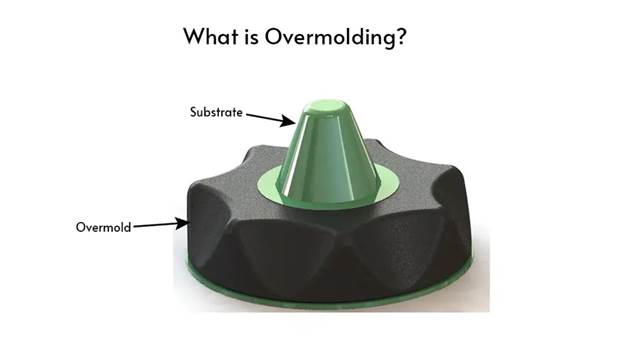
El sobremoldeo es la fabricación de un producto mediante la unión de dos o más materiales en un solo producto. Se aplica en la mayoría de industrias, como la electrónica, equipos médicos, automoción y productos de consumo. Se realiza moldeando sobre un material base conocido como sobremolde, sobre un material base conocido como sustrato.
El sobremoldeo se realiza para mejorar la estética, longevidad y funcionalidad de los productos. Permite a los fabricantes incorporar la potencia de un material con la flexibilidad o suavidad del otro. Esto hace que los productos sean más cómodos, fáciles de tratar y duraderos.
El sobremoldeo aparece en artículos que utilizamos a diario. Se ha aplicado a mangos de cepillos de dientes y fundas de teléfono, así como a herramientas eléctricas e instrumentos quirúrgicos, entre otros artículos de la fabricación contemporánea. Conocer el sobremoldeo le permitirá comprobar lo cómodos y seguros que son los objetos de la vida cotidiana.
¿Qué es el sobremoldeo?
Sobremoldeado es un procedimiento mediante el cual se forma un producto a partir de dos materiales. El material inicial se conoce como sustrato y suele ser un plástico duro como ABS, PC o PP. Tiene una resistencia a la tracción de 30-50 Mpa y una temperatura de fusión de 200- 250 °C. El otro material, que es el sobremolde, es blando, por ejemplo, TPE o silicona, con una dureza Shore A de 40-80.

El sustrato se deja enfriar hasta 50-70 °C. La presión inyectada en el sobremolde es de 50-120Mpa. Así se forma una unión fuerte. El sobremoldeo mejora la capacidad de sujeción, la resistencia y la durabilidad de los productos.
Uno de estos objetos típicos es un cepillo de dientes. El mango es de plástico duro para garantizar su resistencia. El mango es de goma blanda, por lo que resulta cómodo de sujetar. Esta aplicación básica demuestra los usos reales del sobremoldeo.
El sobremoldeo no se aplica sólo a las empuñaduras blandas. También se aplica para recubrir productos electrónicos, dar a un objeto una decoración colorida y prolongar la vida útil de un producto. Esta flexibilidad le permite ser uno de los métodos de fabricación más aplicables en la actualidad.
Proceso completo
Selección de materiales
El procedimiento de sobremoldeo comienza con la elección de los materiales. El sustrato suele ser un plástico duro como ABS, PC o PP. Tienen una resistencia a la tracción de 30-50 Mpa y un punto de fusión de 200- 250 °C. El material moldeado suele ser blando, como el TPE o la silicona, y tiene una dureza Shore A de 40-80. Es necesario seleccionar los materiales que sean compatibles. Si el producto final no resiste la tensión, puede deberse a un fallo en la unión de los materiales.
Moldeo de sustratos
El sustrato se vierte en el molde a una presión de 40-80 Mpa tras calentarlo a 220-250 °C. Una vez inyectado, se deja solidificar a 50-70 °C para hacerlo dimensionalmente estable. El tiempo empleado en este proceso suele ser de 30-60 segundos en relación con el tamaño y el grosor de la pieza. Las tolerancias son extremadamente altas, y la desviación no suele ser superior a +-0,05 mm. La desviación afectará al producto en lo que respecta al ajuste del sobremoldeado y a la calidad del producto.
Preparación del molde a sobremoldear
Tras el enfriamiento, el sustrato se transfiere cuidadosamente a un segundo molde, durante el cual se realiza la inyección del sobremoldeado. El molde se precalienta a 60-80 °C. El precalentamiento elimina el efecto del choque térmico y también permite que el material del sobremolde fluya suavemente sobre el sustrato. La preparación del molde es necesaria para evitar la formación de huecos, alabeos o uniones deficientes en el producto final.
Inyección sobremoldeada
La presión se inyecta en el sustrato utilizando entre 50 y 120 Mpa del material de sobremoldeo. La temperatura de la inyección depende del material: TPE 200-230 °C, silicona 180-210 °C. Este paso debe ser preciso. Una temperatura o presión inadecuadas pueden provocar defectos de burbujas, separación o cobertura insuficiente.
Enfriamiento y solidificación
Tras la inyección, la pieza se enfría para permitir la solidificación del sobremoldeado y su fuerte unión al sustrato. El tiempo de enfriamiento oscila entre 30 y 90 segundos en función del grosor de las piezas. Las regiones delgadas se enfrían más rápidamente, mientras que las más gruesas tardan más en enfriarse. Es necesario un enfriamiento adecuado para garantizar una unión uniforme y minimizar las tensiones internas que pueden causar grietas o deformaciones.
Expulsión y acabado
Una vez enfriada, la pieza sale del molde. Se eliminan los sobrantes. Se comprueba el acabado superficial y la precisión dimensional de la pieza. Así se garantiza que el producto tenga la calidad requerida y sea compatible con las demás piezas en caso de necesidad.
Pruebas e inspección
El último paso son las pruebas. Tipos de pruebas: Las pruebas de tracción o pelado determinan la resistencia de la unión, que suele ser de 1-5 MPa. Las pruebas Shore A se utilizan para comprobar la dureza del sobremolde. Los defectos, como burbujas, grietas o desalineación, pueden detectarse visualmente. Sólo los componentes sometidos a pruebas se envían o se unen para formar productos acabados.
Tipos de sobremoldeo
Moldeo de dos disparos
El moldeo en dos tiempos implica que una máquina moldea dos materiales. El moldeo se realiza a una temperatura de 220-250 °C y una presión de 40-80 MPa, seguido de la inyección del segundo material, que se realiza a 50-120 MPa. La técnica es rápida y precisa y resulta adecuada cuando se trata de un gran número de productos, como empuñaduras de goma y botones suaves al tacto.
Moldeo por inserción
Durante el moldeo por inserción, el sustrato ya está preparado y se inserta en el molde. Se cubre con un sobremolde, ya sea de TPE o silicona, que se inyecta a 50-120 MPa. La fuerza de adherencia suele ser de 1-5 MPa. Este método es típico de las herramientas, los cepillos de dientes y los dispositivos sanitarios.
Sobremoldeo multimaterial
El sobremoldeo multimaterial es un sobremoldeo en el que hay más de 2 materiales en una sola pieza. La duración de la inyección de cada material es en secuencia 200-250 °C, 50-120 MPa. Permite estructuras complicadas con secciones duras, delicadas y cubrientes.
El sobremoldeo se ha utilizado en aplicaciones
Las aplicaciones del sobremoldeo son muy diversas. Los ejemplos típicos son los siguientes:
Electrónica
Las fundas de los teléfonos suelen ser de plástico duro con bordes de goma blanda. Los botones de los mandos a distancia son de goma, ya que proporcionan un mejor tacto. Los componentes electrónicos se protegen con sobremoldeado, y se mejora la usabilidad.
Productos sanitarios
Los precintos protectores, el instrumental quirúrgico y las jeringuillas suelen estar sobremoldeados. Los productos blandos facilitan la manipulación de los dispositivos y también los hacen más seguros. Esto es esencial en las aplicaciones médicas, donde la comodidad y la precisión son importantes.
Industria del automóvil
El sobremoldeo se utiliza para fabricar botones de tacto suave, empuñaduras y juntas utilizadas en el interior de los automóviles. Las juntas de goma se utilizan para impedir que entre agua o polvo en las piezas. Esto aumenta la comodidad y la durabilidad.
Productos de consumo
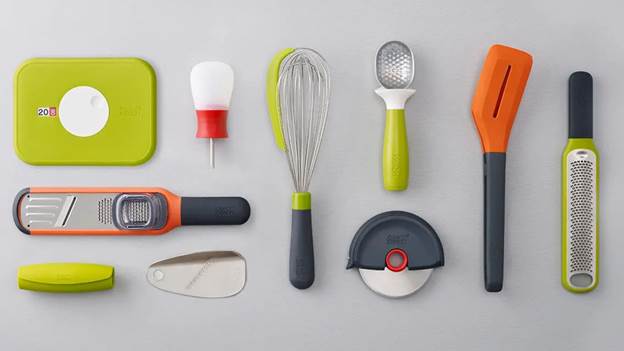
El sobremoldeo se utiliza habitualmente en mangos de cepillos de dientes, utensilios de cocina, herramientas eléctricas y equipamiento deportivo. El proceso se utiliza para añadir agarre, proteger superficies y añadir diseño.
Herramientas industriales
El sobremoldeado se utiliza en herramientas como destornilladores, martillos y alicates, con mangos blandos. Esto limita la fatiga de las manos y aumenta la seguridad de uso.
Embalaje
El sobremoldeado de alguna parte del envase (por ejemplo, las tapas de las botellas o los precintos de seguridad) se utiliza para mejorar la manipulación y la funcionalidad.
El sobremoldeo permite al fabricante fabricar productos funcionales, seguros y atractivos.
Ventajas del sobremoldeo
El sobremoldeo tiene numerosas ventajas.
Agarre y comodidad mejorados
El uso de materiales blandos facilita la manipulación de los productos. Esto se aplica a herramientas, productos domésticos y dispositivos médicos.
Mayor durabilidad
La unión de varios materiales aumenta la resistencia de los productos. Los materiales duros y blandos garantizan la seguridad del producto.
Mejor protección
Mediante el sobremoldeo pueden añadirse cubiertas o juntas de componentes electrónicos, maquinaria o instrumentos delicados.
Diseño atractivo
Los productos se diseñan en varios colores y texturas. Esto realza la imagen y la marca.
Ergonomía
Las empuñaduras blandas minimizan la fatiga de la mano y hacen que sea más cómodo trabajar con objetos o dispositivos durante más tiempo.
Versatilidad
El sobremoldeo utiliza una gran variedad de materiales y permite crear formas complejas. Esto permite a los fabricantes crear productos innovadores.
Retos del sobremoldeo
El sobremoldeo también plantea algunos retos que los fabricantes deben tener en cuenta:
Compatibilidad de materiales
No todos los materiales se adhieren bien. Es posible que algunas combinaciones deban adherirse o revestirse.
Mayor coste
Dado que implica materiales, moldes y fases de producción adicionales, el sobremoldeo puede elevar los costes de producción.
Proceso complejo
El diseño del molde, la presión y la temperatura deben regularse estrictamente. El más mínimo error puede provocar defectos.
Tiempo de producción
Moldeo El moldeo en dos fases puede requerir más tiempo que el moldeo en un solo material. Sin embargo, las nuevas tecnologías, como el moldeo en dos fases, pueden reducir este tiempo.
Limitaciones de diseño
Las formas complejas pueden requerir moldes a medida, y su fabricación puede resultar costosa.
No obstante, estas cuestiones desalentadoras no han frenado el sobremoldeo, ya que mejora la calidad de los productos y su rendimiento.
Principios de diseño del sobremoldeo
El sobremoldeo es un diseño en el que la base está hecha de un material y el molde, de otro distinto.
Compatibilidad de materiales
Seleccione los materiales que se van a unir. El sobremolde y el sustrato deben ser compatibles entre sí en cuanto a sus características químicas y térmicas. Los materiales similares que tienen puntos de fusión cercanos minimizan las posibilidades de una unión débil o delaminación.
Espesor de pared
Mantenga constante el grosor de la pared para que haya uniformidad en el flujo del material. La falta de uniformidad de las paredes puede provocar fallos como marcas de hundimiento, huecos o alabeos. Las paredes suelen tener entre 1,2 y 3,0 mm de diversos materiales.
Ángulos de calado
Estampe ángulos en superficies verticales para facilitar la expulsión. Un ángulo de 1 a 3 grados ayuda a evitar daños en el sustrato o el sobremoldeado durante el desmoldeo.
Esquinas redondeadas
Evite las esquinas afiladas. Los bordes redondeados favorecen el flujo de materiales durante la inyección y disminuyen la concentración de tensiones. Los radios de las esquinas recomendados son de 0,5-2 mm.
Características de adhesión
Se hacen hoyos o ranuras, o estructuras entrelazadas para aumentar la unión mecánica entre el sustrato y el sobremoldeado. Estas características añaden resistencia al pelado y al cizallamiento.
Ventilación y colocación de compuertas
Instalar respiraderos que permitan la salida de aire y gases. Coloque las compuertas de inyección en lugares distintos de las zonas sensibles para conseguir un flujo homogéneo que evite fallos estéticos.
Consideración de la contracción
Hay que tener en cuenta la variación de la contracción de los materiales. La contracción de los termoplásticos puede ser tan pequeña como 0,4-1,2 o la de los elastómeros puede ser de 1-3%. Un diseño correcto evitará distorsiones y errores dimensionales.
Tabla de decisiones técnicas: ¿Es el sobremoldeo adecuado para su proyecto?
| Parámetro | Valores típicos | Por qué es importante |
| Material del sustrato | ABS, PC, PP, Nylon | Proporciona resistencia estructural |
| Resistencia del sustrato | 30-70 MPa | Determina la rigidez |
| Material del sobremoldeado | TPE, TPU, Silicona | Añade agarre y estanqueidad |
| Dureza del sobremoldeado | Orilla A 30-80 | Controla la flexibilidad |
| Temperatura de inyección | 180-260 °C | Garantiza una fusión adecuada |
| Presión de inyección | 50-120 MPa | Afecta a la adherencia y al relleno |
| Fuerza de adhesión | 1-6 MPa | Mide la adherencia de las capas |
| Espesor de pared | 1,2-3,0 mm | Previene los defectos |
| Tiempo de enfriamiento | 30-90 segundos | Impacto en la duración del ciclo |
| Tolerancia dimensional | ±0,05-0,10 mm | Garantiza la precisión |
| Índice de contracción | 0,4-3,0 % | Evita la deformación |
| Coste de utillaje | $15k-80k | Mayor inversión inicial |
| Volumen ideal | >50.000 unidades | Mejora la rentabilidad |
Piezas fabricadas por sobremoldeo
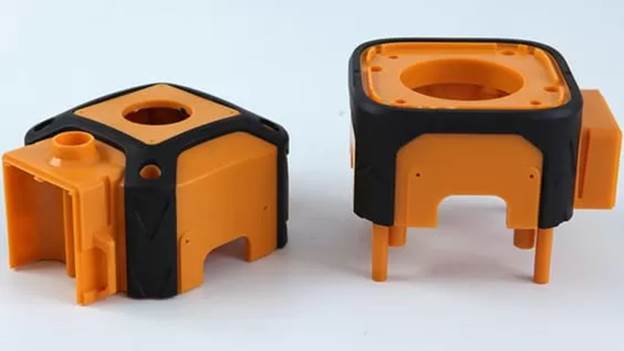
Mangos de herramientas
El sobremoldeado se utiliza para crear un núcleo duro y una empuñadura de goma blanda en muchas herramientas manuales. Esto aumenta la comodidad y minimiza la fatiga del uso de la mano y ofrece un mayor control del uso.
Productos de consumo
Los productos más comunes, como cepillos de dientes, utensilios de cocina y herramientas que requieren electricidad, suelen utilizar sobremoldeo. Las empuñaduras o almohadillas blandas ayudan a mejorar la ergonomía y la vida útil.
Electrónica
En la carcasa del teléfono, el mando a distancia y las carcasas protectoras son aplicaciones habituales del sobremoldeo. También proporciona absorción de impactos, aislamiento y una superficie suave al tacto.
Componentes de automoción
Los botones, juntas, retenes y empuñaduras sobremoldeados son un elemento habitual en el interior de los coches. Los sistemas de tacto suave mejoran el confort, el ruido y las vibraciones.
Productos sanitarios
El sobremoldeo se utiliza en dispositivos médicos como jeringuillas, instrumentos quirúrgicos, objetos de mano y similares. El proceso garantiza una seguridad, precisión y firmeza absolutas.
Materias primas en sobremoldeo
La selección del material es importante. Los sustratos más comunes son:
Plásticos duros como el polipropileno (PP), el policarbonato (PC) y el ABS.
Metales en campos de aplicación
Los materiales del sobremoldeado suelen ser:
- Plásticos blandos
- Goma
- Elastómeros termoplásticos de nailon (TPE)
- Silicona
La elección del material se basa en el uso del producto. Por ejemplo, los aparatos médicos necesitan materiales biocompatibles. La electrónica requiere materiales aislantes y protectores.
Buenas prácticas en el diseño de piezas sobremoldeadas
El diseño de las piezas que se van a sobremoldear debe estar bien estudiado para conseguir altos niveles de unión, un aspecto atractivo y un rendimiento de calidad. El cumplimiento de las directrices de diseño establecidas contribuye a minimizar la tasa de error y a que la calidad de los productos sea uniforme.
Seleccionar materiales compatibles
El sobremoldeo depende de la elección del material. El sobremoldeado y el material subyacente tienen que tener una buena unión. Las materias primas que se funden a velocidades similares y tienen las mismas propiedades químicas tienen uniones más potentes y fiables.
Diseño para una unión fuerte
Hay que favorecer una buena unión mecánica entre el diseño de la pieza y el propio diseño. Los rebajes, las ranuras y las formas entrelazadas son algunas de las características que permiten que el material sobremoldeado sujete firmemente la pieza base. Esto minimiza las posibilidades de separación durante el uso.
Mantener el grosor de la pared en la forma correcta
Un espesor uniforme en las paredes permite el flujo de materiales en el proceso de moldeo. La falta de uniformidad en el grosor puede provocar marcas de hundimiento, huecos o secciones débiles en el componente. Un diseño simétrico mejora tanto la resistencia como el aspecto.
Utilice ángulos de calado adecuados
Los ángulos de desmoldeo simplifican el proceso de extracción de la pieza del molde. La fricción y los daños pueden minimizarse en la expulsión mediante un ángulo de desmoldeo adecuado, lo que resulta especialmente útil en piezas sobremoldeadas complejas.
Evite las esquinas afiladas
Los bordes agudos pueden provocar puntos de tensión y limitar la fluidez del material. Los bordes redondeados y los resultados fluidos mejoran la resistencia y hacen que el compuesto sobremoldeado fluya uniformemente alrededor del componente.
Incluye características de ventilación
Durante la inyección, una buena ventilación permite la salida del aire y los gases atrapados. Unas buenas ventilaciones permiten evitar bolsas de aire y defectos superficiales, así como llenar el molde hasta la mitad.
Planificar el posicionamiento del material sobremoldeado
Los puntos de inyección no deben situarse cerca de características y bordes importantes. Esto elimina la acumulación de materiales, la ruptura del flujo y los defectos estéticos en las partes expuestas.
Optimizar el diseño de herramientas
El éxito del sobremoldeo requiere moldes bien diseñados. La colocación adecuada de la compuerta, unas guías equilibradas y unos canales de refrigeración eficaces contribuyen a garantizar un flujo uniforme y una producción estable.
Tenga en cuenta la contracción del material
Las distintas sustancias tienen diferentes velocidades de enfriamiento. Los diseñadores deben tener en cuenta estas diferencias para que no se observen alabeos, desalineaciones ni problemas dimensionales en la pieza final.
¿Cuáles son algunos de los materiales utilizados para sobremoldear?
El sobremoldeo ofrece a los fabricantes la posibilidad de mezclar materiales distintos para conseguir determinadas características mecánicas, operativas y estéticas. La elección del material viene determinada por su solidez, flexibilidad, comodidad y resistencia medioambiental.
Termoplástico, no Termoplástico.
Es una de las combinaciones de sobremoldeo más extendidas. El material de base es un polímero termoplástico, que es un policarbonato (PC). A continuación, se recubre con un termoplástico más blando, como el TPU. Este compuesto mejora el agarre, la comodidad y el tacto de la superficie, sin sacrificar la resistencia estructural.
Termoplástico sobre metal
Esta técnica utiliza un material termoplástico que se moldea sobre una pieza metálica. Metales como el acero o el aluminio suelen recubrirse con plásticos como el polipropileno (PP). De este modo se evita la corrosión del metal, se reducen las vibraciones y el ruido durante el uso.
TPE sobre elastómero.
Este sistema emplea un sustrato de plástico duro reciclado como el ABS con la adición de un elastómero flexible en la parte superior. Normalmente se aplica en productos que requieren durabilidad y flexibilidad, como mangos de herramientas y equipos médicos.
Silicona sobre plástico
La silicona también se sobremoldea sobre materiales plásticos como el policarbonato. Ofrece un alto nivel de resistencia al agua, capacidad de sellado y baja sensación táctil. Se suele aplicar en dispositivos médicos y electrónicos.
TPE sobre TPE
También puede realizarse el sobremoldeo de diferentes grados de elastómeros termoplásticos. Esto permite a los fabricantes fabricar productos con diferentes texturas, colores o áreas funcionales en una misma pieza.
¿Es el sobremoldeado la elección correcta?
Cuando su producto requiere resistencia, comodidad y durabilidad al mismo tiempo, sobremoldeo es la decisión adecuada. Es especialmente adecuado cuando se utiliza con componentes que necesitan un tacto suave, resistencia a los impactos o protección adicional sin añadir más procesos de montaje. El sobremoldeo puede utilizarse en productos que se tocan con frecuencia, como herramientas, equipos médicos o incluso cajas electrónicas.

Sin embargo, el sobremoldeo no se aplica a todos los proyectos. Normalmente se asocia a mayores gastos de utillaje y a un diseño intrincado del patrón del molde, a diferencia del moldeo de un solo material. Cuando las cantidades de producción son pequeñas o el diseño del producto es básico, los procesos de moldeo tradicionales pueden resultar menos costosos.
Evaluar la compatibilidad de los materiales, el volumen de producción, los requisitos de funcionalidad y el presupuesto con consideración en la fase inicial de diseño ayudará a decidir si una solución de sobremoldeo es la más eficaz para abordar su proyecto.
Ejemplos de sobremoldeado en la vida real
Cepillos de dientes
El mango es de plástico duro. La empuñadura es de goma blanda. Esto facilita la tarea de limpieza de los dientes.
Fundas de teléfono
El dispositivo está recubierto de plástico duro. Los bordes de goma blanda absorben los golpes de las caídas.
Herramientas eléctricas
La goma está sobremoldeada en los mangos para minimizar las vibraciones y aumentar la seguridad.
Interiores de automóviles
Los mandos y botones de control suelen ser suaves al tacto, lo que mejora la experiencia del usuario.
Los siguientes ejemplos demuestran la mejora de la usabilidad, la seguridad y el diseño del sobremoldeo.
Sincere Tech - Su socio Hi-Fi en cualquier tipo de moldeo
Sincere Tech es un socio de fabricación de confianza que se ocupa de todas las formas de moldeo, como el moldeo por inyección de plástico y el sobremoldeo. Ayudamos a los clientes desde el diseño hasta la producción en serie de productos con precisión y eficacia. Con alta tecnología e ingeniería competente, proporcionamos piezas de alta calidad en los mercados de automoción, médico, electrónico y de consumo. Visite Plas.co para conocer lo que somos capaces de hacer y ofrecer.
Conclusión
El sobremoldeo es una técnica de fabricación flexible y útil. Es un proceso que consiste en combinar dos o más materiales para hacer productos más resistentes, seguros y cómodos. Se aplica ampliamente en electrónica, dispositivos médicos, componentes de automoción, electrodomésticos y herramientas industriales.
Esto se consigue mediante una cuidadosa elección del material, una forma precisa de los moldes y asegurándose de que la temperatura y la presión se mantienen bajo control. El sobremoldeo tiene ventajas considerables, aunque se enfrenta a algunos retos, como el aumento del coste y del tiempo de producción.
Los productos sobremoldeados son más duraderos, ergonómicos, atractivos a la vista y funcionales. Uno de los ámbitos en los que el sobremoldeo se ha convertido en un componente inseparable de la fabricación moderna es el de los productos cotidianos, como cepillos de dientes y fundas de teléfono, hasta artículos más serios, como equipos médicos e interiores de automóviles.
Al conocer el sobremoldeo, podemos sentirnos agradecidos por el hecho de que se deba a decisiones sencillas en el diseño que ayudan a que los productos sean más cómodos de usar y más duraderos. Un proceso tan pequeño pero tan significativo contribuye a mejorar la calidad y la funcionalidad de los bienes que utilizamos en nuestra vida cotidiana.


