
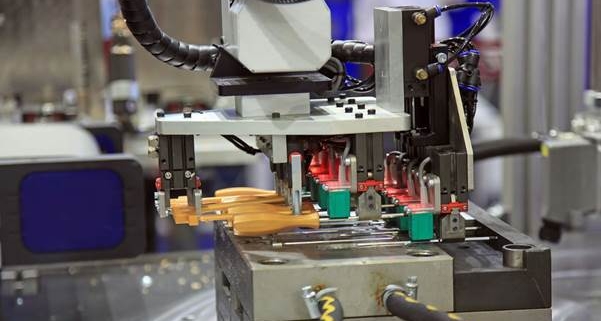
Sprøytestøping av termoplast er et slikt materiale som har fortsatt å være populært i verdens produksjonsindustri på grunn av den økte etterspørselen etter lette materialer av høy kvalitet. Effektivitet, nøyaktighet og kostnadseffektivitet er noen av suksessfaktorene i dagens raske produksjonsverden. En av de vanligste prosessene som oppfyller alle disse kravene, er sprøytestøping av termoplast. Det er en produksjonsprosess på høyt nivå, siden den gjør det mulig for bedriftene å lage plastkomponenter av ønsket kvalitet på en konsekvent og nøyaktig måte.
Prosessen brukes i andre virksomheter innen blant annet forbruksvaresektoren og bilindustrien. Bedriftene vil være i stand til å ta bedre produksjonsbeslutninger fordi de vet hvordan prosessen fungerer og hvilke fordeler den gir.
Hva er termoplastisk sprøytestøping?
Sprøytestøping av termoplast eller sprøytestøping er en produksjonsprosess som innebærer at en termoplast i smelteform presses inn i en form og deretter støpes til ønsket form. Når formen er avkjølt og fast, blir sluttproduktet avstøpt med kraft.
Det er også svært effektivt når det gjelder masseproduksjon. Det gjør det mulig for produsentene å komme opp med detaljerte design som er veldig nøyaktige. Sprøytestøping av termoplast er også en god produksjonsmetode i storskalaproduksjon på grunn av at formene kan gjenbrukes.
Termoplast er materialer som kan smeltes og støpes om og om igjen uten at egenskapene forringes. Dette gjør dem svært allsidige og gjør at de kan tilpasses andre bruksområder.
Produksjonsprosess for sprøytestøping av termoplast
1. Valg av materiale
Det første trinnet i prosessen med sprøytestøping av termoplast er å velge riktig materiale, f.eks. polypropylen, ABS, polykarbonat, vanligvis termoplastiske pellets. Slike materialer velges avhengig av egenskaper som styrke, plast, varmebestandighet og pris. Den sprøytestøpte termoplasten er det riktige materialet som gir optimal funksjonalitet og styrke til delen.
2. Smelting av termoplasten
Dette innebærer smelting av termoplasten for å oppnå ønsket form og volum for å fylle støpemaskinen. Smelting av termoplasten: Termoplasten smeltes til ønsket form og volum og helles i støpemaskinen.
I en varm tønne av sprøytestøpemaskinen settes de rå plastpelletsene. Smelten av pellets i fatet er homogen og tyktflytende. Temperaturen på dette stadiet er veldig relevant slik at nedbrytning og jevn drift av støpeprosessen kan sikres.
Støpeformen brukes til å lansere det nye produktet på markedet.
3. Injeksjon i støpeformen
Når termoplasten er eksponert for riktig temperatur, presses den inn i et formhulrom av ønsket størrelse. Formen bestemmer detaljens form og beskaffenhet. Porter, åpninger og kanaler konstrueres på riktig måte, slik at det smeltede materialet strømmer jevnt inn i formen og minimerer defekter. Dette er en av de nødvendige operasjonene ved injisering av termoplast.
4. Frysing og gjenfrysing
Når plasten er i formen, smelter den og stivner. Tiden som kreves i avkjølingsprosessen, bestemmes av materialet, tykkelsen på veggene og komponentens kompleksitet. Avkjølingen må være jevn slik at det ikke oppstår skjevheter, synker eller krymper.
5. Formåpning og utstøting av deler
Deretter størkner delen, formen åpnes, og det ferdige produktet støpes ut. Dette gjentas deretter gjennom kontinuerlig produksjon. De moderne maskinene er automatiserte, og de har datastyringer som sikrer at den samme delen brukes i de forskjellige seriene, noe som gir samme del av høy kvalitet.
6. Bearbeiding og etterbehandling
Selv termoplastkomponenter som er sprøytestøpt, kan trenge ytterligere etterbehandling, f.eks. trimming, lakkering eller montering. Dette er prosesser som gjør at delen blir funksjonelt og estetisk akseptabel.
7. Kvalitetskontroll
Kvalitetskontrollen utføres av produsentene i prosessen for å bli kjent med dimensjoner, toleranser og materialintegritet. Kvalitetsvedlikehold har resultert i termoplastisk sprøytestøping som lager pålitelige og sterke deler til andre bransjer.
Typer sprøytestøpte termoplastiske materialer
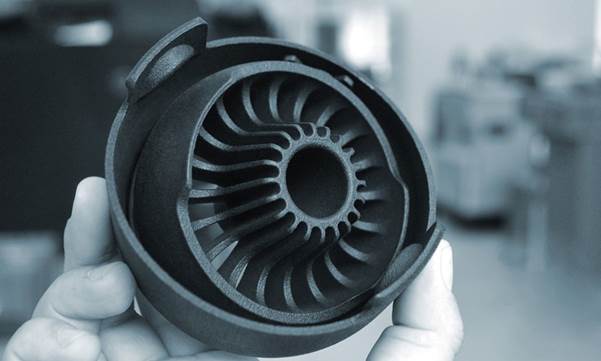
Det finnes mange forskjellige typer sprøytestøpte termoplastmaterialer. De ulike typene har særegenheter som gjør dem egnet til ulike bruksområder.
Materialer av noen av skjemaene er:
- Polypropylen (PP): Det er lett og ikke-kjemisk.
- Polyetylen (PE): Mykt og slitesterkt.
- Akrylnitril-butadienstyren (ABS): Slagfast og sterk.
- Polycarbonate (PC): Heat resistant and transparent.
- Nylon (PA): Strong, tough and hard.
The selection of the thermoplastic injection molded material plays a critical role in the determination of the preferred performance and life of the end product.
Fordeler med sprøytestøping av termoplast
Thermoplastic injection molding is advantageous in production in several ways:
- High efficiency: First in the mass production.
- Precision: Development of advanced and advanced designs.
- Kostnadseffektivt: Will decrease material wastes.
- Reusability: The materials could be reused and recycled.
- Diversity: It can be applied in other industries.
Such advantages render thermoplastic injection molding as an option worth consideration by those firms that would want to enhance the efficiency of the production.
Sprøytestøping av herdeplast vs. termoplast
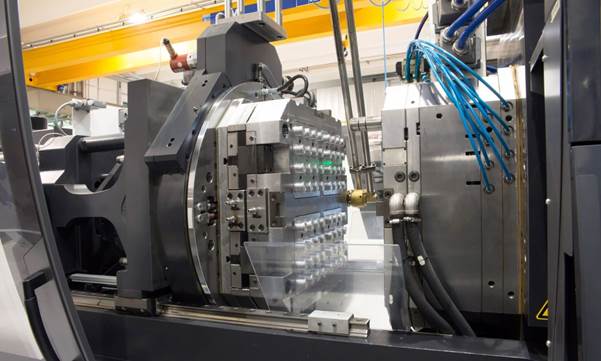
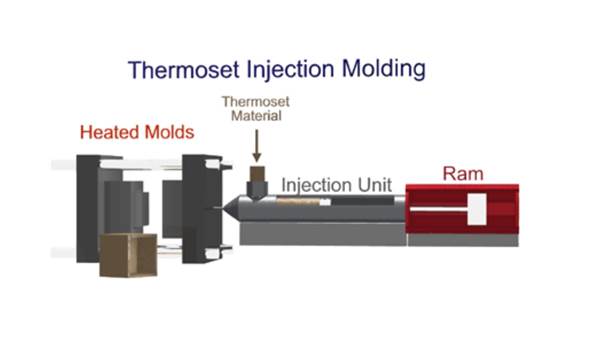
The difference between thermoset and thermoplastic injection molding needs to be considered in the event that someone is making the correct decision regarding the process. Thermoplastics may be recycled and molten and remodeled at other times therefore making it flexible. Thermoset plastics, on the other hand, do not melt in the curing process and change chemically.
Comparatively, thermoset and thermoplastic injection molding are not easy to handle in comparison to thermoplastics. Thermosets are however, more resistant to heat and their structural stability is greater. The choice of either the thermoset or the thermoplastic injection molding would depend on the application.
Bruksområder på tvers av bransjer
The thermoplastics injection molding process is flexible and efficient and thus it can find application in most industries.
- Auto parts: auto interior components, bumpers and dashboard.
- Medical: Surgical equipment, syringes and medical equipment.
- Elektronikk: Housing, connections and insulations.
- Forbruksvarer: Household and toys.
The thermoplastic injection molding is now a mandatory practice in the current production due to the ability to create lightweight and strong products.
Kvalitetskontroll i sprøytestøping
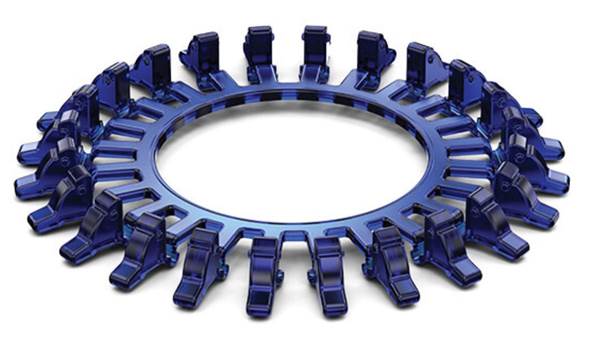
In any production, quality is an issue of concern. Injection molding thermoplastic follows the same idea of quality control which is aimed at making sure that each product is up to standard. The manufacturers have the sophisticated tools and test procedures to verify the dimensions, strength and durability. The quality control minimizes the defects and leaves the customers happy.
One of the highest benefits of injection molding thermoplastic is consistency and this is the reason why it can be used in the large-scale production.
Kostnadsfaktorer ved sprøytestøping av termoplast
The thermoplastic injection molding prices will vary depending on a sequence of aspects such as the nature of materials that should be employed, shape of the mold and the quantity of units that ought to be produced. The first mold fees are high when done in large volumes but made up by reduced cost of production. Cost saving may also be performed through lavish building and a correct choice of the materials.
Long-term saving and enhanced efficiency in production is one of the aspects that is shared in long-term businesses investing in injection molding of thermoplastics.
Miljøpåvirkning og bærekraft
Much emphasis is being laid on sustainability in the manufacturing industry. The concept of the thermoplastic injection molding stimulates the green operations because of the possibility of the recycling of the material and the decrease of the waste. Most of the thermoplastics are recyclable in several occasions hence lower pollution to the environment. This makes the process more sustainable as compared to the other manufacturing processes.
The companies that have implemented the application of the thermoplastic injection molding will be in a position to help in the creation of the greener future and be productive at the same time.
Vanlige feil i termoplastisk sprøytestøping og hvordan du unngår dem
This is an extremely efficient process that may defect when the production process is taking place. The injection molding is thermoplastic and is known to possess warping, sink marks, short shots and flash. When the part cools in another rate, it gets warped thus bends the part. Good cooling systems can be used to minimize this. The sink marks are tiny dots that are marked on the surface and are normally attributed to the inappropriate pressure or cooling time.
Short shots are done when the mold has not been filled completely as is common due to low injection pressure. But the excess pouring out of the cavity of the mold is flash. Such issues would be prevented by designing appropriate molds and machine configuration during injection molding of thermoplastics.
Betydningen av formdesign i sprøytestøping av termoplast
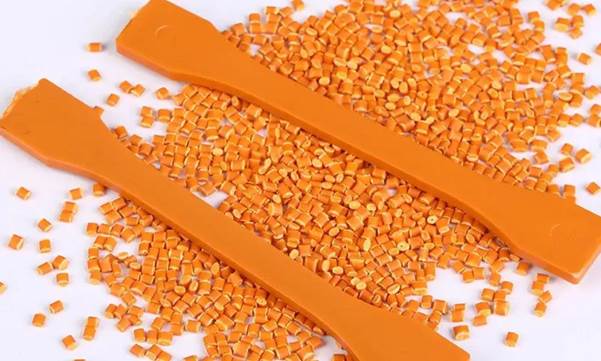
Designs of molds are very crucial in the success of injection molding thermoplastic. Good material flow, easy cooling, easy to eject the complete part, is given by a good mold.
The considerations of the design of the mold are the location of gates, cooling, and venting. The material can fill up the mold evenly creating minimal defects when the gates are appropriately placed. The cooling channels are applied to maintain the homogenous temperatures and this improves the product quality.
An injection molding thermoplastic has a high quality mold that does not only improve efficiency but also improves the length of production.
Betydningen av temperatur- og trykkregulering
Temperature and pressure are some of the most significant parameters involved in the process. When thermoplastics are injected, right temperature will ensure that the substance flows properly and it fills the mold completely. Unwanted heat can destroy the material. With low values, there is a probability of having defects due to the non-flowing of the material as expected. Similarly, sufficient pressure is required to ensure that the mold has a uniform fill.
These variables are closely controlled in order to improve product quality and reduce wastage during injection thermoplastic molding.
Fordeler med sprøytestøpt termoplast i produktdesign
The thermoplastic injected plastic is very beneficial in product design. Designers can also come up with complicated shapes, thin wall and detailed features that would have been difficult to accomplish by other means. The advantage of injection molded thermoplastic is the other benefit as there is a possibility of adding several parts in a single component. This saves time on assembling and increases products durability.
The design is adaptable; thus a company can become creative and can invent unique products that can be differentiated in the market.
Sammenligning av sprøytestøping av termoplast med andre plastprosesser
There are different processes of plastic manufacturing but thermoplastic through injection molding is efficient and accurate. The shape and detail control of injection molding is better than processes like blow molding and extrusion. It is most appropriate in the case of hard materials of complex profiles.
Despite the fact that injection molding thermoplastic may not be suitable to some of the usages, it becomes suitable in high volume production where the quality of the items used should be constant.
Globale produksjonstrender og Kinas rolle
Thermoplastic injection molding has seen China become one of the major nations of production of plastics. Many firms prefer outsourcing production because it is cost effective and efficient in production. The Chinese manufacturers are capable of offering the current machine, workforce, and the capacity to handle massive quantities of manufacturing. They also have good prices hence making them a good option to businesses all over the world.
Moreover, many businesses in China are compliant with the world quality standards, and it ensures the quality and reliability of results. That is why they create such a formidable presence in the global market because of such a combination of cheapness and quality.
Tilpassede løsninger for sprøytestøping av termoplast
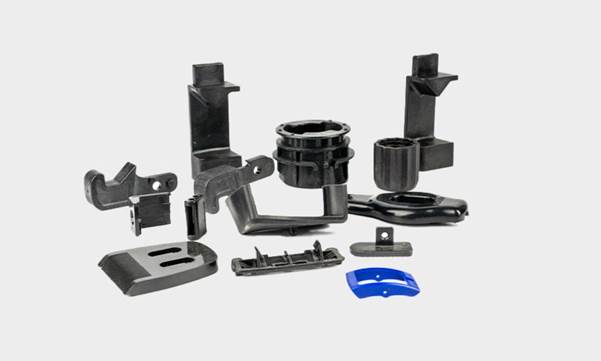
Customization is one of the biggest benefits of injection molding of thermoplastics. The manufacturers can come up with products that satisfy individual needs like the size, shape, color and material characteristics. Customized solutions are especially useful in those industries that have special requirements, e.g., aerospace and medical. This is ensured by the fact that it is produced with special components that ensure that they are superior in terms of performance and functionality.
The companies are able to liaise with the manufacturers in developing custom made designs which suit their specifications.
Vedlikehold og lang levetid for støpeformer
The long life of the molds which will be used in the injection molding of the thermoplastics is a major factor because of maintenance. The cleaning and the inspection are performed on a regular basis in order to avoid the damage and maintain the performance.
Wear and tear may also occur as time goes by due to repetition in the molds. This can be improved by doing a replacement of worn-out parts and routine services.
Maintained molds are known not only to improve the quality of products, but also to reduce the time of production.
Tips for å velge riktig materiale
The material used is critical in the process of defining the outcomes that would be achieved. Some factors must be taken into account in working with injection molded thermoplastic because they contain strength, flexibility, heat resistance and cost.
There are numerous advantages of the media. Using ABS as a case in point, ABS is said to be strong whereas polyethylene is valued to be flexible. These properties will be known and this knowledge will help in making the right choice.
You also get a chance of seeking the recommendation of professionals in order to decide on which injection molded thermoplastic to apply in your project.
Siste ord
The thermoplastic sprøytestøping is important in the modern manufacturing process due to its efficiency, precision, and versatility. The technology and materials are becoming more reliable and inexpensive with the increase in the process, which is making it more cost effective.
It is advantageous to business in industries not only on its flexibility of design but also on mass production. Firms can maximize this powerful manufacturing process through knowledge about the process, materials and best practices.
Vanlige spørsmål
1. Hva er sprøytestøping av termoplast?
Injection molding is a thermoplastic process of manufacturing where a form of plastic known as thermoplastic molten material is injected into a mold to make the perfect parts of the plastics. It is widely used in production of complex shapes and in high volume production.
2. Hva er termoplastiske sprøytestøpte komponenter materialer?
These materials include polypropylene (PP), ABS, polycarbonate (PC), polyethylene (PE) and nylon (PA). Each injected dose of thermoplastic material is determined depending on its strength, flexibility, heat resistance and requirement of usage.
3. Hva er forskjellen mellom sprøytestøping av termoplast og andre prosesser?
Thermoplastic injection molding creates shapes of an exact, detailed, and repeatable nature, which cannot be achieved with extrusion and blow molding. It is applied effectively in the production of solid components of complicated geometry and it is quite efficient in large scale production.
4. Hva er forskjellen mellom herdeplast og termoplast ved sprøytestøping?
Through thermoset/ thermoplastic injection molding, thermoplastics are capable of being melted and remodeled several times, whilst thermosets are unable to melt and are subject to chemical curing. Thermoplastics are easier and can be recycled, whereas thermosets are more resistant to heat and chemicals.
5. Hva skal jeg gjøre for å unngå feil ved sprøytestøping av termoplast?
Warping, sink marks and flash are the defects that are normally experienced. Their defects are reduced through the proper design of the mold, the control of temperature and pressure, and the use of high-quality thermoplastic material of high quality, which results in the production that is consistent and reliable.


