
Прототипное литье под давлением: Полное руководство по разработке современных изделий
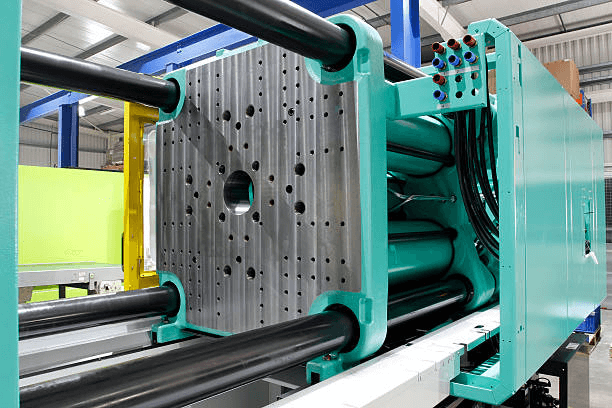
Today’s manufacturing environment is more competitive and companies require faster manufacturing, lower manufacturing cost and better product quality. One of the best approaches that have been used to achieve these goals is prototype injection molding. This process is used for manufacturers to produce sample products before entering into full-scale production. It enables businesses to conduct product design testing, refine the functionality and eliminate costly production errors.
Manufacturing has undergone significant transformation in the past couple of decades. Businesses are now expected to introduce products on to the market in a timely manner, but with a high quality. They also want reliable and long-lasting products. As a result of this, manufacturers have taken serious measures to ensure that they maintain their competitive edge in the industry through the use of advanced production methods. prototype injection molding is a very important process that helps modern manufacturing.
Companies typically start with a design concept when they are creating a new product. The product needs to be thoroughly tested before it enters production. This is where injection mold prototype solutions come in handy. A prototype helps manufacturers to see if the product functions correctly, looks good and fulfills customer expectations.
This injection molding prototype techniques are a useful approach for many industries to enhance product development. The automotive, medical, electronics, packaging, aerospace and consumer goods industries are included. Companies can find design issues early and fix them for cheaper, without having to pay for costly corrections later, by using prototypes.
In the creation of a new business product, the use of injection molded prototypes is a necessity to shorten the development time for businesses around the world. Companies don’t have to wait for months to make improvements to their product ideas when they can quickly assess them. This reduces the time and costs.
This article covers the concept of prototype injection molding in a simple and easy to understand manner. You will be taught about the process, benefits, materials, applications, challenges, design considerations, costs and future trends.
Understanding Prototype Injection Molding
Prototype injection molding is a manufacturing method for plastic prototypes to be used for production before the scale production. It enables companies to evaluate the design, functionality and quality of a product, before it goes into production. It is a widely used method due to its speed, reliability and cost-effectiveness.
This involves using a specially-made mold into which molten plastic is poured to create a particular form. Production molds are typically more complex and expensive than the mold used for the prototypes. A part of the plastic is removed after it cools and hardens and examined for accuracy and performance.
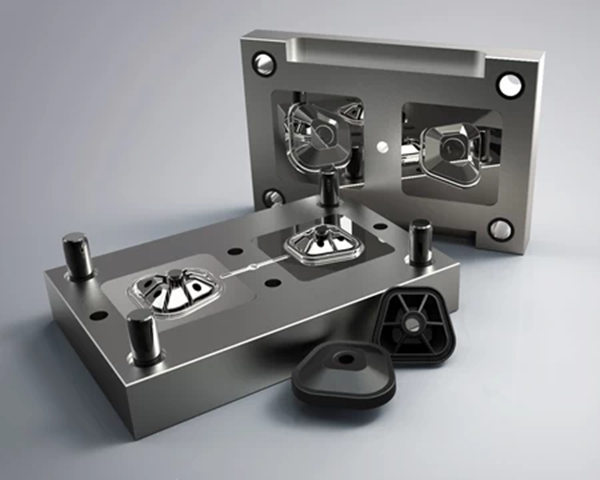
Prototype injection molded products offer manufacturers the opportunity to uncover design issues before it is time for mass production. When there is any problem, it can be rectified quickly without wasting considerable money or materials. This enhances product quality, and decreases the risk in production.
The other significant advantage is quick product development. They can create a sample in a few days and present it to clients, engineers or investors for approval. Various materials may also be tried to select the most durable and strong material.
In conclusion, prototype injection molding is a vital process in the modern manufacturing industry that empowers companies to develop superior products while minimizing time and expenses.
The Prototype Injection Molding Process Steps
Several steps are important in the process of prototype injection molding. Every step is important in the process of producing accurate, functional prototype parts.
Дизайн продукта
The first step in developing the injection mold prototype is to make a product design. The computer-aided design (CAD) software is used by engineers to design a detailed 3-D model of the part. Dimensions, wall thickness, surface details and functional features are included in the design.
The success of the injection molding prototype production is enhanced by a well-designed model. The engineer needs to make sure the design will allow for the smooth flow of material and easy mold release.
Mold Creation
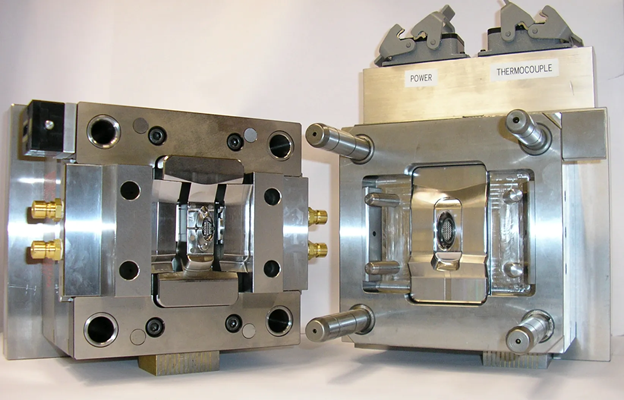
Once the design is finished, the manufacturers will make a mold for prototype plastic injection molding. Aluminum is generally the material used for prototype molds as it is easier and quicker to machine.
The mould is a shape that has a cavity similar to the desired product. In the process of injection molded prototypes production, the liquid plastic is injected into this cavity to make the part.
Выбор материала
Selecting an appropriate plastic material is a critical factor of prototype injection molding. Various plastics offer various characteristics, including flexibility, strength, heat resistance and transparency.
During the injection mold prototype production, the manufacturers will test several materials to choose the most suitable one for the final production.
Injection Process
In the injection molding prototype manufacturing, the plastic pellets are heated and melted. The molten plastic material is then injected into the mold cavity at a high pressure.
By doing this, prototype plastic injection molding can be used to produce highly detailed and precise parts. The molten plastic fills all the corners of the mold.
Cooling Stage
The plastic then cools inside the mould following injection. A key aspect of developing robust and solid injection molded prototypes is cooling.
Cooling time is dependent upon material type, wall thickness, and mold design. Warping and shrinkage are avoided due to appropriate cooling.
Part Removal
After cooling, the mold is opened and the product is taken out. If more parts are required, the prototype injection molding process is then repeated.
Тестирование и оценка
Engineers pay extra close attention to the injection mold prototype after production. They verify size, look, strength and usability.
In the process of testing, the company can make improvements on the injection molding prototype before mass production. Design changes can be achieved early, therefore the manufacturing cost is minimized later.
The flexibility of prototype plastic injection molding is suitable for the rapid development of products. Businesses can rapidly and effectively test several design variants.
As ‘injection molded prototypes’ are very similar to the actual parts manufactured, the manufacturer will acquire significant insights into the behavior of their products in the real world.
Table 1: Mechanical Properties of Common Prototype Injection Molded Materials
| Материал | Прочность на разрыв (МПа) | Flexural Modulus (GPa) | Ударная прочность (кДж/м²) | Heat Deflection Temp (°C) | Плотность (г/см³) | Water Absorption (%) |
| ABS | 40-50 | 2.0–2.5 | 15-30 | 85–100 | 1.04 | 0.2-0.5 |
| PC | 60–75 | 2.2–2.6 | 60-90 | 125–140 | 1.20 | 0.15–0.35 |
| PP | 25–40 | 1.2–1.8 | 5–15 | 90-110 | 0.90 | <0.03 |
| Nylon 6 | 70–90 | 2.0–3.0 | 8–20 | 170–200 | 1.13 | 1.0-2.5 |
| PEEK | 90-100 | 3.5–4.5 | 20–35 | 280–315 | 1.30 | <0.1 |
The advantages of Prototype Injection Molding include
Companies may use prototype injection molding for any number of reasons when developing a product.
Faster Product Development
The injection mold prototype manufacturing process has a great speed. Sample products can be easily developed and tested before production takes place.
Quick testing facilitates rapid improvements of products by businesses. The processes injection molding prototype are therefore very useful in competitive industries.
Экономия средств
It can be a costly error to develop a product without testing. Prototype plastic injection molding is used to identify problems early on in the company.
Addressing design problems prior to mass production can save money. That is why injection molded prototypes is the most popular method used.
Better Product Quality
Prototyping helps to create a better product. The decision regarding strength, durability, fit, and appearance can be made during prototype injection molding.
There is a relationship between the quality of a product and the quality of testing done. Businesses that are employing injection mold prototype service will generally end up with better products.
Material Testing
Materials will have various reactions to the manufacturing process. In the case of plastic, manufacturers can test out various plastic materials through Injection molding prototype methods.
This versatility can be helpful when choosing the optimal material to ensure performance and durability in prototype plastic injection molding.
Accurate Results
The injection molded prototypes are very similar to end-of-production parts, unlike some quick manufacturing techniques.
The accuracy enables engineers to make informed design decisions in prototype injection molding.
Reduced Manufacturing Risks
Testing products early helps companies minimize production risks. Testing performed on the Injection mold prototype can find weak points and manufacturing problems.
In the industries where safety and reliability are the main concern, it is important to reduce risks.
Improved Communication
Physical prototypes have a positive effect on communication amongst engineers, manufacturers and customers. Injection molding prototype samples enable everyone to have a better understanding of the final product.
This is helpful for teamwork and customer acceptance due to the value of prototype plastic injection molding.
Faster Market Entry
The firms which use injection molded prototypes are able to launch products quicker. Having a quick turnaround in product development is essential for businesses to remain competitive.
Often prototype injection molding is able to give the company a significant edge in the market.
Materials used in Prototype Injection Molding
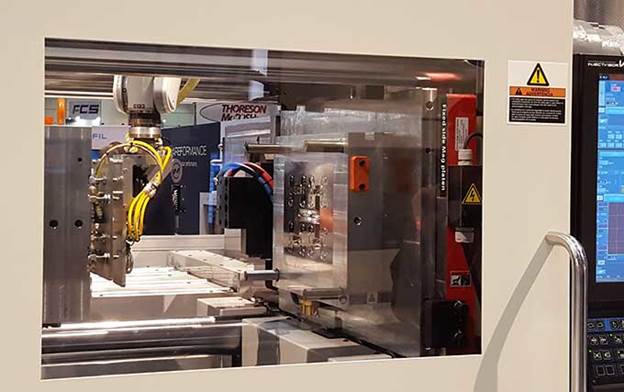
One of the key points in prototype injection molding is material selection. Various plastic materials have various properties.
АБС-пластик
Strong, tough and inexpensive, ABS is commonly used in the manufacturing of injection mold prototype.
It is widely used for automotive components, electronic enclosures and consumer goods.
Полипропилен
Another widely used material for the production of injection molding prototype is polypropylene. It is flexible, resistant to chemicals and lightweight.
Polypropylene is used in many packaging and household products.
Поликарбонат
Polycarbonate is a material with a very high impact resistance and transparency. This material is commonly employed in prototype plastic injection molding to make protective covers and medical products.
Нейлон
It is nylon which gives good resistance to wear and strength. Nylon is used in the manufacture of injection molded prototypes that are widely used in industry and in the automotive sector.
Полиэтилен
Polyethylene is flexible, long lasting, and water proof. Used in prototype injection molding often in the packaging sector.
Акрил
Acrylic is a material that has good transparency and weather resistance. It is employed in injection mold prototype use by manufacturers, where the appearance of the product is important.
TPU
A flexible plastic called TPU is used in the products that need elasticity and toughness, which are called injection molding prototype.
Custom Materials
There are certain companies that require specialized materials that are known as prototype plastic injection molding. The materials could be flaming retardant, UV resistant, or medical grade plastic.
Pre-production injection molded prototypes are tested to verify that the materials will meet the product requirements prior to production.
Table 2: Technical Processing Parameters for Prototype Injection Molding
| Тип материала | Температура плавления (°C) | Mold Temperature (°C) | Давление впрыска (МПа) | Cooling Time (sec) | Коэффициент усадки (%) | Typical Cycle Time (sec) |
| ABS | 220-260 | 40-80 | 70-120 | 15-30 | 0.4-0.7 | 25–60 |
| Полипропилен (PP) | 200–250 | 20-70 | 50–100 | 10–25 | 1.0-2.5 | 20-50 |
| Поликарбонат (PC) | 280–320 | 80–120 | 80–140 | 20–40 | 0.5-0.7 | 35–70 |
| Nylon (PA6) | 230–290 | 70–100 | 75–125 | 18–35 | 0.7–1.5 | 30–65 |
| PEEK | 360–400 | 120–160 | 100–160 | 40-90 | 1.1–1.3 | 80–140 |
Prototype Injection Molding applications include
Prototype injection molding is used in many industries around the world.
Автомобильная промышленность
Injection mold prototype manufacturing is a key technology in the automotive industry. Prototype is used in companies for dashboards, clips, handles, housings and interior parts.
Testing aids in the enhancement of vehicle safety and durability.
Медицинская промышленность
To make prototype devices and equipment, medical companies employ injection molding prototype methods.
The prototype plastic injection molding is of great value due to its high precision in medical products.
Электронная промышленность
Phone casings, connectors, housings and device parts are produced by electronic firms with injection molded prototypes.
The process enables manufacturers to run that functionality tests prior to production.
Потребительские товары
Prototype injection molding is used to make many household products. This may be something like kitchen utensils, toys, containers, or personal care items.
Aerospace Industry
The aerospace industry employs injection mold prototype solutions to prototype for lightweight, durable parts.
In aerospace applications safety testing is particularly important.
Упаковочная промышленность
The application of injection molding prototype development is used by packaging companies to develop bottle caps, containers, and packaging accessories.
Промышленное оборудование
The prototype plastic injection molding is used in factories and machinery manufacturers to create mechanical components.
Medical Packaging
For sterile packaging and healthcare containers, the term Injection molded prototypes is also applied.
The applications demonstrate that prototype injection molding is very useful in many industries.
Differences Between Prototype and Production Injection Molding
Although prototype injection molding and production injection molding are similar, they have several differences.
Объем производства
The manufacturing of Injection mold prototype is based on low-volume production. Production molding is done to produce thousands or millions of parts.
Материалы для пресс-форм
Typically prototype molds are produced from aluminum. Hardened steel is commonly used for the production molds.
As a result, the difference between the two is that injection molding prototype tooling is faster and cheaper.
Стоимость
Generally, the cost of prototype plastic injection molding is lower due to the relatively simpler prototype molds.
Speed
Prototyping can be done quickly by the manufacturers to produce injection molded prototypes . More time to create production tooling.
Purpose
The main usage of prototype injection molding is test and evaluation. Production molding is mainly related to mass production.
Design Changes
It is convenient to make design changes in Injection mold prototype processes. Modifying production tooling is more complex.
Гибкость
The use of Injection molding prototype development for material testing and material experiment design.
When it comes to production molding, consistency and efficiency are the priorities.
Risk Reduction
The prototype plastic injection molding process can be used prior to production to minimize manufacturing risks.
Test can be used to enhance product quality.
Accuracy
In today’s world, the injection molded prototypes will give you highly accurate results that would compare to your final product.
This makes prototype injection molding very useful in the product development process.
Table 3: CNC Machined Prototype Mold vs Aluminum Prototype Mold
| Недвижимость | CNC Steel Mold | Aluminum Prototype Mold |
| Average Tool Life | 100,000+ cycles | 5,000–20,000 cycles |
| Thermal Conductivity | 25–35 W/mK | 120–180 W/mK |
| Machining Time | 2–6 weeks | 5–10 days |
| Стоимость оснастки | Высокий | Medium |
| Surface Finish Quality | Превосходно | Very Good |
| Устойчивость размеров | Очень высокий | Умеренный |
| Recommended Production Volume | Medium to High | Low to Medium |
| Твердость | 48–52 HRC | 70–95 HB |
Design considerations for prototype injection molding
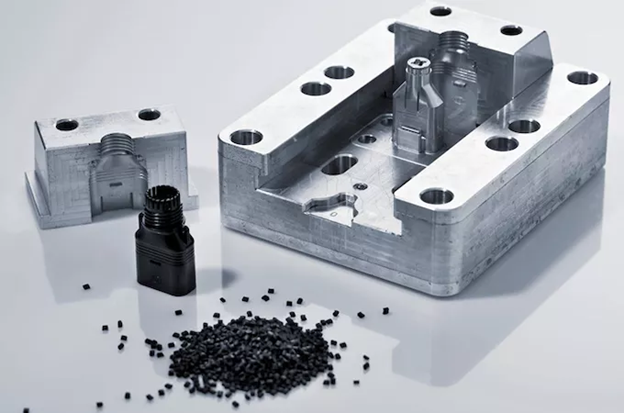
The key factor in successful prototype injection molding is good product design.
Толщина стенок
The uniform wall thickness will help in material flow during injection mold prototype manufacturing.
The warping and defects are caused due to the uneven wall.
Углы наклона
Angles that are created in the draft eliminates parts from the mold during injection molding prototype production.
If the correct draft angles are not provided parts can become stuck in the mold.
Material Shrinkage
The shrinkages of various plastics are different in the process of prototype plastic injection molding .
Shrinkage has to be taken into account when designing a product.
Gate Location
The placement of the gates has an impact on the inflow of plastic into the mold. The quality of injection molded prototypes is enhanced by the proper design of the gate.
Дизайн ребер
A rib is used to reinforce products without adding more wall thickness to them.
Good rib design for prototype injection molding.
Отделка поверхности
Some products need to be smooth and some need to be textured.
The appearance of injection mold prototype is influenced by the surface design.
Tolerance Requirements
Precise dimensions are important in injection molding prototype manufacturing.
Engineers need to take care to establish tolerances.
Вентиляция
In the course of so-called prototype plastic injection molding, air that remains in the mold can lead to defects.
Air can be released through proper venting.
Cooling Design
Quality of injection molded prototypes and cycle time are improved through efficient cooling.
The prototype injection molding project can be more successful due to good design practices.
Table 4: Mold Design Engineering Specifications
| Параметр | Recommended Value | Engineering Purpose |
| Draft Angle | 1°–3° per side | Easier part ejection |
| Толщина стенок | 1.0–4.0 mm | Prevent sink marks and warpage |
| Gate Diameter | 0.8–2.5 mm | Controls material flow |
| Vent Depth | 0.01–0.05 mm | Removes trapped air |
| Ejector Pin Diameter | 2-10 мм | Supports smooth ejection |
| Runner Diameter | 3–8 mm | Maintains balanced flow |
| Отделка поверхности | SPI A1 to D3 | Controls appearance quality |
| Mold Steel Hardness | 28–52 HRC | Improves mold life |
Challenges in Prototype Injection Molding
While there are many advantages to prototype injection molding, there are also some drawbacks.
Tooling Costs
Even after creating the molds, an investment is still necessary to make injection mold prototype manufacturing.
The more complex the molds, the higher the development costs.
Материальные ограничения
The injection molding prototype production process is sometimes difficult to process some materials.
Manufacturers need to choose materials judiciously.
Сложность конструкции
Prototype plastic injection molding can be challenging in the case of complex product shapes.
Engineers tend to streamline designs to make them easier to manufacture.
Усадка и деформация
Plastic materials can shrink or warp when they are cooled.
This influences the accuracy of the injection molded prototypes.
Время производства
Faster than production tooling, prototype injection molding does still take time for the mold to be made.
Mold Durability
Prototype molds may wear out quicker than production molds.
This can restrict the production quantity of injection mold prototype.
Дефекты поверхности
The in-production injection molding prototype process may cause products to be affected by sink marks, flash, or flow lines.
Material Waste
During prototype plastic injection molding, there is some generating of waste.
Process optimization is a goal of manufacturers for minimizing waste.
Техническая экспертиза
The key to successful injection molded prototypes is experience with the engineers and mold designers.
Despite these difficulties, prototype injection molding is still very useful in today’s product development process.
Table 5: Quality Defect Analysis in Prototype Injection Molding
| Defect Type | Main Cause | Engineering Solution | Typical Tolerance Impact |
| Маркировка раковины | Thick wall sections | Reduce wall thickness | ±0.15 mm |
| Деформация | Uneven cooling | Optimize cooling channels | ±0.30 mm |
| Вспышка | Excessive pressure | Reduce clamp force | ±0.10 mm |
| Short Shot | Low injection pressure | Increase pressure and venting | ±0.25 mm |
| Линии сварки | Improper flow meeting | Modify gate location | Cosmetic defect only |
| Следы от ожогов | Trapped gas overheating | Improve venting system | Surface degradation |
Future Trends in Prototype Injection Molding
The prospects for prototype injection molding are excellent.
Автоматизация
Efficiency of injection mold prototype manufacturing is enhanced by automation.
Robotic Systems help to minimize production time and labor costs.
Умное производство
The injection molding prototype quality control is enhanced by digital monitoring systems.
The production data can be tracked in real time for the manufacturers.
Устойчивые материалы
In the prototype plastic injection molding industry, eco-friendly plastics come in more and more.
The companies are working on minimizing environmental footprint.
Faster Tooling Methods
The production speed of injection molded prototypes has been improved by advanced machining technologies.
This means quicker product development.
Artificial Intelligence
The use of AI systems enables optimization of prototype injection molding processes.
AI enhances quality and minimizes defects.
Advanced Simulation
The engineers use simulation software to predict the behavior of the materials when they are being produced with injection mold prototype.
This helps to make designs more accurate.
Hybrid Manufacturing
Some companies take advantage of the injection molding prototype methods and 3D printing at the same time.
This provides more flexible development solutions.
Improved Materials
The possibilities of prototype plastic injection molding are growing as a result of the development of new materials.
There are now tougher, lighter plastics available for manufacturers.
Global Manufacturing Growth
The worldwide demand for injection molded prototypes is still increasing.
The growth of industries will make prototype injection molding a vital manufacturing solution in the future.
Заключение
Prototype литьё под давлением has emerged as one of the most significant manufacturing techniques in today’s product design. It enables firms to prototype products in a timely manner, validate design and minimize manufacturing risks prior to going into large-scale production.
In many industries, injection mold prototype solutions are the backbone of businesses to enhance product quality and accelerate product launches. Prototype testing aids companies in creating better products, whether they are producing automotive components, medical devices, electronics, or consumer goods.
The prototype plastic injection molding has one significant benefit that is one of the sample parts injection moulding with high accuracy can be produced. These prototypes are more representative of the final products for more reliable testing.
Today the injection molded prototypes are still used for innovation and effectiveness for modern industries. Prototype processes are now faster, smarter and more sustainable with the advances in manufacturing technology.
With the rising demand of high-quality products, prototype injection molding values are becoming more and more significant than ever. Businesses that invest in a robust prototyping process may find that their success in the market and customer satisfaction is greater.
prototype injection molding will undoubtedly be a huge cornerstone of world manufacturing in the years to come.


Ответить
Хотите присоединиться к обсуждению?Не стесняйтесь вносить свой вклад!