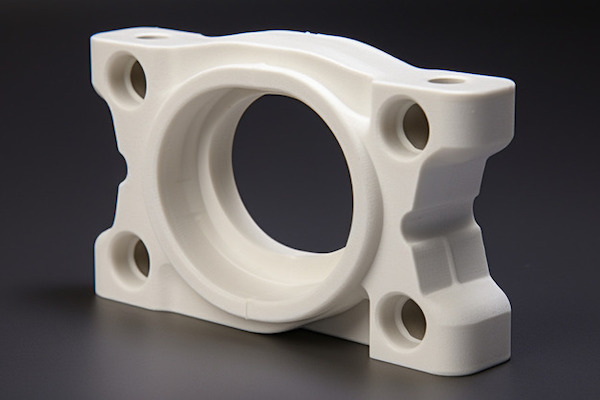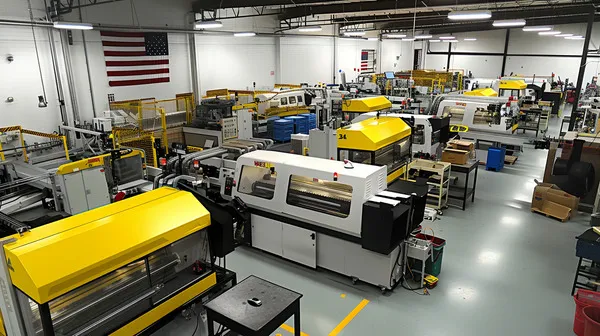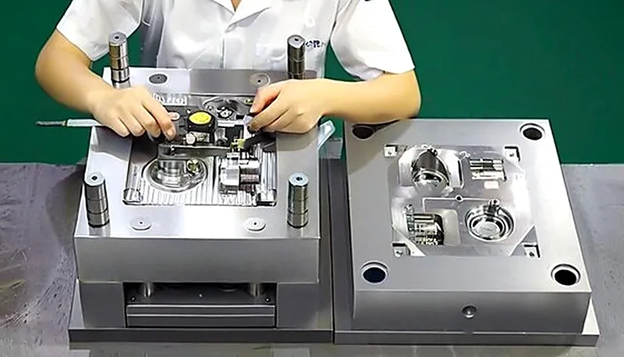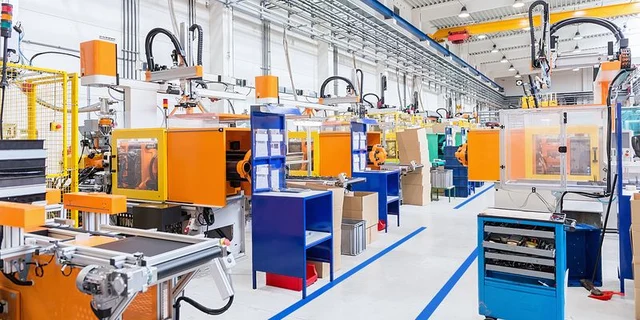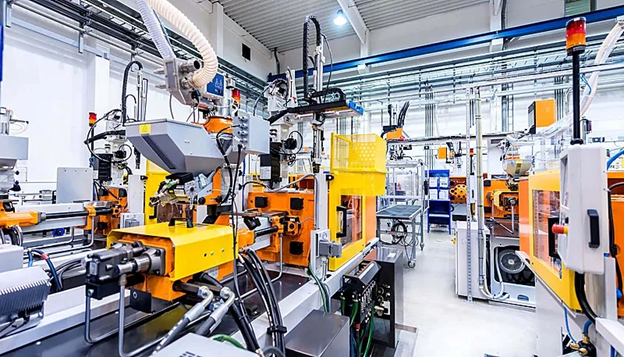
Injection Molded Parts: An all-purpose Guide

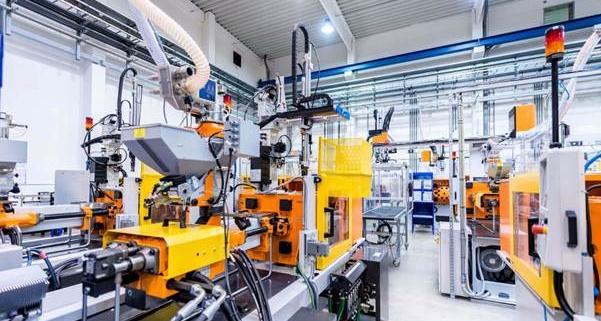
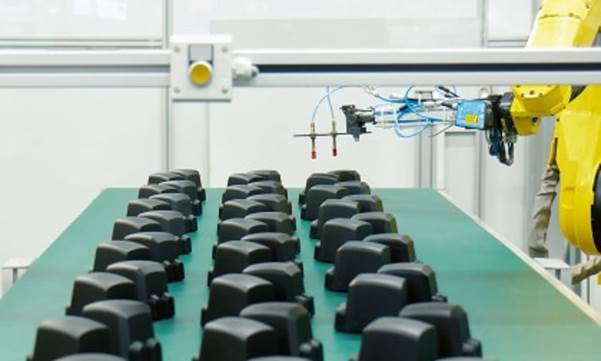
Injection molded parts production is a significant component of the contemporary industry. Injection molding is used to make many of the products surrounding us. This is a process that aids in the production of strong and accurate components. These are components that find their applications in numerous fields. The quality of molded products demanded goes up annually.

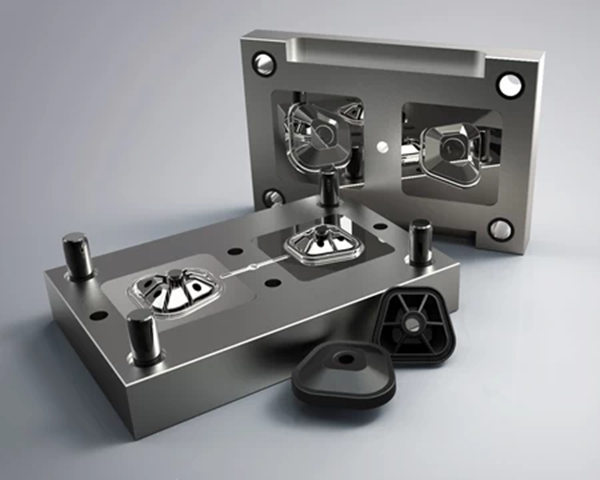
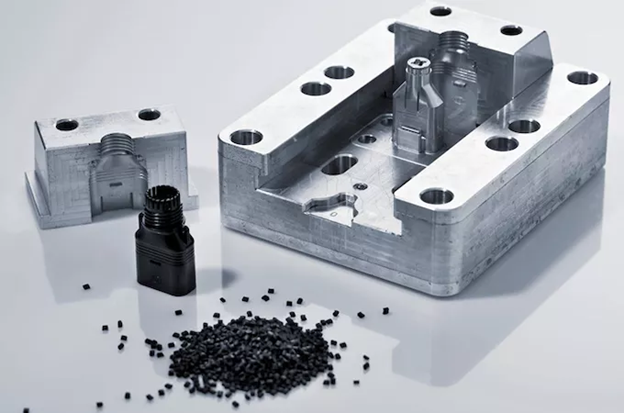
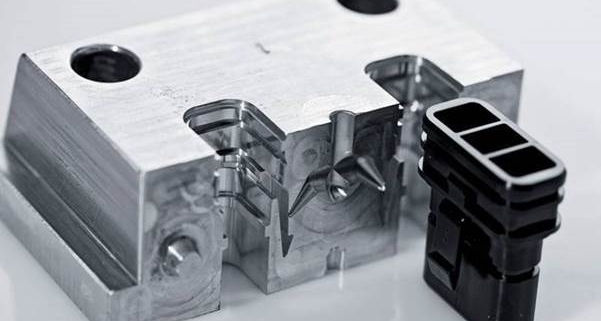
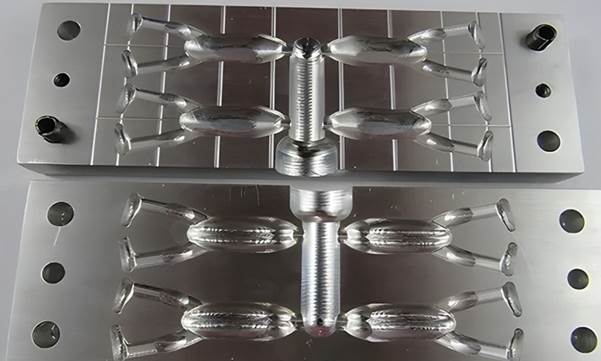
The reason behind the wide use of plastic injection molding parts is that they are durable and economical. They enable companies to manufacture large numbers of products that are of the same shape. Complex designs also work well in this process. Meanwhile, the injection molding mold parts are important in the shaping and forming of these products. The process cannot go on well without the right mold components.

The popularity of injection molding is due to the fact that it is time-saving. It also reduces waste. The method allows short-cycle production. It is something that a number of industries cannot afford to do away with.

Plastic Injection Molding: What is Plastic Injection Molding?

Plastic Spritzgießen refers to a production process. In large quantities, plastic products are produced with its assistance. It is also a fast and reliable procedure. It can be used to manufacture parts of the same shape and size in all cases.

In this process, plastic material is first heated. The plastic becomes soft and melts. The liquid plastic is then inserted into a mold. The mold has a specific shape. When the plastic cools down, it becomes solid. This entire part is removed from the mold.

Plastic Injection Molding: What is Plastic Injection Molding?

Plastic injection molding is used to bring about simple and complex products. It allows high accuracy. It also reduces material wastefulness, too. The reason has to do with the fact that it is popular because less time and money are wasted.

Table 1: Injection Molding Mold Components

Mold ComponentTypical MaterialToleranceOberflächeTypical Life CycleFunction
Core & CavityHardened Steel / Aluminum±0.01–0.03 mmRa 0.2–0.8 μm>1 million shotsShapes internal and external features
RunnerSteel / Aluminum±0.02 mmRa 0.4–0.6 μm>500,000 shotsChannels molten plastic to the cavity
GateSteel / Aluminum±0.01 mmRa 0.2–0.5 μm>500,000 shotsControls plastic entry into the cavity
KühlungskanäleCopper / Steel±0.05 mmRa 0.4–0.6 μmContinuousRemoves heat efficiently
Ejector PinsHardened Steel±0.005 mmRa 0.3–0.5 μm>1 million shotsEjects finished part without damage
Venting SlotsSteel / Aluminum±0.01 mmRa 0.2–0.4 μmContinuousReleases trapped air during injection

Knowing the Injection Molding Process

A controlled and precise method of production is the injection molding technology. They are applied in the production of plastic components of high accuracy. It is a functional procedure that occurs in stages. Each step has some parameters and numerical values.

Selection and Preparation of Materials

It begins with plastic raw material. This is usually packed in the form of pellets or in the form of granules. Such material is normally ABS, polypropylene, polyethylene, and nylon.

  • Pellet size: 2–5 mm
  • Wet content before drying: 0.02% -0.05%
  • Drying temperature: 80°C–120°C
  • Drying time: 2–4 hours

Proper drying is critical. Bubbles and surface defects of molded parts may be brought about by moisture.

Melting and Plasticizing

The plastic pellets are dried and forced into the Spritzgießen machine. They go through a screw that rotates and through a hot barrel.

  • Barrel temperature zones: 180°C–300°C
  • Screw speed: 50–300 RPM
  • Screw compression ratio: 2.5:1 -3.5:1.

The plastic is melted by the turning of the screw. The substance turns into a homogenous mass of liquid. Even the melting offers consistency of the component.

Injection Phase

On completion of melting down the plastic, it is pushed into the molding cavity. The mold is filled with great pressure in a quick and regularized way.

  • Injection pressure: 800–2000 bar
  • Injection speed: 50–300 mm/s
  • Injection time: 0.5–5 seconds

There is no use of short shots and flash due to appropriate pressure control. It is intended to fill the entire mold prior to the beginning of plastic cooling.

Packing and Holding Stage

The mold is filled, and pressure is applied to the mold. This is to overcome the process of material shrinkage at room temperature.

  • Loading pressure: 30-70 percent flow of injection.
  • Holding time: 5–30 seconds
  • Typical shrinkage rate: 0.5%–2.0%

This process increases the part concentration and dimension. It also reduces internal stents.

Cooling Process

Injection molding is the process that takes the longest in cooling time. The plastic substance would then solidify and melt.

  • Mold temperature: 20°C–80°C
  • Cooling time: 10–60 seconds
  • Heat transfer efficiency: 60%–80%

Elimination of heat is done by cooling channels in the mold. Proper cooling eliminates warping and defects of the surface.

Mold Opening and Ejection

After cooling, the mold opens. A section that has been completed is removed using ejector pins or plates.

  • Mold opening speed: 50–200 mm/s
  • Ejector force: 5–50 kN
  • Ejection time: 1–5 seconds

Ejection: Careful ejection will not damage parts. The closing of the mold then commences the next cycle.

The Cycle Time and Production Output

The total cycle time will be different depending on the size of the parts and the material.

  • Average cycle time: 20–90 seconds
  • Output rate: 40 -180 parts/hour.
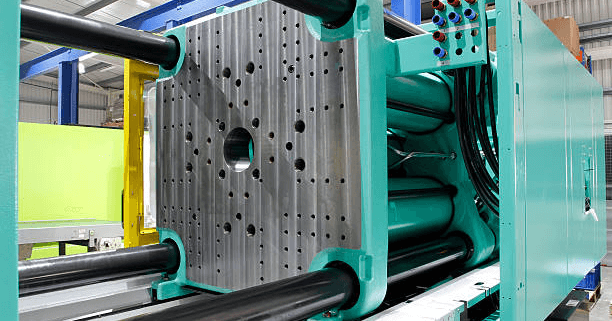
  • Machine clamping force: 50–4000 tons

Reduced cycle times will boost productivity. However, quality must be maintained constantly.

Monitoring and Control of Process

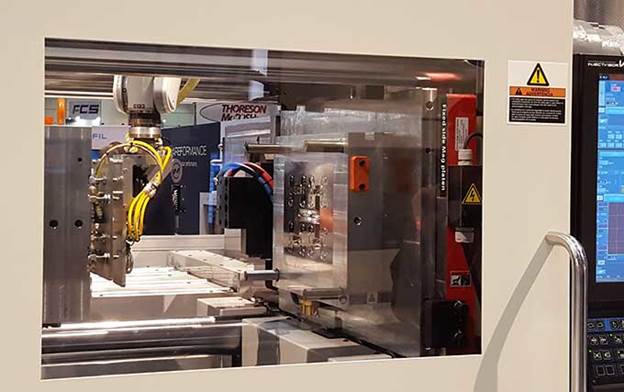
In contemporary machines, sensors and automation are employed. Pressure flow rate and temperature are checked by these systems.

  • Temperature tolerance: ±1°C
  • Pressure tolerance: ±5 bar
  • Dimensional accuracy: ±0.02 mm

Consistency of quality is ensured by monitoring the process. It also reduces scrap and downtimes.

Importance of Components of Mold

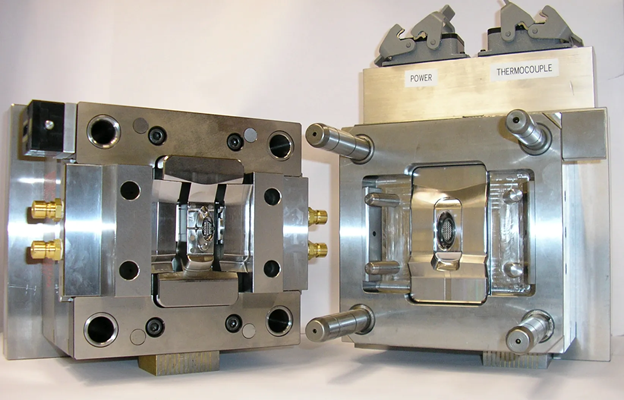
Injection molding is dependent on the parts of the mold. Each of the elements of the mold has some role to play. These are the shaping, cooling, and ejecting.

Die Kunststoff-Spritzguss parts are considered to be successful depending on the correct design of the mold. A poor mold can cause defects. These defects include cracks and unbalanced surfaces. Mold parts made by injection molding, on the other hand, help in ensuring accuracy. They also ensure that they go in good cycles.

High-quality protract parts are molded. They reduce the maintenance costs as well. This makes it more effective and dependable.

Mold Components Technical Information

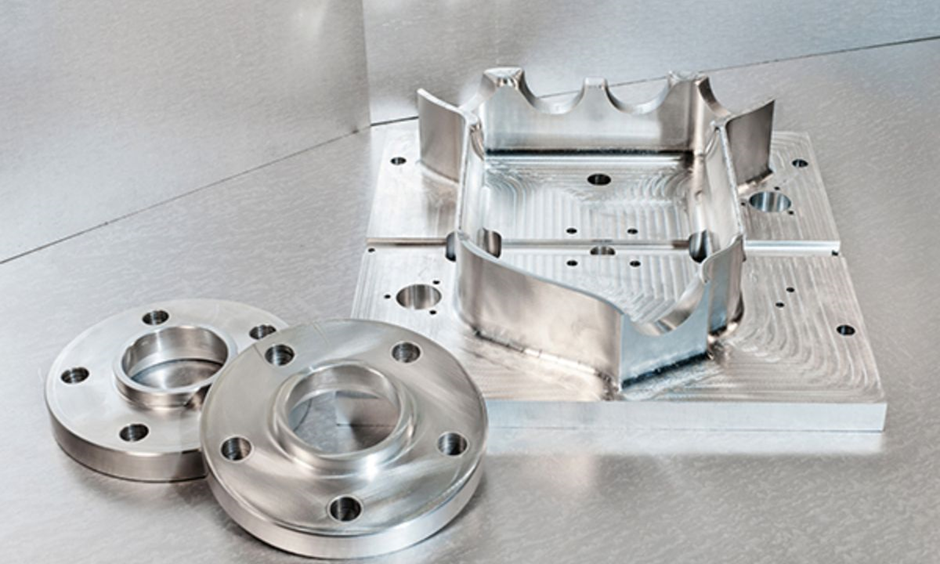
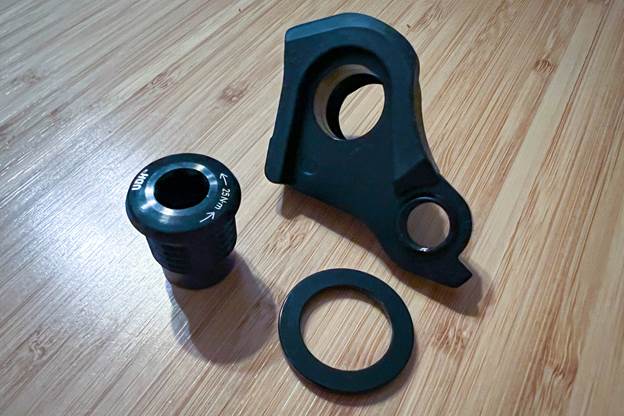
Mold components are the most important elements of the injection molding system. They control the shape, accuracy, strength, and quality of the surface. Without mold components that are well-designed, there is no way that stable production can be achieved.
Plastic Injection Molding: What is Plastic Injection Molding?

Core and Cavity

The core and the cavity are what determine the final shape of the product. The external surface consists of the cavity. The core makes up internal features.

  • Dimensional tolerance: ±0.01–0.03 mm
  • Surface finish: Ra 0.2–0.8 µm
  • Typical steel hardness: 48–62 HRC

Precision in core and cavity is high, hence minimizing defects. It enhances the uniformity of the parts also.

Läufersystem

The system of the runner directs the molten plastic at the injection nozzle to the cavity. It has an influence on flow balance and filling speed.

  • Runner diameter: 2–8 mm
  • Flow velocity: 0.2–1.0 m/s
  • Pressure loss limit: ≤10%

Reduction in material waste is done by proper runner design. It also has an even filling.

Tor-Design

The gate regulates the flow of plastic in the cavity. Part quality depends on the size and type of gate.

  • Gate thickness: 50 -80 of part thickness.
  • Gate width: 1–6 mm
  • Shear rate limit: <100,000 s⁻¹

Right gate design eliminates weld lines and burn marks.

Kühlsystem

Cooling tracks are used to cool down the mold. This system has a direct influence on cycle time and the stability of parts.

  • Cooling channel diameter: 6–12 mm
  • Distance of the channel to the cavity: 10-15mm.
  • Maximum temperature difference permitted: < 5 °C.

Ease of cooling enhances dimensional accuracy. It also reduces the time of production.

Auswurfsystem

When cooled, the part is ejected within the ejection system. It has to exert force in equal quantity to prevent harm.
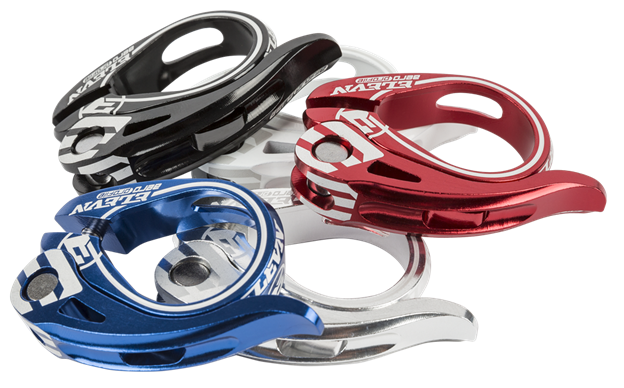
  • Ejector pin diameter: 2–10 mm
  • Ejector force per pin: 200–1500 N
  • Ejection stroke length: 5–50 mm

Even ejection eliminates cracks and deformation.

Venting System

The air can be trapped and escape through vents when injecting. Burns and incomplete filling are caused by poor venting.

  • Vent depth: 0.02–0.05 mm
  • Vent width: 3–6 mm
  • Maximum air pressure: <0.1 MPa

Adequate venting enhances the quality of surfaces and the life of molds.

Base and Alignment Components Mold Base

The base of the mould bears all the parts. Bushings and guide pins are used to provide proper alignment.

  • Guide pin tolerance: ±0.005 mm
  • Mold base flatness: ≤0.02 mm
  • Lifecycle alignment: more than 1M shots.

High alignment decreases the wear and flash.

Table 2: Key Process Parameters

ParameterRecommended RangeUnitBeschreibungTypical ValueNotes
Barrel Temperature180–300°CHeatis  applied to melt the plastic220–260Depends on the material type
Einspritzdruck800–2000barPressure to push molten plastic into the mold1000Adjust for part size & complexity
Temperatur der Form20–120°CTemperature is maintained for proper cooling60–90Higher for engineering plastics
Abkühlungszeit10–60secondsTime for the plastic to solidify25–35Depends on wall thickness
Zykluszeit20–90secondsTotal time per molding cycle30–50Includes injection, packing, and cooling
Ejector Force5–50kNForce to remove part from the mold15–30Must prevent part damage

Raw Materials Injection Molding

Material selection is very important. It influences the quality, stability, outlook, and price of the end product. Selecting the appropriate plastic is necessary to guarantee that the parts will work and will be printed properly.

Raw Materials Injection Molding

Thermoplastic Materials

The most widespread materials are thermoplastics due to the fact that they can be melted and reused several times. There is a wide use of ABS, polypropylene, polyethylene, and polystyrene. ABS is impact-resistant and strong, and melts at 200 to 240 °C. Polypropylene melts at temperatures of 160 °C or 170 °C; it is light in weight and resistant to chemicals. Polyethylene has a melting point of 120 °C to 180 °C and is suitable in moisture resistant products.

Engineering Plastics

High-strength parts or heat-resistant parts are made with engineering plastics such as Nylon, Polycarbonate (PC), and POM. Nylon melts at 220 °C -265 °C and is applied in gears and mechanical parts. Polycarbonate is a strong and transparent polymer that melts at 260 °C to 300 °C. POM has a melting temperature of 165 °C to 175 °C and is accurate in components.

Thermosetting Plastics

Plastics that are thermosetting are difficult to remelt after being molded because they harden permanently. They melt at 150 °C- 200 °C and are utilized in high-temperature applications such as electrical components.

Additives and Fillers

Materials are enhanced by additives. Glass fibers (10% -40 percentage) add strength, mineral fillers (5%-30 percentage) lower shrinkage, and UV stabilizer (0.1-1 percentage) shield against the sun. These assistive components are longer-lasting and work better.

Material Selection Requirements

The material selection is factor-driven in terms of temperature, strength, chemical confrontation, moisture, and cost. Adequate selection will result in long-lasting, precise, and quality products and lessen the mistakes and waste.

Table 3: Material Properties

MaterialMelt Temp (°C)Mold Temp (°C)Injection Pressure (bar)Tensile Strength (MPa)Shrinkage (%)
ABS220–24060–80900–150040–500.5–0.7
Polypropylen (PP)160–17040–70800–120030–351.0–1.5
Polyethylen (PE)120–18020–50700–120020–301.5–2.0
Polystyrol (PS)180–24050–70800–120030–450.5–1.0
Nylon (PA)220–26580–1001200–200060–801.5–2.0
Polycarbonat (PC)260–30090–1201300–200060–700.5–1.0
POM (Acetal)165–17560–80900–150060–701.0–1.5

Components that are manufactured under the Plastic Injection Molding Process

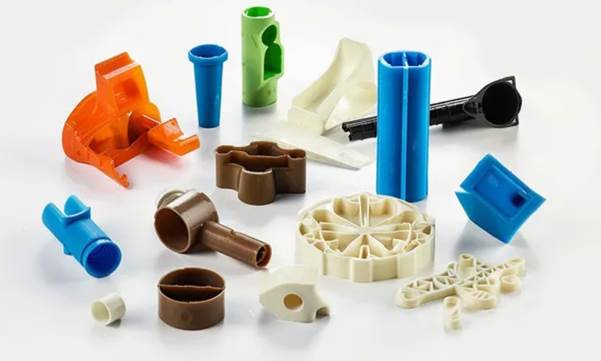
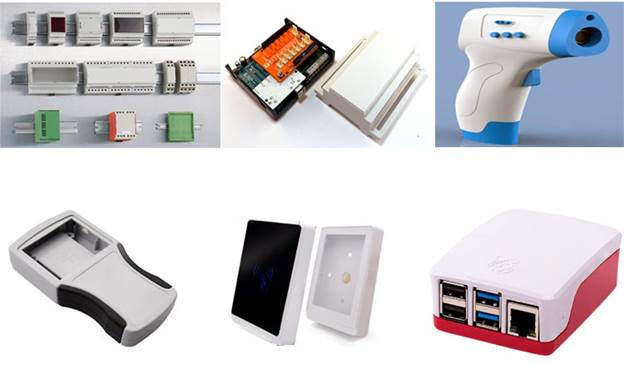
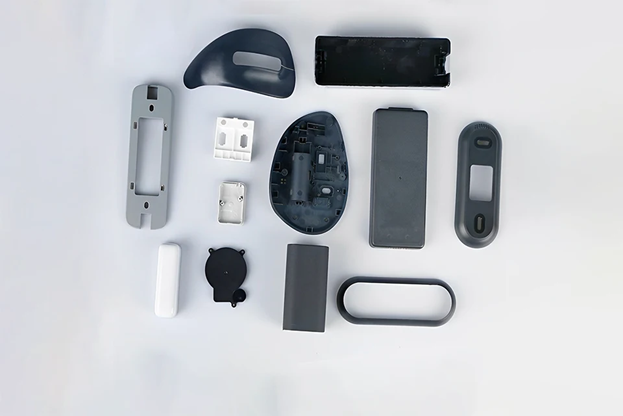
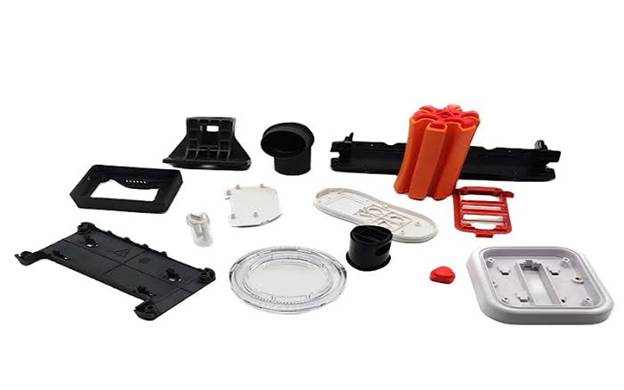
Plastic injection molding is a process that creates a large number of components applicable in various sectors. The process is precise, durable, and of large volume production. Examples of typical components produced in this manner are shown below.

Components that are manufactured under the Plastic Injection Molding Process

Automotive Parts

  • Dashboards
  • Bumpers
  • Air vents
  • Door panels
  • Gearshift knobs
  • Fuel system components
  • Interior trims

Medical Parts

  • Syringes
  • Tubing connectors
  • Surgical instruments
  • IV components
  • Medical device housings
  • Disposable medical tools

Electronics Parts

  • Housings for devices
  • Switches and buttons
  • Cable clips and wire holders
  • Connectors and plugs
  • Keyboard keys
  • Circuit board enclosures

Packaging Products

  • Bottles and jars
  • Bottle caps and closures
  • Food containers
  • Cosmetic containers
  • Lids and seals
  • Storage boxes

Consumer and Industrial Goods

  • Toys and figurines
  • Household tools
  • Appliance components
  • Construction fittings
  • Accurate clips and fasteners.
  • Industrial machine parts

Design and Precision

Design is a significant contributor to success. An effective mold enhances the quality of a product. It minimizes errors during production as well.

The parts of the process of Kunststoff-Spritzguss require strict dimensions. Performance can be influenced by small mistakes. This is the reason why the creation of the injection molding mould parts is designed with close tolerances. State-of-the-art software is often employed in design.

Components that are manufactured under the Plastic Injection Molding Process

Strength is also enhanced through good design. It enhances appearance. It guarantees superior fitting in end assemblies.

Industrielle Anwendungen

Many industries also use injection molding, which is fast, exact, and it is economical. It enables mass production of identical parts with very high precision.

Autoindustrie

In the auto sector, dashboards, bumpers, air vents, and interior panels are made using plastic injection molding parts. These components should be powerful, light, and heat-resistant. Particularly, it is done by molding, whereby the shapes are exact and uniform to prevent any safety and quality issues.

Medical Industry

In medicine Syringes, tubing connectors, and surgical instruments are made by injection molding. Much precision and hygiene areas needed. Particularly, plastic injection molding parts can be made of medical-grade plastics, and injection molding mold parts can be used to ensure accuracy and smoothness.

Electronics Industry

Housings, connectors, switches, and cable clips are all produced in the electronics industry through injection molding. Plastic injection molding parts secure the fragile circuits, and the injection molding mold parts are necessary to make the parts fit perfectly.

Packaging Industry

Injection molding is also applied in the packaging of bottles, containers, caps, and closures. The parts of the plastic injection molding are used to give the required shapes and sizes, whereas the parts of injection molding are used to produce in large quantities within the shortest amount of time by creating minimum wastage.

Other Industries

Consumer goods, toys, construction, and aerospace are also injected. Its flexibility and accuracy give it the ability to fit nearly any plastic product, be it the simple householder the complicated technical parts.

Qualitätskontrolle und Prüfung

In manufacturing, quality control is required. All the parts should be desiccated to meet design requirements. Testing is a measure of safety and performance.

The plastic injection molding parts are subjected to visual and mechanical inspections. Defects are spotted at an early stage through these checks. Simultaneously, the inspection of the wear and damage of the injection mold parts is conducted. Frequent inspections eliminate the failure of production failures.

Good quality management enhances customer confidence. It also minimizes wastage and expenditure.

Pros of the Injection Molding

There are numerous advantages of injection molding. It permits a rapid production rate. It also guarantees repetition.

Kunststoff-Spritzgießen parts are dynamic and light. They are capable of mass production. In the meantime, automation is supported by the use of injection molding of the mold parts. This lowers the cost of labour and mistakes.

Pros of the Injection Molding

Also, the process is environmentally friendly. The scrap material may be reutilized. This will contribute to environmental mitigation.

Challenges and Solutions

Injection molding, just like any process, is challenging. These are material problems as well as wear of moulds. Unfavorable environments lead to flaws.

Part flaws may be assessed in the absence of proper handling of “plastic injection molding parts. These risks can be minimized by appropriate training. Simultaneously, mold parts that are used in injection molding must be maintained on a regular basis. This assures long life.

Modern technology will be useful in addressing a lot of issues. The efficiency is enhanced through automation and monitoring.

Future of Injection Molding

The injection molding future is solid. There is a development of new materials. Smart manufacturing is becoming a reality.

Injection molding parts that are produced out of plastic will be improved. They will be more significant and lighter. At the same time, better materials and coatings will be applied to the injection mold part. This will enhance longevity.

The industry will still be characterized by innovation. Competitive firms will be those that change.

China’s Role

China contributes significantly to the injection molding market in the world. It is among the biggest manufacturers of plastic injection molding parts and the distributor of injection molding mold parts. The manufacturing sector is very diversified in the country; small-scale production is available as well as large-volume industrial production.

China’s Role

The factories of China have high-precision machines and skilled labor that are used to manufacture parts. The reliance of many international companies on Chinese manufacturers is because they offer cost-effective solutions without reducing on quality.

Besides, China is an Innovation leader. It creates new materials, molds, and automation methods to enhance efficiency. It has a good supply chain and high production capacity that contribute to its status as a major player in satisfying global demand for injection molded products.

Why Choose Sincere Tech

We are Sincere Tech, and we deal with supplying high-quality plastic injection molding parts and injection molding mold parts to our clients in different industries. We have years of experience and a passion to do things in the best way, hence all our products are of the best quality in terms of precision, durability, and performance.

We have a group of experienced and qualified engineers and technicians who offer quality and affordable solutions through the application of modern machinery and new methods. We have ensured close attention to all the details, such as the choice of material, the design of molds, etc., so that we have the same quality in each batch.

Clients prefer Sincere Tech due to the fact that we appreciate trust, professionalism, and customer satisfaction. We collaborate with individual clients to get to know their special needs and offer solutions to their needs. We are also committed to the concept of on-time delivery, technical assistance, and constant improvement, which make us stand out inthe injection molding industry.

Sincere Tech is the company with which you can find excellence in plastic injection molding when you require either minor, detailed parts or large-volume production. You do not just get parts with us, you also get a team dedicated to your success and growth.

To learn more about our services and products, go to plas.co and see why we are the right choice for the clients of the world.

Schlussfolgerung

Injection molding is a solid process of production. It is the backbone of numerous industries in the world. Its main strengths are precision, speed, and quality.

Plastic injection molding parts are still very vital in everyday life. They are useful in serving various needs, from the simplest to the complex components. Meanwhile, injection molding mold parts guarantee the efficient flow of manufacturing and the same outcome.

Injection molding will only continue to increase with the right design and maintenance. It will also continue to form a vital aspect of modern production. 

What is overmolding

Overmolding is the making of a product by joining two or more materials into one product. It is also applied in most industries, such as electronics, medical equipment, automotive, and consumer products. It is done by molding over a base material known as an overmold, over a base material known as a substrate.

Overmolding is done to enhance the aesthetic, longevity, and functionality of products. It enables manufacturers to incorporate the power of one material with the flexibility or softness of the other. This makes products more comfortable, easier to deal with, and durable.

Overmolding appears in items that we use on a daily basis. This has been applied to toothbrush handles and phone cases as well as power tools and surgical instruments, among other items in contemporary manufacturing. Knowing about overmolding will make it easy to see how convenient and safe objects in everyday life are.

Inhaltsübersicht

What is Overmolding?

Umspritzen is a procedure through which one product is formed out of two materials. The initial material is known as the substrate and typically is a hard plastic such as ABS, PC, or PP. It has a tensile strength of 30-50 Mpa tensile strength and a melting temperature of 200- 250 °C. The other material, which is the overmold, is soft, e.g., TPE or silicone, with a Shore A hardness of 40-80.

What is Overmolding?

The substrate is allowed to cool down to 50-70 °C. The pressure injected into the overmold is 50-120Mpa. This forms a strong bond. Overmolding enhances the holding power, strength, and durability of products.

One such typical object is a toothbrush. The handle is of hard plastic to ensure strength. The grip itself is of soft rubber and, therefore, is comfortable to hold. This basic application demonstrates the real-life uses of overmolding.

Overmolding does not apply only to soft grips. It is also applied in covering electronic products, giving an object a colorful decoration, and extending the life of a product. This flexibility enables it to be one of the most applicable manufacturing methods in contemporary days.

Full Process

Auswahl des Materials

The procedure of overmolding starts with the choice of the materials. The substrate normally is a hard plastic like ABS, PC, or PP. They contain tensile strength of 30-50 Mpa and a melting point of 200- 250 °C. The molded material is usually a soft one, such as TPE or silicone, and has a Shore A hardness of 40-80. It is necessary to select the materials that are compatible. Failure of the final product to withstand stress can be caused by failure of the bonding of the materials.

Substrate Molding

The substrate was poured into the mold at a pressure of 40-80 Mpa after heating to 220-250 °C. Once injected, it is allowed to solidify to 50-70 °C to render it dimensionally stable. The time taken in this process is usually 30-60 seconds in relation to the size and the thickness of the part. There are extremely high tolerances, and deviation is typically not more than +-0.05 mm. Deviation will result in the product being affected in regard to overmold fit and product quality.

Preparation of the mold to be overmolded

Following the cooling, the substrate is then carefully transferred to a second mold, during which the overmold injection is done. The mold is preheated to 60-80 °C. Preheating eliminates the effect of thermal shock and also allows the overmold material to flow smoothly over the substrate. Mold preparation is needed to prevent any voids, warping, or poor bonding in the final product.

Overmold Injection

The pressure is injected into the substrate using 50-120 Mpa of the overmold material. The temperature of the injection is conditional upon the material: TPE 200-230 °C, silicone 180-210 °C. This step must be precise. Improper temperature or pressure may result in defects of bubbles, separation, or insufficient coverage.

Abkühlung und Erstarrung

Following injection, the part is cooled to enable solidification of the overmold and its strong bond to the substrate to take place. The cooling time ranges from 30 to 90 seconds based on the thickness of the parts. The thin regions cool more quickly, whereas the thicker ones are slower to cool. Adequate cooling is needed to guarantee even bonding as well as minimize internal stress that may cause cracks or deformation.

Ejection and Finishing

The part is forced out of the mold after being cooled down. Any surplus, referred to as flash, is excised. The component is checked in terms of surface finish and dimensional accuracy. This will make sure that the product is of the required quality and is compatible with the other parts in case of need.

Testing and Inspection

The final step is testing. Test types: Tensile or peel tests determine the strength of the bond, which is usually 1-5 MPa. Shore A tests would be used to check overmold hardness. The defects, such as bubbles, cracks, or misalignment, can be visually detected. Only components that are tested are shipped or put together into finished products.

Types of Overmolding

Types of Overmolding

Two-Shot Molding

Two-shot molding involves one machine molding two materials. The molding is done at a temperature of 220-250 °C and pressure of 40-80 MPa, followed by the second material injection, which is at 50-120 MPa. The technique is quick and accurate and is suitable when a large number of products, such as rubber grips and soft-touch buttons, are involved.

Einsatzformteil

During insert molding, the substrate is already prepared and inserted into the mold. It is covered with an overmold, either TPE or silicone, which is injected at 50-120 MPa. Bond strength is usually 1-5 MPa. This approach is typical of the tools, toothbrushes, and healthcare devices.

Multi-Material Overmolding

Multi-material overmolding is an overmolding where there is more than 2 materials in a single part. The injection duration of every material is in sequence 200-250 °C, 50-120 MPa. It permits complicated structures with hard, delicate, and covering sections.

Overmolding has been used in applications

The applications of overmolding are very diverse. The following are the typical examples:

Overmolding has been used in applications

Elektronik

Telephone cases usually have hard plastic with soft rubber edges. The buttons of remote controls are constructed of rubber as they provide better touch. Electronic components are safeguarded with overmolding, and enhanced usability is provided.

Medizinische Geräte

Protective seals, surgical instruments, and syringes are usually overmolded. Soft products facilitate easier handling of the devices and also make them safer. This is essential in the medical applications where comfort and precision are important.

Autoindustrie

 Overmolding is used to make soft-touch buttons, grips, and seals used in car interiors. Seals of rubber are used to block water or dust from entering parts. This enhances comfort as well as durability.

Konsumgüter

Overmolding is commonly used in toothbrush handles, kitchen utensils, power tools, and sports equipment. The process is used to add grips, protect surfaces, and add design.

Industrial Tools

Overmolding is used in tools such as screwdrivers, hammers, and pliers, which are used to make soft handles. This limits the fatigue of the hands and enhances the safety of use.

Verpackung

Overmolding of some part of the packaging (e.g., bottle tops or safeguarding seals) is used to enhance handling and functionality.

Overmolding enables the manufacturer to produce products that are functional, safe, and also appealing.

Benefits of Overmolding

There are numerous benefits of over-molding.

Benefits of Overmolding

Improved Grip and Comfort

Products are made easier to handle by the use of soft materials. This applies to tools, household products, and medical devices.

Increased Durability

Attachment of several materials enhances the strength of products. The hard and soft materials guarantee the safety of the product.

Better Protection

Cover or seals of electronics, machinery, or delicate instruments can be added through overmolding.

Attractive Design

The products are designed in various colors and textures. This enhances image and branding.

Ergonomics

Soft grips minimize fatigue in the hand and make objects or devices more comfortable to work with for longer.

Versatility

Overmolding uses a wide variety of materials and can be used to form intricate forms. This enables manufacturers to come up with products that are innovative.

Challenges of Overmolding

There are also some challenges of overmolding, which should be taken into consideration by the manufacturers:

Kompatibilität der Materialien

Not all materials bond well. Certain combinations might need to be adhesive-bonded or surfaced.

Higher Cost

Because it involves additional materials, molds, and steps of production, overmolding may raise production costs.

Complex Process

Mold design, pressure, and temperature have to be strictly regulated. Defects can be brought about by the slightest of errors.

Production Time

Molding Two-stage molding may require more time than single-material molding. New technologies, such as two-shot molding, can, however, cut this time.

Design Limitations

Complex shapes can need custom molds, and this can be costly to make.

Nonetheless, these discouraging issues have not stopped overmolding since it enhances the quality of products and performance.

Overmolding Design Principles

Overmolding is a design where the base is made of a material, and the mold is made out of a different material.

Overmolding Design Principles

Kompatibilität der Materialien

Select the materials that are bonded. Overmold and substrate should be compatible with each other in terms of their chemical and thermal characteristics. Similar materials that have close melting points minimize the chances of weak bonding or delamination.

Wanddicke

Keep the thickness of the wall constant so that there is consistency in the flow of the material. Lack of uniformity of the walls may lead to faults such as sink marks, voids, or warping. Walls are usually between 1.2 and 3.0 mm of various materials.

Entwurfswinkel

Emboss angles on vertical surfaces to facilitate ejection. An angle of 1- 3 degrees assists in avoiding damage to the substrate or overmold during demolding.

Rounded Corners

Avoid sharp corners. Rounded edges enhance the flow of materials during injection, and stress concentration is decreased. The recommended corner radii are 0.5-2mm.

Bonding Features

Pits or grooves are made, or interlocked structures are made to grow mechanical bonding between the substrate and the overmold. The features add peel and shear strength.

Venting and Gate Placement

Install vents that will enable the escape of air and gases. Position injection gates in locations other than the sensitive areas in order to achieve a homogeneous flow that avoids cosmetic faults.

Shrinkage Consideration

Consider variation in the shrinkage of materials. The shrinkage of thermoplastics can be as little as 0.4-1.2 or elastomers can be 1-3%. The correct design will avoid distortion and dimensional errors.

Technical Decision Table: Is Overmolding Right for Your Project?

ParameterTypical ValuesWhy It Matters
Substrate MaterialABS, PC, PP, NylonProvides structural strength
Substrate Strength30–70 MPaDetermines rigidity
Overmold MaterialTPE, TPU, SiliconeAdds grip and sealing
Overmold HardnessShore A 30–80Controls flexibility
Injection Temperature180–260 °CEnsures proper melting
Einspritzdruck50–120 MPaAffects bonding and fill
Bond Strength1–6 MPaMeasures layer adhesion
Wanddicke1.2–3.0 mmPrevents defects
Abkühlungszeit30–90 secImpacts cycle time
Dimensional Tolerance±0.05–0.10 mmEnsures accuracy
Schrumpfungsrate0.4–3.0 %Prevents warping
Tooling Cost$15k–80kHigher initial investment
Ideal Volume>50,000 unitsImproves cost efficiency

Parts Made by Overmolding

Parts Made by Overmolding

Tool Handles

Overmolding is used to create a hard core and soft rubber grip in many hand tools. This enhances comfort and minimizes fatigue of hand usage and offers greater control of usage.

Konsumgüter

Most common products, such as toothbrushes, kitchenware, and tools that require electricity, usually utilize overmolding. Soft grips or cushions help to improve ergonomics and lifespan.

Elektronik

In the phone case, remote control, and protective housings, common applications of overmolding include these. It also provides shock absorption, insulation, and a soft touch surface.

Automobilkomponenten

Overmolded buttons, seals, gaskets, and grips are a common feature in the interior of cars. Soft-touch systems enhance the comfort, noise, and vibrations.

Medizinische Geräte

Overmolding is used in medical devices such as syringes, surgical instruments, handheld objects, and the like. The process will guarantee thorough-going safety, accuracy, and firm hold.

Raw Materials in Overmolding

Material selection is of importance. Common substrates include:

Hard plastics such as polypropylene (PP), polycarbonate (PC), and ABS.

Metals in fields of application

The overmold materials usually are:

  • Soft plastics
  • Rubber
  • Nylon thermoplastic elastomers (TPE)
  • Silicone

The choice of the material is based on the use of the product. As an illustration, biocompatible materials are needed in medical gadgets. Electronic requires materials that are insulative and protective.

Best Practices in the Design of Overmolding Parts

The design of parts to be overmolded must be well considered in order to attain high levels of bonding, attractive outlook, and quality performance. Adhering to established design guidelines contributes to minimizing the error rate, and the quality of the products becomes consistent.

Select Materials which are compatible

The overmolding depends on the choice of material. The overmold and the underlying material have to have a good connection. Commodities that melt at similar rates and have the same chemical properties have more powerful and dependable bonds.

Design for Strong Bonding

Good mechanical bonding between the part design and the design itself should be supported. Undercuts, grooves, and interlocking shapes are some of the features that enable the overmolded material to hold the base part firmly. This minimizes the chances of separation when in use.

Keep the wall thickness in the right way

A uniform thickness in the walls enables the flow of materials in the molding process. Lack of uniformity in the thickness may lead to sink marks, voids, or weak sections in the component. A symmetric design enhances strength as well as its looks.

Use Adequate Draft Angles

Draft angles simplify the process of extracting the part from the mold. Friction and damage can be minimized in ejection through proper draft, and this is particularly useful in complex overmolded parts.

Avoid Sharp Corners

Acute edges have the potential to cause stress points and limit the flow of material. Rounded edges and flowing results enhance strength and make the overmolded compound flow evenly around the component.

Include Venting Features

During injection, good venting enables the trapped air and gases to escape. Good vents allow avoiding air pockets and surface flaws, as well as filling the mold halfway.

Plan Overmold Material Positioning

The injection points are not to be placed near important features and edges. This eliminates the accumulation of materials, rupture of flow, and aesthetic defects in the exposed parts.

Optimize Tool Design

The successful overmolding requires well-designed molds. Proper placement of the gate, balanced runners, and effective cooling channels contribute to ensuring that there is even flow and stable production.

Take into consideration Material Shrinkage

Various substances have different rate in cooling down. These differences should be taken into account by designers so that no warping, misalignment, or dimensional problems can be observed in the final part.

What are some of the materials used to overmold?

Overmolding gives the manufacturers the chance to mix dissimilar materials to accomplish certain mechanical, operational, and aesthetic traits. The choice of the material is determined by its strength, flexibility, comfort, and environmental resistance.

Thermoplastic, not Thermoplastic.

It is one of the most widespread overmolding combinations. The base material is a thermoplastic polymer, which is a polycarbonate (PC). It is then covered with a softer thermoplastic such as TPU. This composite enhances grip, comfort, and surface feel, and structural strength is not sacrificed.

Thermoplastic over Metal

This technique uses a thermoplastic material that is molded on top of a metal part. Metals like steel or aluminum are usually coated with plastics like polypropylene (PP). This assists in guarding against corrosion of the metal, reducing vibration, and decreasing noise during usage.

TPE over Elastomer.

This system employs a hard plastic recycled substrate like ABS with the addition of a flexible elastomer on the top. It is normally applied in products that require durability and flexibility, such as tool handles and medical equipment.

Silicone over Plastic

Silicone is also overmolded over plastic materials such as polycarbonate. This offers a high level of water resistance, sealing capability, and low tactile feel. It is commonly applied in medical and electronic devices.

TPE over TPE

Overmolding of different grades of thermoplastic elastomers can also be performed. This enables the manufacturers to produce products that have different textures, colors, or functional areas, within one part.

Is Overmolding the Right Choice?

When your product requires strength, comfort, and durability at the same time, Umspritzen is the appropriate decision to make. It is particularly suitable when used with components that need a soft handle, impact resistance, or additional protection without adding more assembly processes. Overmolding can be used on products that are frequently touched, like tools, medical equipment, or even electronic cases.

Is Overmolding the Right Choice?

Nevertheless, overmolding does not apply to all projects. It is normally associated with increased tooling expenses and intricate mold pattern design as opposed to single-material molding. When production quantities are small or product design is basic, then the traditional molding processes could work out to be less expensive.

Assessing the material compatibility, volume of production, requirement of functionality, and budget with consideration at the initial design stage will help in deciding whether an overmolding solution is the most effective in addressing your project.

Examples of overmolding in the real-life

Toothbrushes

The handle is hard plastic. The grip is soft rubber. This eases the task of cleaning the teeth.

Phone Cases

The device is covered with hard plastic. Drop shock is absorbed on soft rubber edges.

Power Tools

The rubber is overmolded on handles to minimize vibration and enhance safety.

Car Interiors

Control knobs and buttons are usually soft in their feel, which makes the user experience better.

The following examples demonstrate the enhancement of usability, safety, and design of overmolding.

Sincere Tech – Your Hi-Fi partner in any kind of Molding

Sincere Tech is a trustworthy manufacturing partner that deals with all forms of molding, such as plastic injection molding and overmolding. We assist the customers with design up to mass production of products with precision and efficiency. With high technology and competent engineering, we provide high-quality parts in automotive, medical, electronics, and consumer markets. Visit Plas.co to get to know what we are capable of and offering.

Schlussfolgerung

Overmolding is a flexible and useful technique of manufacturing. It is a process that involves a combination of two or more materials to make products stronger, safer, and more comfortable. It is broadly applied in electronics, medical devices, automotive components, domestic appliances, and industrial tools.

This is done by a careful choice of the material, accurate shape of the molds, and by ensuring that the temperature and the pressure are kept in check. Overmolding has considerable benefits, even though it is faced with some challenges, such as increased cost and increased production time.

Overmolded products are more durable, ergonomic, appealing to the eye, and functional. One of the areas where overmolding has become an inseparable component of modern manufacturing is the case of everyday products, such as toothbrushes and phone cases, to more serious items such as medical equipment and automobile interiors.

Knowing about overmolding, we may feel grateful to the fact that it is due to simple decisions in the design that help to make the products more convenient to use and longer-lasting. Such a little yet significant process goes on to enhance the quality and functionality of the goods that we use in our daily lives.

Was ist Insert Molding? Verfahren, Anwendungen und Vorteile

The insert molding is a pertinent technology in present-day production. It is used in attaching metal or other elements to plastic. The process offers a unified, tough, and strong component. As an alternative to the step-by-step technique of having to assemble pieces after molding them, the insert molding technique fuses them. This will save on labour, time, and enhance the quality of the product.

China is a mammoth in the insert molding. It provides cost-efficient production. High-level factories and skilled labor have been established in the country. China is a producer of all-purpose materials. It leads global production.

This paper will discuss insert molding, its process, insert types, materials, design, available guidelines, its usage, advantages, and comparison with moulding processes in contemporary production.

Inhaltsübersicht

What is Insert Molding?

Insert molding is a process of plastic moulding. A part that has been assembled, usually a metal part, is placed into a mold. The next step is molten plastic injected around it. When plastic becomes hard, the plastic insert becomes a component of the end product. The technique is used in electronics and automotive industries, and also in the medical equipment industry.

What is Insert Molding?

The large advantage of the insert molding is strength and stability. Metal-inserted plastic parts are stronger in terms of mechanical strength. They can also be threaded and worn less as time progresses. This is especially essential in those parts that should be screwed or bolted many times.

Types of Inserts

The inserts used in insert molding have different varieties, which are used according to the purpose.

Metal Inserts

Metal inserts are the most widespread ones. These are either steel, brass, or aluminum. They are used on threaded holes for structural or mechanical strength.

Electronic Inserts

Electronic components that can be molded to appear in the form of plastic are sensors, connectors, or small circuits. This guarantees their safety and the reduction of assembly processes.

Other Materials

Some of the inserts are made in ceramics or composites to be utilized for special purposes. They are used in instances where heat resistance or insulation is required.

Choosing the Right Insert

It would depend on the part role and the type of plastic to make the decision. The major ones are compatibility, strength, and durability.

The Insert Molding Process

Single-step molding entails the incorporation of a metal or other element with a plastic tool. The insert is inserted into the ultimate product. This is a stronger and faster process compared to the assembly of parts that follows.

The Insert Molding Process

Preparing the Insert

The insert is rinsed in order to extract all the dirt, grease, or rust. It is also occasionally overcoated or rugged so that it becomes glued to plastic. It will not be destroyed by hot plastic when it is preheated to 65-100 °C.

Placing the Insert

The insert is placed with much care in the mold. Robots can insert it into large factories. Pins or clamps hold it firmly. The positioning of the right will prevent movement when the molding is taking place.

Injecting Plastic

This is accomplished by injecting the molten plastic to surround the insert. Their temperature range is between 180 and 343°C. Pressure is 50-150 MPa. To be strong, the holding pressure should be 5-60 seconds.

Kühlung

It is a solidification of the plastic. Smaller components take 10-15 seconds, and larger components take 60 seconds or above. Cooling channels prevent the warming up.

Ejecting the Part

The mold and ejector pins force the part out. Small finishing or trimming could then follow.

Important Points

The expansion of metal and plastic is not the same. Preheating and constant controlled mold temperature decreases the stress. This is done by the use of sensors in modern machines to achieve uniformity in the results in terms of pressure and temperature.

Key Parameters:

ParameterTypical Industrial RangeEffect
Injection Temperature180–343 °CDepends on plastic grade (higher for PC, PEEK)
Einspritzdruck50–150 MPa (≈7,250–21,750 psi)Must be high enough to fill around insert surfaces without displacing them
Injection Time2–10 sShorter for small parts; longer for larger components
Holding Pressure~80% of injection pressureApplied after fill to densify material and reduce shrinkage voids
Holding Time~5–60 sDepends on material and part thickness

Types of common injections to be shaped 

Various types of inserts applied in injection molding exist, and they rely on the use. Each of the types contributes to the strength and performance of the final part.

The Insert Molding Process

Threaded Metal Inserts

Threaded inserts can be steel, brass, or aluminum. They allow the potential of screwing and bolting a number of times without the plastic being broken. The latter is common in automobiles, home appliances, and electronics.

Press-Fit Inserts

The press-fit inserts are those that are installed in a molded component without any additional attachment. As the plastic cools, it holds the insert and stabilizes it very well and powerfully.

Heat-Set Inserts

This is followed by the process of heat-setting inserts. When allowed to cool, the hot insert will fuse with the surrounding plastic to some extent, creating a very strong bond. They are generally used in thermoplastics, e.g., nylon.

Ultrasonic Inserts

In a vibration, ultrasonic inserts are installed. The plastic melts in the region surrounding the insert and becomes hard to create a tight fit. It is a precise and fast method.

Choosing the Right Insert

The choice of the right and left is according to the type of plastic, part design, and the load that is anticipated. The choice of metal inserts has been made based on strength, and the special inserts, like the heat-set inserts and ultrasonic inserts, have been evaluated on the basis of precision and durability.

Design Rules in the Industry of Insert Injection Molding

The design of parts to be inserted by use of molding should be properly planned. The accurate design ensures that there is high bonding, precision, and permanence.

Design Rules in the Industry of Insert Injection Molding

Insert Placement

The inserts will be inserted where they will be in a good position to be supported by plastic. They must not be very close to walls or thin edges because this can result in cracks or warping.

Plastic Thickness

Always make sure that the walls that surround the insert are of the same thickness. Due to an abrupt thickness change, uneven cooling and shrinkage can be experienced. The insert will typically have a 2-5 mm thickness, which is sufficient as far as strength and stability are concerned.

Kompatibilität der Materialien

Take plastic and stuff it with adhesive materials. An example is a nylon that can be used with brass or stainless-steel inserts. Mixes that become excessive in heat must be avoided.

Formenbau

Add a good gate position and cooling arrangements to the mold. The plastic must be capable of moving freely about the insert and must not entrap air. The temperatures are stabilized by channels and prevented from warping.

Toleranzen

Correct tolerances of the insert components of the design. It only takes a small space of clearance of 0.1-0.3 mm in order to perfectly fit the insert without being loose or hard.

Reinforcement Features

The insert should be underpinned using ribs, bosses, or gussets. When used, these properties become widely distributed, thereby preventing cracking or movement of inserts.

Unsuitable Overmold Materials to use in an insert-molding process

The ideal process is the insert molding; however, the plastic is readily melted and easily flows throughout the process of molding. The plastic should also be attached to the insert to create a robust part. Preference is given to thermoplastics because they possess the correct melting characteristics and flow characteristics.

Unsuitable Overmold Materials to use in an insert-molding process

Styrene Acrylonitrile Butadiene Styrene

ABS is not only dimensional, but it is also easy to work with. It is best applicable to consumer electronics among other products that demand a high level of accuracy and stability.

Nylon (Polyamide, PA)

Nylon is strong and flexible. It is usually welded to metal inserts to a structural commodity, e.g, automotive bracketry or building component.

Polycarbonat (PC)

Polycarbonate is not only crack-free but also tough. It is applicable mostly in the provision of electronics enclosures and medical equipment, and other equipment that requires durability.

Polyetheretherketone (PEEK)

PEEK has a competitive advantage over the heat and chemical. It would apply to the high-performance engineering, aerospace, and medical fields.

Polypropylen (PP)

Polypropylene is not viscous, and neither does it respond to a high number of chemicals. It is used on domestic and consumer goods, and on automobile parts.

Polyethylen (PE)

Polyethylene is cheap and also elastic. The primary use of this is in lighting, e.g., packaging or protective cases.

Thermal plastic Polyurethane (TPU) and Thermoplastic Elastomer (TPE)

TPU and TPE are rubber-like, soft, and elastic. They are perfect in over molding grips, seals, or parts that require impact absorption.

Choosing the Right Material

The choice of the overmold material is dictated by the part functionality, the task of the insert, and its functioning. It should also be a good flow plastic bonding the insert, besides providing the required strength and flexibility.

Part Geometry and Insert Placement:

 This feature applies to all parts.

Part Geometry and Insert Placement

 Part Geometry and Insert Placement:

 It is a feature that could be applied to any part.

The insert retention is dependent on the shape of the part. The insert positioning should be such that of adequate plastic around it. One should not have insurance too close to edges or narrow walls, as this can crack or bend.

The plastic surrounding the insert should be smooth in thickness. A sudden change in thickness can result in either nonuniform cooling or contraction. In the case of the insert, a normal 2-5 mm of plastic is sufficient in regard to strength and stability.

The design features that can be used to support the insert are ribs, bosses, and gussets. As it is used, they help in the dispersion of stress and the inhibition of movement. Once the insert is correctly installed, one is assured that the part is in place and that the part works effectively.

Technical Comparison of Thermoplastics for Insert Molding

MaterialMelt Temp (°C)Mold Temp (°C)Injection Pressure (MPa)Tensile Strength (MPa)Impact Strength (kJ/m²)Shrinkage (%)Typical Applications
ABS220–26050–7050–9040–5015–250.4–0.7Consumer electronics, housings
Nylon (PA6/PA66)250–29090–11070–12070–8030–600.7–1.0Automotive brackets, load-bearing parts
Polycarbonat (PC)270–32090–12080–13060–7060–800.4–0.6Electronics enclosures, medical devices
PEEK340–343150–18090–15090–10015–250.2–0.5Aerospace, medical, chemical applications
Polypropylen (PP)180–23040–7050–9025–3520–301.5–2.0Automotive parts, packaging
Polyethylen (PE)160–22040–6050–8015–2510–201.0–2.5Packaging, low-load housings
TPU/TPE200–24040–7050–9030–5040–800.5–1.0Grips, seals, flexible components

The Advantages of the Insert Moulding

The Advantages of the Insert Moulding

Strong and Durable Parts

An insert molding process involves the combination of plastic and metal into a single entity. This makes the components tough, robust, and can be used over and over again.

Reduced Assembly and Labour

The insert will be inserted into the plastic, and no additional assembly will be required. This conserves time and labor and reduces the possibility of mistakes during assembly.

Precision and Reliability

The insert is firmly attached to the moulding. This guarantees that the dimensions are the same and that the mechanical strength is increased to increase the reliability of parts.

Design Flexibility

The fabrication of complex designs through the assistance of insert moulding would be difficult to produce through conventional assembly. It is possible to have metal and plastic being used in a novel combination to fulfil functional requirements.

Cost-Effectiveness

Insert molding will also reduce waste of materials, as well as assembly costs in large volumes of production. It improves effectiveness and overall quality of products, therefore long-term cost-effective.

The applications of the Insert Moulding

Autoindustrie

The automobile industry is a typical application of Einsatzspritzguss. Plastic components have metal inserts, which provide the component, like brackets, engine parts, and connectors, with strength. This will render assembly less and durability more.

Elektronik

Electronics. The benefit of insert molding here is that it is possible to add connectors, sensors, and circuits to a plastic casing. This will guarantee the safety of the fragile components and make the assembly process relatively easy.

Medizinische Geräte

The technology of insert molding is highly used in medical apparatuses that demand a high degree of accuracy and longevity. This is applied in the production of surgical equipment, diagnostic equipment, and durable plastic-metal combinations.

Konsumgüter

Consumer goods like power tools, appliances, and sports equipment are mostly molded with insert molding. It reinforces and simplifies the assembly of the process, and it makes ergonomic or complex designs possible.

Industrial Applications, Aerospace.

Die Einsatzspritzguss is also used in heavy industries and aerospace. High-performance plastics that are filled with metal have light and strong components that are heat-resistant and wear-resistant.

Materials Used

The action of the insert mode of molding requires the appropriate materials for the plastic and the insert. The choice will lead to power, stability, and output.

The Advantages of the Insert Moulding

Metal Inserts

The use of metal inserts is normally done because they are rough and durable. It comprises mainly steel, brass, and aluminium. In parts with a load, steel can be used, brass cannot be corroded, and aluminum is light.

Plastic Inserts

Plastic inserts are corrosion-resistant and light. They are used in low-load applications or applications in parts that are non-conductive. Plastic inserts can also be shaped into complex shapes.

The Ceramic and Composite Inserts.

Ceramic and composite inserts are used to obtain heat, wear, or chemical resistance. They are normally employed in aerospace, medical, and industrial fields. Ceramics are resistant to high temperatures, and composites are also stiff yet have low thermal expansion.

Thermoplastic Overmolds

The surroundings of the insert are a thermoplastic that is generally a plastic. Available options include ABS, Nylon, Polycarbonate, PEEK, Polypropylene, Polyethylene, TPU, and TPE. ABS is moldable, stable, Nylon is flexible and strong, and Polycarbonate is an impact-resistant material. TPU and TPE are soft and rubbery materials that are used as seals or grips.

Kompatibilität der Materialien

Plastic and metal are supposed to grow in ratio to one another in order to eliminate strain or deformation. The plastics must be glued to the insert in case they should not separate. In plastic inserts, the overmold material should acquire adhesive to ensure that it becomes strong.

Material Selection Tips

Consider the load, temperature, chemical, and part design exposure. The metal inserts are durable, the plastic inserts are lightweight, and the ceramics can withstand extreme conditions. The overmold material must have the capability of meeting all the functional requirements. 

Cost Analysis

The inserted plastic will enable the saving of the money that would have been utilized in the attachment of the single parts. The decrease in the assembly levels will mean a decrease in the number of labourers and a faster production speed.

Initial costs of moulding and tooling are higher. Multiplex molds having a set of inserts in a certain position are more expensive. However, the unit cost is lower when the level of production is large.

Choice of material is also a factor of cost. Plastic inserts are less expensive than metal inserts. PEEK is a high-performance plastic that is costly in comparison to the widely used plastics, including ABS or polypropylene.

Overall, the price of insert moulding will be minimal in the medium to high volume of production. It will save assembly time, improve the quality of the parts, and reduce long term cost of production.

The problems with the Molding of Inserts

Despite the high efficacy of the insert molding, it has its problems, too:

Thermal Expansion: We will have rate differences and therefore warp in metal and plastic.

Insert Movement: Inserts can move, already in the injection process, unless firmly fixed.

Material Compatibility: Not all plastics can be compatible with all metals.

Small Run Mould tooling and set-up Cost: Mould tooling and set-up can be expensive at very small quantities.

These problems are reduced to a minimum by designing well, mould preparation, and process control.

Die Zukunft des Insert Molding

The insert moulding is in the development stage. New materials, improved machines, and automation are being used to increase efficiency, and 3D printing and hybrid manufacturing processes are also becoming opportunities. Its ability to produce lightweight, strong, and precise parts due to the necessity of the parts is that the insert moulding will be a significant production process.

The Advantages of the Insert Moulding

When it comes to Assistance with Sincere Tech

In the case of insert moulding and overmoulding, we offer high-quality, correct, and reliable moulding solutions of moulding at Sincere Tech. Our technology and hand-craft workers will ensure that every part will be as per your specification. We are strong in the long-lasting, complicated, and economical automobile, electronic, medical, and consumer goods moulds. Your manufacturing process is easy and efficient, and this is due to our turnaround times and great customer service. You are moving to Sincere Tech, and with the company will work in line with precision, quality, and your success. Trust us and have your designs come true for us correctly, dependably, and to industry standards.

Schlussfolgerung

Insert moulding is a production process that is flexible and effective. It allows designers to employ a single powerful component that is a combination of metal and plastic. The use of insert moulding in industries over the years is due to its advantages that include power, precision, and low cost. But it is getting more confident along with the advancements in materials and automation. The solution to manufacturing by insert molding is time saving, cost reduction, and high-quality products in the context of modern manufacturing.

Acryl-Spritzgießen: Der vollständige Leitfaden

Acrylic injection molding can be defined as a new technology of manufacturing plastic products with high quality. The technique has a wide application in the automotive industry, healthcare sector, consumer goods, and electronics. It is particularly renowned for making transparent, tough, and attractive products.

China is a major part of the acrylic molding business. China has large quantities of factories that manufacture high-quality acrylic molds and parts. They offer cost-effective, dependable, and scalable production to the international markets.

This paper covers the process of injection molding, types of molds, applications, and best practices in acrylic injection molding.

Inhaltsübersicht

What is Acrylic Injection Molding?

Acrylic injection molding is an aircraft production technique in which acrylic plastic is warmed up until it melts and then injected into a mold. The plastic is cured and solidifies into a given shape. The process is very useful in the large-scale production of complex and consistent parts.

The acrylic pellets are small and used as the starting food materials. These are poured into a heated barrel until it melts. Then the molten acrylic is injected into high pressure mold with acrylic molds. The molds are cooled and opened, and the finished product is ejected.

The process is fast, accurate, and economical, unlike other methods of molding. It suits industries where the quantity of production is needed without necessarily touching on the quality.

What is Acrylic Injection Molding?

Benefits of Acrylic Molding

There are numerous benefits of acrylic molding.

  • Large Transparency: Acrylic products are very transparent. They are frequently applied in situations when it is necessary to be visual.
  • Langlebigkeit: Acrylic is durable and scratch-resistant.
  • Complex Shapes: It is able to do complex designs, which are hard to do with other plastics.
  • Cost-Effective: After creating molds, thousands of pieces can be created in a short time, which makes the process less expensive.
  • Konsistenz: Each batch is the same as the preceding one, and quality is ensured in high quantities.

The acrylic molding is quick and accurate, and hence a good option where quality and speed are expected in industries.

Acrylic Injection Molding was discovered

In the mid-20th century, the manufacturers of the process started to develop the process of acrylic injection molding because the manufacturers wanted to find a quicker and more accurate method of shaping PMMA. Previously, casting was used as the primary process of acrylic molding, which was a slow and work-consuming process.

Machines that could melt acrylic pellets at temperatures of 230-280 °C and inject them into small acrylic molds were invented by engineers in Germany and the United States in the 1940s and 1950s. This invention made it possible to manufacture intricate and high-quality parts that had uniform dimensions.

Injection techniques of acrylic to produce what is today known as the molding of acrylic transformed industries such as automotive, medical devices, and consumer products. Acrylic plastic molding not only reduced the time but also increased efficiency, but it also made parts that had tight tolerances (+-0.1 mm) and those that were optically clear (>90% light transmission).

Acrylic Injection Molding was discovered

Types of Acrylic Molds

There are several types of acrylic molds; each model is produced according to the required production nature and complexity of the product. The selection of a suitable type guarantees results of high quality and efficiency in acrylic molding.

Ein-Kavitäten-Werkzeuge

 Single-cavity molds are made to make a single part after each injection cycle. They can be used when the production run is small or in prototypical projects. With single-cavity molds, the process of injection molding acrylic material is done using the term under consideration in order not to have to deal with the problem of incorrect shaping and vague surfaces.

Mehrkavitäten-Werkzeuge

 Multi-cavity molds are able to manufacture many copies within one cycle. This gives them ideal suitability for massive production. Multi-cavity molds are frequently molded with acrylic to accomplish consistency and minimize the time of production.

Familie Schimmelpilze

In a single cycle, family molds generate some of the various parts. This is a type that is practical in formulating components that constitute a product assembly. Family molds can use acrylic plastic molding that enables multiple pieces to be manufactured at the same time, which saves both time and cost.

Heißkanal-Werkzeuge

The Hot runner molds allow the plastic to be kept in channels to minimize wastage and enhance efficiency. Hot runner systems use acrylic molds that fit high-precision products with smooth surfaces and fewer defects.

Formen für Kaltkanäle

Cold runner molds employ channels that cool together with the part being molded. They are less costly and easier to produce. A lot of small to medium-sized manufacturers would rather use acrylic molding by using cold runner molds to do their production cheaply.

The choice of the appropriate type of the so-called acrylic molds is determined by the volume of production, the design of the product, and the budget. Correct selection of molds leads to better performance of acrylic injection molding and finished products of high quality.

The techniques of Acrylic Plastic Molding

Acrylic plastic molding is the process of using several methods to convert acrylic substances into useful and attractive items. Both approaches have strengths, which are determined by design, volume of production, and the needs of the product.

The techniques of Acrylic Plastic Molding

Spritzgießen

The most popular one, which is called acrylic injection molding, consists of heating acrylic subunits, called acrylic pellets, until molten, and its injection into acrylic molds. Upon cooling, the plastic will solidify in the intended shape. This is the best method to make a high-precision product in massive quantities.

Formpressen

 Acrylic sheets are put in a hot mold and pressed to form in compression molding. This technique can be applied to thicker sections and plain designs. Compression molding of acrylic is used to make it uniform in thickness and strength.

Extrusion

Long continuous profiles are made by extrusion, where molten acrylic is forced into a shaped die. By extrusion, acrylic molding is used on such items as tubes, rods, and sheets. It is even in cross-sections and surfaces.

Tiefziehen

The thermoforming technique heats acrylic sheets until pliable and shapes them over a mold with the vacuum or pressure. The approach works well with huge or non-huge products. Thermoforming is a technique of manufacturer of low to medium volumes of acrylic plastic molds at a reasonably low cost.

Rotational Molding

Rotational molding is also used with acrylic, but the mold is rotated during heating to evenly coat the inside of the mold. Shapes with hollows can be made effectively using this technique. In rotational molds, there is the flexibility of molding acrylic to fit some designs.

Process of Molding Acrylic

Molding acrylic is an important and technical process through which the raw acrylic material is changed into finished parts of high quality. The procedure comes with several processes, and each process entails precise control of temperature, pressure, and time to provide the optimal outcome in the process of acrylic molding.

Process of Molding Acrylic

Material Preparation

The reaction begins with acrylic high-quality pellets, which can be of different sizes (usually 2-5 mm in diameter). The moisture content of the pellets should be less than 0.2, and any further moisture may lead to bubbles in the process of molding. The pellets are normally dried in a hopper dryer at 80-90 deg C in not less than 2-4hours before usage.

Melting and Injection

The dried pellets are introduced into the barrel of the injection molding machine. The temperature of the barrel is maintained at 230-280 °C, with acrylic grade depending on the grade used. The pellets are melted by the screw mechanism to form a homogeneous acrylic mixture in molten form.

The acrylic is then injected at high pressure – normally 70-120 MPa – into acrylic molds once molten. The time of injection depends on the size of the part, with the small to medium parts taking about 5 to 20 seconds.

Kühlung

A pressurized mold is placed after injection as the acrylic cools and solidification takes place. The time of cooling varies with the thickness of parts:

  • 1-2 mm thickness: 15-20 seconds
  • 3-5 mm thickness: 25-40 seconds
  • Above 5 mm thickness: 45-60 seconds

The cooling is necessary to eliminate warping, shrinkage, or surface defects. Established molds may also make use of water pipes or oil cooling to maintain the temperatures in the required specifications.

Mold Opening and Ejection

The mold is opened once it has cooled, and the part is ejected with mechanical or hydraulic ejector pins. It should be noted that the force of ejection should be limited to ensure that it does not damage the surface or deform it.

Post-Processing

The part may also go through finishing procedures like clipping off or polishing the part after ejection, or annealing. Aging at temperatures of 80-100 deg C 1-2 hours of aging assists in removing internal stresses and enhancing clarity and strength.

Quality Inspection

Individual components are checked against defects such as air bubbles, warping, and dimensionality. Calipers are utilized, or a laser scan is undertaken, and tolerance is allowed to be within + 0.1 mm when dealing with high precision components. The application of acrylic plastic molding, which is of good quality, has ensured that all its products are industry standard.

Summary of Process Parameters:

StepParameterValue
DryingTemperature80–90°C
DryingDuration2–4 hours
Barrel TemperatureMelt Acrylic230–280°C
Einspritzdruck70–120 MPa
Abkühlungszeit1–2 mm thick15–20 sec
Abkühlungszeit3–5 mm thick25–40 sec
Abkühlungszeit>5 mm thick45–60 sec
AnnealingTemperature80–100°C
AnnealingDuration1–2 hours
Dimensional Tolerance±0.1 mm

The acrylic molding with the following technological characteristics guarantees the quality, accuracy, and efficiency of each product. The process of acrylic injection molding can be used to manufacture clear, durable, and dimensionally accurate components by using optimized conditions, which ensure consistent production of the components.

Uses of Acrylic Injection Molding

The acrylic injection molding is heavily applied in sectors where accuracy, clarity, and longevity are required.

Uses of Acrylic Injection Molding

Autoindustrie

Tail lights, dashboards, and trims are made as a result of acrylic molds. Parts are typically 1.5-5 mm thick, and with a temperature range of -40 °C to 80 °C. Clarity and longevity are guaranteed by Molding acrylic.

Health care and medical equipment.

Lab equipment, instrument covers, and protective shields are manufactured by the process of Acrylic plastic molding. There is a requirement for parts with tolerances of +-0.1 mm and the ability to be sterilized. Acrylic injection molding ensures smooth and correct surfaces.

Unterhaltungselektronik

Smartphone covers, LED housings, and protective screens are molded with acrylic. Part must have a gloss on the surface exceeding 90% and accurate dimensions.

Amphetamine, Methamphetamine, and amphetamines in household and decoral products.

Such products as cosmetic containers, display cases, and panels are manufactured with the help of using the so-called acrylic plastic molding. The average thickness varies between 2 and 8 mm, which provides even finishes with smooth, clear, and colorful finishes.

Electrical Components, Lighting, and Optics.

The acrylic injection molding is used in the clarity of LED lenses, light diffusers, and signage. The parts attain transmission of light to the tune of over 90% at specific angles and thickness.

Industrielle Ausrüstung

There is the use of machine guards, instrument panels, and transparent containers, which are based on acrylic molding. Components require an impact strength of 15-20 kJ/m2 and be clear.

Typical Applications
This Framework is applied in situations when the government controls all the main features of healthcare services, such as quality, cost, and accessibility, and the amount of provided services.

Industrie

  • Product Examples
  • Key Specifications
  • Automobilindustrie
  • Tail lights, dashboards
  • thickness 1.5-5 mm, Temp 40 °C to 80 °C

Healthcare

  • Test tube racks, shields
  • Tolerance -0.1 mm, sterilization-resistant.

Elektronik

  • Covers, housings
  • Surface gloss 90, dimensional stability.

Konsumgüter

  • Containers containing cosmetics, exhibition boxes.
  • Thickness 2-8 mm, smooth finish
  • Lighting
  • LED lenses, diffusers
  • Transmission of light greater than 90, accurate geometry.
  • Industrial
  • Guards, containers
  • Impact strength 15-20 kJ/m 2, clear.

Quality Control of Acrylic Molding

In acrylic molding, quality is essential in order to have parts that are up to standard. Some minor flaws can have an impact on performance and appearance.

Inspection of Parts

All the components are inspected against air bubbles, bending, and scratches on the surface. Calipers or laser scanners are used to measure so that tolerance is not exceeded by +-0.1 mm. The process of acrylic injection molding depends on regular checks as a way to ensure high quality of the output.

Wartung von Schimmelpilzen

Defects are prevented, and the life of the mold is lengthened by ensuring that it is regularly cleaned and inspected. The old molds may lead to inaccuracy in the dimensions or uneven surfaces.

Process Monitoring

Temperature, pressure, and cooling times are continuously checked during the process of molding acrylic. Barrel temperatures average 230-280°C and injection pressure ranges from 70 to 120 Mpa, to avoid mistakes.

Final Testing

Complete components are tested through functional and visual tests. As an illustration, optical components have to be inspected regarding the transfer of light (greater than 90 per cent) and structural parts regarding impact strength (15-20 kJ/m2).

This can be achieved by keeping a tight rein on the quality of the final product to generate dependable, accurate, and aesthetically flawless individual parts of acrylic plastic molding.

Selecting the appropriate Acrylic Injection Molding Alliance

When it comes to high-quality production, the correct choice of the manufacturer of the acrylic injection molding is crucial.

Selecting the appropriate Acrylic Injection Molding Alliance

Erfahrung und Fachwissen

Find partners who have experience in acrylic molding and acrylic molding. Experienced engineers would be able to maximize the mold design, injection, and finishing to specifications.

Equipment and Technology

Innovative machines that regulate temperature (230-280 °C), injection pressure (70-120 Mpa) are very specific in enhancing product consistency. The errors and waste are minimized with the help of high-quality acrylic molds and automated systems.

Qualitätssicherung

When it comes to a trusted supplier, they include rigorous checks of their parts, such as dimension checks (within -0.1 mm tolerance) and surface checks. With correct QA, it is ensured that the components of the acrylic plastic will be clear, durable, and defect-free.

Communication and Support

Good manufacturers interact during the designing and manufacturing process. They assist in the optimization of molds, propose materials, and material cycle time optimization.

Suggestions on Successful Acrylic Molding

It is advisable to follow best practices in acrylic molding to have high-quality, accurate, and durable parts.

Suggestions on Successful Acrylic Molding

Use High-Quality Material

Begin with acrylic 2-5 mm size pellets of less than 0.2 moisture content. Drying at 80-90°C 2-4 hours help in eliminating the bubbles and surface defects when molding acrylic.

Optimize Mold Design

Create an appropriate vented design and design acrylic molds with appropriate cooling channels and injection points. It minimizes warping, contraction, and cycle time in the process of injection molding of acrylic.

Control Process Parameters

Keep barrel temperature at 230-280 °C and injection pressure at 70-120 Mpa. Cooling time should be equivalent to part thickness:

  • 1-2 mm – 15-20 sec
  • 3-5 mm – 25-40 sec
  • 5 mm – 45-60 sec

Inspect Regularly

Check parts’ dimensions (maximum error in dimensions 0.1 mm), light spots, and optical clearness (transmission greater than 90%). The advantage of acrylic plastic molding lies in the ability to perform consistent inspection.

Maintain Molds

Wash and clean molds so as to avoid wear and ensure smooth and consistent production. Molded acrylic finds increased efficiencies and quality of parts.

All these tips will give the process of acrylic injection molding a sure, no less attractive, and perfectly correct components every time.

Widespread Defects and Prevention

Defects can be experienced even in the case of accurate acrylic injection molding. Knowledge of causes and solutions guarantees the quality of acrylic molding.

Widespread Defects and Prevention

Air Bubbles

Any air present in acrylic molds may produce bubbles on the surface.

Recommendation: Drying of acrylic NP with less than 0.2 percent moisture, correct ventilation of molds, and injection pressure of 70-120 Mackey’s.

Verziehen

Warping occurs, whereby the parts do not cool equally, hence they are distorted.

Resolution: homogeneous cooling channels, temperature of part, and part cooling time depending on part thickness (e.g., 1-2 mm – 15-20 sec, 3-5 mm – 25-40 sec).

Sinkende Markierungen

The sink marks are formed when the thick parts contract during cooling.

Solution: maximize the wall thickness, packing pressure, and adequate cooling rates in molding acrylic.

Kurze Schüsse

Short shots occur when the molten acrylic fails to fill the mold.

Resolution: Turn on more pressure in the injection press, clear blockages in acrylic molds, and verify correct barrel temperature (230-280 °C).

Surface Defects

Rough or scratches decrease transparency in acrylic plastic molding.

Remedy: Polish molds, do not use too much ejection power, and keep processing areas clean.

Outlook of Acrylic Injection Molding

Technology, efficiency, and sustainability are the future of acrylic injection molding.

Outlook of Acrylic Injection Molding

Advanced Automation

The acrylic molding is becoming more and more automated and robotic. Temperatures (230-280°C) and injection pressures (70-120 Mpa) can be controlled with accuracy by machines. Automation in the production of acrylic by molding lowers human error and enhances the cycle times.

3D Printing and Prototyping

The molds in the acrylic prototype are accomplished by 3D printing within a limited time. This allows the engineers to carry out experimentation with designs and optimization of molds before the production is done in full. Acrylic plastic molding is faster and cheaper due to the quick prototyping.

Sustainable Materials

It is becoming a norm to recycle the acrylic waste and develop materials that are friendly to the environment. Pellets recycled in the production of acrylic products under the injection molding process will result in a reduced environmental impact, though it will not impact the quality of the product.

Improved Product Quality

In the future, there will be increased optical clarity (>90 percent light transmission), surface finish, and dimensional controls (+-0.1 mm) in what is termed acrylic molding. This strengthens products, making them clearer and more precise.

Industry Growth

With the growing need for durable, lightweight, and clear products, the market will be broadening on the activities of molding acrylic in the automotive, medical, electronic, and consumer goods sectors.

Through technology and sustainability adoption, acrylic injection molding will continue to be one of the manufacturing processes used in high-quality and efficient production.

Sincere Tech: Your Reliable Provider of Acrylic Injection Molding.

Sincere Tech (Plas.co) offers services of precision plastic molding and acrylic Spritzgießen, which can be trusted. We have strong, accurate, and appealing parts, which are guaranteed by our high-technology and skilled workforce. We deal with custom-made acrylic molds and solutions that we make according to your design specifications.

Wholesome and Trustworthy Solutions.

We perform one-stop shopping prototype and product design up to large-scale production. You will be handling high-quality, durable, and reliable parts in our hands with our experience in acrylic molding and molding acrylic.

Reason to select Sincere Tech (Plas.co)?

The examples of our work can be viewed at https://plas.co. If you are seeking the best in terms of quality, precision, and good service, then Sincere Tech (Plas.co) is your partner when you are in search of the best in molding solutions.

Schlussfolgerung

Acrylic molding and acrylic injection molding are essential processes in the current production. They provide quality, long-lasting, and fashionable products that can be used in most industries. It is efficient and reliable, starting with the design of acrylic molds, to the creation of the consistent parts.

When manufacturers adhere to the best practices and select the appropriate partner, high-quality products can be produced with the help of the use of molding acrylic. The further maturation of technology means that acrylic injection molding will be one of the most important in the development of innovative, accurate, and aesthetic products.

Alles, was Sie über das Spritzgießen von glasgefülltem Nylon wissen müssen

Glass-filled nylon Injection molding is a very important process in present-day manufacturing. The process is an integration of the plastics that are flexible and strong like glass fibres, giving rise to lightweight, strong, and accurate parts. High-stress and high-temperature components. A considerable number of industries can utilize glass-filled nylon injection molding to produce high-stress and high-temperature components with a consistent quality.

Manufacturers use this material since it enables them to produce in large volumes without compromising on performance. In the modern day, automotive, electronics, and industrial processes require this process to give them strong, reliable, and cost-effective components.

What is Glass Filled Nylon?

Polyamide reinforced material is glass-filled nylon. Nylon is mixed with small glass fibres to transform it into one with improved mechanical properties. The injection moulding of glass-filled nylon is used, which creates a part that would be harder, stronger and heat resistant as compared to plain nylon.

The inclusion of the glass fibres reduces the warping and shrinkage of the cooling process. It ensures the final product is of the right size, and this is vital in the fields of industry and automobiles.

What is Glass Filled Nylon?

The principal properties of the glass-filled nylon are:

  • High tensile strength
  • High levels of dimensional stability.
  • Hemolytic and chemolithic resistance.
  • Light in weight compared to metals.

The production of glass-filled nylon injection moulding guarantees not only the durability of the parts but also makes them cost-effective when it comes to mass production.

Physical, Chemical, and Mechanical Properties

The article titled Injection moulding glass-filled nylon is a mixture of nylon that has a high degree of flexibility and glass fibres, which have high strength and endow unique characteristics. Knowledge of these assists in creating credible components.

Physical Properties

  • Die Dichte: 1.2 -1.35 g/cm 3, which is slightly heavier than unfilled nylon.
  • Wasserabsorption: 1-1.5% (30% glass-filled) falls as the content of fibres is raised.
  • Thermal Expansion: Low dimensional stability coefficient (1535 µm/m -C)

Chemical Properties

  • Resistance: High towards fuels, oils and most of the chemicals.
  • Entflammbarkeit: A V-2 to V-0, depending on grade.
  • Corrosion: Not corrodible like metals, perfect in unfavorable environments.

Mechanical Properties

  • Zugfestigkeit: 120-180 Mpa and it depends on the fibre content.
  • Flexural Strength: 180–250 MPa.
  • Impact Resistance: Medium, and reducing with an increase in fibre content.
  • Stiffness: Stiffness is high (5 8Gpa), which offers stiff load-bearing components.
  • Wear Resistance: It is superior in gears, bearings and moving elements.

Das Spritzgießverfahren

Glass-filled nylon injection moulding is done by melting the composite material and then injecting it under high pressure into a mould. The procedure is divisible into several steps:

  • Preparation of the material: The composition of the proper quantity of glass fibre and Nylon pellets is mixed.
  • Melting and injection: The material is heated until melted, then it is forced through a mold.
  • Cooling: This is a solidification process whereby the fibres are fixed.
  • Ejection and finishing: The rudiment of the solid is taken out of the mould and is likely to be trimmed or polished.

The glass fibres in the injection molding glass filled nylon assist the part not to lose its shape and strength once it is cooled down. This is particularly needed in tightly toleranced and very complex designs.

Das Spritzgießverfahren

Advantages of Utilizing Glass-Filled Nylon

The material glass-filled nylon injection molding offers several benefits in comparison to a conventional material:

  • Strength and durability: Tensile and flexural strength are achieved with the use of glass fibre.
  • Heat resistance: This implies that the components can resist the high temperatures without deforming.
  • Dimensional accuracy: The lesser shrinkage is an assurance of the resemblance of different batches.
  • Leichtes Gewicht: The material is strong, but upon being made lightweight, it becomes more efficient in automotive and aerospace uses.
  • Cost efficiency: Shorter production time and reduced waste would lower the costs.

On the whole, the term injection moulding glass-filled nylon enables makers of high-performance parts to create their parts efficiently and address the needs of the modern industry.

Glass Filled Nylon Processing Tips

When injecting glass-filled nylon, it is important to pay attention to the behavior of the material and the settings of the machine. Flow, cooling and thermal properties are altered by the presence of glass fibers. When the correct instructions are followed, the glass-filled nylon injection molding could result in robust, accurat,e and flawless components.

Glass Filled Nylon Processing Tips

Material Preparation

Glass-filled nylon is easily used as a moisture-absorbing material. Wet material may lead to bubbles, voids and bad surface finish. Dry the material at 80–100 °C in 46 hours. Make sure that the glass fibres are not clumped together in the nylon in order to achieve uniform strength.

Schmelztemperatur

Keep recommended nylon grade melt temperature:

  • PA6: 250–270°C
  • PA66: 280–300°C

Excessive temperature may ruin the nylon and spoil fibers whereas excessively low temperature causes poor flow and inadequate filling in injection moulding glass-filled nylon.

Injection Pressure and Speed

Moderate injection rate and pressure: 70 -120 Mpa is normal. Quick injection can deform fibres and cause stress within fibres. Appropriate speed not only allows smooth flow but also produces consistent fibre orientation, leading to stronger parts.

Temperatur der Form

Surface finish and dimensional accuracy depend on the temperature of the mould. Maintain 80–100°C. The low temperatures of the mould can produce warping and sink marks, whereas high temperatures enhance the flow and reduce the cycle time.

Abkühlungszeit

Wall thickness should be equal to the cooling time. Makes it too short and it warps, too long and it makes it less efficient. Proper cooling channels assist in ensuring that there is uniform cooling and accurate dimensions in the  glass-filled nylon injection moulding.

This is what happens to it upon being ejected and post-processing

Use 1 -2 degrees draft angles to achieve smooth ejection. It is important to avoid too much force of ejection capable of pulling fibres or snapping part. After processing, there could be trimming, polishing or annealing to resolve internal stress.

Fiber Content Consideration

The content of glass fiber is usually 30 50% in weight. An increase in fiber content enhances strength, stiffness and heat tolerance, but decreases impact toughness. Control parameters of processing to avoid defects by adjusting to fiber content.

Potential Glass-Filled Nylon Substitutes

Though, the glass-filled nylon with an injection moulding is strong and durable, sometimes there are better materials to use in certain requirements.

  • Unfilled Nylon (PA6/PA66): Nylon is lightweight, cheaper and simpler to work with, and it is recommended in low-stress work, but is not as stiff as glass-filled nylon.
  • Polycarbonat (PC): Impact strength and heat resistance are high, and stiffness is less than that of glass-filled nylon injection molding.
  • Polyphenylene Sulfide (PPS): This is very strong in both chemical and heat resistance and can be used in high temperature applications at the expense of.
  • Acetal (POM): Dimensional stability, low friction and weak in heat resistance and stiffness.
  • Fiber-Reinforced Composites: Carbon or aramid reinforcing fibres are stronger, stiffer, more complicated and costly to process.
Potential Glass-Filled Nylon Substitutes

Glass Filled Nylon Properties

The glass-filled nylon in the form of injection molding is preferred due to the good mechanical and thermal properties it has, which qualify it to withstand the demanding nature of the applications. The addition of nylon with glass fibres increases the strength, rigidity, and dimensional stability of the material. Here are the main properties:

High Tensile Strength

Nylon-containing glasses are resistant to high pulling and stretching forces. This renders glass-filled nylon injection moulding suitable for structural components in automotive and industrial applications.

Excellent Heat Resistance

Glass fibers enhance thermal stability so that parts can be strong at high temperatures. This is crucial to the elements that are exposed to engine heat or electronic equipment.

Dimensional Stability

The glass fibers minimize the contraction and deformation during cooling. The process of Injection molding glass-filled nylon creates the parts that do not lose their shape and accurate measurements even in complex designs.

Improved Stiffness

Glass-filled nylon is stiffer than normal nylon and is not likely to bend when under pressure. This suits it with gears, brackets and mechanical housings.

Fashion and Friction Resistance

Glass fibers also increase the abrasion resistance, thus decreasing wear on the moving parts. The service life of components is prolonged by using the glass-filled nylon injection molding which is especially applicable in high-friction environments.

Lightweight

Though it is powerful, glass-filled nylon is significantly lighter than metal products, hence it is used in automotive components, aerospace, and electronic products where weight reduction is important.

Chemische Beständigkeit

Nylon is glass-filled and can withstand oils, fuels and most chemicals and is thus appropriate in harsh environments. This will guarantee durability in industry or automotive parts.

Types of Glass-Filled Nylon

Glass filled nylon has several types each intended to be used in a particular manner in injection molding glass filled nylon and glass filled nylon injection molding.

Types of Glass-Filled Nylon

PA6 with Glass Fill

Nylon 6 (PA6) that is reinforced with glass fibers is strong and stiff with wear resistance. It is mostly applied in industrial and car parts.

PA66 with Glass Fill

PA66 (Nylon 66) is more heat-resistant and has slightly better mechanical properties than PA6. It will be perfect in high-temperature applications such as engine components or electric housings.

PA6/PA66 Blends with Glass Fill

Blends combine the hardness of PA6 and the heat defiance of PA6,6, which gives a balance between strength, stiffness and dimensional stability.

Specialized Grades

Glass-filled nylons sometimes contain lubricants, flame-resistant materials or UV stabilizers to be used in electronics, outdoor parts, or safety gear.

Glass-Filled Nylon Injection Molding Uses

Glass-filled nylon injection molding is finding a lot of applications in a wide range of industries because of its strength, heat resistance and accuracy. Examples of its common uses are:

Glass-Filled Nylon Injection Molding Uses

Automobilindustrie

  • Gears and bushings
  • Brackets and housings
  • Clips and fasteners

Elektronik

  • Electrical connectors
  • Switch housings
  • Insulating components

Industrial Machinery

  • Wear-resistant parts
  • Machinery functional parts.

Konsumgüter

  • Appliance components
  • Sporting equipment
  • Durable casings

Applying nylon filled with glass in injection molding in these applications will guarantee good long and reliable work even in difficult conditions.

Glass Filled Nylon Injection Molding Design Guidelines

Components meant to be used in a glass filled nylon injection molding have to be designed with much care to ensure that the components are as strong as possible, precise and at the same time durable. 

Glass Filled Nylon Injection Molding Design Guidelines

Wanddicke

  • Havea similar wall thickness to avoid sinking and warping.
  • Most glass-filled nylon parts should be recommended with a thickness of 2-5 m, depending on the load requirement.

Very fine sections should be avoided as they can lead to weakening of the fiber structure and thick sections should be avoided as they can lead to uneven cooling and internal stresses.

Corner Radii

  • Sharp corners should be replaced by rounded ones.
  • Stress concentration is minimized with a radius of between 0.5 and 1.5 times the wall thickness.
  • Injection molding glass filled nylon has sharp edges that may cause fiber breakages or cracks.

Rib Design

  • Ribs do not add material, and they make the product stiffer.
  • Maintenance of ribs 50 to 60% of the adjacent wall.
  • The height of the ribs must not be more than 3 times the thickness of the wall; otherwise, sink marks and warpage will occur.

Correct rib design enhances strength and dimensional stability in nylon injection molding that is filled with glass.

Boss Design

  • The screw attachments are done with bosses.
  • Have a ratio of thickness 1:1 of the wall and fillets on the bottom.

Long thin bosses are to be avoided because they can become warped during curing with glasses filled nylon injection moulding.

Entwurfswinkel

  • Never leave out a draft angle so that they can easily be ejected from the mould.
  • Vertical walls should have a minimum draft of 1-2 degrees on each side.

Scratches, deformation, of fiber pull-out during demolding can be avoided in the process of proper drafting.

Orientation of Fiber Flexibility.

  • The glass fibers in injection molding glass filled nylon are so oriented that they move down the direction of the flow when injecting.
  • Get design details such that the paths of stress are parallel and normal to the fiber to achieve maximum strength.

Features leading to fibers bunching or misaligning should be avoided as they may result in a decrease in mechanical performance.

Schrumpfung und Verformung

Glass-filled nylon also shrinks less compared with unfilled nylon, yet unequal thickness of the wall may lead to warping.

Varying wall thickness, ribs, and inadequate cooling channels should be used to ensure minimum dimensional variation.

Oberfläche

  • This may cause the surface to be a little bit rougher because of the presence of glass fibers.
  • Apply polished molds or post-processing in case a smooth finish is very important.
  • Do not polish too much, so as not to disorient fibers in glass filled nylon injection molding.

Popular Complications and Remedies

Although the injection molded glass filled nylon is effective, it presents some challenges:

  • Fiber rupture: happens when shearing is excessive in mixing.
  • Remedy: Adjust mixing time and speed of the solution screws.
  • Distortion of parts: parts can be distorted due to uneven cooling.
  • Remedy: Fine-tune the temperature of the mould, and mould design.
  • Roughness of surfaces: fibres can provide uneven finishes.
  • Solution: Polish moulds and processes.
  • Water intake: nylon is a water absorber, and this influences the quality.
  • Solution: Before molding, the materials should be pre-dried.

The manufacturers would be capable of exploiting the maximum of glass-filled nylon by addressing these issues.

Considerations of the Environment and Cost

In certain instances, where metals are used, glass filled nylon injection moulding is more environmentally friendly:

  • Less energy use: lighter materials will minimize energy use in manufacturing.
  • Less material waste: scrap is minimized by accurate moulding.
  • Extended product life: durable parts require fewer replacements hence low environmental impact.

There is also the advantage of lowering costs through increased speed and decreased wastes, which means that injection molding glass filled nylon will be favorable choice in the large-scale production.

Best Practices by the Manufacturers

The best practices to make the use of glass filled nylon injection molding successful include:

  • Wipe off the pre-dry materials to avoid moisture-related defects of moisture.
  • Even fiber distribution Use appropriate screw design.
  • Maximize the temperature of moulds and injection rate.
  • Check the cooling of the monitor to ensure there is no warping.
  • Surfaces of high-quality moulds should be used.

It is by following these practices that high-quality and consistent parts with excellent performance will be achieved.

Future Trends

The application of glass filled nylon injection moulding is increasing because of:

  • More need for automotive lightweight parts.
  • Consumer electronics are of high-performance. Heat-resistant components that are used in industrial automation.

It is still being researched to be able to align the fiber better, lower the cycle time, and increase the time in which this material can be recycled, thus it can be even more beneficial in the future.

About Sincere Tech

Website: https://plas.co

Sincere Tech is a reputable firm that offers services of plastic injection moulding. We are specialized in glass filled nylon injection molding.

What We Do

Our strong and accurate parts are used in automotive, electronic, and industrial applications. Each element is inspected to comply with the standards of high quality.

Why Choose Us

  • We produce long-lasting and high-quality parts.
  • Our personnel are highly qualified and professional.
  • We offer cost-effective and quick solutions.
  • We have given attention to customer satisfaction.

At Sincere Tech, we will provide quality products that satisfy you.

Schlussfolgerung

Glass-filled nylon injection molding and injection molding glass filled nylon injection moulding are crucial processes in present-day manufacturing. These are strong, heat-resistant, dimensionally stable and cost-effective. Inan automobile, electronic or industrial machine, glass-filled nylon can be used to ensure high-performing, durable and reliable components. Manufacturers have been able to deliver high-quality and consistent results by using best practices, design, and process control. Glass-filled nylon injection molding has been one of the most viable and effective solutions to industry in terms of strength, lightweight and low cost.

Metall-Spritzgießen: ein Leitfaden für eine neue Revolution in der Fertigung

Increased manufacturing has seen metal injection molding being one of the most influential technologies. The modernization processes in industries, like the MIM injection molding process, currently rely on the process, whereas the global efficiency is growing by using Chinese metal injection molding solutions. These tools, such as metal injection mold systems, are very effective in producing an accurate design, and new production methods like metal injection molding are enabling one to produce powerful, complicated, and dependable metal components. Most importantly, the invention of the technique of Metal injection molding has changed the industrial potential to the extent that today, companies have acquired new efficiency and quality benchmarks.

Inhaltsübersicht

What is Metal Injection Molding?

Metal injection molding

Metal Injection Molding (MIM), also known as metal injection molding, is an innovative process of manufacturing that blends the accuracy of the injection molding of plastic materials with the strength and stability of metals. It enables the fabrication of complex, small, and very precise metal components that would otherwise be challenging or uneconomical to make by conventional machining processes.

The technology has emerged as the foundation of modern manufacturing, particularly in such industries as aerospace, automotive, medical devices, electronics, and defence. The MIM injection molding allows manufacturers to form complex shapes, minimize the waste of materials, and ensure high-quality final results.

Major Characteristics of Metal Injection Molding

  • Complex Geometry: Able to make parts of shapes that would not be made through conventional machining.
  • High Precision: Keeps strict standards of key constituents.
  • Material Efficiency: Scrap and waste are minimized compared to traditional metalworking.
  • Scalability: It can support small-batch prototyping and high-volume production.
  • Cost-Effective: Reduces the labour required and secondary processes, and manufactures parts that last.

China Metal Injection Moulding on the Rise

China’s metal injection molding has been one of the world leaders in the production of precision metal parts in recent years. Chinese manufacturers are now a favourable destination to businesses all over the world that require an affordable yet quality metal component due to their advanced technology, skilled engineers, and competitive production capacity.

The emergence of China’s metal injection molding is an indicator of a technological breakthrough and the long-term investment in the current production facilities. China has invested in its capabilities in the injection molding of MIM, and coupled with scalable manufacturing, has been able to strengthen its dominance in the automotive, aerospace, electronics, medical equipment, and defence industries.

Important Drivers to the Development of China’s Metal Injection Molding 

Fortschrittliche Technologie

Die Chinese manufacturers are using the best equipment and automated production lines, whereby there is accuracy and consistency in all the parts manufactured.

Skilled Workforce

The involvement of groups of engineers and technicians possessing long-term experience in the field of the development of metal injection molding contributes to the optimization of production and high-quality levels.

Cost Competitiveness

Production cost in China is relatively cheap, and hence, China’s metal injection moulding could be addressed as a viable alternative to firms that need to cut costs without affecting quality.

Rapid Scalability

The Chinese facilities are capable of managing small-scale prototyping as well as large-scale production and are, therefore, a good partner to global industries.

Global Quality Standards

The contemporary china metal injection moulding companies can comply with international standards like ISO and RoHS, and that is why the production is reliable and certified.

Process of Metal Injection Molding?

Metal injection molding

Metal injection moulding is a complex production process that provides the flexibility of plastic injection moulding with the power and longevity of metal. It enables the manufacturers to make tiny, complicated, and extremely accurate metal parts that are hard or costly to make in conventional machining.

In its most basic form, the process is based on working with fine metal powders, binders and special-purpose moulds. MIM injection molding allows engineers to manufacture high-volume, highly complex parts with ease and still have good, tight tolerances and mechanical performance.

Step 1: Feedstock Preparation

The initial stage is the preparation of the feedstock, which is a blend of fine metal powders and polymer binder. It is a binder that aids in the flow of the metal powder in the injection process and the part shape until it is sintered.

Key points:

  • Metal powder size and distribution are very important in the final part quality.
  • The selection of binders has an effect on flow properties and debinding.
  • Homogeneous mixing is used to have uniform density and strength in every part.

To achieve the success of metal injection molding, it is necessary to prepare the feedstock properly to ensure that all parts are made to meet the strict requirements in terms of their dimensions and characteristics.

Step 2: Injection Moulding

The ready feedstock is injected into a so-called metal injection mould, and the shape and the features of the part are determined. Mould design is very important in ensuring high precision and the prevention of defects.

The benefits of injection moulding under MIM:

  • Imparts some of the most complicated geometries with minimal secondary machining.
  • Assures high accuracy with large quantities of production.
  • Minimizes wastage in comparison to conventional methods of machining.

It is at this point that the moulded part is known as a green part, which has the binder, but is not dense enough. Manufacturers are able to produce parts with complex designs and very narrow tolerances that would otherwise be hard with other production techniques by using the MIM injection moulding.

Step 3: Debinding

The removal of the binder has to be done after moulding, and this is known as debinding. This can be achieved through:

  • Thermal Debinding: The heating of the component vaporises the binder.
  • Solvent Debinding: Binder that is dissolved in a chemical solution.
  • Catalytic Debinding: A catalyst is used to debind at low temperatures.

Effective debinding leads to the component not cracking or deforming, which is essential in preserving precision in the metal injection moulding process.

Step 4: Sintering

The debound component is sintered at elevated temperatures that are lower than the melting temperature of the metal. During sintering:

  • Particles of metals melt together to form masses that become stronger.
  • There is minor shrinkage, and this is taken into consideration during the design of the mould.
  • Final mechanical properties are obtained, which include hardness and tensile strength.

Sintering is the change in the part, which the part was a weak green part before, but now it is a full-fledged high-strength part. The given step is essential to provide the reliability and durability of the products made with the help of metal injection moulding.

Step 5: Post-Processing and Quality Control.

Following sintering, parts can adhere to other processes, like:

  • Surface finishing (polishing, coating, or plating).
  • Ensuring improved qualities by heating.
  • Checking to verify that it meets the design requirements.

Quality control ensures that metal injection moulding components are of an industrial standard and are reliable in their selected use.

Features of an Excellent metal injection mould 

Metal injection molding

Maßgenauigkeit

A quality metal injection moulding will guarantee accuracy in dimensions and uniform tolerances of all components produced by metal injection moulding. Precision minimizes secondary machining and is important to such industries as aerospace, automotive, and medical devices.

Dauerhaftigkeit

The durable molds are manufactured by wearing resistant materials that act as wear resistant and able to endure all the cycles of high pressure and temperature. Durable moulds are used in China’s metal injection moulding to ensure efficiency in production and the same quality of parts.

Thermal Management

The appropriate thermal control prevents warping and even cooling in the process of injection molding of MIM. This will ensure a uniform density, strength and finish on every component.

Ease of Maintenance

The modern molds are easy to maintain with replaceable parts that minimize downtime and increase their life cycles. The production of metal injection molding is smooth and reliable due to efficient maintenance.

Complex Geometry

Excellent molds can create complex shapes in thin walls and fine features. This has enabled the ability of metal injection molding to produce the parts that could not be produced otherwise using ordinary means of production.

Metal Injection Molding Power and Innovation

Metal injection molding

Technological Strength

Metal injection molding is a high-precision and sophisticated manufacturing and engineering process that allows industries to manufacture small, complicated, and high-strength parts in a cost-effective way. The strength of the given technology lies in the fact that it combines the flexibility of the design of plastic injection molding with the mechanical strength of metal, which was previously impossible to achieve through traditional approaches. The companies that apply the concept of MIM injection molding enjoy the advantages of production cycles that are quicker, the quality of products is always maintained, and the companies can be innovative when designing products.

Industry Applications

It can be used in very diverse industries because of the innovative use of the metal injection moulding, and this can be found in the automotive, aerospace, medical devices, consumer electronics, as well as in defence industries. By utilizing the advantages of the Chinese metal injection moulding, the companies are in a position to utilize the affordability of the solutions without it affecting the performance, producing the components that are of high standards in the industry.

Material in Metal Injection Molding

Metal Powders

Fine metal powders are the main components in a metal injection molding process that dictate the strength, durability and compositional properties of the end products. Stainless steel, titanium, nickel alloys and copper are the commonly used powders. The powder used determines hardness, corrosion and stress performance. Powders of high quality are required to guarantee that MIM injection molding makes parts that are homogeneous, have high mechanical qualities, and can perform well when they are subjected to demanding tasks.

Binder Materials

Another important ingredient of metal injection molding feedstock is the binders. They are propofol and swell up as temporary adhesives when injected and shaped to bind the metal powders. Binders are then removed with a lot of care in the debinding processes after molding. The choice of binder to use will be decisive in the smooth flow during the molding process, accuracy in dimensions and a flawless end product. The removal of binder is one of the most important processes in effective production in the process of metal injection molding.

Composite and Specialty Materials

Composite materials or metal-ceramic blends may be utilized in more advanced applications. These are the special materials, which allow the manufacturers, including the ones engaged in the practice of china metal injection molding, to make the components with a specific characteristic like high heat resistance, light-weight design or an increase in mechanical strength. With close selection and combination of such materials, it is possible to achieve the demanding demands of such industries as aerospace, medical devices, electronics and defence with the help of metal injection molding.

Selection of material to be used

The materials used in the metal injection molding process have a direct effect on the end result of the mechanical power of the part, finish, and thermal stability of the part. The engineers need to take into consideration elements like particle size, particle distribution, compatibility with the binder and sintering properties to maximise production. The correct choice of materials means that the parts that are being produced by means of the MIM injection molding are not only functional but also reliable and durable in the sphere in which they will be used.

Future Potential

The sustained development of materials, mould development, and sintering processes guarantees that metal injection molding is one of the most popular technologies of acceptable precision manufacturing. The engineers can now make components with improved mechanical properties, lesser weight and longer durability. The continued development of the concept of Metal injection molding offers even greater prospects of technological advancement in the industrial design, efficiency in production and performance of products.

Metal Injection Moulding: When is it required?

Metal injection molding

In the case of Complex and Precise Parts

The use of metal injection moulding is necessitated by the fact that industries need very complex, detailed, and miniature metal components that are inefficiently made using conventional machining and casting techniques. Using the assistance of the so-called MIM injection molding, manufacturers will be allowed to reach fine details, thin walls, and detailed shapes, preserving the strength and accuracy.

Where Strength and Durability are of High Importance

This is necessary in cases where components are required to be resistant to high pressure, heat and mechanical stress. Products manufactured by the use of metal injection moulding are very strong, wearable and reliable, and therefore find their application in the industrial sectors like automotive, aircraft, and defence.

When a large production volume is required

Metal injection molding is recommended in case companies need mass production of their products with constant quality. The china metal injection molding is applicable in many industries to realize efficient production, high volume, and cost-effective production without a reduction in dimensional accuracy.

Whenever Cost-Effectiveness Counts

In cases where it is preferred to minimize the waste materials, labour time, and secondary processing, then Metallic injection molding will be the choice. It has high production efficiency, and at the same time, it is of high quality, hence one of the most economical manufacturing solutions.

Which materials are acceptable when Metal Injection Molding?

Metal injection molding

Metal Injection Moulding is in favour of high-performance materials. The most common ones are stainless steel, tool steel, titanium, nickel alloys, copper, and magnetic alloys. All the materials are chosen depending on the necessary property, which may be strength, hardness, resistance to corrosion, resistance to heat and durability. This has created flexibility in MIM to satisfy intensive demands in automotive, medical, aerospace, electronics, and industrial engineering sectors.

Stainless Steel

The most common material used in Metal Injection Moulding is stainless steel. It is highly resistant to corrosion, strong, and durable, thus can be used in medical equipment, food processing equipment, automobile parts and consumer products. Such grades as 316L and 17-4PH are popular because of their excellent mechanical qualities and dependability.

Tool Steel

Tool steel is chosen whenever components require extreme hardness, wear resistance and toughness. It finds application in cutting tools, industrial machine components, gears and high-stress/abrasion structural elements. Tool steel guarantees a long life cycle and high dimensional stability in stressful situations.

Titanium

Titanium is a very prized metal Injection Molding with lightweight and high strength. It also offers very good corrosion resistance and biocompatibility, and again makes a perfect material to use in aerospace components, high-performance engineering parts and medical implants like orthopaedic and dental devices.

Nickel Alloys

Nickel alloys are applied in cases when the component has to be resistant to high temperatures, corrosion and severe working conditions. They provide superior thermal stability, oxidation resistance, which makes them ideal for aerospace components, chemical processing equipment and high-temperature mechanical assemblies.

Copper

In Metal Injection Molding, the Metal Injection Molding involves the use of copper demands high levels of electrical and thermal conductivity. It is normally found in the electronic parts, heat dissipation parts, connectors, and electrical hardware. Copper is also a good corrosion-resistant material, and it is optimal when precision electrical engineering is required.

Magnetic Alloys

Components that need high magnetic properties are made using magnetic alloys like the soft magnetic stainless steels and alloys that comprise iron. They find extensive application in sensors, motors, electronic devices, automotive systems and in precision electrical applications. They give a high level of magnetic performance and mechanical strength.

Uses of Metal Injection Molding

Autoindustrie

Metal injection moulding is also an important process in the automotive industry, in that it manufactures highly strong and precise parts like gears, brackets, engine parts and provisions of the safety system. Manufacturers can create intricate shapes, which would not be economically feasible through conventional machining, with the assistance of MIM injection moulding. The capabilities of China’s metal injection moulding are also essential to many companies in order to produce in large quantities and not to sacrificing the quality.
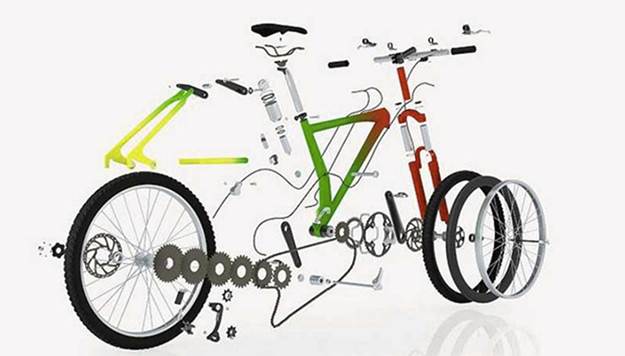
Medizin und Gesundheitswesen

The medical industry has benefited a lot in terms of the use of Metal injection moulding as it is able to manufacture small, precise and biocompatible parts. Metal injection moulding is used to manufacture surgical instruments, orthodontic brackets, orthopaedic implants and housing of devices. Some of the materials supported by the process include stainless steel and titanium, making it very durable and effective in medical use, where it is highly needed.

Aerospace and Defence

Reliability and performance are critical in the aerospace or defence world. Lightweight but high-strength components like turbine parts, structural fittings, weapon components, and precision connectors are commonly produced by means of metal injection molding. By using MIM injection molding, industries can have high dimensional accuracy, strength, and consistency, which are essential in a high-risk environment.

Unterhaltungselektronik

Metal injection moulding is applied in the electronics industry to produce very small and detailed parts like connectors, hinges, phone components and hardware components. The accuracy of MIM injection moulding and the effectiveness of China’s metal injection moulding are a favourable boost to mass production of highly durable, smooth, and lightweight electronic parts.

Construction of Industrial Machinery and Tools.

The Industrial machinery and engineering tools also rely on the use of Metal injection moulding in manufacturing tough and wear-resistant components. Part of cutting tools, locks, fasteners, and mechanical assemblies are usually manufactured by the use of metal injection moulding. This enables the industries to be able to perform, endure, and remain efficient in use even in harsh conditions.

Metal injection molding industrial advantages

Metal injection molding

Kosteneffizienz

Metal injection moulding is very inexpensive. Manufacturers can use complex parts using a minimum of waste materials (using MIM injection molding) and low labour expenses. The companies that depend on China’s metal injection molding are able to get quality components at a low cost.

Precision and Complexity

The process enables one to make complex, high-precision parts otherwise hard or impossible to make using traditional techniques. Completed features, small tolerances, and new designs are backed up with the support of metal injection molding, which is suitable in aerospace, medical, and automotive applications.

Consistency and Reliability.

In the controlled production processes, there is the so-called metal injection molding, which makes each part comply with strict requirements. The use of MIM injection molding and China metal injection molding facilities offers regular and dependable production, which minimizes errors and rework.

Versatility

The components of various industries, such as medical equipment, electronics, and defence, can be produced through the process of metal injection molding. It is flexible, and therefore, manufacturers can respond effectively to the dynamic needs of the market.

Nachhaltigkeit

It minimizes the amount of waste of materials and energy consumed in the process, and hence, metal injection molding is an environmentally friendly manufacturing process. MIM injection moulding encourages sustainable manufacturing with no reduction in quality.

About Dong Guan Sincere Tech

Dong Guan Sincere Tech is a Chinese manufacturer of precision manufacturing that deals with metal injection moulding (MIM) and sophisticated engineering solutions. Having spent years in the business, as well as having the latest technology and a very professional team of technicians, we can boast of being ranked among the best and most trustworthy manufacturers of metal moulding in China.

We offer complete services such as MIM injection moulding, china metal injection moulding solutions, metal injection mould design, custom part development, and high-precision component manufacturing to the automotive, medical, aerospace, electronics, and industrial sectors. Our current manufacturing plants, quality management, and adherence to innovation assure that whatever we produce will exceed the standards of quality, durability, and precision as required and demanded by the international standards.

In Dong Guan Sincere Tech, our motto is to provide the best quality at reasonable costs and provide excellent services to our customers, and this makes us a reliable choice for clients around the world. In case you need the best metal injection moulding services in China, then you have found the best company that you can rely on to deliver the best.

Abschließende Überlegungen

Injection moulding of metals is not a technique, but a revolution in precision engineering. The world is now more innovative, efficient, and reliable through the developments of the MIM injection moulding, the accuracy of each metal injection mould, the power of performance of metal injection moulding, as well as the technological breakthrough of the METAL injection molding. The road of this technology is continuing to develop, and there is more in store that can bring more opportunities to the future of industrial production.

What is Metal Injection Moulding (MIM)?

Metal Injection Moulding is a sophisticated process of manufacturing that involves the use of metal powder and binder material to form complex and high-strength metal components. It enables the creation of detailed, precise as well and hardy parts that can not be easily created using traditional machining.

Which industries can be offered the Metal Injection Molding?

Metal Injection Moulding has found extensive application in automotive, aerospace, medical equipment, electronic, and defence applications as well as industrial equipment. It would be perfect for manufacturing small, complex, and highly precise components that must have a high level of strength and performance.

What are the reasons why Dong Guan Sincere Tech should be selected to provide MIM services?

Dong Guan Sincere Tech is a leading and most reputable manufacturer of metal injection moulding in China. We design and manufacture high-quality production, technology, quality check, competitive prices, and professional support of engineers to achieve high-quality output in any project.

Are you able to meet large volume production?

Yes, we also produce both in small batches and on large scales. We have modern facilities and highly skilled staff that enable us to provide high levels of consistency and efficiency in mass-producing projects and, at the same time, maintain accuracy and reliability.

What are the materials of the Metal Injection Molding?

A very diverse variety of materials, such as stainless steel, titanium, nickel alloys, and special performance metals, are used. To guarantee good performance of a product, each material is chosen in terms of strength, durability, corrosion resistance, and use.

Chinesische Spritzgießunternehmen: Führend in der Präzisionsfertigung

In der schnelllebigen Welt des Gesundheitswesens sind Präzision, Sauberkeit und Konformität mehr als nur Schlagworte, sie sind eine nicht verhandelbare Anforderung. Eine der zugrundeliegenden Technologien, die die Herstellung sicherer, wirksamer und skalierbarer medizinischer Geräte ermöglicht, ist das medizinische Kunststoffspritzgießen. Der Kunststoffspritzguss verleiht Spritzen und Kathetern, chirurgischen Instrumenten und Diagnostikgehäusen ihre Form und trägt durch die Herstellung der Einzelteile wesentlich zur modernen Medizin bei.

Kunststoff-Spritzguss

Der Faktor der Auswahl eines vertrauenswürdigen Herstellers von medizinischen Spritzgussformen ist erwähnenswert. Der richtige Lieferant garantiert, dass Ihr Produkt den strengen Industriestandards entspricht, mit äußerster Präzision arbeitet und auch bei großen Produktionsläufen wirtschaftlich bleibt. Ein Fehlverhalten kann erhebliche negative Auswirkungen haben, wie z. B. Produktrückrufe, Verstöße gegen die Vorschriften oder eine Gefährdung der Patientensicherheit.

Dieser Artikel enthält eine Liste mit den 10 wichtigsten Unternehmen für medizinischen Kunststoff-Spritzguss aus verschiedenen Teilen der Welt. Die Kriterien für die Aufnahme in die Liste sind sehr streng, angefangen bei Zertifizierungen, Innovation, globaler Präsenz und früheren Leistungen. Trotz der Tatsache, dass die globale Natur der Branche viele regionale Akteure umfasst, haben wir die Auswahl auf nur zwei chinesische Unternehmen beschränkt, von denen Sincere Tech eines ist, während die übrigen in den USA, Europa und Israel vertreten sind.

Inhaltsübersicht

Was ist medizinisches Kunststoffspritzgießen?

Es handelt sich um ein Nischenfertigungsverfahren, das zur Herstellung hochpräziser und hochwertiger kunststoffgestützter Komponenten für die Medizin und das Gesundheitswesen eingesetzt wird. Dabei wird geschmolzener Kunststoff in eine speziell bearbeitete Form gespritzt und abgekühlt, bis er erstarrt und seine endgültige Form annimmt.

Wesentliche Merkmale:

  • Präzision und Sauberkeit: Medizinische Gussteile müssen enge Toleranzen einhalten und werden in Reinraumumgebungen hergestellt, um Verunreinigungen zu vermeiden.
  • Biokompatible Materialien: Verwenden Sie für medizinische Zwecke geeignete Kunststoffe wie Polycarbonat, Polypropylen und PEEK, die für die Verwendung im oder am menschlichen Körper sicher sind.
  • Einhaltung von Vorschriften: Die Hersteller müssen Normen wie die ISO 13485-, FDA- und CE-Vorschriften einhalten, um Sicherheit und Wirksamkeit zu gewährleisten.
  • Hohes Volumen und Wiederholbarkeit: Perfekt für die Herstellung großer Mengen einheitlicher, steriler Teile wie Spritzen, Infusionssets, Diagnosegehäuse, Arthroskope, chirurgische Instrumente und Arzneimittelspender.
Kunststoffspritzgussform

Kriterien für die Auswahl

Die folgenden Kriterien helfen bei der Entscheidung, welches Unternehmen das beste im Bereich des medizinischen Spritzgießens ist,

1. Zertifizierung nach ISO 13485 und Einhaltung von Vorschriften

Die international anerkannte Norm für Qualitätsmanagementsysteme in der Medizinprodukteindustrie ist ISO 13485. Darüber hinaus müssen die Unternehmen die FDA- und CE-Vorschriften erfüllen, wenn sie ihre Produkte verkaufen wollen.

2. Fortschrittliche Technologie und Reinraumkapazitäten

Die Unternehmen müssen in der Lage sein, in Reinraumumgebungen (ISO-Klasse 7 oder besser) zu arbeiten und die neuesten Spritzgusstechnologien (Mikrospritzguss und Mehrfachspritzguss) einzusetzen, um die Normen für Hygiene, Kontamination usw. zu erfüllen.

3. Medizinischer Schwerpunkt und Erfolgsbilanz in der Industrie

Zuverlässigkeit und Fachwissen im Bereich der Herstellung medizinischer Komponenten haben eine lange Tradition. Unternehmen, die schon lange im Gesundheitswesen tätig sind, kennen auch die Vorschriften und Leistungsanforderungen besser.

4. Großer Kundenstamm im Gesundheitswesen und globale Reichweite

Globale Unternehmen werden über robuste Infrastrukturen für Qualitätskontrolle, Logistik und Regulierung verfügen, um multinationale medizinische OEMs besser bedienen zu können.

5. F&E und Anpassungsfähigkeiten

Sie bieten nicht nur die Herstellung, sondern auch technische Unterstützung, Design for Manufacturing (DFM) sowie Innovationspartnerschaften, um neue Produkte schnell und effizient auf den Markt zu bringen.

Top 10 der medizinischen Kunststoff-Spritzgießunternehmen.

Sie gehören zu den weltweit führenden Unternehmen in der medizinischen Kunststoffspritzgussbranche. Diese Hersteller, die nach strengen Kriterien wie Qualitätszertifizierungen, technologischer Fortschritt, globale Präsenz und Engagement für Innovation ausgewählt wurden, genießen das Vertrauen der führenden Medizintechnikmarken auf der ganzen Welt. Hier sind die Top 10:

1. Sincere Tech (China)

Sincere Tech ist einer der führenden chinesischen Hersteller im Bereich des medizinischen Kunststoffspritzgusses für globale Kunden. Sincere Tech bietet Reinraum-Spritzguss, Rapid Prototyping und Massenproduktion und ist eine zuverlässige Quelle für hochpräzise medizinische Teile. Das Unternehmen hat sich der Qualität verschrieben, indem es die ISO 13485-Normen befolgt, fortschrittliche Werkzeuge einsetzt und strenge Validierungsprozesse durchführt. Darüber hinaus können OEMs im Bereich Medizintechnik den gesamten Prozess auslagern, einschließlich der Konstruktion von Formen, der Herstellung und sogar der Montage, so dass sie einen kompletten Service mit verschiedenen Unternehmen erhalten.

Aufrichtige Technik

Website: https://www.plasticmold.net/

Firmenprofil:

Seit über 15 Jahren hat sich Sincere Tech auf die Herstellung von Formen und präzisen Kunststoffteilen in China spezialisiert. Dank seiner Qualifikation nach ISO 13485 und seiner hochwertigen Reinräume bietet das Unternehmen wichtige Teile für weltweit tätige medizinische OEMs, die enge Toleranzen benötigen. Das Unternehmen übernimmt die Konstruktion der Formen, die Werkzeugherstellung und die Weiterverarbeitung - alles von einem Standort aus. Da sie die Produktentwicklung von den ersten Schritten bis zur Massenproduktion verwalten können, sind sie für die Herstellung von Medizinprodukten sehr wertvoll.

Bediente Branchen:

Medizinische Geräte, Automobilindustrie, Elektronik und Verpackung.

Warum Sincere Tech wählen?

  1. Unser Präzisionsgusswerk für medizinische Anwendungen erfüllt die strenge Norm ISO 13485.
  2. Bietet alle Dienstleistungen an, vom Entwurf über die Prototypenerstellung bis hin zur Produktion.
  3. Die Fähigkeit, Teile in Reinräumen für kontaminationsfreie Produkte zu formen.
  4. Es bedarf einer guten Qualitätssicherung und Validierung.
  5. Wir bieten wettbewerbsfähige Preise sowohl für kleine als auch für große Kunden weltweit.

2. Phillips-Medisize (USA)

Phillips Medisize ist ein Molex-Unternehmen und ein Branchenriese auf dem Gebiet der integrierten Medikamentenverabreichung, Diagnosegeräte und medizinischen Elektronik. Phillips Medisize ist ein Full-Service-Spritzgießer für medizinische Produkte mit globaler Präsenz und umfassender Erfahrung in komplexen Baugruppen. Das Unternehmen verfügt über hochmoderne Reinraumanlagen, die sowohl Design- und Prototyping-Dienstleistungen als auch automatisierte Großserienfertigungsdienste bieten, falls Sie diese benötigen. Das Unternehmen ist ein führender Innovator von Lösungen für die Verbindung von digitaler Gesundheit und fortschrittlicher Produktverfolgung.

Top 10 Medizinische Kunststoff-Spritzgussunternehmen

Firmenprofil:

Phillips-Medisize ist ein Geschäftsbereich von Molex und konzentriert sich auf die Herstellung von Geräten für die Medikamentenverabreichung, Diagnostik und vernetzte Gesundheit weltweit. Das Unternehmen ist international in den USA, Europa und Asien vertreten und verfügt über Reinräume der ISO-Klassen 7 bis 8. Das Unternehmen bietet Dienstleistungen für jeden Schritt an und kümmert sich um das Design, die Entwicklung, die Prüfung und die vollständige Produktion. Zu den Kunden des Unternehmens zählen einige der weltweit führenden Pharma- und Medizintechnikunternehmen.

Bediente Branchen:

Medikamentenverabreichung, Diagnostik und medizinische Elektronik.

Warum Phillips-Medisize wählen?

  1. Internationaler Betrieb durch Automatisierung verbessert und in Reinraumumgebungen aufrechterhalten.
  2. Kenntnisse über vernetzte Gesundheit und den Einsatz digitaler Technologien.
  3. Eine Geschichte erfolgreicher Zusammenarbeit mit führenden MedTech-Unternehmen.
  4. Alle unsere Betriebe weltweit erfüllen die ISO 13485- und FDA-Normen.
  5. Erfahrung im Umgang mit den Anforderungen großer Fertigungsprojekte.

3. Tessy Plastics (USA)

Tessy Plastics liefert seit Jahrzehnten Hochpräzisions-Kunststoffspritzguss für den medizinischen Sektor und ist für seine ISO 13485-Zertifizierung bekannt. Das Unternehmen verfügt über alle Produkte im eigenen Haus, von der Werkzeugherstellung bis hin zur Automatisierung und Validierung. Das Unternehmen ist vollständig auf den medizinischen Bereich angewiesen und stellt eine breite Palette von chirurgischen, diagnostischen und tragbaren medizinischen Geräten her, die eng mit Kunden und Partnern zusammenarbeiten, um höhere Zuverlässigkeit, einfache Skalierbarkeit und die Einhaltung globaler Vorschriften zu gewährleisten. Das Unternehmen verfügt auch über die Fähigkeit, Mikroformen und Einlegeformen für empfindliche Komponenten herzustellen.

Medizinischer Kunststoff-Spritzguss Unternehmen

Firmenprofil:

Seit 1976 ist Tessy Plastics in New York, USA, als Familienunternehmen im Bereich Präzisionsspritzgießen tätig. Der medizinische Bereich von Bosch konzentriert sich auf chirurgische, diagnostische und tragbare Geräte, die alle nach strengen Qualitätsstandards hergestellt werden. Tessy kombiniert bei seiner Arbeit Automatisierung, fortschrittliche Werkzeuge und Montageverfahren. Die Ingenieure des Unternehmens arbeiten mit den Kunden zusammen, um Probleme in Bezug auf Design, Vorschriften und schnelle Markteinführung zu lösen.

Bediente Branchen:

Medizin, Elektronik und Konsumgüter.

Warum Tessy wählen?

  1. Alle Schritte vom Entwurf bis zum Verkauf liegen in einer Hand.
  2. Zu den wichtigsten Stärken des Unternehmens gehören das Mikroformen und das Spritzgießen von Einlegeteilen.
  3. Über 40 Jahre Erfahrung in der Herstellung medizinischer Geräte.
  4. Das Unternehmen verfügt über Reinraumbereiche der ISO-Klasse 7.
  5. Das Unternehmen ist nach ISO 13485 zertifiziert und hat sich zum Ziel gesetzt, alle Anforderungen für Medizinprodukte zu erfüllen.

4. Gerresheimer (Deutschland)

Gerresheimer ist ein weltweit führendes Unternehmen für medizinische und pharmazeutische Verpackungen mit einer wichtigen Kunststoffspritzguss-Sparte, die in der Lage ist, Arzneimittelverabreichungssysteme, spritzgegossene Diagnosegeräte und vorgefüllte Spritzen herzustellen. Das Unternehmen unterhält mehrere Reinraum-Produktionsanlagen und arbeitet nach den höchsten regulatorischen Standards. Aufgrund seiner vertikalen Integration von Produktdesign über Formenbau bis hin zur Endmontage ist das Unternehmen der bevorzugte Partner von Pharmaunternehmen in aller Welt.

Spritzgießen von medizinischem Kunststoff

Firmenprofil:

Medizinische und pharmazeutische Verpackungsunternehmen kennen Gerresheimer und seine langjährige Erfahrung im Spritzgießen. Weltweit ist das Unternehmen an mehr als 30 Standorten tätig und liefert seinen Kunden Produkte von Insulin-Pens über Inhalatoren bis hin zu Diagnostik-Kits. Die Stärke des Unternehmens liegt in der Abdeckung des gesamten Leistungsspektrums, vom Design bis zur Herstellung der Endverpackung. Aufgrund seiner fortschrittlichen Infrastruktur kann das Unternehmen große medizinische Geräte herstellen, die vielen Vorschriften entsprechen.

Bediente Branchen:

Pharmazeutika, Gesundheitswesen und Diagnostik.

Warum Gerresheimer wählen?

  1. Fertigungslösungen, die ein ganzes System umfassen.
  2. Reinraum-zertifizierte Einrichtungen gibt es an verschiedenen Standorten weltweit.
  3. Neue Entwicklungen sowohl bei der Verpackung als auch bei den Geräten.
  4. Viele führende Pharmaunternehmen verlassen sich auf uns.
  5. Alle medizinischen Vorschriften der EU und der USA werden eingehalten.

5. Nypro Healthcare (Jabil - USA)

Nypro Healthcare ist Teil von Jabil und liefert hochvolumige medizinische Kunststoffspritzgusslösungen für hochkomplexe und stark regulierte Märkte. Mit seinen Automatisierungskapazitäten und seiner technischen Unterstützung verfügt Nypro über Produktionsstätten auf der ganzen Welt. Das Unternehmen konzentriert sich auf anspruchsvolle medizinische Anwendungen wie injizierbare Arzneimittel, Diagnosesysteme und minimalinvasive chirurgische Instrumente. Nypro arbeitet mit seinen Kunden auf der Grundlage eines Partnerschaftsmodells zusammen und stellt sicher, dass F&E, Prototyping und Fertigung gewährleistet sind.

Medizinischer Kunststoff-Spritzguss Unternehmen

Firmenprofil:

Nypro, das zu Jabil Healthcare gehört, bietet komplette CDMO-Dienstleistungen und Spritzguss für medizinische Geräte an. In fünf Regionen der Welt bietet Nypro Großserienproduktion für die Bereiche Chirurgie, Diagnostik und Medikamentenverabreichung an. Dank ihrer Kompetenz in den Bereichen Automatisierung, Einhaltung von Vorschriften und Verkleinerung von Produkten können sich die Kunden gegen die Konkurrenz durchsetzen. Außerdem arbeiten sie von Anfang an an der Konstruktion, wählen wichtige Materialien aus und bauen Prototypen.

Bediente Branchen:

Systeme zur Verabreichung von Medikamenten, Diagnostik und Chirurgie.

Warum Nypro wählen?

  1. Produktionsstätten in mehreren Ländern mit der Möglichkeit, die Produktion zu erweitern.
  2. Detaillierte Kenntnis der Vorschriften auf den geregelten Märkten.
  3. Eine bessere Automatisierung und Montage bringt den Automobilherstellern Vorteile.
  4. Frühzeitige Teamarbeit zwischen F&E und frühem Design.
  5. Führender Anbieter bei der Herstellung von Hochrisiko-Medizinprodukten.

6. Röchling Medical (Deutschland)

Röchling Medical, ein Unternehmen der Röchling-Gruppe, bietet End-to-End-Spritzgießlösungen für Kunden aus der Pharma-, Diagnostik- und Medizinprodukteindustrie. Sie sind weltweit in Europa, den USA und China verfügbar. Zu den Kompetenzen von Röchling gehören Engineering und die Einhaltung von Vorschriften sowie das Spritzgießen im Reinraum. Das Portfolio reicht von Lab-on-Chip-Komponenten bis hin zu kundenspezifischen Gehäusen für chirurgische Geräte, die häufig in vollständig validierten Umgebungen der Klasse 7 hergestellt werden.
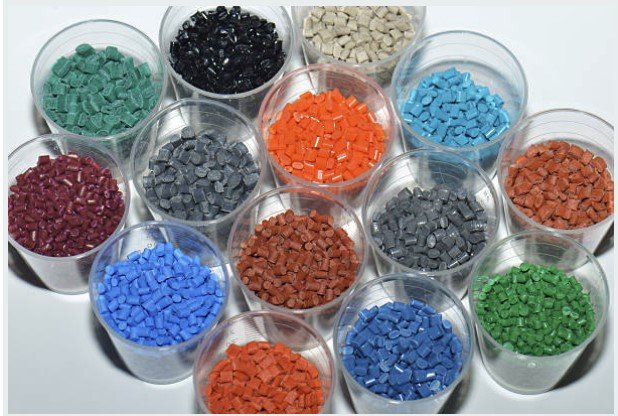
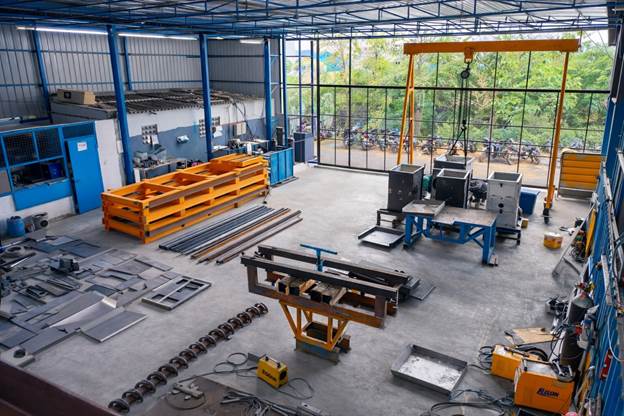
Medizinischer Kunststoff-Spritzguss Unternehmen

Firmenprofil:

Röchling Medical ist als Teil der Röchling-Gruppe tätig und unterstützt die Pharma-, Diagnostik- und MedTech-Industrie auf der ganzen Welt. Das Unternehmen hat sich auf die Bereiche Reinraumguss, Lab-on-chip und Gerätegehäuse spezialisiert und produziert in Deutschland, den USA und China. Röchling bietet technische Unterstützung, regulatorische Funktionen und vollständige Unterstützung für das Produktmanagement von Anfang bis Ende. Die Fertigungssysteme in diesen Einrichtungen unterstützen sowohl kleine als auch große Produktionsläufe.

Bediente Branchen:

Diagnostik, Pharmazeutik und chirurgische Instrumente.

Warum wählen?

  1. Die Unternehmen sind in mehreren Ländern in Europa, China und den Vereinigten Staaten tätig.
  2. Es werden umfassende Dienstleistungen im Bereich der Reinraumfertigung angeboten.
  3. Ich habe in Formgebungsumgebungen der Klasse 7 und Klasse 8 gearbeitet.
  4. Bereitstellung von technischer Hilfe für die folgenden Vorschriften.
  5. Wir sind in der Lage, kundenspezifische Komponenten für medizinische Anwendungen zu entwickeln.

7. Seaway Plastics Engineering (USA)

Seaway Plastics, spezialisiert auf die Produktion kleiner bis mittlerer Stückzahlen, ist ein zuverlässiger Partner für medizinische OEMs, die eine schnelle Abwicklung und flexible Unterstützung benötigen. Zu den Dienstleistungen des Unternehmens gehören Reinraum-Spritzguss, hausinterner Werkzeugbau und Montageservice. Besonders bekannt ist Seaway im Bereich der orthopädischen und chirurgischen Geräte. Das Unternehmen stellt auch Protokolle zur IQ/OQ/PQ-Validierung zur Verfügung, wodurch deutlich wird, dass seine Produkte stark reguliert sind.

Top 10 Medizinische Kunststoff-Spritzgussunternehmen

Firmenprofil:

Seaway Plastics bietet vor allem Spritzgussprodukte für Unternehmen der Medizintechnik in kleinen bis mittleren Stückzahlen an. Die Einrichtungen in Reinräumen der ISO-Klasse 7 ermöglichen sowohl den Formenbau als auch die Validierung und Montage der Endprodukte. Seaway hat sich vor allem mit orthopädischen und chirurgischen Instrumenten einen Namen gemacht. Aufgrund der kurzen Produktionszeiten wenden sich die Kunden sowohl für Muster- als auch für Kleinserienprojekte an diese Unternehmen.

Bediente Branchen:

Orthopädie, chirurgische Instrumente und Diagnostik.

Warum wählen?

  1. Es werden schnelle Prototypenherstellung und geringe Stückzahlen angeboten.
  2. Wir bieten die Entwicklung und Unterstützung unserer eigenen Test- und Automatisierungswerkzeuge an.
  3. Sie können sich darauf verlassen, dass unsere Einrichtungen sowohl nach ISO 13485 zertifiziert sind als auch von der FDA reguliert werden.
  4.  
  5. Spezielle Formen für empfindliche Bauteile sind in Reinräumen möglich.
  6. Bietet dem Kunden vollständige Flexibilität.

8. MedPlast (jetzt Viant - USA)

Dieses Unternehmen, das heute unter dem Namen Viant bekannt ist, ist ein führendes Unternehmen in der Herstellung von medizinischen Geräten. Das Unternehmen ist in der Auftragsfertigung tätig, einschließlich Kunststoffspritzguss, Extrusion, Montage, Verpackung und Sterilisation. Die Kompetenzen des Unternehmens gehen über die Herstellung von implantierbaren Geräten, Diagnosekits und Systemen zur Verabreichung von Medikamenten hinaus. Der Schwerpunkt von Viant auf Design for Manufacturability (DFM) und intensive Qualitätskontrolle macht das Unternehmen zu einem idealen Anbieter für risikoreiche medizinische Anwendungen.

Kunststoff-Spritzgießerei

Firmenprofil:

Das Unternehmen firmiert unter der Marke Viant und bietet eine Vielzahl von Verfahren zur Herstellung von Medizinprodukten an, z. B. Spritzguss und Sterilisation. Die Geschäftsfelder erstrecken sich auf die Märkte für Orthopädie, Diagnostik und Einwegprodukte. Dank der DFM-Fähigkeiten von Viant und der internen regulatorischen Ressourcen sind die Lösungen sowohl sicher als auch skalierbar. Vifor Pharma verfügt über mehr als 25 Einrichtungen rund um den Globus, in denen das Unternehmen sein regulatorisches Know-how einsetzt.

Bediente Branchen:

 Implantierbare Geräte, Diagnostik und chirurgische Systeme.

Warum wählen?

  1. Bietet Dienstleistungen für Design, Herstellung, Formgebung und Sterilisation an.
  2. Nachgewiesene Erfahrung in der Behandlung von schwer behandelbaren medizinischen Problemen.
  3. Für die Welt entworfen, für die Welt produziert.
  4. Sie können Ihre Bestellung nach Bedarf ändern und alle Produkte werden auf ihre Qualität hin kontrolliert.
  5. Alle unsere Einrichtungen sind nach ISO 13485 und FDA zertifiziert.

9. Technoplast (Israel)

Technoplast ist ein aufstrebender Akteur im Bereich des medizinischen Präzisionskunststoffspritzgusses mit Sitz in Israel. Zu den Produkten, die das Unternehmen anbietet, gehören Produktdesign, Rapid Prototyping und Massenproduktion, wobei der Schwerpunkt auf kundenspezifischen medizinischen Komponenten liegt. Zu den Kunden gehören multinationale Hersteller medizinischer Geräte. Technoplast ist bekannt für seine schnelle Markteinführung, da das Unternehmen sehr agil arbeitet und über eine starke Forschungs- und Entwicklungsabteilung verfügt. Technoplast ist außergewöhnlich stark (Kardiologie, Diagnostik, Einwegprodukte).

Medizinischer Kunststoff-Spritzguss Unternehmen

Firmenprofil:

Technoplast ist ein israelisches Unternehmen, das fortschrittliche Kunststoffformen für die Verwendung in medizinischen Geräten anbietet. Das Unternehmen bietet Unterstützung bei der Produktentwicklung, der Herstellung von Prototypen, Formen und der Produktion von Produkten in großem Maßstab. Technoplast ist bekannt für seine Flexibilität, seine effektive Forschung und Entwicklung und seine Erfahrung in der Herstellung von Produkten für die Kardiologie, Diagnostik und Einwegprodukte. Schnelle Lieferzeiten und niedrige Herstellungskosten haben für das Unternehmen oberste Priorität.

Bediente Branchen:

 Kardiologie, Diagnostik und Einwegprodukte.

Warum Technoplast wählen?

  1. Verbesserter Output durch agiles Handeln und schnelles Prototyping.
  2. Hochpräziser Formenbau für detaillierte medizinische Teile.
  3. Innovative Forschung und Entwicklung für medizinische Zwecke.
  4. Hohe Markteinführungsraten der Produkte.
  5. Die Zertifizierung nach ISO 13485 ist mit CE- und FDA-konformen Produkten gekoppelt.

10. TK Mold (China)

TK Mold, das zweite und letzte chinesische Unternehmen auf dieser Liste, ist für seine hochpräzisen Werkzeug- und Spritzgießdienstleistungen bekannt. Das Unternehmen stellt Formen und Komponenten für die Medizintechnik her und exportiert seine Produkte nach Nordamerika, Europa und auf andere asiatische Märkte. Die Stärken des Unternehmens liegen im technischen Design und in der Fähigkeit, diese Ideen sowohl im Formenbau als auch in der Produktion kleiner bis mittlerer Stückzahlen zu verwirklichen. TK Mold verfügt über ein zertifiziertes ISO-Dokument und hält sich an internationale medizinische Standards. Daher ist TK Mold ein gutes Unternehmen für die Auslagerung von Produktionsarbeiten.

TK-Formenbauer

Firmenprofil

TK Mold ist in China für hochwertige Spritzgussformen und Teile für medizinische Geräte bekannt. Ihre Kunden in Nordamerika, Europa und Asien erhalten Reinraumformteile für Anwendungen der Klasse 7. Die Formen werden vom ursprünglichen Design über die Fertigung mittlerer Serien bis hin zu den Nachbearbeitungsschritten unterstützt. Da das Unternehmen nach ISO 13485 zertifiziert ist und internationale Standards erfüllt, hat es sich das Vertrauen eines Offshore-Partners erworben.

Bediente Branchen

Medizin, Elektronik und Automobil.

Warum wählen?

  1. Für die Produktion wird nur eine kleine Anzahl von professionell gestalteten Formen verwendet.
  2. Besonderes Augenmerk gilt der Innovation im Ingenieurwesen.
  3. ISO-zertifiziert und nach den medizinischen Richtlinien.
  4. Bereitstellung von Fachwissen für die EU, die USA und Asien.
  5. Erschwingliche Methoden für die Zusammenarbeit mit OEMs.

Zukunftsperspektiven für Unternehmen, die medizinische Kunststoffspritzgussverfahren einsetzen.

Mit der Entwicklung des Gesundheitswesens wird erwartet, dass sich die Unternehmen des medizinischen Spritzgusses in mehreren wesentlichen Aspekten weiterentwickeln werden. Hier ist, was die Zukunft bringt:

1. Einführung von intelligenten Materialien

  • Die Unternehmen investieren in Materialien wie antimikrobielle, biologisch abbaubare oder bioresorbierbare Polymere, die eine verbesserte Funktionalität bieten.
  • Diese Lieferungen ermöglichen die Verwendung von sichereren und nachhaltigeren medizinischen Einwegprodukten.

2. Ausweitung auf Mikrofluidik und Miniaturisierung

  • Immer mehr verarbeitende Unternehmen sind gezwungen, extrem kleine und komplizierte Teile für Lab-on-a-Chip, tragbare Sensoren und Diagnosegeräte herzustellen.
  • Um wettbewerbsfähig zu bleiben, ist die Fähigkeit zur Mikroverformung erforderlich.

3. Integration von Automatisierung und Industrie 4.0

  • Die fortgeschrittene Automatisierung und die Datenanalyse in Echtzeit werden es den Unternehmen jedoch ermöglichen, ihre Prozesseffizienz, Rückverfolgbarkeit und Qualitätskontrolle zu verbessern.
  • Intelligente Fabriken mit vernetzten Systemen werden menschliche Fehler minimieren, und die Produktivität wird steigen.

4. Kundenspezifische Anpassung und On-Demand-Fertigung

  • Die Nachfrage nach personalisierten Medizinprodukten steigt, so dass die Unternehmen auf eine flexible Serienfertigung setzen.
  • Rapid Prototyping und additive Fertigung können die traditionellen Formgebungsverfahren verbessern.

5. Nachhaltigkeit und Einhaltung von Umweltvorschriften

  • Weltweite Verordnungen zwingen die Unternehmen zum Recycling, zur Verringerung des Abfall- und Energieverbrauchs und zur Reduzierung der Verwendung von nicht wiederverwertbaren Kunststoffen.
  • Die Hersteller machen sich die grünen Initiativen und Praktiken der Kreislaufwirtschaft zu eigen.

6. Verstärkte behördliche Kontrolle

  • Mit dem Aufkommen neuer und innovativer Materialien und Technologien können die Unternehmen mit strengeren Validierungs-, Rückverfolgbarkeits- und Konformitätsprotokollen rechnen.
  • Es wird notwendig sein, in das bürokratische Fachwissen zu investieren, um den Marktzugang weiterhin zu gewährleisten.

7. Strategische Partnerschaften mit MedTech-Firmen

  • Die Unternehmen gehen eine engere Zusammenarbeit mit medizinischen OEMs ein, um gemeinsam innovative, IP-sensitive Lösungen zu entwickeln.
  • Es wird zu einem Wettbewerbsvorteil werden, die frühe Entwurfsphase einzubeziehen.

Schlussfolgerung

Es ist wichtig, den besten Hersteller von medizinischem Kunststoff-Spritzguss zu wählen, um sicherzustellen, dass Ihr medizinisches Gerät in Bezug auf Sicherheit, skalierte Produktion und Einhaltung aller Vorschriften erfolgreich ist. Diese Liste umfasst die Weltelite der Unternehmen, die nicht nur die technischen und rechtlichen Anforderungen der Medizinbranche erfüllen, sondern auch innovative und kundenorientierte Lösungen anbieten.

Angefangen bei den Giganten der Welt wie Phillips-Medisize und Gerresheimer bis hin zu Nischenunternehmen wie Sincere Tech und Technoplast verfügt jeder einzelne von ihnen über ein gewisses Maß an bewährtem Fachwissen und Fähigkeiten im Gesundheitsbereich. Ganz gleich, ob Sie ein neues Diagnoseinstrument entwickeln oder den Ausstoß eines bestehenden Geräts erhöhen wollen, die Zusammenarbeit mit einem dieser zuverlässigen Lieferanten für medizinischen Spritzguss bringt Sie an die Spitze der Qualitätsspezifikationen und des Wettbewerbs.

Seriöse Anbieter von medizinischem Spritzguss garantieren einen Vorsprung bei den Qualitätsmaßstäben und im Wettbewerb auf dem Markt.

FAQs

1. Was ist der medizinische Kunststoff-Spritzguss?

Dabei handelt es sich um ein Herstellungsverfahren, bei dem hochpräzise Kunststoffteile für medizinische Anwendungen mit speziellen Geräten und Materialien unter Einhaltung hoher gesetzlicher Standards hergestellt werden.

2. Warum ist die ISO 13485-Zertifizierung für Unternehmen der medizinischen Formgebung wichtig?

Es stellt sicher, dass das Unternehmen die international anerkannten Standards für Qualitätsmanagementsysteme der Medizinprodukteindustrie einhält, was der Schlüssel zur Einhaltung der Vorschriften und zur Produktsicherheit ist.

3. Welche Materialien werden normalerweise beim medizinischen Spritzguss verwendet?

Zu den gängigen Materialien gehören medizinisches Polycarbonat, Polypropylen, Polyethylen und thermoplastische Elastomere, die biokompatibel und sterilisierbar sein müssen.

4. Wie wirken sich Reinräume beim medizinischen Spritzgießen aus?

Reinräume sind eine kontaminationsfreie Umgebung, die für die Herstellung steriler/empfindlicher medizinischer Komponenten von entscheidender Bedeutung ist, da sie das Risiko einer Kontamination durch Partikel minimieren.

5. Ist es für kleine Unternehmen möglich, die Produktion der großen Hersteller zu erreichen?

Ja. Zahlreiche kleine Unternehmen bieten Nischenexpertise, agile Entwicklung und Rapid-Prototyping-Dienste an, die in der Tat gute Partner für spezialisierte oder kundenspezifische Arbeiten sind.

Chinesische Spritzgießunternehmen: Führend in der Präzisionsfertigung

Heutzutage hat China seine Position als weltweit führender Hersteller von Spritzgussteilen gefestigt und ist zu einer wertvollen Produktionslösung für Unternehmen aller Größen in der Welt geworden, und das zu wettbewerbsfähigen Preisen. Dank seiner großen Zahl von Spritzgussunternehmen ist China zu einem Spezialgebiet für die Herstellung von Kunststoffteilen für das gesamte Spektrum der Industrie geworden, von der Automobilindustrie über Elektronik, Gesundheitswesen und Verpackung bis hin zu Konsumgütern. Sie übernehmen die schwere Arbeit der fortschrittlichen Technologie, der Feinmechanik und der Automatisierung, die zur Herstellung von Formteilen mit unschlagbarer Genauigkeit und Effizienz eingesetzt werden. Die chinesische Spritzgussindustrie bietet mehrere entscheidende Vorteile, für die sich die Unternehmen gerne entscheiden. Eine der größten Anziehungskräfte in Bezug auf die kosteneffiziente Produktion ist, dass die Arbeits- und Produktionskosten in China billiger sind als in westlichen Ländern. Darüber hinaus sind chinesische Spritzgussunternehmen zunehmend mit hocheffizienten, hochmodernen Maschinen und Robotersystemen ausgestattet, die eine effiziente und hochvolumige Produktion bei gleichzeitiger Wahrung der Qualität ermöglichen. Das Unternehmen verfügt über international anerkannte Zertifizierungen wie ISO 9001, ISO 13485 (medizinische Geräte) und IATF 16949 (Automobilkomponenten), um die weltweiten Qualitätsstandards der Branche zu erfüllen.

Chinesische Spritzgießer haben auch die Stärke der Anpassung und Innovation. Die Hersteller in China verfügen über die technischen Fähigkeiten und das Fachwissen, um kundenspezifische Formen für Mehrkavitätenwerkzeuge, Umspritzungen, Einlegeteile und komplizierte Designs zu liefern. Für Unternehmen, die auf Schnelligkeit und Zuverlässigkeit Wert legen, sind die schnellen Durchlaufzeiten und die Produktion in großem Maßstab die beste Wahl.

Inhaltsübersicht

Was ist Spritzgießen?

Dies ist ein Verfahren zur Herstellung von Kunststoffteilen durch Einspritzen von geschmolzenem Material in eine Form. Es ist in den Bereichen Automobilbau, Medizin, Elektronik, Kunststoffverpackungen und Haushaltswaren weit verbreitet. Mit diesem Verfahren werden komplexe Teile mit hoher Präzision und Konsistenz in die Massenproduktion gebracht.

Warum ein chinesisches Spritzgießunternehmen beauftragen?

Erstens hat sich China aus verschiedenen Gründen zu einer wichtigen Drehscheibe für das Spritzgießen entwickelt:

1. Kosteneffiziente Produktion

Die Preisgestaltung ist einer der Hauptgründe, warum sich Unternehmen für chinesische Gießereiunternehmen entscheiden. Da die Arbeits- und Betriebskosten in China niedriger sind als in westlichen Ländern, ist es möglich, hochwertige Formteile zu einem Bruchteil der Kosten herzustellen.

2. Fortgeschrittene Fertigungstechnologie

In modernen chinesischen Spritzgießbetrieben wird viel in die Automatisierung und in modernste Maschinen investiert. Präzision und höchste Produktivität werden von vielen Unternehmen durch den Einsatz von Robotersystemen, computergestütztem Design (CAD) und Qualitätskontrollsystemen in Echtzeit gewährleistet.

3. Hochwertige Standards

Die meisten angesehenen chinesischen Gießereiunternehmen halten sich an internationale Qualitätsstandards wie ISO 9001, ISO 13485 (für medizinische Geräte) und IATF 16949 (Automobilteile). Diese Zertifizierungen garantieren, dass das Produkt den hohen Qualitätsanforderungen entspricht.

4. Personalisierung und Innovation

Viele chinesische Spritzgussunternehmen bieten maßgeschneiderte Lösungen für unterschiedliche Geschäftsanforderungen an. Chinesische Hersteller haben für jeden Kundenbedarf eine Antwort, vom Umspritzen und Einlegen bis hin zu komplexen Mehrkavitätenmodellen.

5. Schnelle Durchlaufzeiten

Chinesische Spritzgussunternehmen können aufgrund effizienter Lieferketten und gestraffter Produktionsprozesse effizienter und schneller als die meisten Konkurrenten in großen Mengen produzieren. Unternehmen, die auf Schnelligkeit angewiesen sind, um Produkte auf den Markt zu bringen, brauchen die Unterstützung dieser Schnelligkeit.

6. Erfahrung und Fachwissen

In der chinesischen Spritzgussindustrie gibt es Tausende von spezialisierten Unternehmen, die über umfassende Erfahrungen in all diesen Bereichen verfügen. Sie gelten als die bevorzugte Wahl für globale Unternehmen in den Bereichen Formenbau, Materialauswahl und Präzisionstechnik.

Branchen, die von chinesischen Spritzgießern profitieren

Die Anwendung des Spritzgießens ist sehr breit gefächert und findet in verschiedenen Branchen statt, die alle ihre eigenen Standards und Technologien haben.

1. Autoindustrie

Chinesische Spritzgussunternehmen stellen Teile wie Armaturenbretter, Stoßstangen, Innenverkleidungen und Beleuchtungskomponenten für den Automobilsektor her, der in hohem Maße auf diese Unternehmen angewiesen ist. Ein entscheidender Vorteil ist die Fähigkeit, leichte, aber haltbare Kunststoffteile herzustellen.

2. Elektronik und Konsumgüter

Chinesische Spritzgussunternehmen haben sich auf die Herstellung von Hochpräzisionsteilen für die Elektronik- und Konsumgüterindustrie und verschiedene andere Produkte spezialisiert. Es werden immer mehr ästhetisch ansprechende, langlebige und funktionale Kunststoffteile benötigt.

3. Medizin und Gesundheitswesen

In Geräten wie chirurgischen Instrumenten, Spritzen und IV-Anschlüssen werden hochwertige Spritzgussteile verwendet, auf die die medizinische Industrie nicht verzichten kann. Je nach Medizintechnikhersteller verfügen viele chinesische Spritzgussunternehmen über Reinraumanlagen für strenge Hygiene- und Sicherheitsstandards in der medizinischen Fertigung.

4. Verpackungs- und Lebensmittelindustrie

Das Spritzgießen wird auch für eine andere wichtige Anwendung eingesetzt, nämlich für Kunststoffverpackungen, zu denen Behälter, Verschlüsse und Flaschen gehören. Die chinesischen Hersteller produzieren einerseits hochwertige und langlebige Verpackungslösungen, andererseits sind sie umweltfreundlich.

Die wichtigsten Akteure der chinesischen Spritzgießindustrie

Das Spritzgießen hat sich in China zu einem führenden Produkt für Branchen wie Automobilbau, Gesundheitswesen, Elektronik und Konsumgüter mit hoher Qualität und Kosteneffizienz entwickelt. Chinesisch Spritzgießunternehmen durch fortschrittliche Fertigungskapazitäten, hochmoderne Ausrüstung und die Einhaltung internationaler Qualitätsstandards weiterhin führend auf dem Weltmarkt. Es gibt einige bekannte chinesische Unternehmen, die sich auf die Herstellung von Kunststoffteilen spezialisiert haben.

Sincere Tech: Ein führender Anbieter von Lösungen für das Kunststoffspritzgießen 

Sincere Tech wurde 2005 gegründet und hat seinen Sitz in der chinesischen Provinz Dongguan. Das Unternehmen ist seit mehr als 10 Jahren als Lieferant von Kunststoffspritzgussformen bekannt. Das Unternehmen hat seine Fähigkeiten erweitert, um Dinge wie Eddie-Gussformen, Silikonkautschukformen, CNC-Bearbeitung und komplette Produktmontage einzubeziehen und ist in einer Vielzahl von Branchen auf der ganzen Welt tätig.

Vielfältiges Angebot an Dienstleistungen

Sincere Tech bietet komplette Fertigungslösungen für Kunden mit den folgenden Arten:

  • Das Unternehmen bietet Produkte wie kundenspezifische Kunststoff-Spritzgussformen an und ist in der Lage, hochpräzise Formen für die Massenproduktion von langlebigen und präzisen Kunststoffkomponenten zu entwerfen und herzustellen.
  • Präzisionsbearbeitung - Die CNC-Bearbeitung, das Fräsen, Bohren, Drehen und Schleifen, die von Sincere Tech durchgeführt wird, erfolgt mit komplettem Fachwissen, um sicherzustellen, dass jedes Teil mit Präzision und hoher Qualität hergestellt wird.
  • Um den Herstellungsprozess zu verbessern, erreicht der Druckgussformenhersteller seinen Erfolg durch die Herstellung von qualitativ hochwertigen und leistungsstarken Druckgussformen und deren Zusammenbau, um langlebige Metallkomponenten zu produzieren, die die Spezifikationen der strengen Industrieanforderungen erfüllen.
  • Wir bieten Spritzgießdienstleistungen an, indem wir fortschrittliche Kunststoff-Spritzgießmaschinen einsetzen, um Komponenten aus den folgenden Materialien wie PP, ABS, PPS, PEEK, PA66+GF30 herzustellen.
  • Produktmontagedienstleistungen - Das Unternehmen montiert effizient Unterbaugruppen, einfache Baugruppen und vollständig montierte Produkte unter Einhaltung strenger Qualitätsstandards.
  • Sincere Tech bietet Silikonformungslösungen für spezifische Projekte in verschiedenen Branchen.

Engagement für Qualität und technologischen Fortschritt

Dennoch hält sincerely tech den höchsten Qualitätsstandard aufrecht, indem es internationale Normen wie ISO 9001:2015 und QS 9000:2015 erfüllt. Zur Herstellung von Formen und Teilen bester Qualität setzt das Unternehmen fortschrittliche Maschinen ein, darunter CMM-Maschinen, 5-Achsen-CNC-Maschinen und FANUC-Maschinen. Sincere Tech bietet seinen Kunden auch NDAs (Non-Disclosure Agreements) zum Schutz des geistigen Eigentums und der geschützten Entwürfe der Kunden zu Vertraulichkeitszwecken.

Für globale Industrien

Als international starkes Unternehmen liefert Sincere Tech Kunststoff- und Metallkomponenten an verschiedene Branchen (Automobil, Medizin, Elektronik, Haushaltsgeräte, Gartenbau, Kosmetik, Lebensmittelverpackungen und elektrische Anschlüsse). Das Unternehmen hat sehr gute Umsätze auf dem Exportmarkt, dessen Produkte in verschiedene globale Märkte, einschließlich Finnland, geliefert werden, da es die verschiedenen branchenspezifischen Normen und Anforderungen erfüllen kann.

Kundenorientierter Ansatz

Sincere Tech legt Wert auf eine wettbewerbsfähige Preisgestaltung, eine hohe Fertigungsqualität und einen guten Service. Als zuverlässiger Partner für internationale Unternehmen verfügt das Unternehmen über gute Projektmanagementfähigkeiten, eine klare Kommunikation in technischem Englisch und eine hohe Kundenzufriedenheit.

Seasky Medical

Seasky Medical ist ein chinesisches Spritzgussunternehmen, das Kunststoffe für medizinische Zwecke herstellt. Das Unternehmen hat seinen Hauptsitz seit 1999 in Shenzhen, Guangdong, und bietet die besten Spritzgießlösungen an. Das Unternehmen bietet Feinformdesign, Materialauswahl und Spritzguss an und kümmert sich auch um die Produktentwicklung, so dass die medizinischen Komponenten den höchsten Qualitäts- und Sicherheitsstandards entsprechen.

Der nach ISO 8 zertifizierte Betrieb von Seasky Medical gewährleistet die Produktion von medizinischen Geräten wie Spritzen, IV-Komponenten und chirurgischen Instrumenten in einer kontaminationsfreien Umgebung. Als Unternehmen mit mehr als einem Jahrzehnt Erfahrung ist Seasky Medical dafür bekannt, zuverlässigen und präzisen medizinischen Spritzguss zu liefern, mit dem sie globale Gesundheitsdienstleister bedienen.

Shenzhen Silver Basis Technology Co, Ltd.

Shenzhen Silver Basis Technology ist ein professioneller chinesischer Formenbauer, der sich auf die Herstellung von Automobil- und Industrieformen spezialisiert hat. Das 1993 gegründete Unternehmen ist einer der zuverlässigsten Lieferanten für weltbekannte Marken wie Peugeot und ZTE und liefert Modelle für verschiedene Anwendungen.

Silver Basis bietet ein umfassendes Angebot an Dienstleistungen in den Bereichen Metallprägung, Druckguss, Formenbau und Produktprüfung. Dank ihrer Kompetenz im Automobilspritzguss können sie Fahrzeugteile für den Innen- und Außenbereich herstellen, die langlebig und präzise sind. Da das Unternehmen auf Qualität ausgerichtet ist, wurde es mit den Zertifikaten ISO 9001 und ISO 14001 ausgezeichnet und ist daher ein Unternehmen, das von internationalen Automobil- und Elektronikherstellern gewählt wird.

JMT Automotive Mold Co. Ltd.

JMT Automotive Mold Co., Ltd. ist ein angesehenes chinesisches Spritzgussunternehmen, das sich mit der Entwicklung und Herstellung von Automobilformen beschäftigt. Seit seiner Gründung im Jahr 2005 hat das Unternehmen mit Sitz in Taizhou, Zhejiang, ein solides Fertigungssystem aufgebaut, um den steigenden Bedarf der Automobilindustrie zu decken.

JMT Automotive Mold verfügt über eine Betriebserfahrung in einer Produktionsstätte von 23.000 Quadratmetern und ist einer der Hersteller, der sich auf SMC-Formen, Haushaltsgeräteformen und Industrieformen spezialisiert hat. Das Unternehmen verfügt über Hochgeschwindigkeits-CNC-Maschinen, Präzisionsprüfgeräte und hochmoderne Spritzgießmaschinen, die zu einem hohen Produktionsstandard führen. JMT Automotive setzt weiterhin auf technologische Innovation und Präzisionstechnik und bietet zuverlässigen Formenbau für Kunden im In- und Ausland.

TK Mold Ltd.

TK Mold Ltd. wurde 1978 gegründet und ist ein bekanntes chinesisches Unternehmen mit mehr als 40 Jahren Erfahrung in der Herstellung von Kunststoffformen. Das Unternehmen wurde 1983 gegründet und ist auf die Entwicklung hochpräziser Formen für medizinische Geräte, Unterhaltungselektronik, intelligente Haushaltsgeräte und Automobilkomponenten spezialisiert.

TK Mold bietet fortschrittliche Spritzgießlösungen für seine globale Kundengruppe von seinen 5 Produktionsstätten aus an, darunter eine in Deutschland. Als Pionier bei der Einführung von Spitzentechnologie, Automatisierung und Präzisionsfertigung wird das Unternehmen von Branchen, die hochleistungsfähige Kunststoffkomponenten benötigen, sehr geschätzt. Alle Produkte von TK Mold sind nach ISO 9001, ISO 13485 und ISO 14001 zertifiziert, um zu gewährleisten, dass sie den internationalen Qualitäts- und Sicherheitsstandards entsprechen.

Guangdong Yizumi Precision Machinery Co, Ltd.

Guangdong Yizumi ist ein führendes chinesisches Spritzgießunternehmen, das Hochleistungs-Spritzgießmaschinen und Kunststoffkomponenten herstellt. Yizumi wurde im Jahr 2002 gegründet und hat seinen Hauptsitz in Foshan, Guangdong. Mit über 600.000 Quadratmetern Produktionsfläche und fast 3.000 Mitarbeitern hat sich Yizumi zu einer Weltmarke entwickelt.

Yizumi hat zahlreiche Branchenpreise für seine Innovationen in der Spritzgießtechnik gewonnen und ist für seine innovativen Lösungen bekannt. Im Jahr 2015 wurde das Unternehmen als erstes chinesisches Spritzgussunternehmen an der Börse von Shenzhen notiert. Yizumi konzentriert sich auf Anwendungen in den Bereichen Automobil, Unterhaltungselektronik und Industrie und wird mit seinem hochmodernen Maschinenpark und hochpräzisen Gussteilen zu einem führenden Unternehmen der Branche.

Herausforderungen und Überlegungen bei der Auswahl eines chinesischen Gussformunternehmens 

Chinesische Bergbauunternehmen bieten viele Vorteile, doch bevor man sich an einen Hersteller wendet, sollte man sich einiger Aspekte bewusst sein.

1. Qualitätskontrolle und Einhaltung der Vorschriften

Nicht alle Hersteller halten sich an dieselben Qualitätsstandards. Bevor Sie sich für einen Anbieter entscheiden, sollten Sie die Zertifizierungen überprüfen und zunächst ein Muster testen.

2. Schutz des geistigen Eigentums

Die Herstellung in China kann ein Problem für die Auslagerung des Schutzes des geistigen Eigentums darstellen. Um zu vermeiden, dass ihre Entwürfe verloren gehen, und um sie zu schützen, sollten Unternehmen mit vertrauenswürdigen Partnern und rechtlichen Vereinbarungen arbeiten.

3. Kommunikation und Sprachbarrieren

Zwar verfügen einige chinesische Hersteller über englischsprachige Verkaufsteams, doch ist die Kommunikation nicht immer einfach. Um Missverständnissen vorzubeugen, werden Unterlagen und Vereinbarungen vorbereitet.

4. Logistik und Versand

Die Abwicklung von Großaufträgen auf internationaler Ebene kann jedoch komplex und kostspielig sein. Chinesische Gießereiunternehmen sollten sich mit den Zollbestimmungen, Vorlaufzeiten und Frachtkosten der Unternehmen auskennen.

Zukünftige Trends im chinesischen Spritzguss

Mit den neuen Technologien entwickelt sich auch die chinesische Gießereiindustrie weiter, um die neuen Marktanforderungen zu erfüllen. Zu den wichtigsten Trends gehören:

1. Nachhaltige und umweltverträgliche Materialien

Mit der zunehmenden Besorgnis über Kunststoffabfälle in China haben sich viele Formteilhersteller mehr Gedanken über Umweltvorschriften gemacht und entwickeln nun biologisch abbaubare sowie recycelte Kunststoffmaterialien.

2. Intelligente Fertigung und Industrie 4.0

Die Automatisierung und die KI-gesteuerte Qualitätskontrolle, die vollständige Umstellung von einem menschenzentrierten Prozess zu einer IoT-fähigen intelligenten Fabrik hat den Spritzgießprozess vollständig verändert und sorgt für eine effizientere Produktion und weniger Verschwendung.

3. Verstärkte kundenspezifische Anpassung und On-Demand-Produktion

Der Schwerpunkt der Unternehmen verlagert sich auf die On-Demand-Produktion von Kleinserien für Nischenmärkte und die schnelle Produktentwicklung.

Schlussfolgerung

Chinesische Spritzgussunternehmen sind ein fester Bestandteil der globalen Fertigungsindustrie, da diese Unternehmen kosteneffiziente, qualitativ hochwertige und innovative Lösungen für Kunden anbieten. Einige dieser Hersteller fertigen Kunststoffteile für Automobilkomponenten, medizinische Geräte und andere verwandte Branchen. Bei der Auswahl eines chinesischen Spritzgussunternehmens sollten Unternehmen die Qualitätsstandards, die Bequemlichkeit der Kommunikation und die Logistik genau prüfen, um eine erfolgreiche Partnerschaft zu gewährleisten. Aufgrund des kontinuierlichen Trends zu technologischen Fortschritten und nachhaltigen Praktiken werden chinesische Spritzgussunternehmen noch viele Jahre lang führend im Spritzguss sein. In Anbetracht der vielen Vorteile sollten Unternehmen jedoch Qualitätskontrolle, Schutz des geistigen Eigentums, Kommunikationsprobleme und Logistik abwägen, bevor sie sich für einen chinesischen Spritzgusspartner entscheiden. Wenn jedoch gründlich recherchiert wurde und mit Herstellern zusammengearbeitet wird, die qualitativ hochwertig produzieren und für ihre Arbeit zertifiziert sind, können die Unternehmen die Vorteile des chinesischen Know-hows beim Spritzgießen nutzen. In Zukunft wird der Spritzguss in China von nachhaltigen Materialien, intelligenter Fertigung, Hochgeschwindigkeitsproduktion und produktionsgesteuerter Automatisierung in Verbindung mit biologisch abbaubaren Kunststoffen und Industrie 4.0-Technologien geprägt sein, und China wird immer noch die größten Fortschritte im globalen Spritzguss machen. Da sich die chinesischen Spritzgussunternehmen kontinuierlich weiterentwickeln und ihr Bestes tun, um das Gesicht der chinesischen Fertigung zu verändern, werden sie die moderne Fertigung weiter vorantreiben.

Häufig gestellte Fragen (FAQs)

1. Warum ist die Herstellung von Spritzgussteilen aus China so beliebt?

Die Entscheidung für China als Standort für das Spritzgießen bietet den Vorteil einer kostengünstigen Produktion, moderner Technologie, gut ausgebildeter Arbeitskräfte und einer gut organisierten Lieferkette. Es gibt viele Hersteller, die internationale Qualitätsstandards einhalten und maßgeschneiderte Lösungen mit sehr kurzen Durchlaufzeiten anbieten.

2. Welchen Nutzen haben chinesische Spritzgießunternehmen für die Industrie?

Alle diese Branchen sind vom chinesischen Spritzguss abhängig, darunter die Automobil-, Elektronik-, Medizintechnik-, Verpackungs- und Konsumgüterindustrie. Chinesische Hersteller können die für diese Branchen benötigten hochpräzisen Kunststoffteile effektiv und kostengünstiger herstellen.

3. Wie garantieren chinesische Spritzgießer die Produktqualität?

Zuverlässige chinesische Gießereiunternehmen kontrollieren die Qualität von den Rohstoffen bis zu den fertigen Produkten streng und verfügen über die folgenden Zertifikate: ISO 9001, ISO 13485 (Medizintechnik) und IATF 16949 (Automobilteile). Mit ihren Prüfverfahren und automatisierten Inspektionssystemen erfüllen sie hohe Standards.

4. Was ist die Auswahl eines chinesischen Gussformherstellers?

Qualitätszertifikate, Erfahrung, Produktionskapazitäten, Schutz des geistigen Eigentums und die Fähigkeit zur Kommunikation und logistischen Unterstützung sollten von den Unternehmen in Betracht gezogen werden. Musterprüfungen und die Sicherstellung der Lieferfähigkeit des Unternehmens sollten durchgeführt werden, um den Weg für eine gute Partnerschaft zu ebnen.

5. Wie sind die Aussichten für die chinesische Spritzgussindustrie?

Die Zeiten, in denen wir leben, verlangen von der Industrie, neue Trends zu finden, um sie zu lösen, einschließlich nachhaltiger und biologisch abbaubarer Kunststoffe, KI-gestützter Automatisierung, intelligenter Fabriken und bedarfsgesteuerter Produktion. Diese Fortschritte werden die Produktion effizienter machen, weniger Abfall verursachen und die ständig wachsende Nachfrage nach umweltfreundlichen Lösungen für die Produktion befriedigen.

Die Wahl des besten Formenbauers in China: Ein umfassender Leitfaden

China ist führend im verarbeitenden Gewerbe, insbesondere im Bereich des Formenbaus. Die große Nachfrage nach hochwertigen Kunststoffprodukten auf der ganzen Welt hat dazu geführt, dass sich Unternehmen weltweit an chinesische Formenbauer wenden, um Präzision, Kosteneffizienz und Innovation zu erhalten. Dieser Beitrag hilft Ihnen bei der Suche nach dem besten Formenbauer in China, den Schlüsselfaktoren, die Sie bei der Auswahl des besten Formenbauers in China berücksichtigen sollten, den Vorteilen der Zusammenarbeit mit einem chinesischen Formenbauer und der Auswahl eines chinesischen Formenbauers für Ihr Unternehmen. Das Spritzgussverfahren wird sehr häufig in der Fertigung eingesetzt und beinhaltet das Einspritzen von geschmolzenem Kunststoff in eine Form, um hochpräzise Teile herzustellen. Dieses Verfahren ist in Branchen wie der Automobilindustrie, der Elektronik, der Medizintechnik und der Konsumgüterindustrie unverzichtbar. In den letzten Jahrzehnten ist China im Bereich der Formenherstellung zur Weltspitze aufgestiegen und liefert hochwertige Formen zu einem erschwinglichen Preis. 

Die Zahl der chinesischen Formenbauer ist so stark angestiegen, dass sie den Weltmarkt mit kostengünstigen und innovativen Lösungen beeinflusst hat. Einer der Gründe für die Dominanz des Spritzgusses ist die vorhersehbare Unterstützung der Regierung für die Fertigungsinfrastruktur in China. Der chinesische Spritzgussformenbau besteht aus Tausenden von kleinen Fabriken und großen Hochtechnologiefabriken. In diesen Unternehmen werden fortschrittliche CNC-Bearbeitung, EDM (Electrical Discharge Machining) und automatisierte Verfahren eingesetzt, um Formen mit präziser und schneller Genauigkeit herzustellen. Die chinesische Formenbauindustrie entwickelt sich und wird durch kontinuierliche Investitionen in Technologie und qualifizierte Arbeitskräfte unterstützt, um den internationalen Qualitätsstandards zu entsprechen. Unternehmen, deren Formen hochwertig, langlebig und kosteneffizient sein müssen, sollten sich nach dem besten Formenbauer in China umsehen. Ein zuverlässiger Formenbauer gewährleistet ein gutes Design, die Auswahl hochwertiger Materialien und eine sorgfältige Qualitätskontrolle. In China gibt es Unternehmen, die sich auf den Formenbau spezialisiert haben, um den Spezifikationen der Kunden gerecht zu werden und mehr Flexibilität und Unterschiede in der Produktion zu ermöglichen.

In diesem Beitrag geht es um SpritzgießenFormenbau, CNC-Bearbeitung, Druckguss, Oberflächenveredelung, Qualitätskontrolle, Entwicklung von Prototypen, kundenspezifischen Werkzeugen, Formhöhlen und Materialauswahl.

Inhaltsübersicht

Wachstum und Entwicklung von Chinas Formenbauindustrie

In den letzten Jahren hat die chinesische Formenbauindustrie sehr schnell expandiert. China hat sich zu einem weltweit führenden Unternehmen im Formenbau entwickelt. Mit der zunehmenden Verlagerung der Produktion von Kunststoff-Spritzgussformen aus den Industrieländern nach China hat sich das Land zu einer wichtigen Stadt für den Formenbau entwickelt, die Herstellern weltweit viel zu bieten hat. 

Der Spritzgussformenbau in China ist in einem sehr reichhaltigen Umfeld tätig, da China über eine riesige und diversifizierte Fertigungsindustrie verfügt. In der modernen Fertigungswelt sind Kunststoffformen ein wichtiger Faktor in der Produktion, und die Qualität dieser Kunststoffformen bestimmt in hohem Maße die Effektivität und Genauigkeit aller Produktionsprozesse.

Der Aufstieg von Chinas Spritzgussindustrie

Die chinesische Kunststoffformenbauindustrie spielt eine wichtige Rolle in der chinesischen Fertigung. Die Technologie des Formenbaus steht auch für die Entwicklung der Produktionskapazitäten eines Landes. In den letzten 10 Jahren hat sich Chinas Kunststoff-Spritzgussindustrie schnell entwickelt.

Die Branche wuchs von 2003 bis 2013 stetig um fast 19 Prozent pro Jahr. Der chinesische Sektor der Spritzgießer in China verzeichnete im Gegensatz zu den vergangenen Jahren eine deutliche Verbesserung der Produktionskapazität, der Einnahmen und der Rentabilitätskennzahlen.

Den jüngsten Statistiken zufolge gibt es in China mehr als 1.500 mittelgroße bis große Unternehmen, die Kunststoffformen herstellen. Im Laufe der Jahre stieg ihr Jahresumsatz auf über 160 Milliarden Yuan und wuchs um mehr als 27%. Die Gesamteinnahmen stiegen um fast 14 % auf über 10 Mrd. Yuan. In der Zwischenzeit entwickelt sich die inländische Werkzeugtechnologie weiter, und die lokalen Hersteller werden auf dem Weltmarkt wettbewerbsfähiger.

Technologischer Fortschritt und Marktposition

Der beste Formenbauer in der chinesischen Industrie hat große Fortschritte bei der technischen und produktionstechnischen Effizienz gemacht. Chinesische Unternehmen setzen fortschrittliche Fertigungstechniken ein, die es ihnen ermöglichen, die Präzision der Produkte, die Haltbarkeit der Produkte und auch die Gesamtqualität der Produkte zu verbessern.

Trotz des Fortschritts hat die Spritzgussformindustrie in China eine beachtliche Entwicklung erreicht, aber Länder wie die Vereinigten Staaten und Japan sind immer noch führend auf dem Markt für Hochpräzisionsspritzgussformen. Aber mit der Entwicklung Chinas beginnt sich die Lücke zwischen inländischen und internationalen Wettbewerbern zu schließen.

Die Position der chinesischen Spritzgießer auf dem Weltmarkt hängt davon ab, ob sie in der Lage sind, Spitzentechnologie zu integrieren. Da Automatisierung, KI-gesteuertes Design und Präzisionstechnik auf dem Vormarsch sind, befinden sich chinesische Hersteller in einer perfekten Position, um ihre Akteure in diese Trends einzubinden und mehr Stärke zu erlangen.

Wichtige Produktionsstandorte in China

Geografisch gesehen konzentriert sich die chinesische Formenbauindustrie hauptsächlich auf zwei große Gebiete:

  • Das Jangtse-Flussdelta ist ein wichtiger Schwerpunkt für die Herstellung und den Verkauf von Formen und beherbergt einige der größten und modernsten Produktionsanlagen der Welt.
  • Ein weiteres wichtiges Zentrum für die Herstellung von Spritzgießwerkzeugen, sowohl für den inländischen als auch für den internationalen Markt, ist das Perlflussdelta, ein weiteres wichtiges Zentrum.

Ein großer Teil der chinesischen Kunststoffspritzgussproduktion geht an Märkte wie die Automobilindustrie, die Elektronik, die Medizintechnik und die Konsumgüterindustrie.

Auch die chinesische Formenbauindustrie ist von ausländischen Investitionen geprägt. Fast 50 Prozent des Gesamtumsatzes und des Gewinns der Branche stammen von Unternehmen, die von Investoren aus Hongkong, Macao und anderen internationalen Märkten finanziert werden. Die Beteiligung dieser ausländischen Unternehmen hat dazu beigetragen, dass neue Technologien und andere Qualitätsstandards eingeführt wurden und Chinas Ruf als bester Standort für den Formenbau gestärkt wurde.

Spritzgussformenbau in China

Das Spritzgießen ist ein sehr beliebtes Verfahren zur Herstellung von Kunststoffteilen, bei dem geschmolzenes Material in eine Form gespritzt wird. Dies ist ein notwendiges Verfahren, das unter anderem in der Automobilindustrie, der Elektronik, der Medizintechnik und der Konsumgüterindustrie eingesetzt wird. Glücklicherweise kann der richtige Spritzgießer in China eine Rolle bei der Verbesserung der Produktqualität und der Kosteneffizienz spielen.

Vorteile des Spritzgießens in China

  • Fortschrittliche CNC-Bearbeitung, Funkenerosion (EDM), usw. Chinesische Formenbauer verwenden hochpräzise Geräte, um Formen mit hervorragender Genauigkeit und Festigkeit herzustellen.
  • Globale Produktnachfrage - Aufgrund der globalen Nachfrage können viele Hersteller Maschinen anbieten, die kürzere Vorlaufzeiten haben und Produkte schneller auf den Markt bringen.
  • Mold Design - Ein Formenbauer würde die Installationen zu tun und es zu beheben, das ist der Grund, warum eine Form China würde die besten Lösungen, wenn sie gegeben sind einzigartige Design-Spezifikationen vor allem in der einfachen und komplexen Form Designs.
  • Viele chinesische Hersteller setzen auf umweltfreundliche Praktiken, indem sie den Abfall- und Energieverbrauch reduzieren, recycelte Materialien verwenden und die Produktionseffizienz optimieren.
  • Der beste Formenbauer in China bietet qualitativ hochwertige Formen zu wesentlich günstigeren Preisen als in westlichen Ländern, da die Arbeits- und Materialkosten niedrig sind.
  • China-Industrie, Kunststoff-Formenbauer in China verfügen sowohl über kleine und große Produktion Fähigkeiten, die für jedes Unternehmen, das seine Kunststoff-Form erfordert geeignet ist.

Ein erfahrener und ausgewählter Spritzgussformenbauer in China hilft Unternehmen, die Vorteile fortschrittlicher Technologie, stabiler Fertigungsprozesse und Kostenvorteile zu nutzen und gleichzeitig qualitativ hochwertige Produkte zu erhalten.

Verfahren zur Herstellung von Spritzgussformen

Die moderne Fertigung ist auf den Spritzgussformenbau angewiesen, um viele Kunststoffteile in hoher Qualität herzustellen. Ein Formenbauer erstellt das Werkzeug, indem er das Design der Form entwickelt und es dann in eine prüfbare Form für geschmolzene Kunststoffprodukte bringt. Ein zuverlässiger chinesischer Spritzgussformenbauer folgt festgelegten Schritten, um Formen herzustellen, die gut funktionieren und Geld sparen.

1. Produkt- und Formgestaltung

Produktdesigner entwickeln zu Beginn des Formenbaus ein vollständiges 3D-Modell des Kunststoffteils für technische Zwecke. Das endgültige Produktdesign bestimmt, wie die Form hergestellt wird.

  • Die Abmessungen, das Material und das Produktionsvolumen des Teils.
  • Die Anzahl der Kavitäten (ein- oder mehrkavitäre Werkzeuge).
  • Unser System umfasst Möglichkeiten zur effektiven Kühlung und zum Ausdrücken von Formteilen.

Die Optimierung der Formkonstruktion wird durch fortschrittliche CAD- und CAE-Software-Systeme erleichtert. Erfahrene Kunststoffformenbauer in China untersuchen die Fließmuster der Formen, um Produktionsprobleme im Voraus zu erkennen.

2. Auswahl des Formstoffs

Die Auswahl geeigneter Formmaterialien wirkt sich direkt darauf aus, wie gut Ihr Produkt funktioniert und intakt bleibt. Ein erfahrener Spritzgussformenbauer in China arbeitet mit diesen Standardformenmaterialien:

  • Gehärteter Stahl eignet sich am besten für Produktionslinien, in denen viele Teile hergestellt werden, da er auch bei starker Beanspruchung stabil bleibt.
  • Vorgehärteter Stahl: Leichter zu bearbeiten, aber für mittlere Produktionsserien geeignet.
  • Aluminium ist aufgrund seines geringen Gewichts eine wirtschaftliche Lösung für den Prototypenbau und die Kleinserienfertigung.

Die Auswahl der Form hängt von den Produktionsanforderungen, dem Kunststofftyp und der Lebensdauer der Form ab.

3. CNC-Bearbeitung und EDM-Bearbeitung

Nach der Genehmigung des Formdesigns beginnt unser Produktionsteam mit fortschrittlichen Maschinen mit der Herstellung.

  • Das CNC-System steuert das Präzisionsschneiden von Metallblöcken mit Hilfe von Computer Numbered Control für die industrielle Produktion.
  • Die EDM-Maschine erzeugt durch elektrische Funken komplizierte Details, die CNC-Maschinen nicht erreichen können.

Die besten Formenhersteller in China nutzen ihre Erfahrung, um jedes Formteil perfekt zu bearbeiten, wodurch die Wahrscheinlichkeit von Produktfehlern bei den fertigen Kunststoffteilen verringert wird.

4. Wärmebehandlung und Oberflächenveredelung

Durch die Wärmebehandlung werden die Metallteile gestärkt und die Form wird haltbarer und effektiver. Durch die Wärmebehandlung werden die Formteile fester und können den Produktionszyklen besser standhalten.

Die Form wird nach der Wärmebehandlung durch Oberflächenbehandlungen endbearbeitet.

  • Polieren: Erzeugt eine glatte, hochwertige Oberfläche.
  • Textur: Der Formgebungsprozess umfasst auch Texturierungsvorgänge, um den fertigen Kunststoffartikeln bestimmte Oberflächendesigns zu verleihen.

5. Zusammenbau und Einbau der Form

Alle bearbeiteten und behandelten Formteile werden zu einem fertigen Formsystem zusammengefügt. Dies beinhaltet:

  • Das Werkzeugsystem enthält sowohl die Kern- als auch die Kavitäteneinheit des Kunststoffformwerkzeugs.
  • Das geformte Produkt kann durch Auswerferstifte entnommen werden.
  • Das System umfasst Kanäle zur Steuerung der Werkzeugtemperatur und beschleunigt die Produktionszyklen.
  • Die Führungsstifte und -buchsen helfen dabei, die Formteile während der Produktion korrekt auszurichten.

Um beim Spritzgießen qualitativ hochwertige Ergebnisse zu erzielen, muss die Anpassung der Form korrekt erfolgen. Fachingenieure von Chinas professionellem Spritzgießunternehmen prüfen und verfeinern jedes Formteil, bis es perfekt passt.

6. Schimmeltests und Probeläufe

Der Formenhersteller testet die Form durch erste Spritzgießvorgänge, bevor die reguläre Produktion beginnt. Dieser Schritt stellt sicher, dass:

  • Die Form beweist, dass sie ohne Probleme funktionieren kann.
  • Die Kunststoffteile entsprechen den Qualitätsanforderungen hinsichtlich Größe, Oberflächenqualität und Materialstärke.
  • Die Hersteller nehmen die notwendigen Änderungen zur Verbesserung der Produktqualität vor, bevor sie mit der Massenproduktion beginnen.

Unternehmen, die Kunststoffformen in China herstellen, testen die Formen mit verschiedenen Kunststoffen, um ihre Leistungsfähigkeit und Produktionseffektivität zu prüfen.

7. Änderungen der Form und endgültige Genehmigung

Unser Team nimmt die erforderlichen Änderungen vor, wenn bei den Tests Probleme mit der Leistung oder dem Betrieb festgestellt werden. Dazu können gehören:

  • Das Kühlsystem muss angepasst werden, um die Wärme besser abzuführen.
  • Der Formenbauer passt die Positionen der Auswerferstifte an, um die Entnahme der Teile zu erleichtern.
  • Wir verbessern die Oberfläche der Kavität durch Glätten oder Umformen der Formteile.

Nachdem die Form bei den Kontrollen alle Qualitätsstandards erfüllt hat, ist sie bereit für die Großserienfertigung.

8. Lieferung der Form und Produktionsbeginn

Die zugelassene Form wird zum Spritzgießbetrieb transportiert, wo Produktionsmitarbeiter sie in eine Spritzgießmaschine einbauen. Ein erstklassiger chinesischer Formenbauer bietet technische Hilfe und Wartungsrichtlinien, damit Ihre Form auch in Zukunft noch gut funktioniert.

Die Faktoren, die die Kosten des Spritzgießens beeinflussen

Die Kosten für Kunststoffformen und Kunststoffspritzgussteile sind ein wichtiger Faktor, der den Gesamterfolg eines Fertigungsprojekts bestimmt. Es gibt mehrere Faktoren, die sich auf die Spritzgießkosten auswirken: Komplexität des Teils, Größe, Oberflächenbeschaffenheit, Materialauswahl, Formnester und Produktionsvolumen. Dies kann von Unternehmen untersucht werden, um ihre Entwürfe zu optimieren und die Kosten für die Zusammenarbeit mit professionellen Formenbauern zu senken.

Komplexität des Entwurfs

Die Kosten für den Formenbau hängen direkt von der Komplexität eines Bauteils ab. Fortschrittlichere Werkzeuge, die erforderliche Konstruktion und die zusätzliche Bearbeitung tragen stärker zu einem höheren Preis der Form bei. Um die Kosten zu minimieren, sollten zusätzliche, unnötige Merkmale, scharfe Winkel und Details nach Möglichkeit vereinfacht werden. Wenn ein Teil des Designs einfach gehalten werden kann, kann das Teil sehr kosteneffizient sein, ohne seine Funktion zu beeinträchtigen.

Größe des Bauteils

Natürlich erfordert ein größeres Bauteil eine größere Form, die wiederum mehr Rohmaterial und Bearbeitungszeit verbraucht. Die Gesamtkosten steigen mit zunehmender Größe der Form. Bei spritzgegossenen Teilen besteht einer der wesentlichen Aspekte der Konstruktion darin, dass die Größe des Teils optimiert werden kann, ohne die Leistung zu beeinträchtigen. Die Reduzierung unnötiger Masse (in diesem Beispiel die Reduzierung der Vanilleschoten) kann dazu beitragen, die Produktionskosten zu senken und gleichzeitig die Produktintegrität zu erhalten.

Wahl des Materials

Die Material- und Formkosten hängen stark von der Art des Kunststoffs ab, der für den Formgebungsprozess verwendet wird. Solche Kunststoffe wie verstärkte oder hochleistungsfähige Polymere sind aufgrund ihrer Haltbarkeit und ihrer besonderen Eigenschaften teurer. Wenn außerdem abrasive oder hitzebeständige Kunststoffe verwendet werden, ist gehärteter Stahl erforderlich, um der Abnutzung standzuhalten, wodurch sich die Gesamtkosten erhöhen. Es ist wichtig, ein Material zu wählen, das von guter Qualität ist, aber nicht die Kosten für die Leistung in die Höhe treibt.

Anforderungen an die Oberflächenbeschaffenheit

Die Oberflächenbeschaffenheit von Formteilen wirkt sich sowohl auf die Ästhetik als auch auf die Kosten des Teils aus. Die Hersteller haben die Möglichkeit, eine minderwertige Oberfläche, SPI Finish B-3 oder C, für das Bauteil zu wählen, das nicht zum sichtbaren Teil des Endprodukts gehört. Wenn Sie jedoch eine schöne, qualitativ hochwertige Oberfläche wünschen, müssen Sie im Produktionsprozess zusätzliche Verfahrensschritte durchführen, die zusätzliche Kosten verursachen.

Kavitätenzahl und Produktionsvolumen

Folglich hängen die Kostenüberlegungen stark von der Konfiguration der Kavitäten ab. Das bedeutet, dass die Herstellung eines Einzelkavitätenwerkzeugs billiger ist, aber die Kosten pro Teil höher sind, weil die Produktion ineffizient ist. Werkzeuge mit mehreren Kavitäten oder Familienwerkzeuge haben dagegen eine kürzere Laufzeit und niedrigere Stückkosten, aber höhere Anschaffungskosten.

In diesem Fall sind Einzelkavitätenwerkzeuge für kleine Produktionsläufe vielleicht die kostengünstigste Option. Bei Großserien können Mehrkavitätenwerkzeuge jedoch die langfristigen Kosten durch eine Steigerung der Produktionsleistung und Effizienz erheblich senken.

Methoden zur Schätzung der Kosten für das Kunststoffspritzgießen

Bei der Planung eines Spritzgießprojekts kann die Abhängigkeit von den Preisangaben der Hersteller ein unvollständiges Bild von den tatsächlichen Kosten eines Projekts vermitteln. Es gibt viele Möglichkeiten, das Kostenverhalten beim Kunststoffspritzgießen abzuschätzen, um den Unternehmen zu helfen, eine bessere Entscheidung zu treffen. Es gibt folgende Methoden, die dabei helfen, die Kosten für verschiedene Produktionsvolumina auf organisierte Weise zu berechnen.

Kostenvoranschlag für Spritzgießen in kleinen Mengen 

Die merkmalbasierte Kostenschätzung ist für die Kleinserienfertigung recht effektiv. Die Kosten für die Form beeinflussen den Preis dieses Teils erheblich, daher werden beim Spritzgießen von Kleinserien häufig Schnellwerkzeugtechniken eingesetzt, um die Form schnell herzustellen, so dass nur eine kleine Anzahl von Formen produziert werden kann.

Die Materialpreise werden entsprechend der Geometrie des Teils und den Konstruktionsanforderungen genau geschätzt. Außerdem muss die richtige Spritzgießmaschine aus einer Datenbank mit einer Reihe von verfügbaren Maschinen ausgewählt werden, die die Zykluszeit auf der Grundlage der Bauteilgeometrie, der Materialeigenschaften und der Maschinenspezifikationen optimieren.

Ein weiterer wichtiger Schritt bei der Kostenabschätzung ist die Wahl der Formgrundlage. Zur Auswahl der effizientesten Formkonfiguration können Standardformgrößen von bekannten Formherstellern verwendet werden. Wenn die Herstellungs- und Materialkosten für verschiedene Kavitätenanordnungen berechnet werden, kann die wirtschaftlichste Anordnung ermittelt werden.

Merkmalsbasierte Kostenabschätzung für die Massenproduktion

Eine Methode zur Schätzung der Merkmalskosten eignet sich am besten für die Großserienfertigung. Aufgrund der großen Anzahl von Einheiten, die in einem bestimmten Produktionslauf hergestellt werden, verteilen sich die Werkzeugkosten auf eine größere Anzahl von Einheiten, und es können haltbarere, hochpräzise Werkzeuge verwendet werden, auch wenn diese im Vorfeld teurer sind.

Ausgehend von den aktuellen Rohstoffpreisen werden Schätzungen der Materialkosten auf der Grundlage der Teilegeometrie vorgenommen. Ein weiterer Faktor ist die Auswahl der am besten geeigneten Spritzgießmaschine, um die Produktionskosten zu senken und die Zykluszeit zu verkürzen.

Die Werkzeugbasis muss anhand der Größen und Kategorien von Standardwerkzeugen ausgewählt werden, um die Werkzeugkosten berechnen zu können. Unmittelbar danach wird der benötigte Formaufbau entsprechend der Teilegeometrie und den Produktionsanforderungen ausgearbeitet. Mathematische Auswertungen mehrerer Kavitätenkonfigurationen ermöglichen es Unternehmen, die kostengünstigste Kavität zu ermitteln, die Material-, Herstellungs- und Werkzeugkosten kombiniert.

Kostenvoranschlag für Kunststoffformen

Die Kosten für die Herstellung der Form selbst können auch mit einer anderen Kostenschätzungsmethode auf der Grundlage der Merkmale bestimmt werden. Die Abmessungen des Teils und die erforderlichen Merkmale wie die Anzahl der Kavitäten sollten die beabsichtigte Standardformgröße vorgeben. Die Verarbeitungsanforderungen und der Gesamtpreis hängen von der Art des Werkzeugs ab, dem SPI-Standardwerkzeug oder dem Rapid-Prototype-Typ für die Kleinserienfertigung.

Mit einem schnellen Formenbau können Formen in kürzeren Zeiträumen hergestellt werden, was die Vorlaufzeit für Produkte mit geringen Stückzahlen verkürzen kann. Bei der Massenproduktion werden sich jedoch hochpräzise Formen, die auf Langlebigkeit ausgelegt sind, zu einem späteren Zeitpunkt als kostengünstigere Option erweisen.

Ansatz zur Schätzung der Durchschnittskosten

Ein Kostenrechner für das Spritzgießen vermittelt eine grundlegende Vorstellung davon, was ein Spritzgießauftrag ohne Teilegeometrie kosten würde. Für diese Methode des schrittweisen Prozessübergangs werden auch zusätzliche Prozessparameter wie Materialauswahl, Anzahl der Angüsse, Anzahl der Komponenten usw. benötigt.

Eine Preisdatenbank hilft dabei, die Materialkosten der Teile zu ermitteln, aber anpassbare Parameter wie Zykluszeit, Maschinensätze und Arbeitskosten schlüsseln die Produktionskosten auf. Sobald die Werkzeugkosten berücksichtigt sind, wird eine detaillierte Kostenübersicht über die Materialien, die Herstellung und die Werkzeugproduktion erstellt, die den Unternehmen hilft, ihr Budget auf sehr systematische Weise zu planen.

Wichtige Tipps für die Suche nach einem zuverlässigen Spritzgießunternehmen in China

Die Auswahl eines chinesischen Formenbauers ist der Schlüssel für eine gute Produktqualität, eine gute Lieferzeit und eine gute Kostenkapazität. Die Zusammenarbeit mit einem vertrauenswürdigen Spritzgießer in China kann sich aufgrund der Komplexität des Spritzgießprozesses auf den Erfolg Ihres Projekts auswirken. Aus diesem Grund finden Sie hier sechs wichtige Hinweise, auf die Sie bei der Suche nach einem zuverlässigen Fertigungspartner achten sollten.

TIPP 1: Bewerten Sie die Produktqualität

Bei der Auswahl eines Spritzgussformherstellers in China sollten Sie der Produktqualität oberste Priorität einräumen. Die Chancen sind höher, dass das Material, das Sie verwenden, hochpräzise ist, und das Unternehmen wird mehr tun, um sicherzustellen, dass Ihr Produkt auch gut ist.

Bevor Sie eine Partnerschaft eingehen, sollten Sie die folgenden Schritte unternehmen:

  • Auf der Website des Unternehmens können Sie sich über dessen Erfahrung und Managementstruktur informieren.
  • Das Unternehmen sollte Qualitätsmanagement-Zertifizierungen wie die ISO-Normen beantragen.
  • Erkundigen Sie sich, ob er/sie Einzelheiten über andere frühere Projekte hat (Fotos, Fallstudien usw.), und bitten Sie ihn/sie, seine/ihre Fähigkeiten zu bewerten.
  • Fragen Sie ihn, ob er Erfahrung mit der Herstellung ähnlicher Produkte hat.

Seriöse chinesische Formenbauer werden immer sehr deutlich machen, wo sie in Bezug auf Qualitätsstandards und frühere Arbeiten stehen.

TIPP 2: Überprüfen Sie die stabile Produktionskapazität

Ein weiterer wichtiger Faktor bei der Auswahl eines chinesischen Kunststoffformenbauers ist die erforderliche rechtzeitige Lieferung. Angesichts der sehr langen Vorlaufzeiten bei Spritzgussprojekten ist es sehr wichtig, dass der Hersteller in der Lage ist, die Termine konsequent einzuhalten.

Zur Bewertung wird die Produktionskapazität eines Unternehmens ermittelt.

  • Sehen Sie sich an, wie die Einrichtungen und Maschinen auf der Website des Unternehmens aussehen.
  • Suchen Sie nach einer detaillierten Liste von Spritzgießmaschinen und -geräten.
  • Vergewissern Sie sich, dass sie über genügend Produktionslinien verfügen, um die Menge Ihrer eingehenden Aufträge zu erfüllen.

Sie müssen jedoch bedenken, dass ein chinesischer Spritzgussformenhersteller mit stabilen Produktionskapazitäten und einer ausreichend gut ausgestatteten Werkstatt Ihnen helfen wird, Verzögerungen und andere unerwartete Probleme zu vermeiden.

TIPP 3: Sorgen Sie für professionelle technische Unterstützung

Das Spritzgießverfahren ist eine komplexe Technik, und nicht alle Produktdesigner sind Experten im Formenbau. Der beste chinesische Formenbauer sollte Ihnen helfen, Ihr Design zu optimieren und das Produktionsrisiko zu eliminieren.

Frühe Stadien auf dem Weg der Kommunikation scheinen zu sein:

  • Gibt der Hersteller eine Rückmeldung aus professioneller Sicht zu einem möglichen Konstruktionsfehler?
  • Prüfen ihre Ingenieure die Machbarkeit Ihres Werkzeugentwurfs?
  • Sind sie in der Lage, Vorschläge für Verbesserungen zu machen, die die Haltbarkeit und/oder die Kosteneffizienz verbessern?

Ein qualifizierter Spritzgießer in China kann Ihnen helfen, Ihr Projekt zu rationalisieren, indem er technische Herausforderungen im Vorfeld des Formenbaus angeht und kostspielige Überarbeitungen vermeidet.

TIPP 4: Kommunikation ist König oder Königin

Die Zusammenarbeit mit einem Kunststoffformenbauer in China ohne Sprachbarrieren kann zu Missverständnissen und Verzögerungen führen, daher ist eine reibungslose Kommunikation sehr wichtig.

Suchen Sie nach einem Unternehmen, das:

  • Sie verfügt über englischsprachige Vertriebsmitarbeiter, mit denen sie Gespräche führen kann.
  • Mehrsprachige Mitarbeiter sorgen außerdem dafür, dass die Kommunikation auch bei Abwesenheit eines wichtigen Ansprechpartners ununterbrochen läuft.
  • Ermöglicht Ihnen den direkten Zugang zu einem Ingenieur in Ihrer englischen Arbeitssprache für ein technisches Gespräch.

Ein Hersteller mit guten Kommunikationsfähigkeiten wird Ihre Zeit viel besser nutzen und besser verstehen, was Sie wollen, und somit eine viel höhere Effizienz erreichen.

TIPP 5: Vergleichen Sie die Preise für die kostengünstigste Lösung

Das Spritzgießen kann jedoch ziemlich teuer sein, daher ist es sehr wichtig, einen chinesischen Formenbauer zu finden, der wettbewerbsfähige Preise anbieten kann, ohne Kompromisse bei der Qualität einzugehen.

Um das beste Angebot zu sichern:

  • Bitten Sie verschiedene Hersteller, Ihnen mehrere Angebote zu unterbreiten.
  • Vergleichen Sie die Preise für Formkosten, Materialkosten und Produktionsgebühren und vergleichen Sie die Zeitpläne.
  • Untersuchen Sie Möglichkeiten zur Kostenreduzierung, z. B. Formen, die mehr in eine Form passen, oder Rabatte für Großeinkäufe.

Es ist mit einem vertrauenswürdigen Spritzgießer in China, dass Sie Ihre Angebote in Bezug auf die Preisgestaltung transparent sein und wird in der Lage sein, Sie bei der Suche nach einer Lösung, die Ihr Budget passt, ohne viel auf Kosten zu verletzen zu unterstützen.

TIPP 6: Prüfen Sie den Ruf des Unternehmens

Bevor Sie sich endgültig für eine Partnerschaft mit einem chinesischen Kunststoffformenbauer entscheiden, sollten Sie sich unbedingt ein Bild von dessen Ruf auf dem Markt machen. Die Erfahrungen, die ein Unternehmen mit früheren Kunden gemacht hat, sind ein Indikator für seine Zuverlässigkeit und die Qualität seiner Dienstleistungen.

So können Sie den Ruf des Herstellers überprüfen:

  • Geben Sie die Namen alter Kunden an, um Referenzen anzufordern und nach deren Erfahrungen zu fragen.
  • Suchen Sie nach Online-Bewertungen, Kommentaren, von anderen zitierten Bewertungen (Testimonials) oder unabhängigen Ratings.
  • Recherchieren Sie, wie lange das Unternehmen bereits in der Branche tätig ist und mit wem es zusammengearbeitet hat, insbesondere mit bekannten Marken.

Ein positives Kundenfeedback Spritzgießer in China mit einer gut Erfahrung ist eher zu bieten qualitativ hochwertige Ergebnisse und professionellen Service.

Wie wählt man den besten Formenbauer in China?

Die Auswahl des Formenbauers ist keine leichte Aufgabe. Einige der Akteure, an die man denken muss, sind:

1. Erfahrung und Reputation in der Branche

Suchen Sie nach Herstellern mit einer langen Erfahrung in diesem Bereich. Ein erfahrener chinesischer Formenbauer kann auf ein langes Portfolio erfolgreicher Projekte zurückblicken und hat praktische Kundenrezensionen gelesen.

2. Produktionskapazitäten

Vergewissern Sie sich, dass der von Ihnen gewählte Hersteller von Kunststoffformen in China über entwickelte Maschinen und Technologien verfügt. Die hohe Präzision einer komplexen Form kann von einer gut ausgestatteten Fabrik hergestellt werden.

3. Qualitätskontrolle und Zertifizierungen

Der Formenbau ist qualitätsgesichert. ISO-Zertifizierungen sind der Maßstab für einen Top-Formenbauer in China, und strenge Maßnahmen zur Qualitätskontrolle sollten ebenfalls in Betracht gezogen werden.

4. Kommunikation und Kundenbetreuung

Die Kommunikation im internationalen Geschäft ist klar. Arbeiten Sie mit einem Hersteller zusammen, der in der Lage ist, Ihre Bedürfnisse zu verstehen und Sie rechtzeitig zu informieren.

5. Preisgestaltung und Vorlaufzeiten

Vergleichen Sie die Kosten für verschiedene Spritzgussformenhersteller in China. Erschwinglichkeit ist wichtig, darf aber nie auf Kosten der Qualität gehen. Vergewissern Sie sich auch, dass der Lieferant Ihre Terminvorgaben einhalten kann.

Die Rolle von Kunststoffformenbauern in verschiedenen Branchen

Jede von ihnen wird von einem breiten Spektrum von Branchen bedient, die spezifische Formen benötigen.

1. Autoindustrie

Sie müssen in der Lage sein, hochpräzise Formen für Stoßstangen, Armaturenbretter und Motorenteile im Automobilsektor herzustellen. Ein zuverlässiger Kunststoffformenbauer in China garantiert die Dauerhaftigkeit des Projekts und auch die Konsistenz.

2. Medizinische Industrie

Bei medizinischen Geräten und Vorrichtungen müssen die Gesundheitsvorschriften streng eingehalten werden. Die besten Hersteller im Formenbau halten sich an internationale Normen, um Sicherheit und Qualität zu gewährleisten.

3. Elektronikindustrie

Top-Spritzgussformenhersteller in China entwerfen und fertigen komplizierte Designs mit höchster Genauigkeit für Elektronikhersteller für Smartphone-Gehäuse, Leiterplattenkomponenten usw.

4. Konsumgüter

Für Haushaltsprodukte, Spielzeug und Verpackungslösungen werden qualitativ hochwertige Formen benötigt, damit das Produktionsniveau aufrechterhalten werden kann. Die chinesischen Formenbauer können innovative und kostengünstige Lösungen anbieten.

Zukünftige Trends im Formenbau in China

Mit der Entwicklung der Technologie wächst die Formenbauindustrie in China weiter. Einige wichtige Trends, die auf die Zukunft der Welt hinweisen, sind die folgenden.

1. Automatisierung und KI-Integration

Robotik und KI-gesteuerte Systeme werden von vielen Herstellern eingesetzt, um die Präzision zu erhöhen und Wiederholungen zu reduzieren.

2. Umweltverträgliche Materialien

In Anbetracht der zunehmenden Besorgnis über den Plastikmüll erforschen einige chinesische Hersteller von Spritzgussformen nachhaltige Materialien.

3. 3D-Druck im Formenbau

Mit der 3D-Drucktechnologie wird die Prototyping-Phase verändert und die Entwicklungskosten und -zeiten werden reduziert.

4. Verstärkte globale Zusammenarbeit

Internationale Unternehmen gehen Partnerschaften mit chinesischen Formenbauern ein, um die Qualität zu verbessern und ihre internationale Präsenz zu erweitern.

Sincere Tech - Führendes Unternehmen für Formenbau in China

Sincere Tech Co., Ltd. wurde 2005 gegründet und ist ein führendes Unternehmen im chinesischen Formenbau, das umfassende Fertigungslösungen anbietet. Das Unternehmen befindet sich in der Provinz Guangdong und hat seinen Hauptsitz in Dongguan City. Wir sind spezialisiert auf Kunststoffspritzgussformen, Druckgussformen, Silikonkautschukformen und CNC-Bearbeitungsdienstleistungen.

Vielfältiges Serviceangebot

Sincere Tech ist ein Anbieter von Weitverkehrsdiensten, der verschiedene Branchen beliefert.

  • Hochwertiger Kunststoff-Spritzguss: Bei den Produkten handelt es sich um qualitativ hochwertige Kunststoffteile für die Bereiche Automobil, Elektronik, Medizintechnik und Konsumgüter.
  • Das Unternehmen hat sich auf Aluminium-, Magnesium- und Zinkdruckguss spezialisiert, der sich durch Präzision und Vielseitigkeit auszeichnet und die Bedürfnisse der Industrie erfüllt.
  • Das Unternehmen bietet Silikonkautschukformen an und stellt sicher, dass die Produkte nach spezifischen funktionalen und ästhetischen Standards hergestellt werden.
  • Fortschrittlicher CNC-Maschinenpark: Unser Maschinenpark ist mit fortschrittlichen CNC-Maschinen für die Herstellung komplizierter und präziser Teile ausgestattet, die ausgezeichnete Toleranzen und Oberflächengüten aufweisen.
  • Als Anbieter von Dienstleistungen im Bereich Rapid Prototyping und Produktmontage sorgt das Unternehmen mit seinen Dienstleistungen für einen nahtlosen Übergang vom Konzept zur Fertigstellung.

Qualitätssicherung und Zertifizierungen

Im Rahmen der strengen Qualitätskontrollsysteme arbeitet Sincere Tech nach den Normen ISO 9001:2015. Eine Verpflichtung dieser Art garantiert, dass die Produkte ausnahmslos die Erwartungen des Kunden erfüllen und sogar übertreffen.

Klientenzentrierter Ansatz

Sincere tech verfolgt eine kundenorientierte Methodik und bietet daher personalisierte Dienstleistungen an, die von der Beratung bis zur Unterstützung bei der Postproduktion reichen. Dies fördert eine langfristige Partnerschaft und garantiert, dass die Kundenprojekte präzise und effizient durchgeführt werden.

Globale Reichweite und Anerkennung in der Branche

Sincere Tech hat sich in der ganzen Welt eine starke Präsenz erarbeitet. Es ist ein angesehener Marktführer in der Branche für Aluminiumguss mit seinem Ruf als Top-Aluminiumgusshersteller in China und den USA.

Zusammenfassend lässt sich sagen, dass Sincere Tech Co., Ltd. an der Schwelle der Formenbauindustrie steht und somit eine breite Palette von Dienstleistungen anbietet, Qualitätsstandards garantiert und ein kundenfreundliches Unternehmen für Unternehmen ist, die eine zuverlässige und kreative Produktion wünschen.

Schlussfolgerung

Obwohl chinesische Spritzgussformhersteller relativ neu auf dem Weltmarkt sind, haben sie sich in der Spritzgussformindustrie einen hervorragenden Ruf erworben. Dank fortschrittlicher Technologie, qualifizierter Arbeitskräfte und kosteneffizienter Produktion haben sich die chinesischen Formenbauer weltweit einen Namen gemacht. Kurze Vorlaufzeiten, Präzisionstechnik und kosteneffiziente, maßgeschneiderte Lösungen sind die Vorteile, von denen Unternehmen profitieren, die einen zuverlässigen Formenbau benötigen. Automatisierung und umweltfreundliche Verfahren sind auf dem Vormarsch und machen China in der Branche stärker. Die Auswahl des besten Formenbauers in China ist nichts anderes als eine strenge Prüfung seiner Erfahrung, seiner Produktionskapazität, seiner Qualitätskontrolle und seines Kundendienstes. Um die höchsten Standards für den Entwurf, die Herstellung und die Endbearbeitung von Spritzgussformen zu gewährleisten, muss man mit einem zuverlässigen Spritzgussformenhersteller in China zusammenarbeiten. Chinesische Formenbauer können eine ganze Reihe von Lösungen für die Automobil-, Medizin-, Elektronik- und Konsumgüterindustrie anbieten.

Darüber hinaus verfügt der Kunststoffformenbau in China über skalierbare Produktionskapazitäten, und die Unternehmen können lukrativ wachsen, während sie ihre Kosten niedrig halten. Darüber hinaus nehmen sich die Hersteller Zeit, um die Verwendung umweltfreundlicher Materialien und energieeffizienter Verfahren zu prüfen. Insgesamt ist China jedoch nach wie vor der beste Ort für den Spritzgussformenbau, weil es über eine überlegene Technologie verfügt, die Produkte erschwinglich sind und ihre Qualität internationalen Standards entspricht.

FAQs

1. Warum nutzen die Menschen China für die Herstellung von Spritzgussformen?

Die Produktion in China ist auch kosteneffizient, fortschrittliche Technologie, qualifizierte Arbeitskräfte sowie kürzere Vorlaufzeiten machen China zum Weltmarktführer im Spritzgussformenbau.

2. Wie wählt man ein gutes Formenbauunternehmen in China aus?

Wählen Sie einen erfahrenen Formenhersteller aus, der über einschlägige Zertifizierungen, ausreichende Produktionskapazitäten, Qualitätskontrollmaßnahmen und Kundenrezensionen verfügt, bevor Sie eine Auswahl treffen.

3. Welche chinesischen Industrien brauchen Kunststoffspritzguss?

Chinesische Formenbauer unterstützen viele Branchen wie die Automobil-, Elektronik-, Medizin-, Verpackungs- und Konsumgüterindustrie, die qualitativ hochwertige und präzise gefertigte Komponenten benötigen.

4. Sind chinesische Formenbauer in der Lage, komplexe Designs herzustellen?

In der Tat können chinesische Hersteller dank fortschrittlicher CNC-Bearbeitung und Automatisierung hochkomplexe und präzise Formen entwerfen und herstellen.

5. Entspricht der chinesische Spritzgussformenbauer dem internationalen Qualitätsstandard?

Führende ISO-zertifizierte Formenhersteller in China führen ebenfalls strenge Qualitätskontrollen durch, um die weltweiten Industriestandards zu erfüllen.