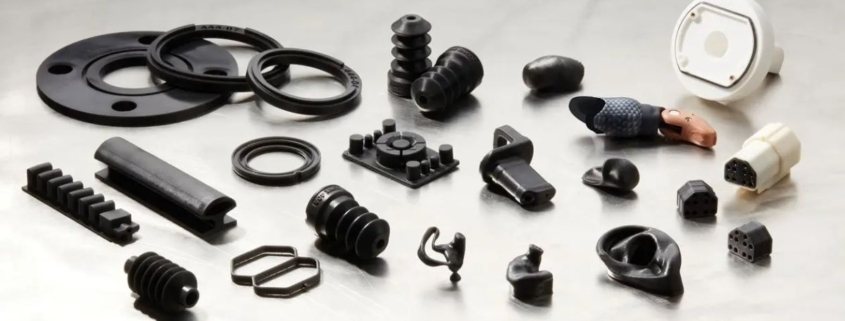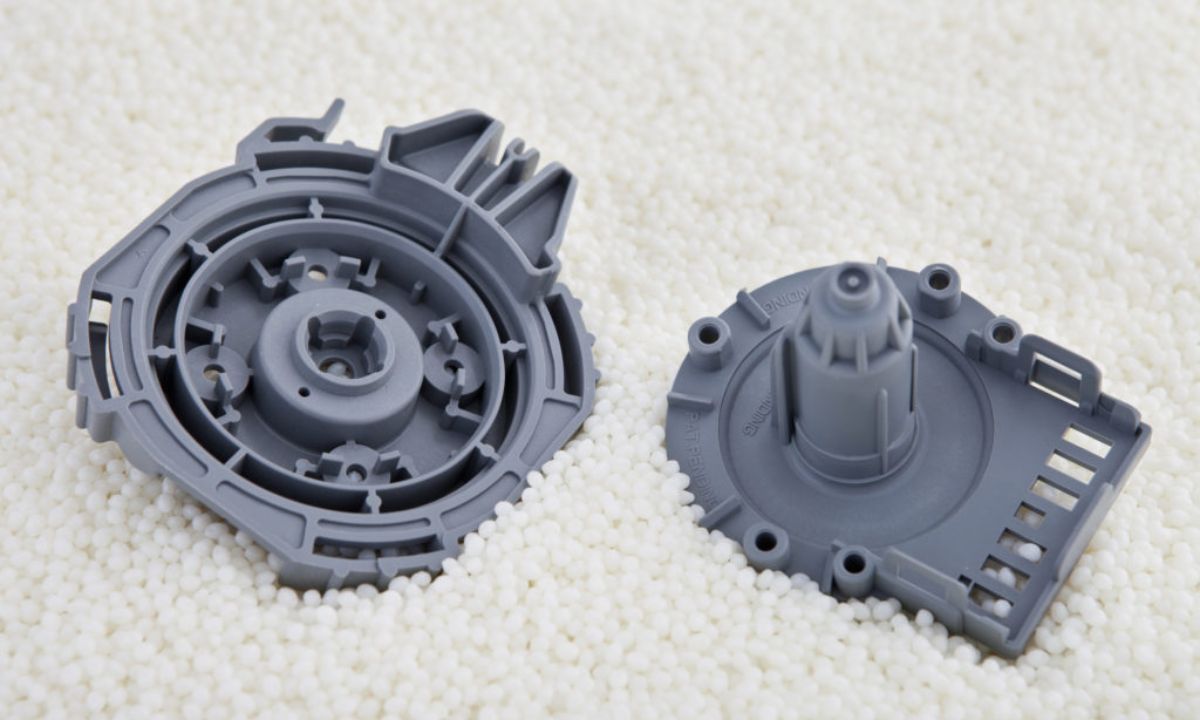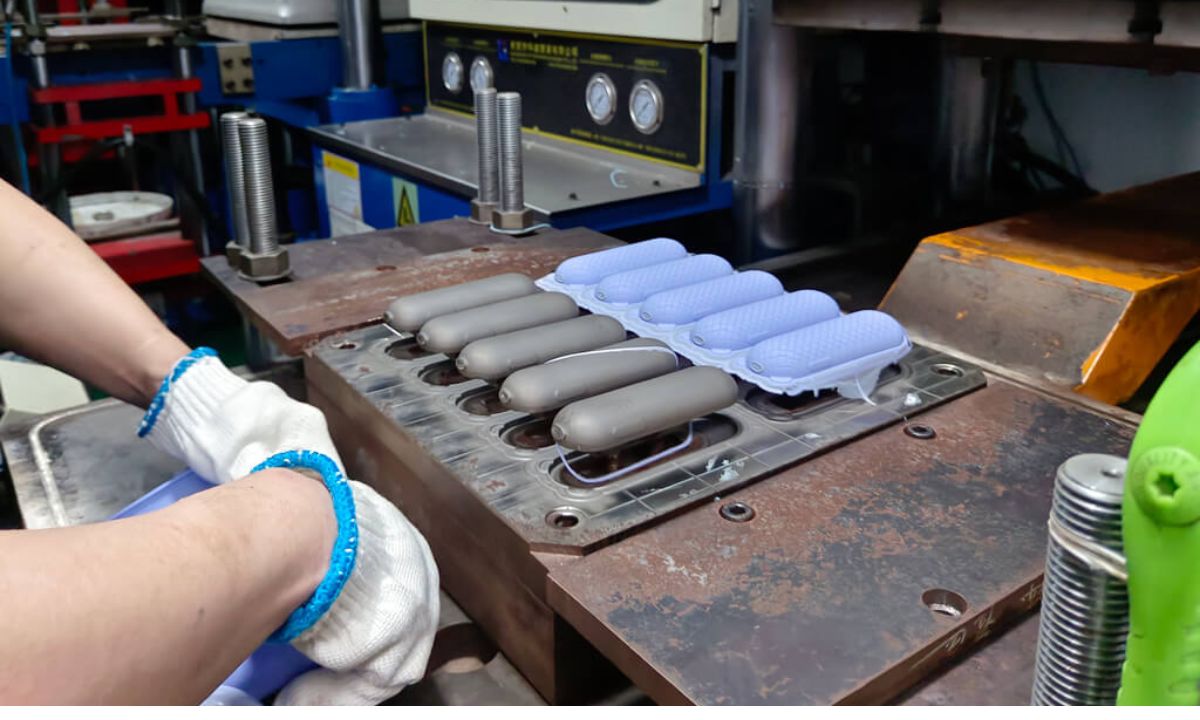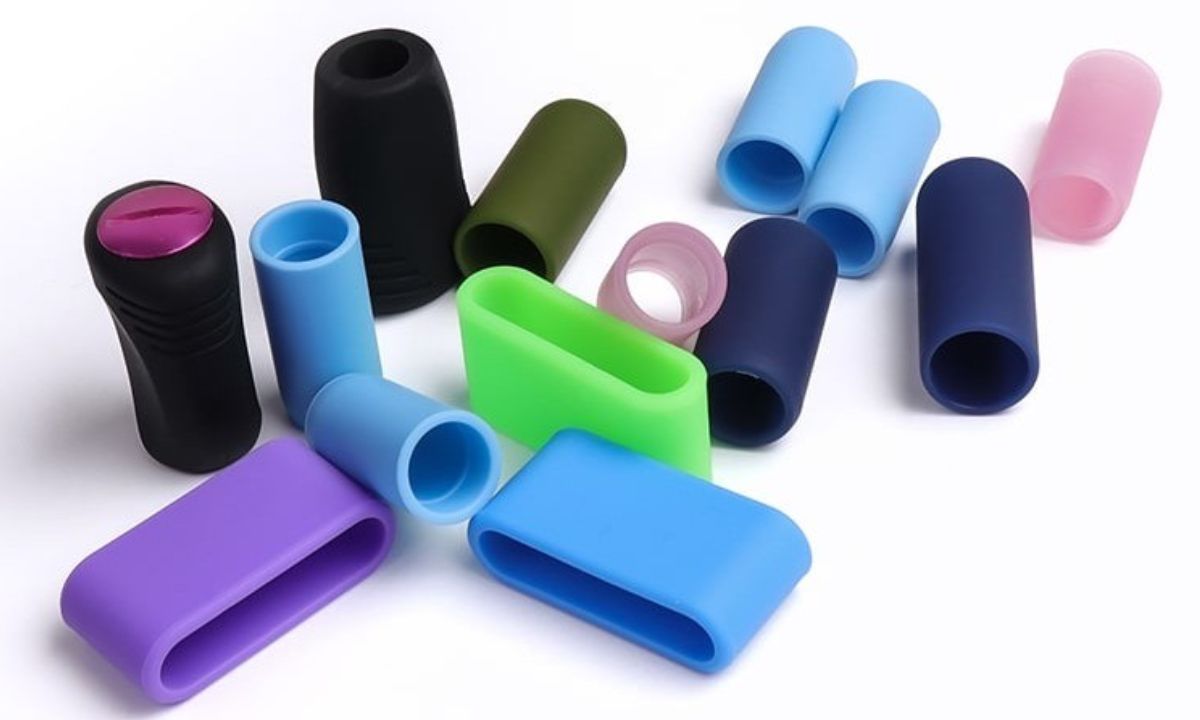
Apprendimento degli strumenti contemporanei per lo stampaggio a iniezione della plastica

The production process in the field of manufacturing has been changing at a high rate in the last several decades, and among the most significant contributors to the development of the field are the developments of plastic injection molding tools. The tools are important in the development of the plastic components that are utilized in various industries like automotive, healthcare, consumer electronics, and packaging industries. Advanced tooling leads to precision, repeatability, and efficiency, which is the cornerstone of present-day plastic manufacturing.

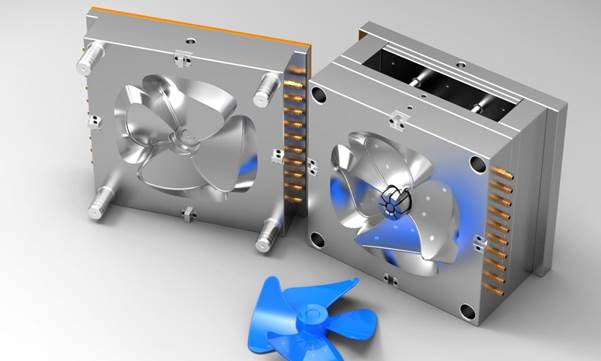
When the companies invest in the plastic injection mold tools, they are investing on the basis of their product quality. These aids in setting the shape of the final, finish, and dimensional accuracy of molded parts. Even the finest molding machines cannot produce the same results in the absence of well-designed stampo ad iniezione per plastica tooling.

What are Plastic Injection Molding Tools?

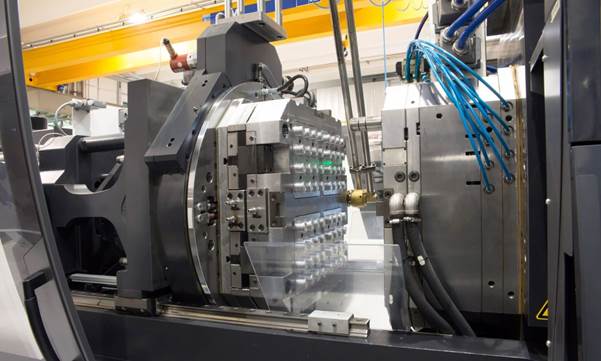
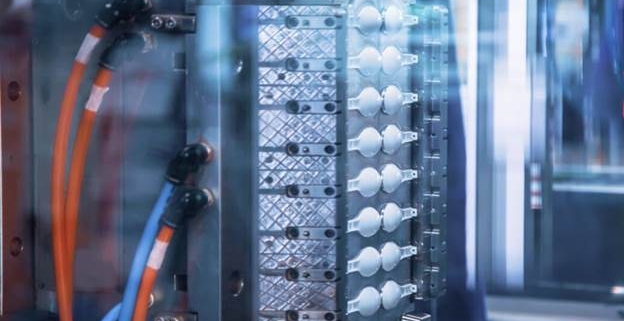
Simply injecting molten plastic into a mold, cooling, and ejecting, the idea of injection molding is at its simplest. The efficiency of the performance of the tooling of plastic injection molding directly influences the efficiency of this process. Tooling comprises molds, inserts, cores, cavities, and cooling systems that constitute the structure that shapes plastic material.

What are Plastic Injection Molding Tools?

Manufacturers utilize the so-called plastic injection mold tools so that they may create thousands, or in some cases millions, of the same parts. The cycle time, volume production, and long-term maintenance are determined by the durability and design of these tools. This is the reason why a proper choice of the partner in terms of plastic injection mold tooling is essential to any production operation.

Forms of Injection Mold Tooling

Injection mold tooling is available in various types to meet production requirements, part complexity, and affordable cost. The right mold will guarantee efficiency, quality parts, and cost-efficiency.

  • Stampi a cavità singola: mold one part each cycle, which is suitable when there is low volume production or prototyping. They are easy and less expensive, yet less fast in mass production.
  • Stampi a più cavità: produce several identical parts at a single cycle, which is best when large volumes are to be manufactured. They save on part cost, although they demand an exact design to fill evenly.
  • Family Molds: The parts are produced in a single cycle by family molds, which minimizes assembly discrepancies. It is harder to design such a cavity since each cavity can fill in varying ways.
  • The Hot Runner Molds: retain the plastic in molten form inside heated channels, thus minimizing waste and cycle time. They suit the mass production of high quality.
  • Stampi a freddo: enable the runners to cast along with the part, which is easier and cheaper, but creates waste of more waste.
  • Two-Plate and Three-Plate Molds: Common mold designs are Two-Plate and Three-Plate Molds. Two-plate molds are easy and affordable to manufacture, whereas three-plate molds enable automatic separation of runners to obtain cleaner parts.
  • Insert Molds: embed the systems of metals or other parts into the component, which removes the need for assembly. The overmold takes a material and gives it another, which insulates or gives it a grip.
  • Prototyping (Soft) Tooling: It is employed with tests or low volume production, whereas Hard Tooling, made of steel, is robust with high volume production. Stack Molds enhance production by molding several layers of parts at the same time.

The choice of appropriate tooling varies with the volume of production, complexity of the part, and the material, which will help in efficiency and quality of the outcome.

Table 1: Types of Injection Mold Tooling

Tooling TypeCavitiesCycle Time (sec)Volume di produzioneNotes
Single-Cavity Mold130–90<50,000 partsLow-volume, prototype
Multi-Cavity Mold2–3215–6050,000–5,000,000High-volume, consistent
Family Mold2–1620–7050,000–1,000,000Different parts per cycle
Hot Runner Mold1–3212–50100,000–10,000,000Minimal waste, faster cycles
Cold Runner Mold1–3215–7050,000–2,000,000Simple, more material waste
Two-Plate Mold1–1620–6050,000–1,000,000Standard, cost-effective
Three-Plate Mold2–3225–70100,000–5,000,000Automated runner separation
Insert Mold1–1630–8050,000–1,000,000Metal inserts included
Overmolding Mold1–1640–9050,000–500,000Multi-material parts

The Advantages of Mold Tooling of High Quality

It has several long term advantages in investing in high-quality plastic injection mold tooling. First, it provides a stable quality of parts in large production lots. Second, it decreases the downtime due to the failure of tools or unnecessary maintenance. Lastly, it enhances the efficiency of production through cooling optimization and optimization of the flow of materials.

The Advantages of Mold Tooling of High Quality

Companies that focus on the production of durable plastic injection molding tools tend to gain lower scrap and increased revenue. Also, properly constructed plastic injection molding tooling has the capability of sustaining elaborate shapes and stringent tolerances, allowing organizations to be innovative without performances.

Design Factors in Mold Tooling

One of the most important requirements in the process of creating plastic injection mold tools is design. The engineers should take into account the choice of materials, the thickness of the wall, the draft angle, and the cooling performance. A good design reduces the stress points and prolongs the life of the tools.

Part complexity is another determinant of the cost of plastic injection molding tooling. Complex forms or undercuts can involve the use of side acts, lifters, or multi-cavity moulds. These characteristics raise the design time and manufacturing costs, but are typically needed with high-performance components.

Since it is required that plastic injection molding tooling should be able to resist high pressure and high temperature, the choice of materials is crucial. Depending on the volume of production and use needs, tool steels, aluminum, and specialty alloys are used.

Parts and Components of Injection Molding Tooling

The tooling used in injection molding is a complicated mechanism that consists of numerous parts that are engineered to the utmost degree. Both components have a certain effect in the process of molding molten plastic into a completed item and ensuring accuracy, efficiency, and repeatability. These characteristics are useful in understanding the manner in which plastic parts of high quality are able to be produced with consistency in large volumes.

Parts and Components of Injection Molding Tooling

Mold Cavity

The hollow which forms the outer shape of the plastic part is called the mold cavity. Molten plastic is injected into the mold and subsequently fills this cavity and hardens to the final product. The size of parts, surface finish, and the look of the parts are dependent on the cavity design. The rate of shrinkage and draft angles should be calculated by engineers to ensure that the part comes out without defects.

Mold Core

The inner geometry of the part is made of the Mold core. It develops features such as holes, recessions, and inside channels, which are critical to functionality and a decrease in weight. In simple molds, cores are fixed, whereas the more complicated parts need to have sliding or collapsible cores to allow undercuts to be freed during the ejection process. The core and cavity are perfectly aligned that provides dimensional accuracy.

Sistema Runner

The runner system is a system of channels that directs the nozzle of the molten plastic of the injection machine to the mold. An effective runner is designed to make the flow balanced in order to fill out all cavities evenly. Defects in the poor design of runners include sink marks, short shot, or warping.

Flow Channels

Flow channels are defined as the individual pathways of the system of the runners where the plastic moves in the mold. These channels should reduce the resistance and not allow the premature cooling of the material. The proper channel design is suitable to keep the material strong and ensure that the wall thickness of the part remains consistent.

Gate

The gate is the little hole through which molten plastic is injected into the cavity. Though it is small, it makes a significant contribution to the quality of parts. Location, size, and style of gate influence the manner in which the mold fills, pressure distribution, and the amount of the gate mark that will be visible on the finished part. Selecting a proper gate design is one way of avoiding stress marks and aesthetic defects.

Sistema di espulsione

The ejector system sends the part out using the ejector system after the plastic has cooled. The part is forced out by ejector pins, sleeves, or plates evenly without breaking or deformation. Ejectors should be placed and ordered properly, particularly for delicate or complicated components.

Sistema di raffreddamento

The cooling system controls the temperature of the mold by pumping water or oil through the system. The cooling is among the most important processes during injection molding since it directly influences cycle time and stability of parts. The irregular cooling may lead to shrinkage, warping, or internal stress. High-technology molds can apply conformal cooling channels that trace the shape of the part to be more efficient.

Alignments and Mounting Characteristics

Elements of alignment, like guide pins and bushings, make sure that every cycle, the halves of the mould are closed perfectly. The mounting features, such as clamps and bolts, are used to hold the mold in the machine. Adequate alignment will eliminate flashing, uneven wear, and mold damage and produce consistent quality parts.

Parts and Components of Injection Molding Tooling

Venting

Venting enables the ambient air and gases to be released from the mold cavity as the plastic fills up the mold. Defects such as burn marks or half-filled can take place without proper venting. Vents are little but necessary in making clean and correct parts.

Slides and Lifters

Slides and lifters are the processes that help the molds to form parts with undercuts or side effects. The angles of the slides move, and the lifters, during ejection, jump to expel the complicated geometries. These elements increase the possibilities of design and remove the necessity of secondary machining.

Mold Materials

The tooling materials have effects on the durability, performance, and cost. High-volume production is carried out with hardened tool steel since it can withstand wear and be precisely accurate. Aluminum molds are cheaper and more common for prototypes or low-volume production. High-performance finishes can enhance the wear and release of parts.

Inserts

Inserts are detachable parts of a mold that are utilized in producing a particular feature, like a thread, a logo, or a texture. They enable molds to be altered or fixed without having to change the tool. The substitutability of inserts allows it to be used to create a variety of products of the same mold base.

Core Pins

Core pins are thinner components that are used to create holes or internal conduits in molded components. They should be well-machined and should be sturdy enough to withstand the pressure of injections without bending or breaking.

Table 2: Injection Mold Tooling Components

ComponentMaterialeTolerance (mm)Max Pressure (bar)Notes
Mold CavitySteel/Aluminum±0.01–0.051,500–2,500Forms part shape
Mold CoreSteel±0.01–0.051,500–2,500Internal features
Sistema RunnerSteel/Aluminum±0.021,200–2,000Guides plastic flow
GateSteel±0.011,500–2,500Entry to cavity
Ejector PinsHardened Steel±0.01N/APart ejection
Canali di raffreddamentoSteel±0.05N/ATemperature control
Slides/LiftersSteel±0.021,200–2,000Complex geometries
InsertsSteel/Aluminum±0.021,500Customizable features

Cooling Aids Baffles, Diffusers, and Water Manifolds

The coolant flow in the mold is guided by baffles and diffusers to provide a uniform temperature pattern. Water manifolds serve as an element of distribution through which the coolant can be directed to the various parts of the mold. A combination of these elements enhances cooling as well as minimizing cycle times.

Mold Texture

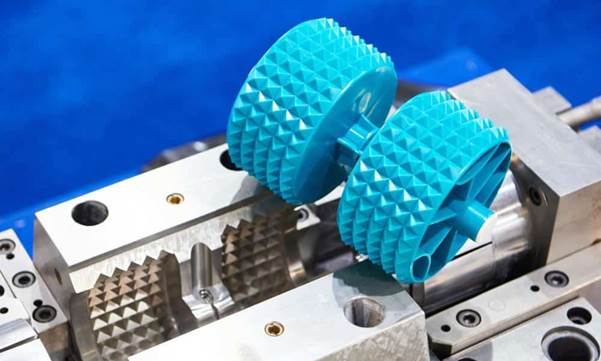
Mold texture is the surface finish on the cavity that has been applied to the part to produce certain patterns or finishes on the part. The texture may enhance grip, minimize glare, or promote the appearance of a product. Methods are chemical etching, laser texturing, and mechanical blasting.

Sprue Bush

Sprue bush is used to connect the nozzle of the injection machine to the runner system. It is the primary path through which the molten plastic is introduced to the mold. The sprue bush should be properly designed to provide a continuous flow of materials and avoid leakage or loss of pressure.

Cavity Retaining Plate

The plate with the cavity inserts is firmly fixed in the cavity retaining plate. It holds position, assists injection pressure, and helps to create overall strength in the mould. Correct plate design guarantees the durability of molds in the long term and part uniformity.

The knowledge of Tooling Costs

A query regarding the cost of the plastic injection molding tooling is one of the most frequently asked questions by manufacturers. Tooling cost depends on the size, complexity, material, and anticipated volume of production. The initial expenses may appear expensive, but quality plastic injection mold tools may pay back with durability in the long-run and steady production.

Issues influencing plastic injection molding tooling cost are:

•          Number of cavities

•          Surface finish specifications.

•          Cooling system complexity

•          Tolerance levels

•          Tool material

Though enterprises can be tempted to save money and use cheaper solutions such as plastic injection mold tooling, it will result in increased maintenance and poor quality of products in the long-term.

The Modern Tooling Technology

This is due to advanced software and machining technologies, which have transformed the development of stampaggio a iniezione di plastica tools. Simulation and computer-aided design (CAD) can help engineers to test the mold flow, cooling efficiency, and structural integrity before the commencement of manufacturing.

The Modern Tooling Technology

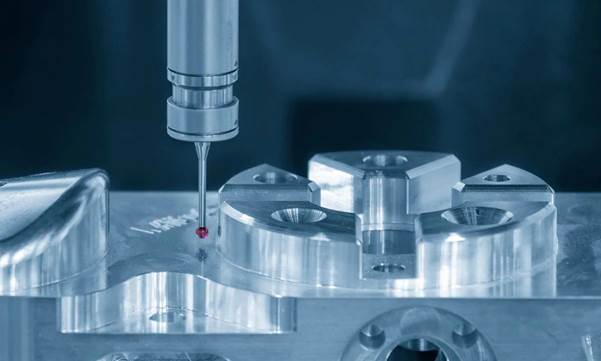
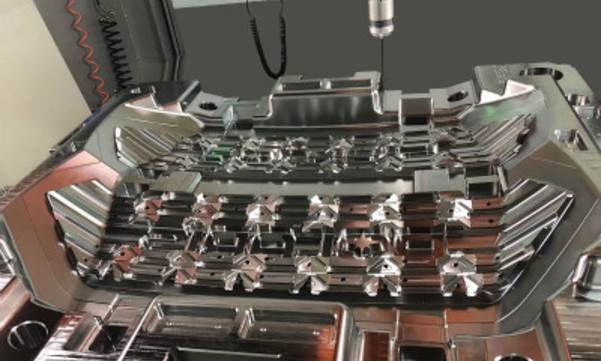
CNC machining, EDM (electrical discharge machining), and high-speed milling are used to ensure that plastic injection molding tooling is done with tight tolerances. Such technologies decrease lead-time and enhance repeatability, and so it is the most reliable modern plastic injection mold tool than ever before.

The use of automation is also associated with the optimization of the cost of plastic injection molding tooling. The manufacturers will be able to realize more value without compromising on quality by cutting manual labor and enhancing the efficiency of the processes.

Maintenance and Longevity

Maintenance of plastic injection molding tools is necessary to prolong their life. Wear and corrosion are prevented by regular cleaning, inspection, and lubrication. Observation of cooling channels and ejector systems promotes the stable operation.

Failure to maintain the tools can significantly add to the cost of plastic injection molding tooling through repairs or early replacement. The companies that adopt preventive maintenance programs not only cover their investment in the area of plastic injection mold tooling but also ensure that the production timetable is kept constant.

Durable plastic injection molding tooling is also applicable in high-volume operations with a long production cycle.

Selection of a Proper Tooling Partner

The choice of a reliable supplier of the plastic injection mold tools is as crucial as the design. Advanced tooling producers are aware of material behavior, production requirements, and cost optimization measures.

An effective collaborator assists in creating a balance between quality and the cost of plastic injection molding tooling, and the tools should be up to the performance expectations. Teamwork at the design levels lowers mistakes as well as minimizing the time of development of the plastic injection molding tools .

The indicators of a good provider of plastic injection mold tooling include communication, technical skills, and high manufacturing skills.

Trends in Future Injection Molding Tooling

Innovation is the future of plastic injection molding tooling. Additive manufacturing, conformal cooling channels, and intelligent sensors are altering the process of constructing and monitoring molds. These innovations decrease the time taken in the cycle and enhance the quality of parts.

Trends in Future Injection Molding Tooling

With the growing significance of sustainability, effective stampo ad iniezione per plastica tools contribute to the decrease of material waste and energy usage. Better designs also reduce the cost of plastic injection molding tooling cost in the lifetime of a tool by increasing the life of the tool and reducing the cost of repairs.

A competitive edge is enjoyed by companies that use next-generation plastic injection molding tools, which have improved performance, increased speed of production, and also the ability to design.

Conclusione

The quality of stampaggio a iniezione di plastica tools is vital to the success of any injection molding operation. Design and choice of materials, maintenance, and innovation are some of the considerations in tooling that affect the efficiency of production and quality of the products. Although the price of plastic injection molding tooling is also a factor of considerable consideration, long-run value will be derived through durability, accuracy, and reliability. Manufacturers can guarantee the consistency of the results, lower downtime, and high ROI by attaching importance to investing in modernization, plastic injection mold tooling, and collaborating with skilled partners.

Parti stampate ad iniezione: Una guida per tutti gli usi

Injection molded parts production is a significant component of the contemporary industry. Injection molding is used to make many of the products surrounding us. This is a process that aids in the production of strong and accurate components. These are components that find their applications in numerous fields. The quality of molded products demanded goes up annually.

The reason behind the wide use of plastic injection molding parts is that they are durable and economical. They enable companies to manufacture large numbers of products that are of the same shape. Complex designs also work well in this process. Meanwhile, the injection molding mold parts are important in the shaping and forming of these products. The process cannot go on well without the right mold components.

The popularity of injection molding is due to the fact that it is time-saving. It also reduces waste. The method allows short-cycle production. It is something that a number of industries cannot afford to do away with.

Plastic Injection Molding: What is Plastic Injection Molding?

Plastic stampaggio a iniezione refers to a production process. In large quantities, plastic products are produced with its assistance. It is also a fast and reliable procedure. It can be used to manufacture parts of the same shape and size in all cases.

In this process, plastic material is first heated. The plastic becomes soft and melts. The liquid plastic is then inserted into a mold. The mold has a specific shape. When the plastic cools down, it becomes solid. This entire part is removed from the mold.

Plastic Injection Molding: What is Plastic Injection Molding?

Plastic injection molding is used to bring about simple and complex products. It allows high accuracy. It also reduces material wastefulness, too. The reason has to do with the fact that it is popular because less time and money are wasted.

Table 1: Injection Molding Mold Components

Mold ComponentTypical MaterialToleranceFinitura superficialeTypical Life CycleFunction
Core & CavityHardened Steel / Aluminum±0.01–0.03 mmRa 0.2–0.8 μm>1 million shotsShapes internal and external features
RunnerSteel / Aluminum±0.02 mmRa 0.4–0.6 μm>500,000 shotsChannels molten plastic to the cavity
GateSteel / Aluminum±0.01 mmRa 0.2–0.5 μm>500,000 shotsControls plastic entry into the cavity
Canali di raffreddamentoCopper / Steel±0.05 mmRa 0.4–0.6 μmContinuousRemoves heat efficiently
Ejector PinsHardened Steel±0.005 mmRa 0.3–0.5 μm>1 million shotsEjects finished part without damage
Venting SlotsSteel / Aluminum±0.01 mmRa 0.2–0.4 μmContinuousReleases trapped air during injection

Knowing the Injection Molding Process

A controlled and precise method of production is the injection molding technology. They are applied in the production of plastic components of high accuracy. It is a functional procedure that occurs in stages. Each step has some parameters and numerical values.

Selection and Preparation of Materials

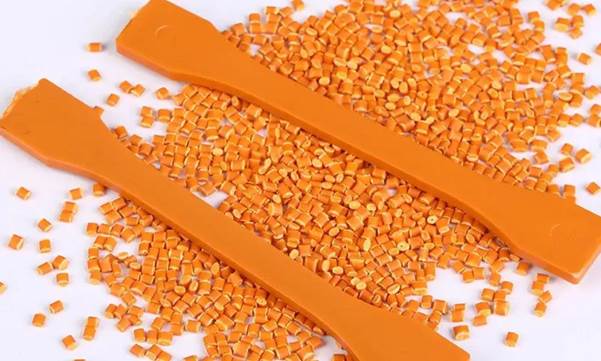
It begins with plastic raw material. This is usually packed in the form of pellets or in the form of granules. Such material is normally ABS, polypropylene, polyethylene, and nylon.

  • Pellet size: 2–5 mm
  • Wet content before drying: 0.02% -0.05%
  • Drying temperature: 80°C–120°C
  • Drying time: 2–4 hours

Proper drying is critical. Bubbles and surface defects of molded parts may be brought about by moisture.

Melting and Plasticizing

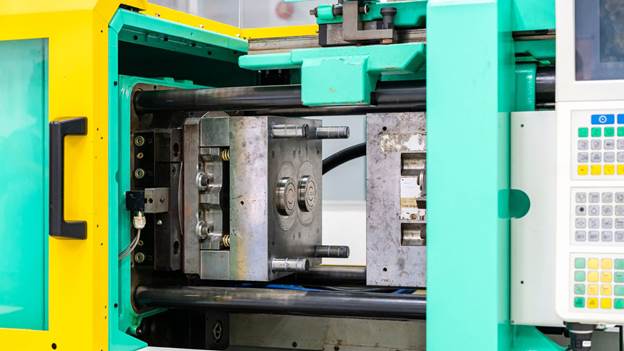
The plastic pellets are dried and forced into the stampaggio a iniezione machine. They go through a screw that rotates and through a hot barrel.

  • Barrel temperature zones: 180°C–300°C
  • Screw speed: 50–300 RPM
  • Screw compression ratio: 2.5:1 -3.5:1.

The plastic is melted by the turning of the screw. The substance turns into a homogenous mass of liquid. Even the melting offers consistency of the component.

Injection Phase

On completion of melting down the plastic, it is pushed into the molding cavity. The mold is filled with great pressure in a quick and regularized way.

  • Injection pressure: 800–2000 bar
  • Injection speed: 50–300 mm/s
  • Injection time: 0.5–5 seconds

There is no use of short shots and flash due to appropriate pressure control. It is intended to fill the entire mold prior to the beginning of plastic cooling.

Packing and Holding Stage

The mold is filled, and pressure is applied to the mold. This is to overcome the process of material shrinkage at room temperature.

  • Loading pressure: 30-70 percent flow of injection.
  • Holding time: 5–30 seconds
  • Typical shrinkage rate: 0.5%–2.0%

This process increases the part concentration and dimension. It also reduces internal stents.

Cooling Process

Injection molding is the process that takes the longest in cooling time. The plastic substance would then solidify and melt.

  • Mold temperature: 20°C–80°C
  • Cooling time: 10–60 seconds
  • Heat transfer efficiency: 60%–80%

Elimination of heat is done by cooling channels in the mold. Proper cooling eliminates warping and defects of the surface.

Mold Opening and Ejection

After cooling, the mold opens. A section that has been completed is removed using ejector pins or plates.

  • Mold opening speed: 50–200 mm/s
  • Ejector force: 5–50 kN
  • Ejection time: 1–5 seconds

Ejection: Careful ejection will not damage parts. The closing of the mold then commences the next cycle.

The Cycle Time and Production Output

The total cycle time will be different depending on the size of the parts and the material.

  • Average cycle time: 20–90 seconds
  • Output rate: 40 -180 parts/hour.
  • Machine clamping force: 50–4000 tons

Reduced cycle times will boost productivity. However, quality must be maintained constantly.

Monitoring and Control of Process

In contemporary machines, sensors and automation are employed. Pressure flow rate and temperature are checked by these systems.

  • Temperature tolerance: ±1°C
  • Pressure tolerance: ±5 bar
  • Dimensional accuracy: ±0.02 mm

Consistency of quality is ensured by monitoring the process. It also reduces scrap and downtimes.

Importance of Components of Mold

Injection molding is dependent on the parts of the mold. Each of the elements of the mold has some role to play. These are the shaping, cooling, and ejecting.

Il stampaggio a iniezione di plastica parts are considered to be successful depending on the correct design of the mold. A poor mold can cause defects. These defects include cracks and unbalanced surfaces. Mold parts made by injection molding, on the other hand, help in ensuring accuracy. They also ensure that they go in good cycles.

High-quality protract parts are molded. They reduce the maintenance costs as well. This makes it more effective and dependable.

Mold Components Technical Information

Mold components are the most important elements of the injection molding system. They control the shape, accuracy, strength, and quality of the surface. Without mold components that are well-designed, there is no way that stable production can be achieved.

Plastic Injection Molding: What is Plastic Injection Molding?

Core and Cavity

The core and the cavity are what determine the final shape of the product. The external surface consists of the cavity. The core makes up internal features.

  • Dimensional tolerance: ±0.01–0.03 mm
  • Surface finish: Ra 0.2–0.8 µm
  • Typical steel hardness: 48–62 HRC

Precision in core and cavity is high, hence minimizing defects. It enhances the uniformity of the parts also.

Sistema Runner

The system of the runner directs the molten plastic at the injection nozzle to the cavity. It has an influence on flow balance and filling speed.

  • Runner diameter: 2–8 mm
  • Flow velocity: 0.2–1.0 m/s
  • Pressure loss limit: ≤10%

Reduction in material waste is done by proper runner design. It also has an even filling.

Design del cancello

The gate regulates the flow of plastic in the cavity. Part quality depends on the size and type of gate.

  • Gate thickness: 50 -80 of part thickness.
  • Gate width: 1–6 mm
  • Shear rate limit: <100,000 s⁻¹

Right gate design eliminates weld lines and burn marks.

Sistema di raffreddamento

Cooling tracks are used to cool down the mold. This system has a direct influence on cycle time and the stability of parts.

  • Cooling channel diameter: 6–12 mm
  • Distance of the channel to the cavity: 10-15mm.
  • Maximum temperature difference permitted: < 5 °C.

Ease of cooling enhances dimensional accuracy. It also reduces the time of production.

Sistema di espulsione

When cooled, the part is ejected within the ejection system. It has to exert force in equal quantity to prevent harm.

  • Ejector pin diameter: 2–10 mm
  • Ejector force per pin: 200–1500 N
  • Ejection stroke length: 5–50 mm

Even ejection eliminates cracks and deformation.

Venting System

The air can be trapped and escape through vents when injecting. Burns and incomplete filling are caused by poor venting.

  • Vent depth: 0.02–0.05 mm
  • Vent width: 3–6 mm
  • Maximum air pressure: <0.1 MPa

Adequate venting enhances the quality of surfaces and the life of molds.

Base and Alignment Components Mold Base

The base of the mould bears all the parts. Bushings and guide pins are used to provide proper alignment.

  • Guide pin tolerance: ±0.005 mm
  • Mold base flatness: ≤0.02 mm
  • Lifecycle alignment: more than 1M shots.

High alignment decreases the wear and flash.

Table 2: Key Process Parameters

ParametroRecommended RangeUnitDescrizioneTypical ValueNotes
Barrel Temperature180–300°CHeatis  applied to melt the plastic220–260Depends on the material type
Pressione di iniezione800–2000barPressure to push molten plastic into the mold1000Adjust for part size & complexity
Temperatura dello stampo20–120°CTemperature is maintained for proper cooling60–90Higher for engineering plastics
Tempo di raffreddamento10–60secondsTime for the plastic to solidify25–35Depends on wall thickness
Tempo di ciclo20–90secondsTotal time per molding cycle30–50Includes injection, packing, and cooling
Ejector Force5–50kNForce to remove part from the mold15–30Must prevent part damage

Raw Materials Injection Molding

Material selection is very important. It influences the quality, stability, outlook, and price of the end product. Selecting the appropriate plastic is necessary to guarantee that the parts will work and will be printed properly.

Raw Materials Injection Molding

Thermoplastic Materials

The most widespread materials are thermoplastics due to the fact that they can be melted and reused several times. There is a wide use of ABS, polypropylene, polyethylene, and polystyrene. ABS is impact-resistant and strong, and melts at 200 to 240 °C. Polypropylene melts at temperatures of 160 °C or 170 °C; it is light in weight and resistant to chemicals. Polyethylene has a melting point of 120 °C to 180 °C and is suitable in moisture resistant products.

Engineering Plastics

High-strength parts or heat-resistant parts are made with engineering plastics such as Nylon, Polycarbonate (PC), and POM. Nylon melts at 220 °C -265 °C and is applied in gears and mechanical parts. Polycarbonate is a strong and transparent polymer that melts at 260 °C to 300 °C. POM has a melting temperature of 165 °C to 175 °C and is accurate in components.

Thermosetting Plastics

Plastics that are thermosetting are difficult to remelt after being molded because they harden permanently. They melt at 150 °C- 200 °C and are utilized in high-temperature applications such as electrical components.

Additives and Fillers

Materials are enhanced by additives. Glass fibers (10% -40 percentage) add strength, mineral fillers (5%-30 percentage) lower shrinkage, and UV stabilizer (0.1-1 percentage) shield against the sun. These assistive components are longer-lasting and work better.

Material Selection Requirements

The material selection is factor-driven in terms of temperature, strength, chemical confrontation, moisture, and cost. Adequate selection will result in long-lasting, precise, and quality products and lessen the mistakes and waste.

Table 3: Material Properties

MaterialeMelt Temp (°C)Mold Temp (°C)Injection Pressure (bar)Tensile Strength (MPa)Shrinkage (%)
ABS220–24060–80900–150040–500.5–0.7
Polipropilene (PP)160–17040–70800–120030–351.0–1.5
Polietilene (PE)120–18020–50700–120020–301.5–2.0
Polistirolo (PS)180–24050–70800–120030–450.5–1.0
Nylon (PA)220–26580–1001200–200060–801.5–2.0
Policarbonato (PC)260–30090–1201300–200060–700.5–1.0
POM (Acetal)165–17560–80900–150060–701.0–1.5

Components that are manufactured under the Plastic Injection Molding Process

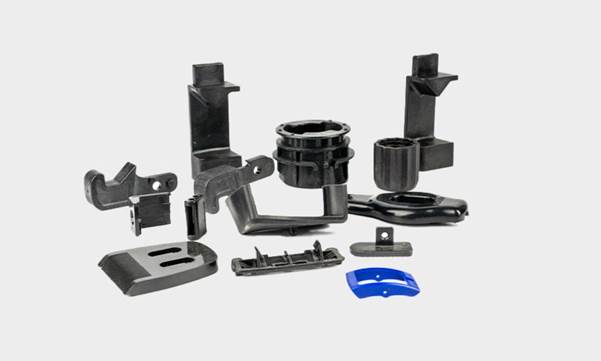
Plastic injection molding is a process that creates a large number of components applicable in various sectors. The process is precise, durable, and of large volume production. Examples of typical components produced in this manner are shown below.

Components that are manufactured under the Plastic Injection Molding Process

Automotive Parts

  • Dashboards
  • Bumpers
  • Air vents
  • Door panels
  • Gearshift knobs
  • Fuel system components
  • Interior trims

Medical Parts

  • Syringes
  • Tubing connectors
  • Surgical instruments
  • IV components
  • Medical device housings
  • Disposable medical tools

Electronics Parts

  • Housings for devices
  • Switches and buttons
  • Cable clips and wire holders
  • Connectors and plugs
  • Keyboard keys
  • Circuit board enclosures

Packaging Products

  • Bottles and jars
  • Bottle caps and closures
  • Food containers
  • Cosmetic containers
  • Lids and seals
  • Storage boxes

Consumer and Industrial Goods

  • Toys and figurines
  • Household tools
  • Appliance components
  • Construction fittings
  • Accurate clips and fasteners.
  • Industrial machine parts

Design and Precision

Design is a significant contributor to success. An effective mold enhances the quality of a product. It minimizes errors during production as well.

The parts of the process of stampaggio a iniezione di plastica require strict dimensions. Performance can be influenced by small mistakes. This is the reason why the creation of the injection molding mould parts is designed with close tolerances. State-of-the-art software is often employed in design.

Components that are manufactured under the Plastic Injection Molding Process

Strength is also enhanced through good design. It enhances appearance. It guarantees superior fitting in end assemblies.

Applicazioni industriali

Many industries also use injection molding, which is fast, exact, and it is economical. It enables mass production of identical parts with very high precision.

Industria automobilistica

In the auto sector, dashboards, bumpers, air vents, and interior panels are made using plastic injection molding parts. These components should be powerful, light, and heat-resistant. Particularly, it is done by molding, whereby the shapes are exact and uniform to prevent any safety and quality issues.

Medical Industry

In medicine Syringes, tubing connectors, and surgical instruments are made by injection molding. Much precision and hygiene areas needed. Particularly, plastic injection molding parts can be made of medical-grade plastics, and injection molding mold parts can be used to ensure accuracy and smoothness.

Electronics Industry

Housings, connectors, switches, and cable clips are all produced in the electronics industry through injection molding. Plastic injection molding parts secure the fragile circuits, and the injection molding mold parts are necessary to make the parts fit perfectly.

Packaging Industry

Injection molding is also applied in the packaging of bottles, containers, caps, and closures. The parts of the plastic injection molding are used to give the required shapes and sizes, whereas the parts of injection molding are used to produce in large quantities within the shortest amount of time by creating minimum wastage.

Other Industries

Consumer goods, toys, construction, and aerospace are also injected. Its flexibility and accuracy give it the ability to fit nearly any plastic product, be it the simple householder the complicated technical parts.

Controllo qualità e test

In manufacturing, quality control is required. All the parts should be desiccated to meet design requirements. Testing is a measure of safety and performance.

The plastic injection molding parts are subjected to visual and mechanical inspections. Defects are spotted at an early stage through these checks. Simultaneously, the inspection of the wear and damage of the injection mold parts is conducted. Frequent inspections eliminate the failure of production failures.

Good quality management enhances customer confidence. It also minimizes wastage and expenditure.

Pros of the Injection Molding

There are numerous advantages of injection molding. It permits a rapid production rate. It also guarantees repetition.

Stampaggio a iniezione di plastica parts are dynamic and light. They are capable of mass production. In the meantime, automation is supported by the use of injection molding of the mold parts. This lowers the cost of labour and mistakes.

Pros of the Injection Molding

Also, the process is environmentally friendly. The scrap material may be reutilized. This will contribute to environmental mitigation.

Challenges and Solutions

Injection molding, just like any process, is challenging. These are material problems as well as wear of moulds. Unfavorable environments lead to flaws.

Part flaws may be assessed in the absence of proper handling of “plastic injection molding parts. These risks can be minimized by appropriate training. Simultaneously, mold parts that are used in injection molding must be maintained on a regular basis. This assures long life.

Modern technology will be useful in addressing a lot of issues. The efficiency is enhanced through automation and monitoring.

Future of Injection Molding

The injection molding future is solid. There is a development of new materials. Smart manufacturing is becoming a reality.

Injection molding parts that are produced out of plastic will be improved. They will be more significant and lighter. At the same time, better materials and coatings will be applied to the injection mold part. This will enhance longevity.

The industry will still be characterized by innovation. Competitive firms will be those that change.

China’s Role

China contributes significantly to the injection molding market in the world. It is among the biggest manufacturers of plastic injection molding parts and the distributor of injection molding mold parts. The manufacturing sector is very diversified in the country; small-scale production is available as well as large-volume industrial production.

China’s Role

The factories of China have high-precision machines and skilled labor that are used to manufacture parts. The reliance of many international companies on Chinese manufacturers is because they offer cost-effective solutions without reducing on quality.

Besides, China is an Innovation leader. It creates new materials, molds, and automation methods to enhance efficiency. It has a good supply chain and high production capacity that contribute to its status as a major player in satisfying global demand for injection molded products.

Why Choose Sincere Tech

We are Sincere Tech, and we deal with supplying high-quality plastic injection molding parts and injection molding mold parts to our clients in different industries. We have years of experience and a passion to do things in the best way, hence all our products are of the best quality in terms of precision, durability, and performance.

We have a group of experienced and qualified engineers and technicians who offer quality and affordable solutions through the application of modern machinery and new methods. We have ensured close attention to all the details, such as the choice of material, the design of molds, etc., so that we have the same quality in each batch.

Clients prefer Sincere Tech due to the fact that we appreciate trust, professionalism, and customer satisfaction. We collaborate with individual clients to get to know their special needs and offer solutions to their needs. We are also committed to the concept of on-time delivery, technical assistance, and constant improvement, which make us stand out inthe injection molding industry.

Sincere Tech is the company with which you can find excellence in plastic injection molding when you require either minor, detailed parts or large-volume production. You do not just get parts with us, you also get a team dedicated to your success and growth.

To learn more about our services and products, go to plas.co and see why we are the right choice for the clients of the world.

Conclusione

Injection molding is a solid process of production. It is the backbone of numerous industries in the world. Its main strengths are precision, speed, and quality.

Plastic injection molding parts are still very vital in everyday life. They are useful in serving various needs, from the simplest to the complex components. Meanwhile, injection molding mold parts guarantee the efficient flow of manufacturing and the same outcome.

Injection molding will only continue to increase with the right design and maintenance. It will also continue to form a vital aspect of modern production. 

Che cos'è il sovrastampaggio

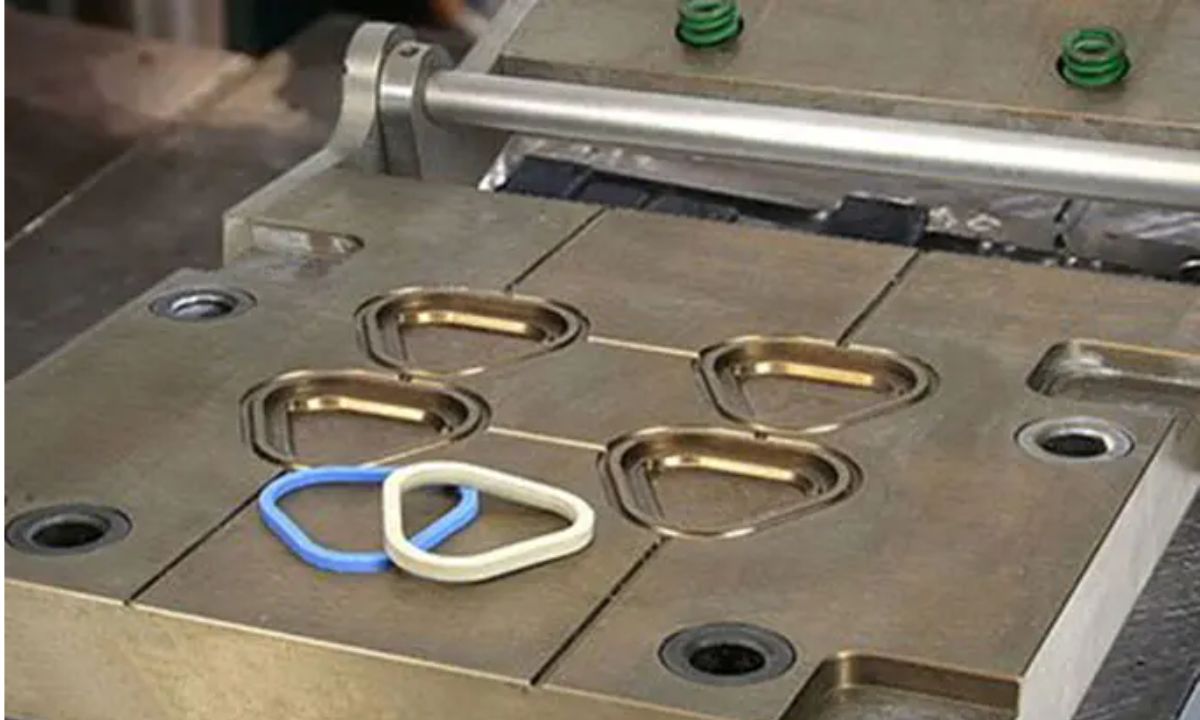
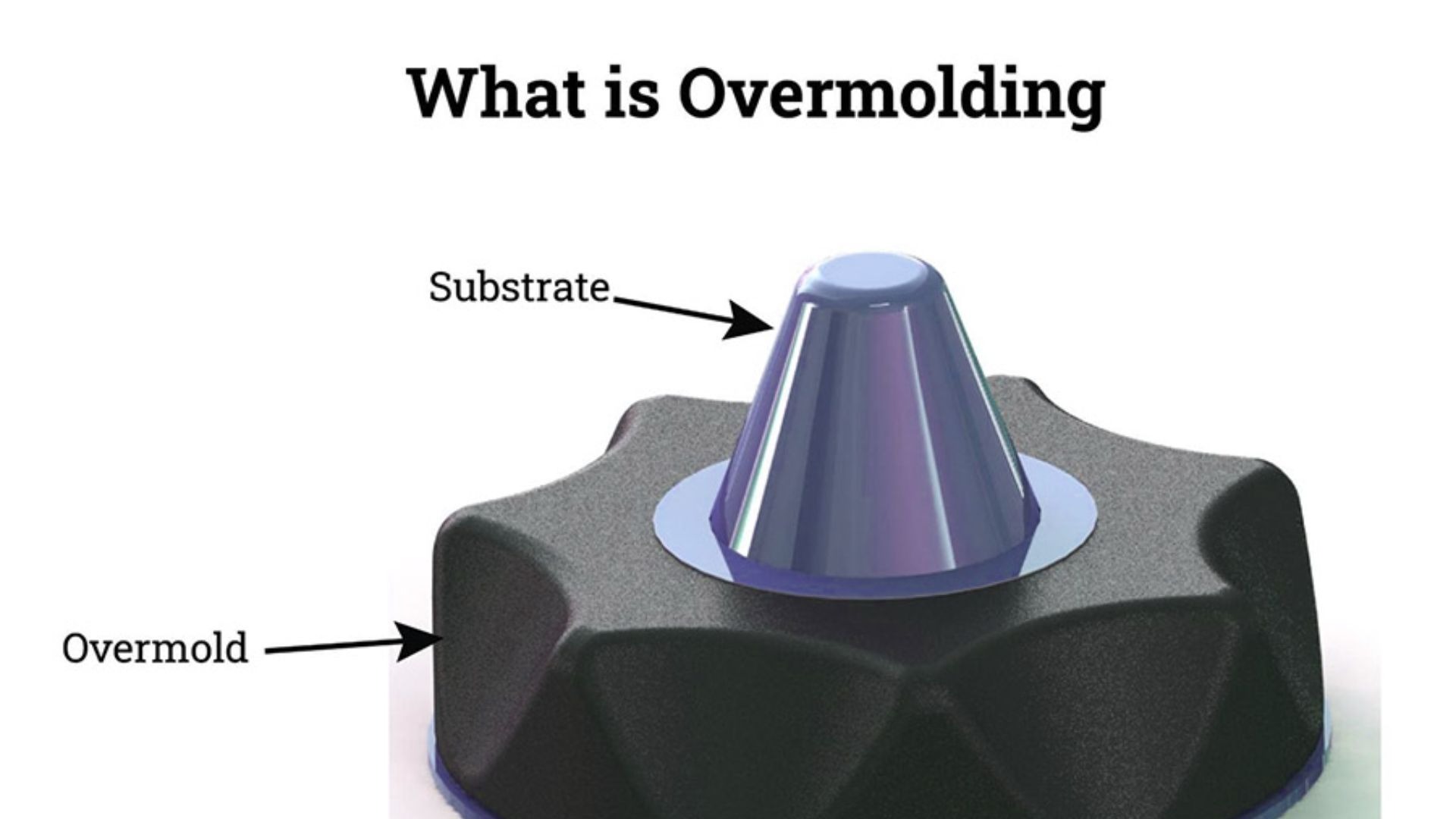
Overmolding is the making of a product by joining two or more materials into one product. It is also applied in most industries, such as electronics, medical equipment, automotive, and consumer products. It is done by molding over a base material known as an overmold, over a base material known as a substrate.

Overmolding is done to enhance the aesthetic, longevity, and functionality of products. It enables manufacturers to incorporate the power of one material with the flexibility or softness of the other. This makes products more comfortable, easier to deal with, and durable.

Overmolding appears in items that we use on a daily basis. This has been applied to toothbrush handles and phone cases as well as power tools and surgical instruments, among other items in contemporary manufacturing. Knowing about overmolding will make it easy to see how convenient and safe objects in everyday life are.

Indice dei contenuti

What is Overmolding?

Sovrastampaggio is a procedure through which one product is formed out of two materials. The initial material is known as the substrate and typically is a hard plastic such as ABS, PC, or PP. It has a tensile strength of 30-50 Mpa tensile strength and a melting temperature of 200- 250 °C. The other material, which is the overmold, is soft, e.g., TPE or silicone, with a Shore A hardness of 40-80.

What is Overmolding?

The substrate is allowed to cool down to 50-70 °C. The pressure injected into the overmold is 50-120Mpa. This forms a strong bond. Overmolding enhances the holding power, strength, and durability of products.

One such typical object is a toothbrush. The handle is of hard plastic to ensure strength. The grip itself is of soft rubber and, therefore, is comfortable to hold. This basic application demonstrates the real-life uses of overmolding.

Overmolding does not apply only to soft grips. It is also applied in covering electronic products, giving an object a colorful decoration, and extending the life of a product. This flexibility enables it to be one of the most applicable manufacturing methods in contemporary days.

Full Process

Selezione del materiale

The procedure of overmolding starts with the choice of the materials. The substrate normally is a hard plastic like ABS, PC, or PP. They contain tensile strength of 30-50 Mpa and a melting point of 200- 250 °C. The molded material is usually a soft one, such as TPE or silicone, and has a Shore A hardness of 40-80. It is necessary to select the materials that are compatible. Failure of the final product to withstand stress can be caused by failure of the bonding of the materials.

Substrate Molding

The substrate was poured into the mold at a pressure of 40-80 Mpa after heating to 220-250 °C. Once injected, it is allowed to solidify to 50-70 °C to render it dimensionally stable. The time taken in this process is usually 30-60 seconds in relation to the size and the thickness of the part. There are extremely high tolerances, and deviation is typically not more than +-0.05 mm. Deviation will result in the product being affected in regard to overmold fit and product quality.

Preparation of the mold to be overmolded

Following the cooling, the substrate is then carefully transferred to a second mold, during which the overmold injection is done. The mold is preheated to 60-80 °C. Preheating eliminates the effect of thermal shock and also allows the overmold material to flow smoothly over the substrate. Mold preparation is needed to prevent any voids, warping, or poor bonding in the final product.

Overmold Injection

The pressure is injected into the substrate using 50-120 Mpa of the overmold material. The temperature of the injection is conditional upon the material: TPE 200-230 °C, silicone 180-210 °C. This step must be precise. Improper temperature or pressure may result in defects of bubbles, separation, or insufficient coverage.

Raffreddamento e solidificazione

Following injection, the part is cooled to enable solidification of the overmold and its strong bond to the substrate to take place. The cooling time ranges from 30 to 90 seconds based on the thickness of the parts. The thin regions cool more quickly, whereas the thicker ones are slower to cool. Adequate cooling is needed to guarantee even bonding as well as minimize internal stress that may cause cracks or deformation.

Ejection and Finishing

The part is forced out of the mold after being cooled down. Any surplus, referred to as flash, is excised. The component is checked in terms of surface finish and dimensional accuracy. This will make sure that the product is of the required quality and is compatible with the other parts in case of need.

Testing and Inspection

The final step is testing. Test types: Tensile or peel tests determine the strength of the bond, which is usually 1-5 MPa. Shore A tests would be used to check overmold hardness. The defects, such as bubbles, cracks, or misalignment, can be visually detected. Only components that are tested are shipped or put together into finished products.

Types of Overmolding

Types of Overmolding

Two-Shot Molding

Two-shot molding involves one machine molding two materials. The molding is done at a temperature of 220-250 °C and pressure of 40-80 MPa, followed by the second material injection, which is at 50-120 MPa. The technique is quick and accurate and is suitable when a large number of products, such as rubber grips and soft-touch buttons, are involved.

Stampaggio a inserti

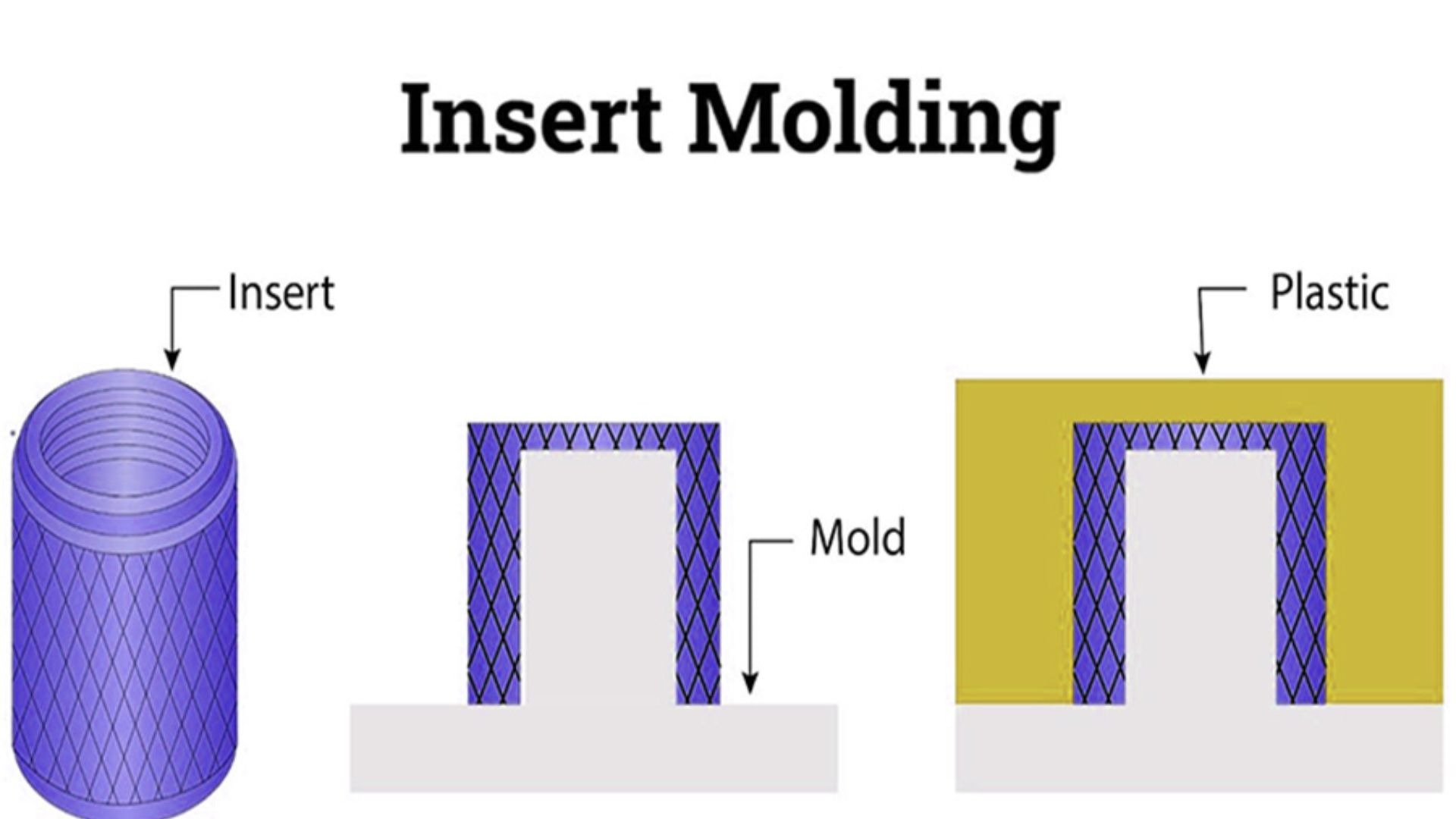
During insert molding, the substrate is already prepared and inserted into the mold. It is covered with an overmold, either TPE or silicone, which is injected at 50-120 MPa. Bond strength is usually 1-5 MPa. This approach is typical of the tools, toothbrushes, and healthcare devices.

Multi-Material Overmolding

Multi-material overmolding is an overmolding where there is more than 2 materials in a single part. The injection duration of every material is in sequence 200-250 °C, 50-120 MPa. It permits complicated structures with hard, delicate, and covering sections.

Overmolding has been used in applications

The applications of overmolding are very diverse. The following are the typical examples:

Overmolding has been used in applications

Elettronica

Telephone cases usually have hard plastic with soft rubber edges. The buttons of remote controls are constructed of rubber as they provide better touch. Electronic components are safeguarded with overmolding, and enhanced usability is provided.

Dispositivi medici

Protective seals, surgical instruments, and syringes are usually overmolded. Soft products facilitate easier handling of the devices and also make them safer. This is essential in the medical applications where comfort and precision are important.

Industria automobilistica

 Overmolding is used to make soft-touch buttons, grips, and seals used in car interiors. Seals of rubber are used to block water or dust from entering parts. This enhances comfort as well as durability.

Prodotti di consumo

Overmolding is commonly used in toothbrush handles, kitchen utensils, power tools, and sports equipment. The process is used to add grips, protect surfaces, and add design.

Industrial Tools

Overmolding is used in tools such as screwdrivers, hammers, and pliers, which are used to make soft handles. This limits the fatigue of the hands and enhances the safety of use.

Imballaggio

Overmolding of some part of the packaging (e.g., bottle tops or safeguarding seals) is used to enhance handling and functionality.

Overmolding enables the manufacturer to produce products that are functional, safe, and also appealing.

Benefits of Overmolding

There are numerous benefits of over-molding.

Benefits of Overmolding

Improved Grip and Comfort

Products are made easier to handle by the use of soft materials. This applies to tools, household products, and medical devices.

Increased Durability

Attachment of several materials enhances the strength of products. The hard and soft materials guarantee the safety of the product.

Better Protection

Cover or seals of electronics, machinery, or delicate instruments can be added through overmolding.

Attractive Design

The products are designed in various colors and textures. This enhances image and branding.

Ergonomics

Soft grips minimize fatigue in the hand and make objects or devices more comfortable to work with for longer.

Versatilità

Overmolding uses a wide variety of materials and can be used to form intricate forms. This enables manufacturers to come up with products that are innovative.

Challenges of Overmolding

There are also some challenges of overmolding, which should be taken into consideration by the manufacturers:

Compatibilità dei materiali

Not all materials bond well. Certain combinations might need to be adhesive-bonded or surfaced.

Higher Cost

Because it involves additional materials, molds, and steps of production, overmolding may raise production costs.

Complex Process

Mold design, pressure, and temperature have to be strictly regulated. Defects can be brought about by the slightest of errors.

Production Time

Molding Two-stage molding may require more time than single-material molding. New technologies, such as two-shot molding, can, however, cut this time.

Design Limitations

Complex shapes can need custom molds, and this can be costly to make.

Nonetheless, these discouraging issues have not stopped overmolding since it enhances the quality of products and performance.

Overmolding Design Principles

Overmolding is a design where the base is made of a material, and the mold is made out of a different material.

Overmolding Design Principles

Compatibilità dei materiali

Select the materials that are bonded. Overmold and substrate should be compatible with each other in terms of their chemical and thermal characteristics. Similar materials that have close melting points minimize the chances of weak bonding or delamination.

Spessore della parete

Keep the thickness of the wall constant so that there is consistency in the flow of the material. Lack of uniformity of the walls may lead to faults such as sink marks, voids, or warping. Walls are usually between 1.2 and 3.0 mm of various materials.

Angoli di sformo

Emboss angles on vertical surfaces to facilitate ejection. An angle of 1- 3 degrees assists in avoiding damage to the substrate or overmold during demolding.

Rounded Corners

Avoid sharp corners. Rounded edges enhance the flow of materials during injection, and stress concentration is decreased. The recommended corner radii are 0.5-2mm.

Bonding Features

Pits or grooves are made, or interlocked structures are made to grow mechanical bonding between the substrate and the overmold. The features add peel and shear strength.

Venting and Gate Placement

Install vents that will enable the escape of air and gases. Position injection gates in locations other than the sensitive areas in order to achieve a homogeneous flow that avoids cosmetic faults.

Shrinkage Consideration

Consider variation in the shrinkage of materials. The shrinkage of thermoplastics can be as little as 0.4-1.2 or elastomers can be 1-3%. The correct design will avoid distortion and dimensional errors.

Technical Decision Table: Is Overmolding Right for Your Project?

ParametroTypical ValuesWhy It Matters
Substrate MaterialABS, PC, PP, NylonProvides structural strength
Substrate Strength30–70 MPaDetermines rigidity
Overmold MaterialTPE, TPU, SiliconeAdds grip and sealing
Overmold HardnessShore A 30–80Controls flexibility
Injection Temperature180–260 °CEnsures proper melting
Pressione di iniezione50–120 MPaAffects bonding and fill
Bond Strength1–6 MPaMeasures layer adhesion
Spessore della parete1.2–3.0 mmPrevents defects
Tempo di raffreddamento30–90 secImpacts cycle time
Dimensional Tolerance±0.05–0.10 mmEnsures accuracy
Tasso di restringimento0.4–3.0 %Prevents warping
Tooling Cost$15k–80kHigher initial investment
Ideal Volume>50,000 unitsImproves cost efficiency

Parts Made by Overmolding

Parts Made by Overmolding

Tool Handles

Overmolding is used to create a hard core and soft rubber grip in many hand tools. This enhances comfort and minimizes fatigue of hand usage and offers greater control of usage.

Prodotti di consumo

Most common products, such as toothbrushes, kitchenware, and tools that require electricity, usually utilize overmolding. Soft grips or cushions help to improve ergonomics and lifespan.

Elettronica

In the phone case, remote control, and protective housings, common applications of overmolding include these. It also provides shock absorption, insulation, and a soft touch surface.

Componenti per autoveicoli

Overmolded buttons, seals, gaskets, and grips are a common feature in the interior of cars. Soft-touch systems enhance the comfort, noise, and vibrations.

Dispositivi medici

Overmolding is used in medical devices such as syringes, surgical instruments, handheld objects, and the like. The process will guarantee thorough-going safety, accuracy, and firm hold.

Raw Materials in Overmolding

Material selection is of importance. Common substrates include:

Hard plastics such as polypropylene (PP), polycarbonate (PC), and ABS.

Metals in fields of application

The overmold materials usually are:

  • Soft plastics
  • Rubber
  • Nylon thermoplastic elastomers (TPE)
  • Silicone

The choice of the material is based on the use of the product. As an illustration, biocompatible materials are needed in medical gadgets. Electronic requires materials that are insulative and protective.

Best Practices in the Design of Overmolding Parts

The design of parts to be overmolded must be well considered in order to attain high levels of bonding, attractive outlook, and quality performance. Adhering to established design guidelines contributes to minimizing the error rate, and the quality of the products becomes consistent.

Select Materials which are compatible

The overmolding depends on the choice of material. The overmold and the underlying material have to have a good connection. Commodities that melt at similar rates and have the same chemical properties have more powerful and dependable bonds.

Design for Strong Bonding

Good mechanical bonding between the part design and the design itself should be supported. Undercuts, grooves, and interlocking shapes are some of the features that enable the overmolded material to hold the base part firmly. This minimizes the chances of separation when in use.

Keep the wall thickness in the right way

A uniform thickness in the walls enables the flow of materials in the molding process. Lack of uniformity in the thickness may lead to sink marks, voids, or weak sections in the component. A symmetric design enhances strength as well as its looks.

Use Adequate Draft Angles

Draft angles simplify the process of extracting the part from the mold. Friction and damage can be minimized in ejection through proper draft, and this is particularly useful in complex overmolded parts.

Avoid Sharp Corners

Acute edges have the potential to cause stress points and limit the flow of material. Rounded edges and flowing results enhance strength and make the overmolded compound flow evenly around the component.

Include Venting Features

During injection, good venting enables the trapped air and gases to escape. Good vents allow avoiding air pockets and surface flaws, as well as filling the mold halfway.

Plan Overmold Material Positioning

The injection points are not to be placed near important features and edges. This eliminates the accumulation of materials, rupture of flow, and aesthetic defects in the exposed parts.

Optimize Tool Design

The successful overmolding requires well-designed molds. Proper placement of the gate, balanced runners, and effective cooling channels contribute to ensuring that there is even flow and stable production.

Take into consideration Material Shrinkage

Various substances have different rate in cooling down. These differences should be taken into account by designers so that no warping, misalignment, or dimensional problems can be observed in the final part.

What are some of the materials used to overmold?

Overmolding gives the manufacturers the chance to mix dissimilar materials to accomplish certain mechanical, operational, and aesthetic traits. The choice of the material is determined by its strength, flexibility, comfort, and environmental resistance.
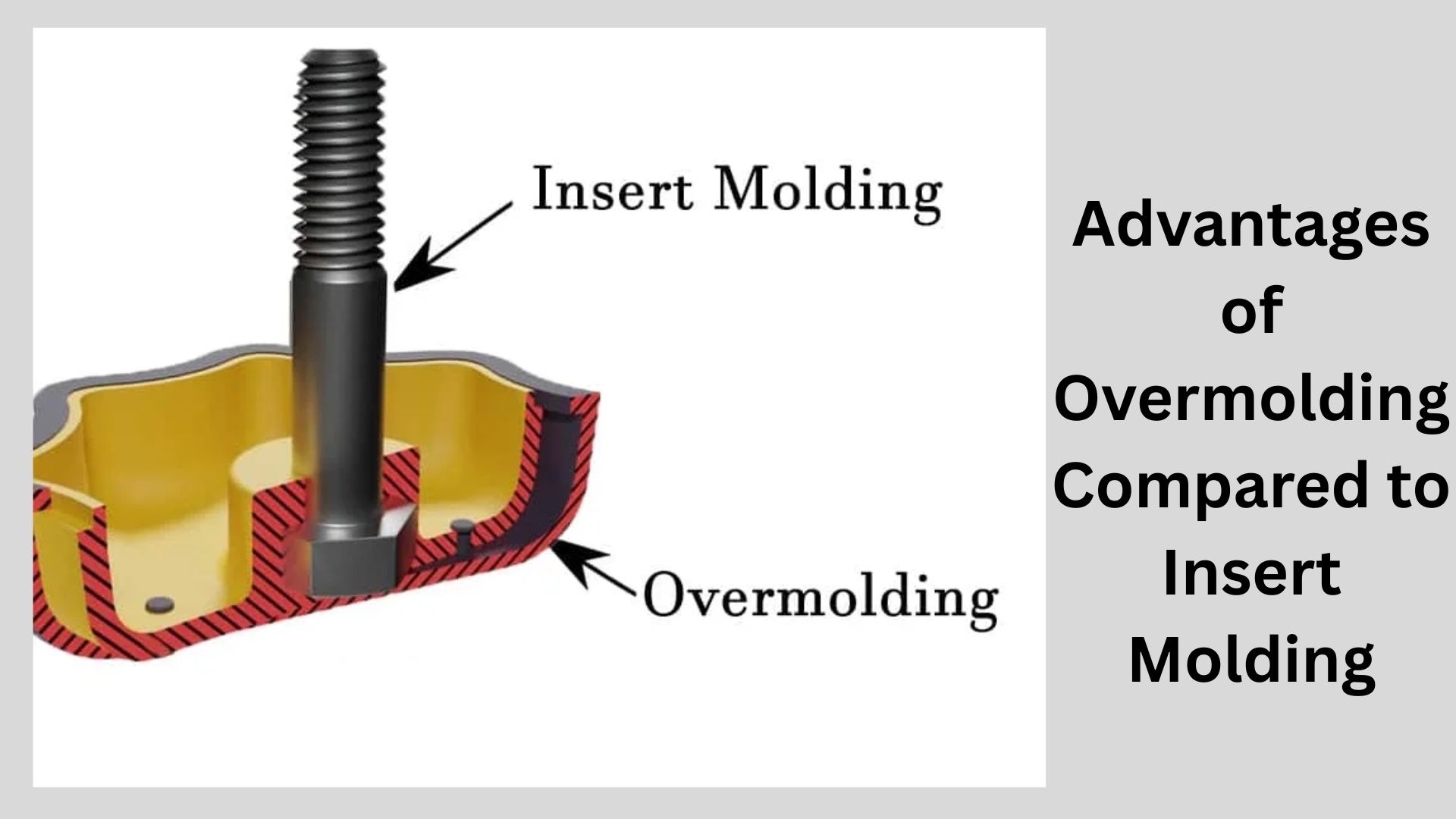
Thermoplastic, not Thermoplastic.

It is one of the most widespread overmolding combinations. The base material is a thermoplastic polymer, which is a polycarbonate (PC). It is then covered with a softer thermoplastic such as TPU. This composite enhances grip, comfort, and surface feel, and structural strength is not sacrificed.

Thermoplastic over Metal

This technique uses a thermoplastic material that is molded on top of a metal part. Metals like steel or aluminum are usually coated with plastics like polypropylene (PP). This assists in guarding against corrosion of the metal, reducing vibration, and decreasing noise during usage.

TPE over Elastomer.

This system employs a hard plastic recycled substrate like ABS with the addition of a flexible elastomer on the top. It is normally applied in products that require durability and flexibility, such as tool handles and medical equipment.

Silicone over Plastic

Silicone is also overmolded over plastic materials such as polycarbonate. This offers a high level of water resistance, sealing capability, and low tactile feel. It is commonly applied in medical and electronic devices.

TPE over TPE

Overmolding of different grades of thermoplastic elastomers can also be performed. This enables the manufacturers to produce products that have different textures, colors, or functional areas, within one part.

Is Overmolding the Right Choice?

When your product requires strength, comfort, and durability at the same time, sovrastampaggio is the appropriate decision to make. It is particularly suitable when used with components that need a soft handle, impact resistance, or additional protection without adding more assembly processes. Overmolding can be used on products that are frequently touched, like tools, medical equipment, or even electronic cases.

Is Overmolding the Right Choice?

Nevertheless, overmolding does not apply to all projects. It is normally associated with increased tooling expenses and intricate mold pattern design as opposed to single-material molding. When production quantities are small or product design is basic, then the traditional molding processes could work out to be less expensive.
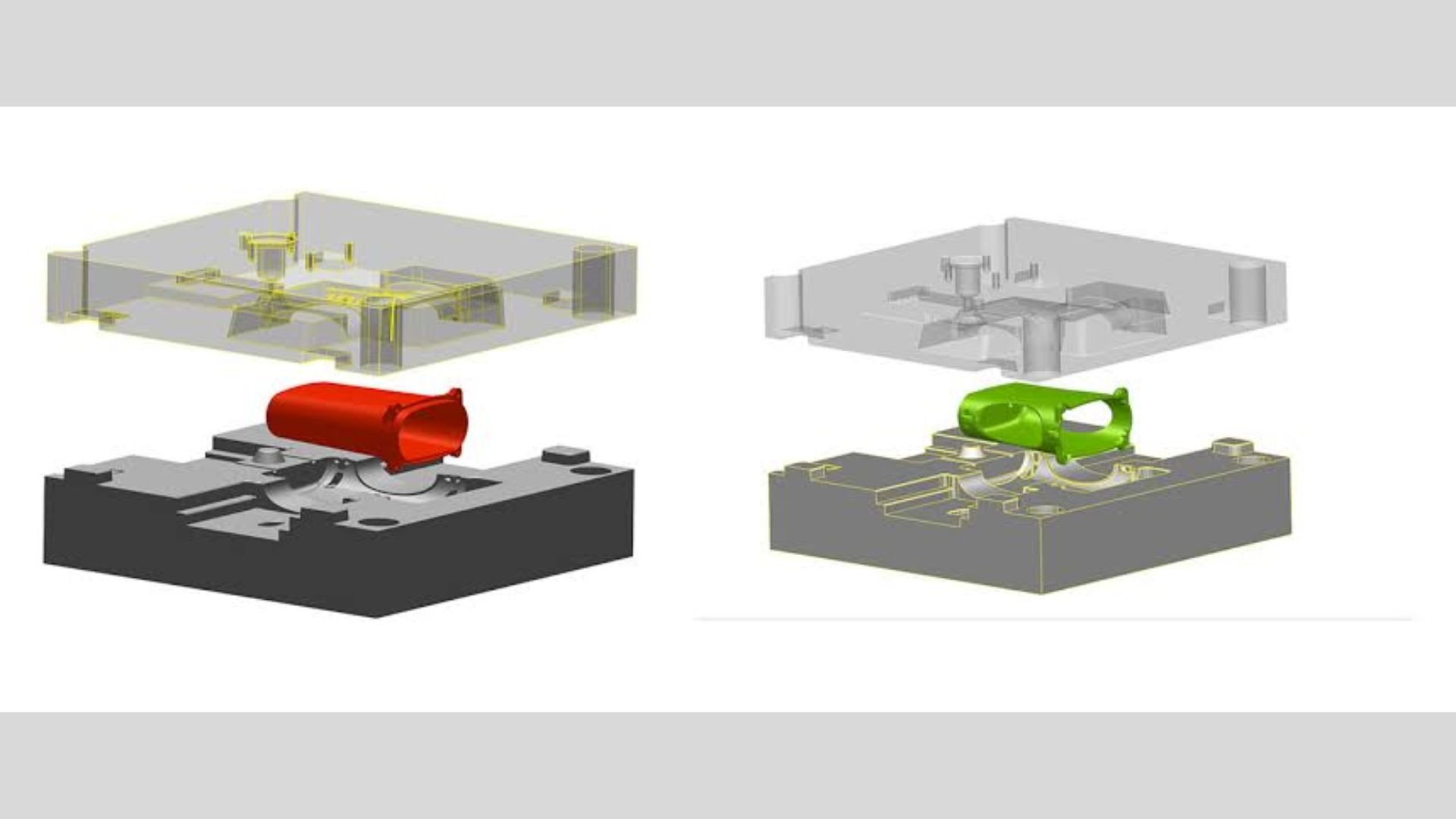
Assessing the material compatibility, volume of production, requirement of functionality, and budget with consideration at the initial design stage will help in deciding whether an overmolding solution is the most effective in addressing your project.

Examples of overmolding in the real-life

Toothbrushes

The handle is hard plastic. The grip is soft rubber. This eases the task of cleaning the teeth.

Phone Cases

The device is covered with hard plastic. Drop shock is absorbed on soft rubber edges.
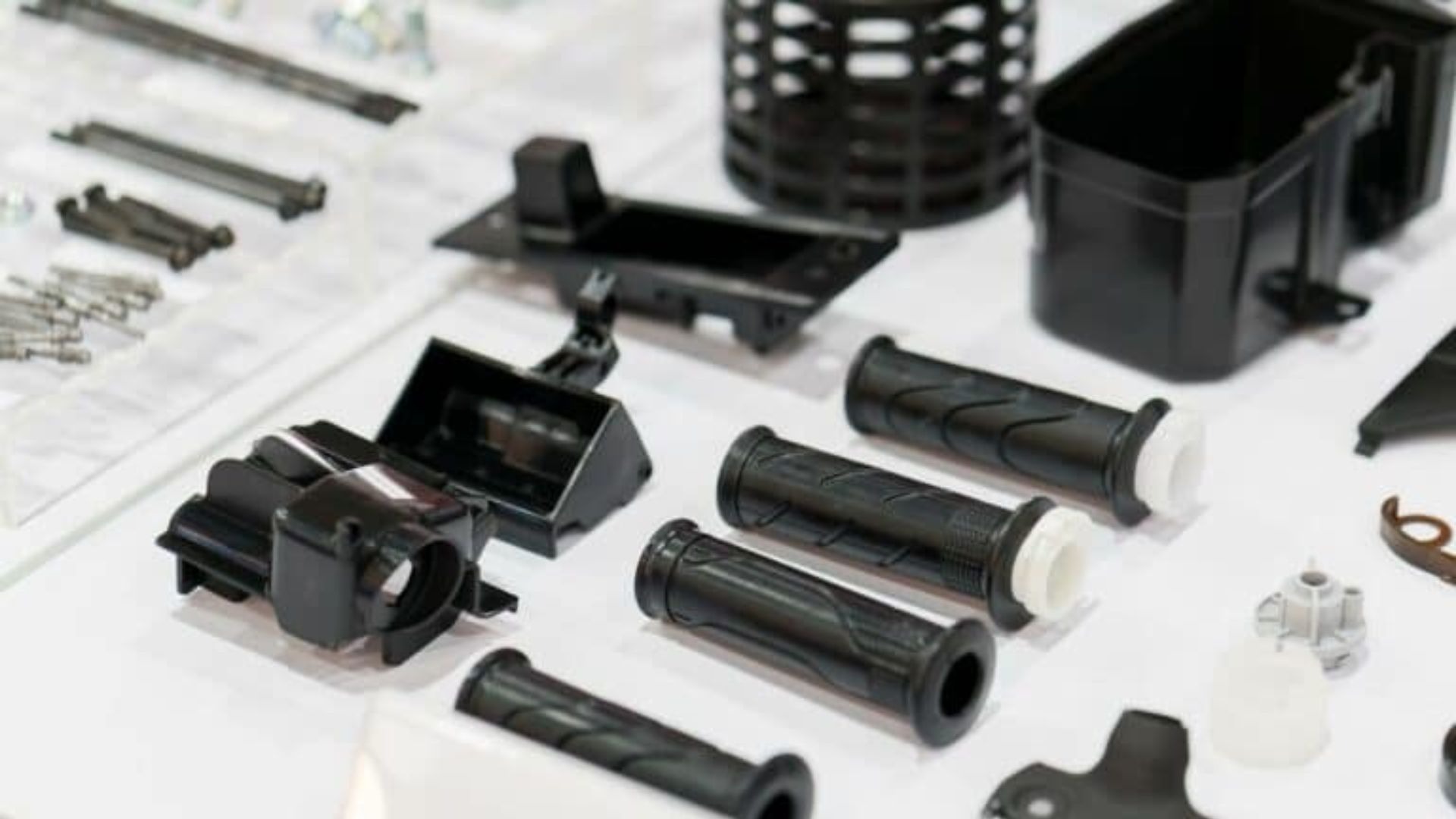
Power Tools

The rubber is overmolded on handles to minimize vibration and enhance safety.
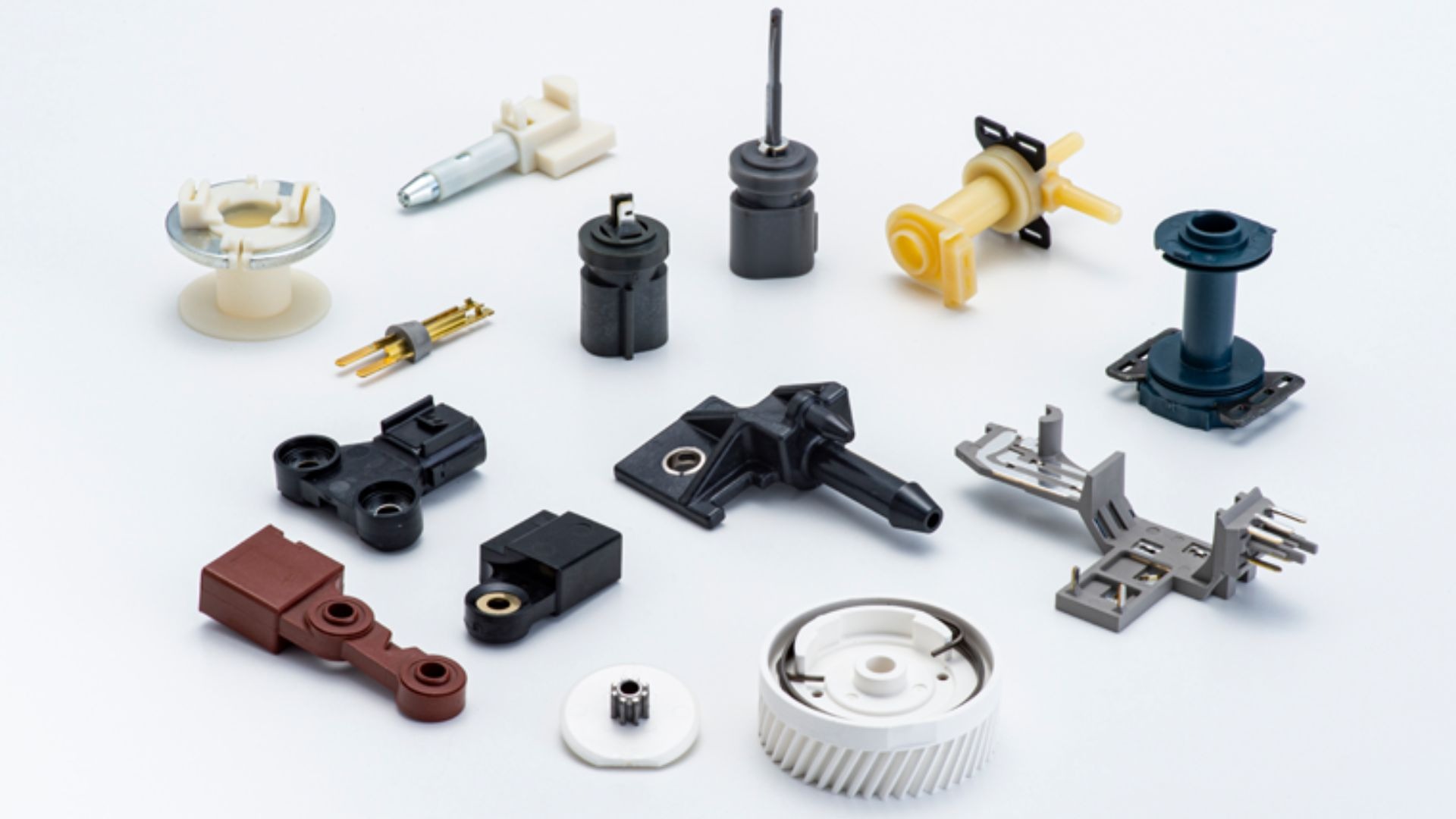
Car Interiors

Control knobs and buttons are usually soft in their feel, which makes the user experience better.

The following examples demonstrate the enhancement of usability, safety, and design of overmolding.

Sincere Tech – Your Hi-Fi partner in any kind of Molding

Sincere Tech is a trustworthy manufacturing partner that deals with all forms of molding, such as plastic injection molding and overmolding. We assist the customers with design up to mass production of products with precision and efficiency. With high technology and competent engineering, we provide high-quality parts in automotive, medical, electronics, and consumer markets. Visit Plas.co to get to know what we are capable of and offering.

Conclusione

Overmolding is a flexible and useful technique of manufacturing. It is a process that involves a combination of two or more materials to make products stronger, safer, and more comfortable. It is broadly applied in electronics, medical devices, automotive components, domestic appliances, and industrial tools.

This is done by a careful choice of the material, accurate shape of the molds, and by ensuring that the temperature and the pressure are kept in check. Overmolding has considerable benefits, even though it is faced with some challenges, such as increased cost and increased production time.

Overmolded products are more durable, ergonomic, appealing to the eye, and functional. One of the areas where overmolding has become an inseparable component of modern manufacturing is the case of everyday products, such as toothbrushes and phone cases, to more serious items such as medical equipment and automobile interiors.

Knowing about overmolding, we may feel grateful to the fact that it is due to simple decisions in the design that help to make the products more convenient to use and longer-lasting. Such a little yet significant process goes on to enhance the quality and functionality of the goods that we use in our daily lives.

Che cos'è lo stampaggio a inserti? Processo, usi e vantaggi

The insert molding is a pertinent technology in present-day production. It is used in attaching metal or other elements to plastic. The process offers a unified, tough, and strong component. As an alternative to the step-by-step technique of having to assemble pieces after molding them, the insert molding technique fuses them. This will save on labour, time, and enhance the quality of the product.

China is a mammoth in the insert molding. It provides cost-efficient production. High-level factories and skilled labor have been established in the country. China is a producer of all-purpose materials. It leads global production.

This paper will discuss insert molding, its process, insert types, materials, design, available guidelines, its usage, advantages, and comparison with moulding processes in contemporary production.

Indice dei contenuti

What is Insert Molding?

Insert molding is a process of plastic moulding. A part that has been assembled, usually a metal part, is placed into a mold. The next step is molten plastic injected around it. When plastic becomes hard, the plastic insert becomes a component of the end product. The technique is used in electronics and automotive industries, and also in the medical equipment industry.

What is Insert Molding?

The large advantage of the insert molding is strength and stability. Metal-inserted plastic parts are stronger in terms of mechanical strength. They can also be threaded and worn less as time progresses. This is especially essential in those parts that should be screwed or bolted many times.

Types of Inserts

The inserts used in insert molding have different varieties, which are used according to the purpose.

Metal Inserts

Metal inserts are the most widespread ones. These are either steel, brass, or aluminum. They are used on threaded holes for structural or mechanical strength.

Electronic Inserts

Electronic components that can be molded to appear in the form of plastic are sensors, connectors, or small circuits. This guarantees their safety and the reduction of assembly processes.

Other Materials

Some of the inserts are made in ceramics or composites to be utilized for special purposes. They are used in instances where heat resistance or insulation is required.

Choosing the Right Insert

It would depend on the part role and the type of plastic to make the decision. The major ones are compatibility, strength, and durability.

The Insert Molding Process

Single-step molding entails the incorporation of a metal or other element with a plastic tool. The insert is inserted into the ultimate product. This is a stronger and faster process compared to the assembly of parts that follows.

The Insert Molding Process

Preparing the Insert

The insert is rinsed in order to extract all the dirt, grease, or rust. It is also occasionally overcoated or rugged so that it becomes glued to plastic. It will not be destroyed by hot plastic when it is preheated to 65-100 °C.

Placing the Insert

The insert is placed with much care in the mold. Robots can insert it into large factories. Pins or clamps hold it firmly. The positioning of the right will prevent movement when the molding is taking place.

Injecting Plastic

This is accomplished by injecting the molten plastic to surround the insert. Their temperature range is between 180 and 343°C. Pressure is 50-150 MPa. To be strong, the holding pressure should be 5-60 seconds.

Raffreddamento

It is a solidification of the plastic. Smaller components take 10-15 seconds, and larger components take 60 seconds or above. Cooling channels prevent the warming up.

Ejecting the Part

The mold and ejector pins force the part out. Small finishing or trimming could then follow.

Important Points

The expansion of metal and plastic is not the same. Preheating and constant controlled mold temperature decreases the stress. This is done by the use of sensors in modern machines to achieve uniformity in the results in terms of pressure and temperature.

Key Parameters:

ParametroTypical Industrial RangeEffect
Injection Temperature180–343 °CDepends on plastic grade (higher for PC, PEEK)
Pressione di iniezione50–150 MPa (≈7,250–21,750 psi)Must be high enough to fill around insert surfaces without displacing them
Injection Time2–10 sShorter for small parts; longer for larger components
Holding Pressure~80% of injection pressureApplied after fill to densify material and reduce shrinkage voids
Holding Time~5–60 sDepends on material and part thickness

Types of common injections to be shaped 

Various types of inserts applied in injection molding exist, and they rely on the use. Each of the types contributes to the strength and performance of the final part.

The Insert Molding Process

Threaded Metal Inserts

Threaded inserts can be steel, brass, or aluminum. They allow the potential of screwing and bolting a number of times without the plastic being broken. The latter is common in automobiles, home appliances, and electronics.

Press-Fit Inserts

The press-fit inserts are those that are installed in a molded component without any additional attachment. As the plastic cools, it holds the insert and stabilizes it very well and powerfully.

Heat-Set Inserts

This is followed by the process of heat-setting inserts. When allowed to cool, the hot insert will fuse with the surrounding plastic to some extent, creating a very strong bond. They are generally used in thermoplastics, e.g., nylon.

Ultrasonic Inserts

In a vibration, ultrasonic inserts are installed. The plastic melts in the region surrounding the insert and becomes hard to create a tight fit. It is a precise and fast method.

Choosing the Right Insert

The choice of the right and left is according to the type of plastic, part design, and the load that is anticipated. The choice of metal inserts has been made based on strength, and the special inserts, like the heat-set inserts and ultrasonic inserts, have been evaluated on the basis of precision and durability.

Design Rules in the Industry of Insert Injection Molding

The design of parts to be inserted by use of molding should be properly planned. The accurate design ensures that there is high bonding, precision, and permanence.

Design Rules in the Industry of Insert Injection Molding

Insert Placement

The inserts will be inserted where they will be in a good position to be supported by plastic. They must not be very close to walls or thin edges because this can result in cracks or warping.

Plastic Thickness

Always make sure that the walls that surround the insert are of the same thickness. Due to an abrupt thickness change, uneven cooling and shrinkage can be experienced. The insert will typically have a 2-5 mm thickness, which is sufficient as far as strength and stability are concerned.

Compatibilità dei materiali

Take plastic and stuff it with adhesive materials. An example is a nylon that can be used with brass or stainless-steel inserts. Mixes that become excessive in heat must be avoided.

Progettazione di stampi

Add a good gate position and cooling arrangements to the mold. The plastic must be capable of moving freely about the insert and must not entrap air. The temperatures are stabilized by channels and prevented from warping.

Tolleranze

Correct tolerances of the insert components of the design. It only takes a small space of clearance of 0.1-0.3 mm in order to perfectly fit the insert without being loose or hard.

Reinforcement Features

The insert should be underpinned using ribs, bosses, or gussets. When used, these properties become widely distributed, thereby preventing cracking or movement of inserts.

Unsuitable Overmold Materials to use in an insert-molding process

The ideal process is the insert molding; however, the plastic is readily melted and easily flows throughout the process of molding. The plastic should also be attached to the insert to create a robust part. Preference is given to thermoplastics because they possess the correct melting characteristics and flow characteristics.

Unsuitable Overmold Materials to use in an insert-molding process

Styrene Acrylonitrile Butadiene Styrene

ABS is not only dimensional, but it is also easy to work with. It is best applicable to consumer electronics among other products that demand a high level of accuracy and stability.

Nylon (Polyamide, PA)

Nylon is strong and flexible. It is usually welded to metal inserts to a structural commodity, e.g, automotive bracketry or building component.

Policarbonato (PC)

Polycarbonate is not only crack-free but also tough. It is applicable mostly in the provision of electronics enclosures and medical equipment, and other equipment that requires durability.

Polyetheretherketone (PEEK)

PEEK has a competitive advantage over the heat and chemical. It would apply to the high-performance engineering, aerospace, and medical fields.

Polipropilene (PP)

Polypropylene is not viscous, and neither does it respond to a high number of chemicals. It is used on domestic and consumer goods, and on automobile parts.

Polietilene (PE)

Polyethylene is cheap and also elastic. The primary use of this is in lighting, e.g., packaging or protective cases.

Thermal plastic Polyurethane (TPU) and Thermoplastic Elastomer (TPE)

TPU and TPE are rubber-like, soft, and elastic. They are perfect in over molding grips, seals, or parts that require impact absorption.

Choosing the Right Material

The choice of the overmold material is dictated by the part functionality, the task of the insert, and its functioning. It should also be a good flow plastic bonding the insert, besides providing the required strength and flexibility.

Part Geometry and Insert Placement:

 This feature applies to all parts.

Part Geometry and Insert Placement

 Part Geometry and Insert Placement:

 It is a feature that could be applied to any part.

The insert retention is dependent on the shape of the part. The insert positioning should be such that of adequate plastic around it. One should not have insurance too close to edges or narrow walls, as this can crack or bend.

The plastic surrounding the insert should be smooth in thickness. A sudden change in thickness can result in either nonuniform cooling or contraction. In the case of the insert, a normal 2-5 mm of plastic is sufficient in regard to strength and stability.

The design features that can be used to support the insert are ribs, bosses, and gussets. As it is used, they help in the dispersion of stress and the inhibition of movement. Once the insert is correctly installed, one is assured that the part is in place and that the part works effectively.

Technical Comparison of Thermoplastics for Insert Molding

MaterialeMelt Temp (°C)Mold Temp (°C)Injection Pressure (MPa)Tensile Strength (MPa)Impact Strength (kJ/m²)Shrinkage (%)Typical Applications
ABS220–26050–7050–9040–5015–250.4–0.7Consumer electronics, housings
Nylon (PA6/PA66)250–29090–11070–12070–8030–600.7–1.0Automotive brackets, load-bearing parts
Policarbonato (PC)270–32090–12080–13060–7060–800.4–0.6Electronics enclosures, medical devices
PEEK340–343150–18090–15090–10015–250.2–0.5Aerospace, medical, chemical applications
Polipropilene (PP)180–23040–7050–9025–3520–301.5–2.0Automotive parts, packaging
Polietilene (PE)160–22040–6050–8015–2510–201.0–2.5Packaging, low-load housings
TPU/TPE200–24040–7050–9030–5040–800.5–1.0Grips, seals, flexible components

The Advantages of the Insert Moulding

The Advantages of the Insert Moulding

Strong and Durable Parts

An insert molding process involves the combination of plastic and metal into a single entity. This makes the components tough, robust, and can be used over and over again.

Reduced Assembly and Labour

The insert will be inserted into the plastic, and no additional assembly will be required. This conserves time and labor and reduces the possibility of mistakes during assembly.

Precision and Reliability

The insert is firmly attached to the moulding. This guarantees that the dimensions are the same and that the mechanical strength is increased to increase the reliability of parts.

Design Flexibility

The fabrication of complex designs through the assistance of insert moulding would be difficult to produce through conventional assembly. It is possible to have metal and plastic being used in a novel combination to fulfil functional requirements.

Cost-Effectiveness

Insert molding will also reduce waste of materials, as well as assembly costs in large volumes of production. It improves effectiveness and overall quality of products, therefore long-term cost-effective.

The applications of the Insert Moulding

Industria automobilistica

The automobile industry is a typical application of stampaggio di inserti. Plastic components have metal inserts, which provide the component, like brackets, engine parts, and connectors, with strength. This will render assembly less and durability more.

Elettronica

Electronics. The benefit of insert molding here is that it is possible to add connectors, sensors, and circuits to a plastic casing. This will guarantee the safety of the fragile components and make the assembly process relatively easy.

Dispositivi medici

The technology of insert molding is highly used in medical apparatuses that demand a high degree of accuracy and longevity. This is applied in the production of surgical equipment, diagnostic equipment, and durable plastic-metal combinations.

Prodotti di consumo

Consumer goods like power tools, appliances, and sports equipment are mostly molded with insert molding. It reinforces and simplifies the assembly of the process, and it makes ergonomic or complex designs possible.

Industrial Applications, Aerospace.

Il stampaggio di inserti is also used in heavy industries and aerospace. High-performance plastics that are filled with metal have light and strong components that are heat-resistant and wear-resistant.

Materials Used

The action of the insert mode of molding requires the appropriate materials for the plastic and the insert. The choice will lead to power, stability, and output.

The Advantages of the Insert Moulding

Metal Inserts

The use of metal inserts is normally done because they are rough and durable. It comprises mainly steel, brass, and aluminium. In parts with a load, steel can be used, brass cannot be corroded, and aluminum is light.

Plastic Inserts

Plastic inserts are corrosion-resistant and light. They are used in low-load applications or applications in parts that are non-conductive. Plastic inserts can also be shaped into complex shapes.

The Ceramic and Composite Inserts.

Ceramic and composite inserts are used to obtain heat, wear, or chemical resistance. They are normally employed in aerospace, medical, and industrial fields. Ceramics are resistant to high temperatures, and composites are also stiff yet have low thermal expansion.

Thermoplastic Overmolds

The surroundings of the insert are a thermoplastic that is generally a plastic. Available options include ABS, Nylon, Polycarbonate, PEEK, Polypropylene, Polyethylene, TPU, and TPE. ABS is moldable, stable, Nylon is flexible and strong, and Polycarbonate is an impact-resistant material. TPU and TPE are soft and rubbery materials that are used as seals or grips.

Compatibilità dei materiali

Plastic and metal are supposed to grow in ratio to one another in order to eliminate strain or deformation. The plastics must be glued to the insert in case they should not separate. In plastic inserts, the overmold material should acquire adhesive to ensure that it becomes strong.

Material Selection Tips

Consider the load, temperature, chemical, and part design exposure. The metal inserts are durable, the plastic inserts are lightweight, and the ceramics can withstand extreme conditions. The overmold material must have the capability of meeting all the functional requirements. 

Cost Analysis

The inserted plastic will enable the saving of the money that would have been utilized in the attachment of the single parts. The decrease in the assembly levels will mean a decrease in the number of labourers and a faster production speed.

Initial costs of moulding and tooling are higher. Multiplex molds having a set of inserts in a certain position are more expensive. However, the unit cost is lower when the level of production is large.

Choice of material is also a factor of cost. Plastic inserts are less expensive than metal inserts. PEEK is a high-performance plastic that is costly in comparison to the widely used plastics, including ABS or polypropylene.

Overall, the price of insert moulding will be minimal in the medium to high volume of production. It will save assembly time, improve the quality of the parts, and reduce long term cost of production.

The problems with the Molding of Inserts

Despite the high efficacy of the insert molding, it has its problems, too:

Thermal Expansion: We will have rate differences and therefore warp in metal and plastic.

Insert Movement: Inserts can move, already in the injection process, unless firmly fixed.

Material Compatibility: Not all plastics can be compatible with all metals.

Small Run Mould tooling and set-up Cost: Mould tooling and set-up can be expensive at very small quantities.

These problems are reduced to a minimum by designing well, mould preparation, and process control.

Il futuro dello stampaggio a inserti

The insert moulding is in the development stage. New materials, improved machines, and automation are being used to increase efficiency, and 3D printing and hybrid manufacturing processes are also becoming opportunities. Its ability to produce lightweight, strong, and precise parts due to the necessity of the parts is that the insert moulding will be a significant production process.

The Advantages of the Insert Moulding

When it comes to Assistance with Sincere Tech

In the case of insert moulding and overmoulding, we offer high-quality, correct, and reliable moulding solutions of moulding at Sincere Tech. Our technology and hand-craft workers will ensure that every part will be as per your specification. We are strong in the long-lasting, complicated, and economical automobile, electronic, medical, and consumer goods moulds. Your manufacturing process is easy and efficient, and this is due to our turnaround times and great customer service. You are moving to Sincere Tech, and with the company will work in line with precision, quality, and your success. Trust us and have your designs come true for us correctly, dependably, and to industry standards.

Conclusione

Insert moulding is a production process that is flexible and effective. It allows designers to employ a single powerful component that is a combination of metal and plastic. The use of insert moulding in industries over the years is due to its advantages that include power, precision, and low cost. But it is getting more confident along with the advancements in materials and automation. The solution to manufacturing by insert molding is time saving, cost reduction, and high-quality products in the context of modern manufacturing.

Acrylic Injection Molding: The Complete Guide

Acrylic injection molding can be defined as a new technology of manufacturing plastic products with high quality. The technique has a wide application in the automotive industry, healthcare sector, consumer goods, and electronics. It is particularly renowned for making transparent, tough, and attractive products.

China is a major part of the acrylic molding business. China has large quantities of factories that manufacture high-quality acrylic molds and parts. They offer cost-effective, dependable, and scalable production to the international markets.

This paper covers the process of injection molding, types of molds, applications, and best practices in acrylic injection molding.

Indice dei contenuti

What is Acrylic Injection Molding?

Acrylic injection molding is an aircraft production technique in which acrylic plastic is warmed up until it melts and then injected into a mold. The plastic is cured and solidifies into a given shape. The process is very useful in the large-scale production of complex and consistent parts.

The acrylic pellets are small and used as the starting food materials. These are poured into a heated barrel until it melts. Then the molten acrylic is injected into high pressure mold with acrylic molds. The molds are cooled and opened, and the finished product is ejected.

The process is fast, accurate, and economical, unlike other methods of molding. It suits industries where the quantity of production is needed without necessarily touching on the quality.

What is Acrylic Injection Molding?

Benefits of Acrylic Molding

There are numerous benefits of acrylic molding.

  • Large Transparency: Acrylic products are very transparent. They are frequently applied in situations when it is necessary to be visual.
  • Durata: Acrylic is durable and scratch-resistant.
  • Complex Shapes: It is able to do complex designs, which are hard to do with other plastics.
  • Efficiente dal punto di vista dei costi: After creating molds, thousands of pieces can be created in a short time, which makes the process less expensive.
  • Coerenza: Each batch is the same as the preceding one, and quality is ensured in high quantities.

The acrylic molding is quick and accurate, and hence a good option where quality and speed are expected in industries.

Acrylic Injection Molding was discovered

In the mid-20th century, the manufacturers of the process started to develop the process of acrylic injection molding because the manufacturers wanted to find a quicker and more accurate method of shaping PMMA. Previously, casting was used as the primary process of acrylic molding, which was a slow and work-consuming process.

Machines that could melt acrylic pellets at temperatures of 230-280 °C and inject them into small acrylic molds were invented by engineers in Germany and the United States in the 1940s and 1950s. This invention made it possible to manufacture intricate and high-quality parts that had uniform dimensions.

Injection techniques of acrylic to produce what is today known as the molding of acrylic transformed industries such as automotive, medical devices, and consumer products. Acrylic plastic molding not only reduced the time but also increased efficiency, but it also made parts that had tight tolerances (+-0.1 mm) and those that were optically clear (>90% light transmission).

Acrylic Injection Molding was discovered

Types of Acrylic Molds

There are several types of acrylic molds; each model is produced according to the required production nature and complexity of the product. The selection of a suitable type guarantees results of high quality and efficiency in acrylic molding.

Stampi a cavità singola

 Single-cavity molds are made to make a single part after each injection cycle. They can be used when the production run is small or in prototypical projects. With single-cavity molds, the process of injection molding acrylic material is done using the term under consideration in order not to have to deal with the problem of incorrect shaping and vague surfaces.

Stampi a più cavità

 Multi-cavity molds are able to manufacture many copies within one cycle. This gives them ideal suitability for massive production. Multi-cavity molds are frequently molded with acrylic to accomplish consistency and minimize the time of production.

Stampi per la famiglia

In a single cycle, family molds generate some of the various parts. This is a type that is practical in formulating components that constitute a product assembly. Family molds can use acrylic plastic molding that enables multiple pieces to be manufactured at the same time, which saves both time and cost.

Stampi a canale caldo

The Hot runner molds allow the plastic to be kept in channels to minimize wastage and enhance efficiency. Hot runner systems use acrylic molds that fit high-precision products with smooth surfaces and fewer defects.

Stampi a freddo

Cold runner molds employ channels that cool together with the part being molded. They are less costly and easier to produce. A lot of small to medium-sized manufacturers would rather use acrylic molding by using cold runner molds to do their production cheaply.

The choice of the appropriate type of the so-called acrylic molds is determined by the volume of production, the design of the product, and the budget. Correct selection of molds leads to better performance of acrylic injection molding and finished products of high quality.

The techniques of Acrylic Plastic Molding

Acrylic plastic molding is the process of using several methods to convert acrylic substances into useful and attractive items. Both approaches have strengths, which are determined by design, volume of production, and the needs of the product.

The techniques of Acrylic Plastic Molding

Stampaggio a iniezione

The most popular one, which is called acrylic injection molding, consists of heating acrylic subunits, called acrylic pellets, until molten, and its injection into acrylic molds. Upon cooling, the plastic will solidify in the intended shape. This is the best method to make a high-precision product in massive quantities.

Stampaggio a compressione

 Acrylic sheets are put in a hot mold and pressed to form in compression molding. This technique can be applied to thicker sections and plain designs. Compression molding of acrylic is used to make it uniform in thickness and strength.

Estrusione

Long continuous profiles are made by extrusion, where molten acrylic is forced into a shaped die. By extrusion, acrylic molding is used on such items as tubes, rods, and sheets. It is even in cross-sections and surfaces.

Termoformatura

The thermoforming technique heats acrylic sheets until pliable and shapes them over a mold with the vacuum or pressure. The approach works well with huge or non-huge products. Thermoforming is a technique of manufacturer of low to medium volumes of acrylic plastic molds at a reasonably low cost.

Rotational Molding

Rotational molding is also used with acrylic, but the mold is rotated during heating to evenly coat the inside of the mold. Shapes with hollows can be made effectively using this technique. In rotational molds, there is the flexibility of molding acrylic to fit some designs.

Process of Molding Acrylic

Molding acrylic is an important and technical process through which the raw acrylic material is changed into finished parts of high quality. The procedure comes with several processes, and each process entails precise control of temperature, pressure, and time to provide the optimal outcome in the process of acrylic molding.

Process of Molding Acrylic

Material Preparation

The reaction begins with acrylic high-quality pellets, which can be of different sizes (usually 2-5 mm in diameter). The moisture content of the pellets should be less than 0.2, and any further moisture may lead to bubbles in the process of molding. The pellets are normally dried in a hopper dryer at 80-90 deg C in not less than 2-4hours before usage.

Melting and Injection

The dried pellets are introduced into the barrel of the injection molding machine. The temperature of the barrel is maintained at 230-280 °C, with acrylic grade depending on the grade used. The pellets are melted by the screw mechanism to form a homogeneous acrylic mixture in molten form.

The acrylic is then injected at high pressure – normally 70-120 MPa – into acrylic molds once molten. The time of injection depends on the size of the part, with the small to medium parts taking about 5 to 20 seconds.

Raffreddamento

A pressurized mold is placed after injection as the acrylic cools and solidification takes place. The time of cooling varies with the thickness of parts:

  • 1-2 mm thickness: 15-20 seconds
  • 3-5 mm thickness: 25-40 seconds
  • Above 5 mm thickness: 45-60 seconds

The cooling is necessary to eliminate warping, shrinkage, or surface defects. Established molds may also make use of water pipes or oil cooling to maintain the temperatures in the required specifications.

Mold Opening and Ejection

The mold is opened once it has cooled, and the part is ejected with mechanical or hydraulic ejector pins. It should be noted that the force of ejection should be limited to ensure that it does not damage the surface or deform it.

Post-Processing

The part may also go through finishing procedures like clipping off or polishing the part after ejection, or annealing. Aging at temperatures of 80-100 deg C 1-2 hours of aging assists in removing internal stresses and enhancing clarity and strength.

Quality Inspection

Individual components are checked against defects such as air bubbles, warping, and dimensionality. Calipers are utilized, or a laser scan is undertaken, and tolerance is allowed to be within + 0.1 mm when dealing with high precision components. The application of acrylic plastic molding, which is of good quality, has ensured that all its products are industry standard.

Summary of Process Parameters:

StepParametroValue
DryingTemperature80–90°C
DryingDuration2–4 hours
Barrel TemperatureMelt Acrylic230–280°C
Pressione di iniezione70–120 MPa
Tempo di raffreddamento1–2 mm thick15–20 sec
Tempo di raffreddamento3–5 mm thick25–40 sec
Tempo di raffreddamento>5 mm thick45–60 sec
AnnealingTemperature80–100°C
AnnealingDuration1–2 hours
Dimensional Tolerance±0.1 mm

The acrylic molding with the following technological characteristics guarantees the quality, accuracy, and efficiency of each product. The process of acrylic injection molding can be used to manufacture clear, durable, and dimensionally accurate components by using optimized conditions, which ensure consistent production of the components.

Uses of Acrylic Injection Molding

The acrylic injection molding is heavily applied in sectors where accuracy, clarity, and longevity are required.

Uses of Acrylic Injection Molding

Industria automobilistica

Tail lights, dashboards, and trims are made as a result of acrylic molds. Parts are typically 1.5-5 mm thick, and with a temperature range of -40 °C to 80 °C. Clarity and longevity are guaranteed by Molding acrylic.

Health care and medical equipment.

Lab equipment, instrument covers, and protective shields are manufactured by the process of Acrylic plastic molding. There is a requirement for parts with tolerances of +-0.1 mm and the ability to be sterilized. Acrylic injection molding ensures smooth and correct surfaces.

Elettronica di consumo

Smartphone covers, LED housings, and protective screens are molded with acrylic. Part must have a gloss on the surface exceeding 90% and accurate dimensions.

Amphetamine, Methamphetamine, and amphetamines in household and decoral products.

Such products as cosmetic containers, display cases, and panels are manufactured with the help of using the so-called acrylic plastic molding. The average thickness varies between 2 and 8 mm, which provides even finishes with smooth, clear, and colorful finishes.

Electrical Components, Lighting, and Optics.

The acrylic injection molding is used in the clarity of LED lenses, light diffusers, and signage. The parts attain transmission of light to the tune of over 90% at specific angles and thickness.

Apparecchiature industriali

There is the use of machine guards, instrument panels, and transparent containers, which are based on acrylic molding. Components require an impact strength of 15-20 kJ/m2 and be clear.

Typical Applications
This Framework is applied in situations when the government controls all the main features of healthcare services, such as quality, cost, and accessibility, and the amount of provided services.

Industria

  • Product Examples
  • Key Specifications
  • Automotive
  • Tail lights, dashboards
  • thickness 1.5-5 mm, Temp 40 °C to 80 °C

Healthcare

  • Test tube racks, shields
  • Tolerance -0.1 mm, sterilization-resistant.

Elettronica

  • Covers, housings
  • Surface gloss 90, dimensional stability.

Beni di consumo

  • Containers containing cosmetics, exhibition boxes.
  • Thickness 2-8 mm, smooth finish
  • Lighting
  • LED lenses, diffusers
  • Transmission of light greater than 90, accurate geometry.
  • Industrial
  • Guards, containers
  • Impact strength 15-20 kJ/m 2, clear.

Quality Control of Acrylic Molding

In acrylic molding, quality is essential in order to have parts that are up to standard. Some minor flaws can have an impact on performance and appearance.

Inspection of Parts

All the components are inspected against air bubbles, bending, and scratches on the surface. Calipers or laser scanners are used to measure so that tolerance is not exceeded by +-0.1 mm. The process of acrylic injection molding depends on regular checks as a way to ensure high quality of the output.

Manutenzione della muffa

Defects are prevented, and the life of the mold is lengthened by ensuring that it is regularly cleaned and inspected. The old molds may lead to inaccuracy in the dimensions or uneven surfaces.

Process Monitoring

Temperature, pressure, and cooling times are continuously checked during the process of molding acrylic. Barrel temperatures average 230-280°C and injection pressure ranges from 70 to 120 Mpa, to avoid mistakes.

Final Testing

Complete components are tested through functional and visual tests. As an illustration, optical components have to be inspected regarding the transfer of light (greater than 90 per cent) and structural parts regarding impact strength (15-20 kJ/m2).

This can be achieved by keeping a tight rein on the quality of the final product to generate dependable, accurate, and aesthetically flawless individual parts of acrylic plastic molding.

Selecting the appropriate Acrylic Injection Molding Alliance

When it comes to high-quality production, the correct choice of the manufacturer of the acrylic injection molding is crucial.

Selecting the appropriate Acrylic Injection Molding Alliance

Esperienza e competenza

Find partners who have experience in acrylic molding and acrylic molding. Experienced engineers would be able to maximize the mold design, injection, and finishing to specifications.

Equipment and Technology

Innovative machines that regulate temperature (230-280 °C), injection pressure (70-120 Mpa) are very specific in enhancing product consistency. The errors and waste are minimized with the help of high-quality acrylic molds and automated systems.

Garanzia di qualità

When it comes to a trusted supplier, they include rigorous checks of their parts, such as dimension checks (within -0.1 mm tolerance) and surface checks. With correct QA, it is ensured that the components of the acrylic plastic will be clear, durable, and defect-free.

Communication and Support

Good manufacturers interact during the designing and manufacturing process. They assist in the optimization of molds, propose materials, and material cycle time optimization.

Suggestions on Successful Acrylic Molding

It is advisable to follow best practices in acrylic molding to have high-quality, accurate, and durable parts.

Suggestions on Successful Acrylic Molding

Use High-Quality Material

Begin with acrylic 2-5 mm size pellets of less than 0.2 moisture content. Drying at 80-90°C 2-4 hours help in eliminating the bubbles and surface defects when molding acrylic.

Optimize Mold Design

Create an appropriate vented design and design acrylic molds with appropriate cooling channels and injection points. It minimizes warping, contraction, and cycle time in the process of injection molding of acrylic.

Control Process Parameters

Keep barrel temperature at 230-280 °C and injection pressure at 70-120 Mpa. Cooling time should be equivalent to part thickness:

  • 1-2 mm – 15-20 sec
  • 3-5 mm – 25-40 sec
  • 5 mm – 45-60 sec

Inspect Regularly

Check parts’ dimensions (maximum error in dimensions 0.1 mm), light spots, and optical clearness (transmission greater than 90%). The advantage of acrylic plastic molding lies in the ability to perform consistent inspection.

Maintain Molds

Wash and clean molds so as to avoid wear and ensure smooth and consistent production. Molded acrylic finds increased efficiencies and quality of parts.

All these tips will give the process of acrylic injection molding a sure, no less attractive, and perfectly correct components every time.

Widespread Defects and Prevention

Defects can be experienced even in the case of accurate acrylic injection molding. Knowledge of causes and solutions guarantees the quality of acrylic molding.

Widespread Defects and Prevention

Air Bubbles

Any air present in acrylic molds may produce bubbles on the surface.

Recommendation: Drying of acrylic NP with less than 0.2 percent moisture, correct ventilation of molds, and injection pressure of 70-120 Mackey’s.

Deformazione

Warping occurs, whereby the parts do not cool equally, hence they are distorted.

Resolution: homogeneous cooling channels, temperature of part, and part cooling time depending on part thickness (e.g., 1-2 mm – 15-20 sec, 3-5 mm – 25-40 sec).

Segni di lavandino

The sink marks are formed when the thick parts contract during cooling.

Solution: maximize the wall thickness, packing pressure, and adequate cooling rates in molding acrylic.

Scatti brevi

Short shots occur when the molten acrylic fails to fill the mold.

Resolution: Turn on more pressure in the injection press, clear blockages in acrylic molds, and verify correct barrel temperature (230-280 °C).

Surface Defects

Rough or scratches decrease transparency in acrylic plastic molding.

Remedy: Polish molds, do not use too much ejection power, and keep processing areas clean.

Outlook of Acrylic Injection Molding

Technology, efficiency, and sustainability are the future of acrylic injection molding.

Outlook of Acrylic Injection Molding

Advanced Automation

The acrylic molding is becoming more and more automated and robotic. Temperatures (230-280°C) and injection pressures (70-120 Mpa) can be controlled with accuracy by machines. Automation in the production of acrylic by molding lowers human error and enhances the cycle times.

3D Printing and Prototyping

The molds in the acrylic prototype are accomplished by 3D printing within a limited time. This allows the engineers to carry out experimentation with designs and optimization of molds before the production is done in full. Acrylic plastic molding is faster and cheaper due to the quick prototyping.

Sustainable Materials

It is becoming a norm to recycle the acrylic waste and develop materials that are friendly to the environment. Pellets recycled in the production of acrylic products under the injection molding process will result in a reduced environmental impact, though it will not impact the quality of the product.

Improved Product Quality

In the future, there will be increased optical clarity (>90 percent light transmission), surface finish, and dimensional controls (+-0.1 mm) in what is termed acrylic molding. This strengthens products, making them clearer and more precise.

Industry Growth

With the growing need for durable, lightweight, and clear products, the market will be broadening on the activities of molding acrylic in the automotive, medical, electronic, and consumer goods sectors.

Through technology and sustainability adoption, acrylic injection molding will continue to be one of the manufacturing processes used in high-quality and efficient production.

Sincere Tech: Your Reliable Provider of Acrylic Injection Molding.

Sincere Tech (Plas.co) offers services of precision plastic molding and acrylic stampaggio a iniezione, which can be trusted. We have strong, accurate, and appealing parts, which are guaranteed by our high-technology and skilled workforce. We deal with custom-made acrylic molds and solutions that we make according to your design specifications.

Wholesome and Trustworthy Solutions.

We perform one-stop shopping prototype and product design up to large-scale production. You will be handling high-quality, durable, and reliable parts in our hands with our experience in acrylic molding and molding acrylic.

Reason to select Sincere Tech (Plas.co)?

The examples of our work can be viewed at https://plas.co. If you are seeking the best in terms of quality, precision, and good service, then Sincere Tech (Plas.co) is your partner when you are in search of the best in molding solutions.

Conclusione

Acrylic molding and acrylic injection molding are essential processes in the current production. They provide quality, long-lasting, and fashionable products that can be used in most industries. It is efficient and reliable, starting with the design of acrylic molds, to the creation of the consistent parts.

When manufacturers adhere to the best practices and select the appropriate partner, high-quality products can be produced with the help of the use of molding acrylic. The further maturation of technology means that acrylic injection molding will be one of the most important in the development of innovative, accurate, and aesthetic products.

Tutto quello che c'è da sapere sullo stampaggio a iniezione di nylon caricato con vetro

Glass-filled nylon Injection molding is a very important process in present-day manufacturing. The process is an integration of the plastics that are flexible and strong like glass fibres, giving rise to lightweight, strong, and accurate parts. High-stress and high-temperature components. A considerable number of industries can utilize glass-filled nylon injection molding to produce high-stress and high-temperature components with a consistent quality.

Manufacturers use this material since it enables them to produce in large volumes without compromising on performance. In the modern day, automotive, electronics, and industrial processes require this process to give them strong, reliable, and cost-effective components.

What is Glass Filled Nylon?

Polyamide reinforced material is glass-filled nylon. Nylon is mixed with small glass fibres to transform it into one with improved mechanical properties. The injection moulding of glass-filled nylon is used, which creates a part that would be harder, stronger and heat resistant as compared to plain nylon.

The inclusion of the glass fibres reduces the warping and shrinkage of the cooling process. It ensures the final product is of the right size, and this is vital in the fields of industry and automobiles.

What is Glass Filled Nylon?

The principal properties of the glass-filled nylon are:

  • High tensile strength
  • High levels of dimensional stability.
  • Hemolytic and chemolithic resistance.
  • Light in weight compared to metals.

The production of glass-filled nylon injection moulding guarantees not only the durability of the parts but also makes them cost-effective when it comes to mass production.

Physical, Chemical, and Mechanical Properties

The article titled Injection moulding glass-filled nylon is a mixture of nylon that has a high degree of flexibility and glass fibres, which have high strength and endow unique characteristics. Knowledge of these assists in creating credible components.

Physical Properties

  • Densità: 1.2 -1.35 g/cm 3, which is slightly heavier than unfilled nylon.
  • Assorbimento dell'acqua: 1-1.5% (30% glass-filled) falls as the content of fibres is raised.
  • Thermal Expansion: Low dimensional stability coefficient (1535 µm/m -C)

Chemical Properties

  • Resistance: High towards fuels, oils and most of the chemicals.
  • Infiammabilità: A V-2 to V-0, depending on grade.
  • Corrosion: Not corrodible like metals, perfect in unfavorable environments.

Mechanical Properties

  • Resistenza alla trazione: 120-180 Mpa and it depends on the fibre content.
  • Flexural Strength: 180–250 MPa.
  • Impact Resistance: Medium, and reducing with an increase in fibre content.
  • Stiffness: Stiffness is high (5 8Gpa), which offers stiff load-bearing components.
  • Wear Resistance: It is superior in gears, bearings and moving elements.

Il processo di stampaggio a iniezione

Glass-filled nylon injection moulding is done by melting the composite material and then injecting it under high pressure into a mould. The procedure is divisible into several steps:

  • Preparation of the material: The composition of the proper quantity of glass fibre and Nylon pellets is mixed.
  • Melting and injection: The material is heated until melted, then it is forced through a mold.
  • Cooling: This is a solidification process whereby the fibres are fixed.
  • Ejection and finishing: The rudiment of the solid is taken out of the mould and is likely to be trimmed or polished.

The glass fibres in the injection molding glass filled nylon assist the part not to lose its shape and strength once it is cooled down. This is particularly needed in tightly toleranced and very complex designs.

Il processo di stampaggio a iniezione

Advantages of Utilizing Glass-Filled Nylon

The material glass-filled nylon injection molding offers several benefits in comparison to a conventional material:

  • Strength and durability: Tensile and flexural strength are achieved with the use of glass fibre.
  • Heat resistance: This implies that the components can resist the high temperatures without deforming.
  • Dimensional accuracy: The lesser shrinkage is an assurance of the resemblance of different batches.
  • Leggero: The material is strong, but upon being made lightweight, it becomes more efficient in automotive and aerospace uses.
  • Cost efficiency: Shorter production time and reduced waste would lower the costs.

On the whole, the term injection moulding glass-filled nylon enables makers of high-performance parts to create their parts efficiently and address the needs of the modern industry.

Glass Filled Nylon Processing Tips

When injecting glass-filled nylon, it is important to pay attention to the behavior of the material and the settings of the machine. Flow, cooling and thermal properties are altered by the presence of glass fibers. When the correct instructions are followed, the glass-filled nylon injection molding could result in robust, accurat,e and flawless components.

Glass Filled Nylon Processing Tips

Material Preparation

Glass-filled nylon is easily used as a moisture-absorbing material. Wet material may lead to bubbles, voids and bad surface finish. Dry the material at 80–100 °C in 46 hours. Make sure that the glass fibres are not clumped together in the nylon in order to achieve uniform strength.

Temperatura di fusione

Keep recommended nylon grade melt temperature:

  • PA6: 250–270°C
  • PA66: 280–300°C

Excessive temperature may ruin the nylon and spoil fibers whereas excessively low temperature causes poor flow and inadequate filling in injection moulding glass-filled nylon.

Injection Pressure and Speed

Moderate injection rate and pressure: 70 -120 Mpa is normal. Quick injection can deform fibres and cause stress within fibres. Appropriate speed not only allows smooth flow but also produces consistent fibre orientation, leading to stronger parts.

Temperatura dello stampo

Surface finish and dimensional accuracy depend on the temperature of the mould. Maintain 80–100°C. The low temperatures of the mould can produce warping and sink marks, whereas high temperatures enhance the flow and reduce the cycle time.

Tempo di raffreddamento

Wall thickness should be equal to the cooling time. Makes it too short and it warps, too long and it makes it less efficient. Proper cooling channels assist in ensuring that there is uniform cooling and accurate dimensions in the  glass-filled nylon injection moulding.

This is what happens to it upon being ejected and post-processing

Use 1 -2 degrees draft angles to achieve smooth ejection. It is important to avoid too much force of ejection capable of pulling fibres or snapping part. After processing, there could be trimming, polishing or annealing to resolve internal stress.

Fiber Content Consideration

The content of glass fiber is usually 30 50% in weight. An increase in fiber content enhances strength, stiffness and heat tolerance, but decreases impact toughness. Control parameters of processing to avoid defects by adjusting to fiber content.

Potential Glass-Filled Nylon Substitutes

Though, the glass-filled nylon with an injection moulding is strong and durable, sometimes there are better materials to use in certain requirements.

  • Unfilled Nylon (PA6/PA66): Nylon is lightweight, cheaper and simpler to work with, and it is recommended in low-stress work, but is not as stiff as glass-filled nylon.
  • Policarbonato (PC): Impact strength and heat resistance are high, and stiffness is less than that of glass-filled nylon injection molding.
  • Polyphenylene Sulfide (PPS): This is very strong in both chemical and heat resistance and can be used in high temperature applications at the expense of.
  • Acetal (POM): Dimensional stability, low friction and weak in heat resistance and stiffness.
  • Fiber-Reinforced Composites: Carbon or aramid reinforcing fibres are stronger, stiffer, more complicated and costly to process.
Potential Glass-Filled Nylon Substitutes

Glass Filled Nylon Properties

The glass-filled nylon in the form of injection molding is preferred due to the good mechanical and thermal properties it has, which qualify it to withstand the demanding nature of the applications. The addition of nylon with glass fibres increases the strength, rigidity, and dimensional stability of the material. Here are the main properties:

High Tensile Strength

Nylon-containing glasses are resistant to high pulling and stretching forces. This renders glass-filled nylon injection moulding suitable for structural components in automotive and industrial applications.

Excellent Heat Resistance

Glass fibers enhance thermal stability so that parts can be strong at high temperatures. This is crucial to the elements that are exposed to engine heat or electronic equipment.

Dimensional Stability

The glass fibers minimize the contraction and deformation during cooling. The process of Injection molding glass-filled nylon creates the parts that do not lose their shape and accurate measurements even in complex designs.

Improved Stiffness

Glass-filled nylon is stiffer than normal nylon and is not likely to bend when under pressure. This suits it with gears, brackets and mechanical housings.

Fashion and Friction Resistance

Glass fibers also increase the abrasion resistance, thus decreasing wear on the moving parts. The service life of components is prolonged by using the glass-filled nylon injection molding which is especially applicable in high-friction environments.

Lightweight

Though it is powerful, glass-filled nylon is significantly lighter than metal products, hence it is used in automotive components, aerospace, and electronic products where weight reduction is important.

Resistenza chimica

Nylon is glass-filled and can withstand oils, fuels and most chemicals and is thus appropriate in harsh environments. This will guarantee durability in industry or automotive parts.

Types of Glass-Filled Nylon

Glass filled nylon has several types each intended to be used in a particular manner in injection molding glass filled nylon and glass filled nylon injection molding.

Types of Glass-Filled Nylon

PA6 with Glass Fill

Nylon 6 (PA6) that is reinforced with glass fibers is strong and stiff with wear resistance. It is mostly applied in industrial and car parts.

PA66 with Glass Fill

PA66 (Nylon 66) is more heat-resistant and has slightly better mechanical properties than PA6. It will be perfect in high-temperature applications such as engine components or electric housings.

PA6/PA66 Blends with Glass Fill

Blends combine the hardness of PA6 and the heat defiance of PA6,6, which gives a balance between strength, stiffness and dimensional stability.

Specialized Grades

Glass-filled nylons sometimes contain lubricants, flame-resistant materials or UV stabilizers to be used in electronics, outdoor parts, or safety gear.

Glass-Filled Nylon Injection Molding Uses

Glass-filled nylon injection molding is finding a lot of applications in a wide range of industries because of its strength, heat resistance and accuracy. Examples of its common uses are:

Glass-Filled Nylon Injection Molding Uses

Automotive

  • Gears and bushings
  • Brackets and housings
  • Clips and fasteners

Elettronica

  • Electrical connectors
  • Switch housings
  • Insulating components

Industrial Machinery

  • Wear-resistant parts
  • Machinery functional parts.

Prodotti di consumo

  • Appliance components
  • Sporting equipment
  • Durable casings

Applying nylon filled with glass in injection molding in these applications will guarantee good long and reliable work even in difficult conditions.

Glass Filled Nylon Injection Molding Design Guidelines

Components meant to be used in a glass filled nylon injection molding have to be designed with much care to ensure that the components are as strong as possible, precise and at the same time durable. 

Glass Filled Nylon Injection Molding Design Guidelines

Spessore della parete

  • Havea similar wall thickness to avoid sinking and warping.
  • Most glass-filled nylon parts should be recommended with a thickness of 2-5 m, depending on the load requirement.

Very fine sections should be avoided as they can lead to weakening of the fiber structure and thick sections should be avoided as they can lead to uneven cooling and internal stresses.

Corner Radii

  • Sharp corners should be replaced by rounded ones.
  • Stress concentration is minimized with a radius of between 0.5 and 1.5 times the wall thickness.
  • Injection molding glass filled nylon has sharp edges that may cause fiber breakages or cracks.

Rib Design

  • Ribs do not add material, and they make the product stiffer.
  • Maintenance of ribs 50 to 60% of the adjacent wall.
  • The height of the ribs must not be more than 3 times the thickness of the wall; otherwise, sink marks and warpage will occur.

Correct rib design enhances strength and dimensional stability in nylon injection molding that is filled with glass.

Boss Design

  • The screw attachments are done with bosses.
  • Have a ratio of thickness 1:1 of the wall and fillets on the bottom.

Long thin bosses are to be avoided because they can become warped during curing with glasses filled nylon injection moulding.

Angoli di sformo

  • Never leave out a draft angle so that they can easily be ejected from the mould.
  • Vertical walls should have a minimum draft of 1-2 degrees on each side.

Scratches, deformation, of fiber pull-out during demolding can be avoided in the process of proper drafting.

Orientation of Fiber Flexibility.

  • The glass fibers in injection molding glass filled nylon are so oriented that they move down the direction of the flow when injecting.
  • Get design details such that the paths of stress are parallel and normal to the fiber to achieve maximum strength.

Features leading to fibers bunching or misaligning should be avoided as they may result in a decrease in mechanical performance.

Restringimento e deformazione

Glass-filled nylon also shrinks less compared with unfilled nylon, yet unequal thickness of the wall may lead to warping.

Varying wall thickness, ribs, and inadequate cooling channels should be used to ensure minimum dimensional variation.

Finitura superficiale

  • This may cause the surface to be a little bit rougher because of the presence of glass fibers.
  • Apply polished molds or post-processing in case a smooth finish is very important.
  • Do not polish too much, so as not to disorient fibers in glass filled nylon injection molding.

Popular Complications and Remedies

Although the injection molded glass filled nylon is effective, it presents some challenges:

  • Fiber rupture: happens when shearing is excessive in mixing.
  • Remedy: Adjust mixing time and speed of the solution screws.
  • Distortion of parts: parts can be distorted due to uneven cooling.
  • Remedy: Fine-tune the temperature of the mould, and mould design.
  • Roughness of surfaces: fibres can provide uneven finishes.
  • Solution: Polish moulds and processes.
  • Water intake: nylon is a water absorber, and this influences the quality.
  • Solution: Before molding, the materials should be pre-dried.

The manufacturers would be capable of exploiting the maximum of glass-filled nylon by addressing these issues.

Considerations of the Environment and Cost

In certain instances, where metals are used, glass filled nylon injection moulding is more environmentally friendly:

  • Less energy use: lighter materials will minimize energy use in manufacturing.
  • Less material waste: scrap is minimized by accurate moulding.
  • Extended product life: durable parts require fewer replacements hence low environmental impact.

There is also the advantage of lowering costs through increased speed and decreased wastes, which means that injection molding glass filled nylon will be favorable choice in the large-scale production.

Best Practices by the Manufacturers

The best practices to make the use of glass filled nylon injection molding successful include:

  • Wipe off the pre-dry materials to avoid moisture-related defects of moisture.
  • Even fiber distribution Use appropriate screw design.
  • Maximize the temperature of moulds and injection rate.
  • Check the cooling of the monitor to ensure there is no warping.
  • Surfaces of high-quality moulds should be used.

It is by following these practices that high-quality and consistent parts with excellent performance will be achieved.

Future Trends

The application of glass filled nylon injection moulding is increasing because of:

  • More need for automotive lightweight parts.
  • Consumer electronics are of high-performance. Heat-resistant components that are used in industrial automation.

It is still being researched to be able to align the fiber better, lower the cycle time, and increase the time in which this material can be recycled, thus it can be even more beneficial in the future.

About Sincere Tech

Sito web: https://plas.co

Sincere Tech is a reputable firm that offers services of plastic injection moulding. We are specialized in glass filled nylon injection molding.

What We Do

Our strong and accurate parts are used in automotive, electronic, and industrial applications. Each element is inspected to comply with the standards of high quality.

Why Choose Us

  • We produce long-lasting and high-quality parts.
  • Our personnel are highly qualified and professional.
  • We offer cost-effective and quick solutions.
  • We have given attention to customer satisfaction.

At Sincere Tech, we will provide quality products that satisfy you.

Conclusione

Glass-filled nylon injection molding and injection molding glass filled nylon injection moulding are crucial processes in present-day manufacturing. These are strong, heat-resistant, dimensionally stable and cost-effective. Inan automobile, electronic or industrial machine, glass-filled nylon can be used to ensure high-performing, durable and reliable components. Manufacturers have been able to deliver high-quality and consistent results by using best practices, design, and process control. Glass-filled nylon injection molding has been one of the most viable and effective solutions to industry in terms of strength, lightweight and low cost.

Stampaggio a iniezione di metalli: una guida alla nuova rivoluzione della produzione

L'aumento della produzione ha visto lo stampaggio a iniezione di metalli come una delle tecnologie più influenti. I processi di modernizzazione delle industrie, come il processo di stampaggio a iniezione MIM, si basano attualmente su questo processo, mentre l'efficienza globale sta crescendo grazie alle soluzioni cinesi di stampaggio a iniezione di metalli. Questi strumenti, come i sistemi di stampaggio a iniezione di metallo, sono molto efficaci nel produrre un design accurato e i nuovi metodi di produzione, come lo stampaggio a iniezione di metallo, consentono di produrre componenti metallici potenti, complicati e affidabili. Soprattutto, l'invenzione della tecnica dello stampaggio a iniezione di metalli ha cambiato il potenziale industriale al punto che oggi le aziende hanno acquisito nuovi parametri di efficienza e qualità.

Indice dei contenuti

Che cos'è lo stampaggio a iniezione dei metalli?

Stampaggio a iniezione di metallo

Stampaggio a iniezione di metalli (MIM), noto anche come stampaggio a iniezione di metalli, è un processo di produzione innovativo che combina la precisione dello stampaggio a iniezione di materiali plastici con la resistenza e la stabilità dei metalli. Consente la fabbricazione di componenti metallici complessi, piccoli e molto precisi che altrimenti sarebbero difficili o antieconomici da realizzare con i processi di lavorazione tradizionali.

Questa tecnologia è emersa come fondamento della produzione moderna, in particolare in settori come quello aerospaziale, automobilistico, dei dispositivi medici, dell'elettronica e della difesa. Lo stampaggio a iniezione MIM consente ai produttori di formare forme complesse, ridurre al minimo lo spreco di materiali e garantire risultati finali di alta qualità.

Caratteristiche principali dello stampaggio a iniezione dei metalli

  • Geometria complessa: In grado di realizzare pezzi di forme che non potrebbero essere realizzate con la lavorazione tradizionale.
  • Alta precisione: Mantiene standard rigorosi nei confronti dei principali costituenti.
  • Efficienza del materiale: Gli scarti e i rifiuti sono ridotti al minimo rispetto alla lavorazione tradizionale dei metalli.
  • Scalabilità: Può supportare la prototipazione di piccoli lotti e la produzione di grandi volumi.
  • Efficiente dal punto di vista dei costi: Riduce la manodopera necessaria e i processi secondari e produce pezzi che durano nel tempo.

Stampaggio ad iniezione di metalli in Cina in crescita

Stampaggio a iniezione di metalli in Cina negli ultimi anni è stato uno dei leader mondiali nella produzione di componenti metallici di precisione. I produttori cinesi sono oggi una destinazione favorevole per le aziende di tutto il mondo che necessitano di componenti metallici convenienti ma di qualità, grazie alla loro tecnologia avanzata, agli ingegneri qualificati e alla capacità produttiva competitiva.

L'emergere dello stampaggio a iniezione di metalli in Cina è indice di una svolta tecnologica e di investimenti a lungo termine negli attuali impianti di produzione. La Cina ha investito nelle proprie capacità di stampaggio a iniezione di MIM e, grazie a una produzione scalabile, è riuscita a rafforzare la propria posizione dominante nei settori automobilistico, aerospaziale, elettronico, delle apparecchiature mediche e della difesa.

Importanti fattori di sviluppo dello stampaggio a iniezione di metalli in Cina 

Tecnologia avanzata

Il Produttori cinesi utilizzano le migliori attrezzature e linee di produzione automatizzate, che consentono di ottenere precisione e coerenza in tutti i pezzi prodotti.

Forza lavoro qualificata

Il coinvolgimento di gruppi di ingegneri e tecnici con una lunga esperienza nel campo dello sviluppo dello stampaggio a iniezione di metalli contribuisce all'ottimizzazione della produzione e dei livelli di qualità.

Competitività dei costi

I costi di produzione in Cina sono relativamente bassi e quindi lo stampaggio a iniezione di metalli in Cina potrebbe essere considerato una valida alternativa per le aziende che hanno bisogno di ridurre i costi senza intaccare la qualità.

Scalabilità rapida

Le strutture cinesi sono in grado di gestire sia la prototipazione su piccola scala che la produzione su larga scala e sono quindi un buon partner per le industrie globali.

Standard di qualità globale

Le aziende contemporanee di stampaggio a iniezione di metalli in Cina sono in grado di rispettare gli standard internazionali come ISO e RoHS, ed è per questo che la produzione è affidabile e certificata.

Processo di stampaggio a iniezione dei metalli?

Stampaggio a iniezione di metallo

Lo stampaggio a iniezione di metallo è un processo produttivo complesso che offre la flessibilità dello stampaggio a iniezione di plastica con la potenza e la longevità del metallo. Consente ai produttori di realizzare parti metalliche minuscole, complicate ed estremamente precise, difficili o costose da realizzare con la lavorazione tradizionale.

Nella sua forma più elementare, il processo si basa sulla lavorazione di polveri metalliche fini, leganti e stampi speciali. Lo stampaggio a iniezione MIM consente agli ingegneri di produrre con facilità pezzi altamente complessi e in grandi volumi, con tolleranze e prestazioni meccaniche buone e strette.

Fase 1: Preparazione della materia prima

La fase iniziale è la preparazione del materiale di partenza, che è una miscela di polveri metalliche fini e legante polimerico. Si tratta di un legante che favorisce il flusso della polvere metallica nel processo di iniezione e la forma del pezzo fino alla sinterizzazione.

Punti chiave:

  • Le dimensioni e la distribuzione della polvere di metallo sono molto importanti per la qualità finale del pezzo.
  • La scelta dei leganti ha un effetto sulle proprietà di scorrimento e sul debinding.
  • La miscelazione omogenea è utilizzata per ottenere densità e resistenza uniformi in ogni parte.

Per ottenere il successo dello stampaggio a iniezione dei metalli, è necessario preparare adeguatamente il materiale di partenza per garantire che tutti i pezzi siano realizzati in modo da soddisfare i requisiti più severi in termini di dimensioni e caratteristiche.

Fase 2: Stampaggio a iniezione

La materia prima pronta viene iniettata in un cosiddetto stampo a iniezione per metalli e vengono determinate la forma e le caratteristiche del pezzo. La progettazione dello stampo è molto importante per garantire un'elevata precisione e la prevenzione dei difetti.

I vantaggi dello stampaggio a iniezione nell'ambito del MIM:

  • Consente di ottenere alcune delle geometrie più complesse con una lavorazione secondaria minima.
  • Assicura un'elevata precisione con grandi quantità di produzione.
  • Riduce al minimo gli sprechi rispetto ai metodi di lavorazione convenzionali.

A questo punto il pezzo stampato è noto come pezzo verde, che ha il legante, ma non è abbastanza denso. Con lo stampaggio a iniezione MIM, i produttori sono in grado di produrre pezzi con design complessi e tolleranze molto strette, altrimenti difficili da ottenere con altre tecniche di produzione.

Fase 3: deceraggio

La rimozione del legante deve essere effettuata dopo lo stampaggio e prende il nome di debinding. Questo può essere ottenuto attraverso:

  • Deceraggio termico: Il riscaldamento del componente vaporizza il legante.
  • Debinding con solvente: Legante disciolto in una soluzione chimica.
  • Deceraggio catalitico: Per scindere a basse temperature si utilizza un catalizzatore.

Un deceraggio efficace fa sì che il componente non si rompa o si deformi, il che è essenziale per preservare la precisione nel processo di stampaggio a iniezione dei metalli.

Fase 4: Sinterizzazione

Il componente debound viene sinterizzato a temperature elevate, inferiori alla temperatura di fusione del metallo. Durante la sinterizzazione:

  • Le particelle dei metalli si fondono insieme per formare masse che diventano più forti.
  • Il ritiro è minimo e viene preso in considerazione durante la progettazione dello stampo.
  • Si ottengono le proprietà meccaniche finali, che comprendono la durezza e la resistenza alla trazione.

La sinterizzazione è il cambiamento del pezzo, che prima era un debole pezzo verde, ma ora è un vero e proprio pezzo ad alta resistenza. Questa fase è essenziale per garantire l'affidabilità e la durata dei prodotti realizzati con l'aiuto dello stampaggio a iniezione di metalli.

Fase 5: post-elaborazione e controllo qualità.

Dopo la sinterizzazione, i pezzi possono aderire ad altri processi, come:

  • Finitura della superficie (lucidatura, rivestimento o placcatura).
  • Garantire una migliore qualità grazie al riscaldamento.
  • Controllo per verificare che sia conforme ai requisiti di progetto.

Il controllo di qualità garantisce che i componenti per lo stampaggio a iniezione dei metalli siano di livello industriale e affidabili per l'uso che ne viene fatto.

Caratteristiche di un eccellente stampo a iniezione per metalli 

Stampaggio a iniezione di metallo

Precisione dimensionale

Uno stampaggio a iniezione di metallo di qualità garantisce precisione nelle dimensioni e tolleranze uniformi di tutti i componenti prodotti con lo stampaggio a iniezione di metallo. La precisione riduce al minimo le lavorazioni secondarie ed è importante per settori come quello aerospaziale, automobilistico e dei dispositivi medici.

Durata

Gli stampi durevoli sono realizzati con materiali resistenti all'usura e in grado di sopportare tutti i cicli di alta pressione e temperatura. Gli stampi durevoli sono utilizzati nello stampaggio a iniezione di metalli in Cina per garantire l'efficienza della produzione e la stessa qualità dei pezzi.

Gestione termica

Il controllo termico appropriato impedisce la deformazione e il raffreddamento uniforme nel processo di stampaggio a iniezione di MIM. Ciò garantirà una densità, una resistenza e una finitura uniformi su ogni componente.

Facilità di manutenzione

Gli stampi moderni sono di facile manutenzione, con parti sostituibili che riducono al minimo i tempi di inattività e aumentano i cicli di vita. La produzione dello stampaggio a iniezione di metalli è regolare e affidabile grazie a una manutenzione efficiente.

Geometria complessa

Stampi eccellenti possono creare forme complesse con pareti sottili e caratteristiche fini. Ciò ha permesso allo stampaggio a iniezione di metalli di produrre pezzi che non potrebbero essere prodotti altrimenti con i normali mezzi di produzione.

Potenza e innovazione dello stampaggio a iniezione di metalli

Stampaggio a iniezione di metallo

Forza tecnologica

Lo stampaggio a iniezione di metalli è un processo di produzione e di ingegneria sofisticato e di alta precisione che consente alle industrie di produrre pezzi piccoli, complicati e ad alta resistenza in modo economicamente vantaggioso. La forza di questa tecnologia risiede nel fatto che combina la flessibilità del design dello stampaggio a iniezione della plastica con la resistenza meccanica del metallo, che in precedenza era impossibile da ottenere con gli approcci tradizionali. Le aziende che applicano il concetto di stampaggio a iniezione MIM godono dei vantaggi di cicli di produzione più rapidi, la qualità dei prodotti viene sempre mantenuta e le aziende possono essere innovative nella progettazione dei prodotti.

Applicazioni industriali

Grazie all'uso innovativo dello stampaggio a iniezione di metalli, può essere utilizzato in diversi settori industriali, come quello automobilistico, aerospaziale, dei dispositivi medici, dell'elettronica di consumo e della difesa. Utilizzando i vantaggi dello stampaggio a iniezione di metalli cinesi, le aziende sono in grado di sfruttare l'economicità delle soluzioni senza che ciò influisca sulle prestazioni, producendo componenti di alto livello nel settore.

Materiale nello stampaggio a iniezione di metalli

Polveri metalliche

Le polveri metalliche fini sono i componenti principali di un processo di stampaggio a iniezione di metalli che determinano la resistenza, la durata e le proprietà compositive dei prodotti finali. L'acciaio inossidabile, il titanio, le leghe di nichel e il rame sono le polveri comunemente utilizzate. La polvere utilizzata determina la durezza, la corrosione e la resistenza alle sollecitazioni. Le polveri di alta qualità sono necessarie per garantire che lo stampaggio a iniezione MIM produca pezzi omogenei, con elevate qualità meccaniche e in grado di funzionare bene quando sono sottoposti a compiti impegnativi.

Materiali per il raccoglitore

Un altro ingrediente importante delle materie prime per lo stampaggio a iniezione dei metalli sono i leganti. Si tratta di propofili che si gonfiano come adesivi temporanei quando vengono iniettati e modellati per legare le polveri metalliche. I leganti vengono poi rimossi con molta cura nei processi di deceraggio dopo lo stampaggio. La scelta del legante da utilizzare sarà decisiva per ottenere un flusso fluido durante il processo di stampaggio, una precisione nelle dimensioni e un prodotto finale impeccabile. La rimozione del legante è uno dei processi più importanti per una produzione efficace nel processo di stampaggio a iniezione dei metalli.

Materiali compositi e speciali

I materiali compositi o le miscele metallo-ceramica possono essere utilizzati in applicazioni più avanzate. Si tratta di materiali speciali che consentono ai produttori, compresi quelli impegnati nella pratica dello stampaggio a iniezione di porcellana metallica, di realizzare componenti con caratteristiche specifiche come l'elevata resistenza al calore, il design leggero o l'aumento della resistenza meccanica. Grazie a un'attenta selezione e combinazione di tali materiali, è possibile soddisfare le esigenze di settori quali l'aerospaziale, i dispositivi medici, l'elettronica e la difesa con l'aiuto dello stampaggio a iniezione di metalli.

Selezione del materiale da utilizzare

I materiali utilizzati nel processo di stampaggio a iniezione dei metalli hanno un effetto diretto sul risultato finale della potenza meccanica del pezzo, della finitura e della stabilità termica del pezzo. Gli ingegneri devono prendere in considerazione elementi come la dimensione delle particelle, la loro distribuzione, la compatibilità con il legante e le proprietà di sinterizzazione per massimizzare la produzione. La scelta corretta dei materiali fa sì che i pezzi prodotti con lo stampaggio a iniezione MIM siano non solo funzionali, ma anche affidabili e durevoli nell'ambito in cui verranno utilizzati.

Potenziale futuro

Il continuo sviluppo dei materiali, degli stampi e dei processi di sinterizzazione garantisce che lo stampaggio a iniezione dei metalli sia una delle tecnologie più diffuse per una produzione di precisione accettabile. Gli ingegneri possono ora realizzare componenti con proprietà meccaniche migliorate, peso ridotto e maggiore durata. Il continuo sviluppo del concetto di stampaggio a iniezione di metalli offre prospettive ancora maggiori di avanzamento tecnologico nel design industriale, nell'efficienza della produzione e nelle prestazioni dei prodotti.

Stampaggio a iniezione di metallo: Quando è necessario?

Stampaggio a iniezione di metallo

Nel caso di parti complesse e precise

L'uso dello stampaggio a iniezione di metalli è reso necessario dal fatto che le industrie hanno bisogno di componenti metallici molto complessi, dettagliati e miniaturizzati, che sono realizzati in modo inefficiente con le tecniche di lavorazione e fusione convenzionali. Con l'aiuto del cosiddetto stampaggio a iniezione MIM, i produttori potranno ottenere dettagli fini, pareti sottili e forme dettagliate, preservando la resistenza e la precisione.

Dove la resistenza e la durata sono di grande importanza

Ciò è necessario nei casi in cui i componenti devono essere resistenti ad alta pressione, calore e stress meccanico. I prodotti realizzati con lo stampaggio a iniezione di metalli sono molto resistenti, indossabili e affidabili e trovano quindi applicazione in settori industriali come quello automobilistico, aeronautico e della difesa.

Quando è richiesto un grande volume di produzione

Lo stampaggio a iniezione di metalli è consigliato nel caso in cui le aziende necessitino di una produzione di massa dei loro prodotti con una qualità costante. Lo stampaggio a iniezione di metalli in Cina è applicabile in molti settori per realizzare una produzione efficiente, in grandi volumi e a costi contenuti, senza ridurre la precisione dimensionale.

Quando conta il rapporto costo-efficacia

Nei casi in cui si preferisce ridurre al minimo i materiali di scarto, i tempi di lavoro e le lavorazioni secondarie, la scelta ricade sullo stampaggio a iniezione metallica. Ha un'elevata efficienza produttiva e allo stesso tempo un'alta qualità, quindi è una delle soluzioni produttive più economiche.

Quali materiali sono accettabili nello stampaggio a iniezione di metalli?

Stampaggio a iniezione di metallo

Lo stampaggio a iniezione dei metalli privilegia materiali ad alte prestazioni. I più comuni sono l'acciaio inossidabile, l'acciaio per utensili, il titanio, le leghe di nichel, il rame e le leghe magnetiche. Tutti i materiali vengono scelti in base alle proprietà necessarie, che possono essere forza, durezza, resistenza alla corrosione, resistenza al calore e durata. Ciò ha creato una certa flessibilità nel MIM per soddisfare le richieste intensive nei settori automobilistico, medico, aerospaziale, elettronico e di ingegneria industriale.

Acciaio inox

Il materiale più comunemente utilizzato nello stampaggio a iniezione dei metalli è l'acciaio inossidabile. È altamente resistente alla corrosione, robusto e durevole e può quindi essere utilizzato in apparecchiature mediche, attrezzature per la lavorazione degli alimenti, parti di automobili e prodotti di consumo. Gradi come il 316L e il 17-4PH sono popolari per le loro eccellenti qualità meccaniche e l'affidabilità.

Acciaio per utensili

L'acciaio per utensili viene scelto quando i componenti richiedono estrema durezza, resistenza all'usura e tenacità. Trova applicazione negli utensili da taglio, nei componenti di macchine industriali, negli ingranaggi e negli elementi strutturali soggetti a forti sollecitazioni/abrasioni. L'acciaio per utensili garantisce un lungo ciclo di vita e un'elevata stabilità dimensionale in situazioni di stress.

Titanio

Il titanio è un metallo molto apprezzato per lo stampaggio a iniezione, leggero e ad alta resistenza. Offre inoltre un'ottima resistenza alla corrosione e biocompatibilità, ed è quindi un materiale perfetto da utilizzare per i componenti aerospaziali, le parti di ingegneria ad alte prestazioni e gli impianti medici come i dispositivi ortopedici e dentali.

Leghe di nichel

Le leghe di nichel vengono applicate nei casi in cui il componente deve essere resistente alle alte temperature, alla corrosione e alle condizioni di lavoro più severe. Offrono una stabilità termica e una resistenza all'ossidazione superiori, che le rendono ideali per i componenti aerospaziali, le apparecchiature per il trattamento chimico e gli assemblaggi meccanici ad alta temperatura.

Rame

Nello stampaggio a iniezione di metalli, lo stampaggio a iniezione di metalli prevede l'uso di rame che richiede alti livelli di conducibilità elettrica e termica. Si trova normalmente nelle parti elettroniche, nelle parti di dissipazione del calore, nei connettori e nell'hardware elettrico. Il rame è anche un buon materiale resistente alla corrosione ed è ottimale quando è richiesta un'ingegneria elettrica di precisione.

Leghe magnetiche

I componenti che richiedono elevate proprietà magnetiche sono realizzati con leghe magnetiche, come gli acciai inossidabili a magnetismo dolce e le leghe di ferro. Trovano ampia applicazione in sensori, motori, dispositivi elettronici, sistemi automobilistici e applicazioni elettriche di precisione. Offrono un elevato livello di prestazioni magnetiche e di resistenza meccanica.

Usi dello stampaggio a iniezione di metalli

Industria automobilistica

Lo stampaggio a iniezione di metalli è un processo importante anche nell'industria automobilistica, in quanto produce parti altamente resistenti e precise come ingranaggi, staffe, parti del motore e componenti del sistema di sicurezza. Con l'aiuto dello stampaggio a iniezione MIM, i produttori possono creare forme intricate che non sarebbero economicamente realizzabili con la lavorazione tradizionale. Le capacità dello stampaggio a iniezione di metalli in Cina sono inoltre essenziali per molte aziende al fine di produrre in grandi quantità senza sacrificare la qualità.

Settore medico e sanitario

L'industria medica ha tratto molti vantaggi dall'uso dello stampaggio a iniezione di metalli, in quanto è in grado di produrre pezzi piccoli, precisi e biocompatibili. Lo stampaggio a iniezione di metalli viene utilizzato per produrre strumenti chirurgici, staffe ortodontiche, impianti ortopedici e alloggiamenti di dispositivi. Alcuni dei materiali supportati da questo processo sono l'acciaio inossidabile e il titanio, che lo rendono molto resistente ed efficace nell'uso medico, dove è molto richiesto.

Aerospaziale e difesa

Affidabilità e prestazioni sono fondamentali nel mondo aerospaziale e della difesa. Componenti leggeri ma ad alta resistenza come parti di turbine, raccordi strutturali, componenti di armi e connettori di precisione sono comunemente prodotti mediante stampaggio a iniezione di metalli. Utilizzando lo stampaggio a iniezione MIM, le industrie possono ottenere un'elevata precisione dimensionale, resistenza e coerenza, essenziali in un ambiente ad alto rischio.

Elettronica di consumo

Lo stampaggio a iniezione di metallo viene applicato nell'industria elettronica per produrre parti molto piccole e dettagliate come connettori, cerniere, componenti di telefoni e componenti hardware. L'accuratezza dello stampaggio a iniezione MIM e l'efficacia dello stampaggio a iniezione di metalli in Cina favoriscono la produzione di massa di parti elettroniche altamente resistenti, lisce e leggere.

Costruzione di macchine e strumenti industriali.

Anche i macchinari industriali e gli strumenti di ingegneria si affidano all'uso dello stampaggio a iniezione di metalli per la produzione di componenti robusti e resistenti all'usura. Parte degli utensili da taglio, delle serrature, dei dispositivi di fissaggio e degli assemblaggi meccanici sono solitamente prodotti con l'uso dello stampaggio a iniezione di metalli. Ciò consente alle industrie di essere in grado di funzionare, resistere e rimanere efficienti nell'uso anche in condizioni difficili.

Vantaggi industriali dello stampaggio a iniezione di metalli

Stampaggio a iniezione di metallo

Efficienza dei costi

Lo stampaggio a iniezione del metallo è molto economico. I produttori possono utilizzare parti complesse utilizzando un minimo di materiali di scarto (utilizzando lo stampaggio a iniezione MIM) e bassi costi di manodopera. Le aziende che dipendono dallo stampaggio a iniezione di metalli in Cina sono in grado di ottenere componenti di qualità a basso costo.

Precisione e complessità

Questo processo consente di realizzare pezzi complessi e di alta precisione, altrimenti difficili o impossibili da realizzare con le tecniche tradizionali. Caratteristiche complete, tolleranze ridotte e nuovi progetti sono supportati dal supporto dello stampaggio a iniezione di metalli, adatto alle applicazioni aerospaziali, mediche e automobilistiche.

Coerenza e affidabilità.

Nei processi di produzione controllati, c'è il cosiddetto stampaggio a iniezione di metalli, che rende ogni pezzo conforme a requisiti rigorosi. L'uso dello stampaggio a iniezione MIM e degli impianti di stampaggio a iniezione di metalli in Cina offre una produzione regolare e affidabile, che riduce al minimo gli errori e le rilavorazioni.

Versatilità

I componenti di vari settori, come le apparecchiature mediche, l'elettronica e la difesa, possono essere prodotti attraverso il processo di stampaggio a iniezione dei metalli. Si tratta di un processo flessibile, che consente ai produttori di rispondere efficacemente alle esigenze dinamiche del mercato.

Sostenibilità

Riduce al minimo la quantità di rifiuti di materiali e di energia consumati nel processo e, pertanto, lo stampaggio a iniezione di metalli è un processo di produzione ecologico. Lo stampaggio a iniezione MIM favorisce una produzione sostenibile senza alcuna riduzione della qualità.

Informazioni su Dong Guan Sincere Tech

Dong Guan Sincere Tech è un'azienda cinese di produzione di precisione che si occupa di stampaggio a iniezione di metalli (MIM) e di soluzioni ingegneristiche sofisticate. Avendo trascorso anni nel settore, oltre a disporre della tecnologia più avanzata e di un team di tecnici molto professionale, possiamo vantarci di essere annoverati tra i migliori e più affidabili produttori di stampi in metallo in Cina.

Offriamo servizi completi come lo stampaggio a iniezione MIM, soluzioni di stampaggio a iniezione di metallo in Cina, progettazione di stampi a iniezione di metallo, sviluppo di parti personalizzate e produzione di componenti di alta precisione per i settori automobilistico, medico, aerospaziale, elettronico e industriale. I nostri attuali impianti di produzione, la gestione della qualità e l'adesione all'innovazione assicurano che qualsiasi cosa produciamo supererà gli standard di qualità, durata e precisione richiesti dagli standard internazionali.

A Dong Guan Sincere Tech, il nostro motto è fornire la migliore qualità a costi ragionevoli e fornire servizi eccellenti ai nostri clienti, e questo ci rende una scelta affidabile per i clienti di tutto il mondo. Se avete bisogno dei migliori servizi di stampaggio a iniezione di metalli in Cina, avete trovato l'azienda migliore su cui potete contare per ottenere il meglio.

Pensieri finali

Lo stampaggio a iniezione dei metalli non è una tecnica, ma una rivoluzione nell'ingegneria di precisione. Il mondo è ora più innovativo, efficiente e affidabile grazie agli sviluppi dello stampaggio a iniezione MIM, all'accuratezza di ogni stampo a iniezione di metallo, alla potenza delle prestazioni di stampaggio a iniezione di metalli, e l'innovazione tecnologica dello stampaggio a iniezione di metalli. La strada di questa tecnologia continua a svilupparsi e ci sono altre novità in serbo che possono portare ulteriori opportunità al futuro della produzione industriale.

Che cos'è lo stampaggio a iniezione di metalli (MIM)?

Lo stampaggio a iniezione dei metalli è un sofisticato processo di produzione che prevede l'uso di polveri metalliche e materiali leganti per formare componenti metallici complessi e ad alta resistenza. Consente di creare parti dettagliate, precise e resistenti che non possono essere facilmente realizzate con la lavorazione tradizionale.

A quali settori industriali può essere offerto lo stampaggio a iniezione di metalli?

Lo stampaggio a iniezione dei metalli ha trovato ampia applicazione nei settori automobilistico, aerospaziale, delle apparecchiature mediche, elettronico, della difesa e delle apparecchiature industriali. È perfetto per la produzione di componenti piccoli, complessi e altamente precisi che devono avere un alto livello di resistenza e prestazioni.

Quali sono le ragioni per cui Dong Guan Sincere Tech dovrebbe essere scelto per fornire servizi MIM?

Dong Guan Sincere Tech è uno dei principali e più rinomati produttori di stampaggio a iniezione di metalli in Cina. Progettiamo e realizziamo produzione di alta qualità, tecnologia, controllo della qualità, prezzi competitivi e supporto professionale degli ingegneri per ottenere risultati di alta qualità in qualsiasi progetto.

Siete in grado di soddisfare grandi volumi di produzione?

Sì, produciamo sia in piccoli lotti che su larga scala. Disponiamo di strutture moderne e di personale altamente qualificato che ci permettono di fornire alti livelli di coerenza ed efficienza nei progetti di produzione in serie e, allo stesso tempo, di mantenere precisione e affidabilità.

Quali sono i materiali dello stampaggio a iniezione dei metalli?

Vengono utilizzati diversi materiali, come l'acciaio inossidabile, il titanio, le leghe di nichel e i metalli speciali ad alte prestazioni. Per garantire le buone prestazioni di un prodotto, ogni materiale viene scelto in termini di forza, durata, resistenza alla corrosione e utilizzo.

Aziende cinesi di stampaggio a iniezione: Leader nella produzione di precisione

Nel mondo frenetico della sanità, precisione, pulizia e conformità vanno oltre le parole d'ordine e sono un requisito non negoziabile. Una delle tecnologie alla base della produzione di dispositivi medici sicuri, efficaci e scalabili è lo stampaggio a iniezione di plastica per uso medico. Dando forma a siringhe e cateteri, strumenti chirurgici e alloggiamenti diagnostici, lo stampaggio a iniezione di materie plastiche è importante per l'alimentazione della medicina moderna grazie alla creazione delle parti costitutive.

stampaggio a iniezione di plastica

Vale la pena di menzionare il fattore della selezione di un produttore di stampi medicali a iniezione affidabile. Il fornitore giusto garantisce che il prodotto sia conforme ai rigorosi standard del settore, che funzioni con la massima precisione e che rimanga economico in caso di produzione su larga scala. Un fallimento può avere impatti negativi significativi, come richiami di prodotti o violazioni della conformità, o minacce alla sicurezza del paziente.

Questo articolo fornisce un elenco dei 10 principali aziende di stampaggio a iniezione di plastica medicale da varie parti del mondo. I criteri di valutazione delle aziende elencate sono molto rigidi, a partire dalle certificazioni, dall'innovazione, dalla presenza globale e dalle prestazioni precedenti. Nonostante la natura globale del settore coinvolga molti attori regionali, abbiamo ristretto la scelta a due sole aziende cinesi, tra cui Sincere Tech, mentre le altre sono distribuite negli Stati Uniti, in Europa e in Israele.

Indice dei contenuti

Che cos'è lo stampaggio a iniezione di plastica medicale?

Si tratta di un processo produttivo di nicchia, utilizzato per produrre componenti medicali e sanitari in plastica di elevata precisione e qualità. Comporta l'iniezione di plastica fusa in uno stampo appositamente lavorato e il suo raffreddamento fino alla solidificazione e all'assunzione della forma finale.

Caratteristiche principali:

  • Precisione e pulizia: Lo stampaggio medicale deve essere conforme a tolleranze strette e viene portato in ambienti puliti per evitare la contaminazione.
  • Materiali biocompatibili: Utilizzare plastiche di grado medico come il policarbonato, il polipropilene e il PEEK, che sono sicure per l'uso nel o con il corpo umano.
  • Conformità normativa: I produttori devono rispettare standard come le norme ISO 13485, FDA e CE per garantire sicurezza ed efficacia.
  • Alto volume e ripetibilità: Perfetto per la produzione di grandi serie di pezzi uniformi e sterili, come siringhe, set per flebo, alloggiamenti diagnostici, artroscopi, strumenti chirurgici e dispositivi per la somministrazione di farmaci.
stampo ad iniezione per plastica

Criteri di selezione

I seguenti criteri aiutano a decidere quale azienda sia la migliore nello stampaggio a iniezione di prodotti medicali,

1. Certificazione ISO 13485 e conformità normativa

Lo standard accettato a livello internazionale per i sistemi di gestione della qualità nel settore dei dispositivi medici è l'ISO 13485. Inoltre, le aziende devono rispettare le normative FDA e CE quando intendono vendere i loro prodotti.

2. Tecnologia avanzata e capacità di camera bianca

Le aziende devono essere in grado di operare in ambienti puliti (classe ISO 7 o superiore) e di utilizzare le più recenti tecnologie di stampaggio a iniezione (microstampaggio e stampaggio a iniezione multi-shot) per soddisfare gli standard di igiene, contaminazione, ecc.

3. Focus medico e curriculum industriale

L'affidabilità e l'esperienza nella produzione di componenti medicali hanno una storia consolidata. Le aziende che operano nel settore sanitario da molto tempo comprendono meglio le normative e le richieste di prestazioni.

4. Ampia base di clienti del settore sanitario e portata globale

Le aziende globali disporranno di solide infrastrutture per il controllo della qualità, la logistica e le normative per servire meglio gli OEM medicali multinazionali.

5. Capacità di R&S e personalizzazione

Non offrono solo produzione, ma anche supporto ingegneristico, progettazione per la produzione (DFM) e partnership per l'innovazione per dare vita a nuovi prodotti in modo rapido ed efficiente.

Le 10 principali aziende di stampaggio a iniezione di materie plastiche per uso medico.

Si tratta di alcuni dei leader mondiali nel settore dello stampaggio a iniezione di materie plastiche medicali. Scelti in base a criteri rigorosi, come le certificazioni di qualità, l'avanzamento tecnologico, la presenza globale e l'impegno verso l'innovazione, questi produttori godono della fiducia dei principali marchi di dispositivi medici di tutto il mondo. Ecco i 10 migliori:

1. Sincere Tech (Cina)

Sincere Tech è uno dei principali produttori cinesi che si occupa di stampaggio a iniezione di plastica medicale per clienti globali. Con la sua attività di stampaggio in camera bianca, prototipazione rapida e produzione di massa, Sincere Tech è una fonte affidabile di componenti medicali di alta precisione. L'azienda si dedica alla qualità seguendo gli standard ISO 13485, gli strumenti avanzati e i rigorosi processi di convalida. Inoltre, gli OEM del settore medicale possono esternalizzare l'intero processo, compresa la progettazione dello stampo, la fabbricazione e persino l'assemblaggio, rendendolo un servizio completo con diverse aziende.

Tecnologia sincera

Sito web: https://www.plasticmold.net/

Profilo aziendale:

Da oltre 15 anni, Sincere Tech è specializzata nella produzione di stampi e nella realizzazione di parti in plastica accurate in Cina. Grazie alla qualifica ISO 13485 e alle camere bianche di alta qualità, l'azienda offre pezzi importanti per gli OEM globali del settore medicale che cercano tolleranze ristrette. L'azienda si occupa della progettazione degli stampi, gestisce l'attrezzaggio ed esegue la lavorazione secondaria, tutto dalla stessa sede. Poiché è in grado di gestire lo sviluppo del prodotto dalle prime fasi alla produzione di massa, è preziosa per la produzione sanitaria.

Settori serviti:

Dispositivi medici, automotive, elettronica e imballaggio.

Perché scegliere Sincere Tech?

  1. La nostra fabbrica di stampaggio di precisione per uso medico soddisfa il rigoroso standard ISO 13485.
  2. Fornisce tutti i servizi, a partire dalla progettazione, alla prototipazione, fino alla produzione.
  3. Capacità di stampare i pezzi in camere bianche per ottenere prodotti senza contaminazione.
  4. Sono necessarie una buona garanzia di qualità e una validazione.
  5. Offriamo prezzi competitivi a piccoli e grandi clienti globali.

2. Phillips-Medisize (USA)

Phillips Medisize è un'azienda Molex e un titano del settore nel campo della somministrazione integrata di farmaci, dei dispositivi diagnostici e dell'elettronica medica. L'azienda, che si occupa di stampaggio a iniezione di prodotti medicali a servizio completo, ha un'impronta globale e una profonda esperienza negli assemblaggi complessi. Dispone di strutture all'avanguardia in camera bianca, che forniscono servizi di progettazione e prototipazione, nonché servizi di produzione automatizzata in grandi volumi, nel caso in cui ne abbiate bisogno. L'azienda è leader nell'innovazione di soluzioni per la connessione alla salute digitale e per la tracciabilità avanzata dei prodotti.

Le 10 principali aziende di stampaggio a iniezione di materie plastiche per uso medico

Profilo aziendale:

Operando come divisione di Molex, Phillips-Medisize si concentra sulla produzione di dispositivi per la somministrazione di farmaci, la diagnostica e la salute connessa in tutto il mondo. Presente a livello internazionale negli Stati Uniti, in Europa e in Asia, l'azienda dispone di camere bianche dalla Classe ISO 7 fino alla Classe 8. Fornisce servizi in ogni fase, occupandosi di progettazione, sviluppo, test e produzione completa. Tra i suoi clienti figurano alcune delle principali aziende farmaceutiche e di dispositivi medici del mondo.

Settori serviti:

Consegna di farmaci, diagnostica ed elettronica medica.

Perché scegliere Phillips-Medisize?

  1. Funzionamento internazionale potenziato dall'automazione e mantenuto in ambienti puliti.
  2. Conoscenza della salute connessa e dell'uso della tecnologia digitale.
  3. Una storia di collaborazioni di successo con aziende leader del settore MedTech.
  4. Tutte le nostre attività in tutto il mondo sono conformi agli standard ISO 13485 e FDA.
  5. Esperienza nella gestione delle esigenze di grandi progetti di produzione.

3. Tessy Plastics (USA)

Tessy Plastics si occupa da decenni di stampaggio a iniezione di materie plastiche di alta precisione nel settore medicale ed è nota per la sua certificazione ISO 13485. Dispone di tutti i prodotti in-house, dagli utensili a tutto ciò che va dall'automazione alla convalida. Completamente dipendente dal settore medico, produce un'ampia gamma di dispositivi medici chirurgici, diagnostici e indossabili che lavorano a stretto contatto con clienti e partner per garantire una maggiore affidabilità, facilità di scalabilità e conformità alle normative globali. Possiede inoltre le capacità di microstampaggio e stampaggio a inserto per componenti delicati.

Aziende di stampaggio a iniezione di plastica per uso medico

Profilo aziendale:

Dal 1976, Tessy Plastics opera a New York, negli Stati Uniti, come azienda familiare nel settore dello stampaggio a iniezione di precisione. Il settore medicale di Bosch pone l'accento su dispositivi chirurgici, diagnostici e indossabili, tutti realizzati secondo elevati standard di qualità. Tessy combina automazione, utensili avanzati e processi di assemblaggio nel suo lavoro. Lo staff di ingegneri dell'azienda collabora con i clienti per risolvere i problemi di progettazione, regolamentazione e lancio rapido.

Settori serviti:

Medicale, elettronica e beni di consumo.

Perché scegliere Tessy?

  1. Tutte le fasi, dalla progettazione alla vendita, sono affidate a un'unica autorità.
  2. I suoi principali punti di forza sono il microstampaggio e lo stampaggio di inserti.
  3. Oltre 40 anni di produzione di dispositivi medici.
  4. L'azienda dispone di camere bianche di classe 7 ISO.
  5. L'azienda è certificata ISO 13485 e mira a soddisfare tutti i requisiti per i dispositivi medici.

4. Gerresheimer (Germania)

Gerresheimer è un'azienda leader a livello mondiale nel settore degli imballaggi medicali e farmaceutici, con un'importante divisione di stampaggio a iniezione di materie plastiche in grado di produrre sistemi di somministrazione di farmaci, dispositivi diagnostici stampati a iniezione e siringhe preriempite. L'azienda possiede diversi impianti di produzione in camera bianca e opera secondo i più elevati standard normativi. Grazie all'integrazione verticale tra la progettazione del prodotto, la fabbricazione degli stampi e infine l'assemblaggio finale, l'azienda è il partner preferito delle aziende farmaceutiche di tutto il mondo.

Stampaggio a iniezione di plastica per uso medico

Profilo aziendale:

Le aziende di packaging medico e farmaceutico riconoscono ampiamente Gerresheimer e la sua lunga esperienza nello stampaggio a iniezione. L'attività globale dell'azienda comprende più di 30 siti e fornisce ai clienti prodotti che vanno dalle penne per insulina agli inalatori e ai kit diagnostici. L'azienda è forte perché copre l'intera gamma di servizi, dalla progettazione alla creazione dell'imballaggio finale. Grazie alla sua infrastruttura avanzata, è in grado di produrre dispositivi medici di grandi dimensioni conformi a numerose normative.

Settori serviti:

Prodotti farmaceutici, sanitari e diagnostici.

Perché scegliere Gerresheimer?

  1. Soluzioni di produzione che comprendono un intero sistema.
  2. Esistono strutture certificate per le camere bianche in diverse località del mondo.
  3. Nuovi sviluppi nel campo del packaging e dei dispositivi.
  4. Molte organizzazioni farmaceutiche leader si affidano a noi.
  5. Rispetto di tutte le normative mediche dell'UE e degli USA.

5. Nypro Healthcare (Jabil - USA)

Nypro Healthcare fa parte di Jabil e fornisce soluzioni per lo stampaggio a iniezione di plastica medicale in grandi volumi per mercati ad alta complessità e altamente regolamentati. Grazie alle sue capacità di automazione e al supporto ingegneristico, Nypro dispone di impianti di produzione in tutto il mondo. Si concentra su applicazioni mediche sofisticate come la somministrazione di farmaci iniettabili, i sistemi diagnostici e gli strumenti chirurgici minimamente invasivi. Nypro lavora con i clienti secondo un modello di partnership, assicurandosi di fornire R&S, prototipazione e produzione.

Aziende di stampaggio a iniezione di plastica per uso medico

Profilo aziendale:

Nypro, che appartiene a Jabil Healthcare, fornisce servizi CDMO completi e stampaggio a iniezione per dispositivi medici. In cinque regioni del mondo, Nypro offre una produzione in grandi volumi per i settori della chirurgia, della diagnostica e della somministrazione di farmaci. Grazie alla loro abilità nell'automazione, nel rispetto delle normative e nella riduzione delle dimensioni, i clienti possono battere la concorrenza. Inoltre, Nypro si occupa della progettazione iniziale, della scelta di materiali importanti e della costruzione di prototipi.

Settori serviti:

Sistemi di somministrazione di farmaci, diagnostica e chirurgia.

Perché scegliere Nypro?

  1. Strutture produttive attive in diversi Paesi con la possibilità di aumentare la produzione.
  2. Conoscenza dettagliata delle regole dei mercati regolamentati.
  3. Una migliore automazione e un migliore assemblaggio portano vantaggi alle case automobilistiche.
  4. Lavoro di squadra precoce tra R&S e progettazione iniziale.
  5. Fornitore leader nella produzione di dispositivi medici ad alto rischio.

6. Röchling Medical (Germania)

Röchling Medical, parte del Gruppo Röchling, offre soluzioni di stampaggio a iniezione end-to-end per clienti che operano nei settori farmaceutico, diagnostico e dei dispositivi medici. Sono disponibili a livello globale in Europa, Stati Uniti e Cina. Le competenze di Röchling comprendono la progettazione e la conformità alle normative, lo stampaggio in camera bianca. Il loro portafoglio comprende tutto, dai componenti lab-on-chip agli alloggiamenti per dispositivi chirurgici personalizzati, spesso prodotti in ambienti di Classe 7 completamente convalidati.

Aziende di stampaggio a iniezione di plastica per uso medico

Profilo aziendale:

Röchling Medical opera come parte del Gruppo Röchling, aiutando le industrie farmaceutiche, diagnostiche e MedTech di tutto il mondo. Lo stampaggio in camera bianca, il lab-on-chip e l'alloggiamento dei dispositivi sono aree in cui l'azienda è specializzata con produzione in Germania, Stati Uniti e Cina. Röchling dispone di assistenza tecnica, funzioni normative e supporto completo per la gestione del prodotto dall'inizio alla fine. I sistemi di produzione di questi stabilimenti supportano sia serie limitate che grandi produzioni.

Settori serviti:

Diagnostica, farmaceutica e strumenti chirurgici.

Perché scegliere?

  1. Le aziende operano in diversi Paesi in Europa, Cina e Stati Uniti.
  2. Sono disponibili ampi servizi di produzione in camera bianca.
  3. Aver lavorato in ambienti di stampaggio di Classe 7 e Classe 8.
  4. Fornire assistenza tecnica per le seguenti normative.
  5. Abbiamo le competenze per sviluppare componenti personalizzati per uso medico.

7. Ingegneria delle materie plastiche Seaway (USA)

Seaway Plastics, specializzata nella produzione di volumi medio-bassi, è un partner credibile per gli OEM del settore medicale che richiedono tempi rapidi e un supporto flessibile. I suoi servizi sono lo stampaggio a iniezione in camera bianca, l'attrezzaggio interno e i servizi di assemblaggio. Seaway è particolarmente nota nel segmento dei dispositivi ortopedici e chirurgici. L'azienda fornisce anche protocolli di convalida IQ/OQ/PQ, chiarendo che i suoi prodotti sono altamente regolamentati.

Le 10 principali aziende di stampaggio a iniezione di materie plastiche per uso medico

Profilo aziendale:

Seaway Plastics offre principalmente lo stampaggio a iniezione di volumi medio-bassi alle aziende di dispositivi medici. Le strutture delle camere bianche di classe ISO 7 consentono la produzione di stampi, nonché la convalida e l'assemblaggio dei prodotti finali. Seaway si distingue soprattutto per la strumentazione ortopedica e chirurgica. Grazie ai tempi di produzione rapidi, ci si rivolge a queste aziende sia per i campioni che per i progetti su piccola scala.

Settori serviti:

Ortopedia, strumenti chirurgici e diagnostici.

Perché scegliere?

  1. Vengono offerti prototipi rapidi e bassi numeri di campioni.
  2. Offriamo lo sviluppo e il supporto dei nostri strumenti di test e di automazione.
  3. Potete fidarvi del fatto che le nostre strutture sono certificate ISO 13485 e regolamentate dalla FDA.
  4.  
  5. È possibile effettuare stampi speciali per componenti sensibili in camere bianche.
  6. Offre una flessibilità totale al cliente.

8. MedPlast (ora Viant - USA)

L'azienda, oggi nota come Viant, è una potenza nella produzione di dispositivi medici. Svolge attività di produzione a contratto, tra cui lo stampaggio a iniezione di plastica, l'estrusione, l'assemblaggio, il confezionamento e la sterilizzazione. Le loro competenze nello stampaggio vanno oltre i dispositivi impiantabili, i kit diagnostici e i sistemi di somministrazione di farmaci. L'enfasi di Viant sulla progettazione per la producibilità (DFM) e l'intenso controllo di qualità ne fanno un fornitore ideale per le applicazioni mediche ad alto rischio.

azienda di stampaggio a iniezione di plastica

Profilo aziendale:

L'azienda opera con il marchio Viant e offre una varietà di processi di produzione di dispositivi medici, ad esempio lo stampaggio a iniezione e la sterilizzazione. Le sue attività si estendono ai mercati dell'ortopedia, della diagnostica e dei dispositivi monouso. Grazie alle competenze di Viant in materia di DFM e alle risorse normative interne, le soluzioni sono create per essere sicure e scalabili. Ci sono più di 25 strutture Vifor Pharma sparse in tutto il mondo dove applicano il loro know-how normativo.

Settori serviti:

 Dispositivi impiantabili, sistemi diagnostici e chirurgici.

Perché scegliere?

  1. Offre servizi di progettazione per la produzione, stampaggio e sterilizzazione.
  2. Esperienza comprovata nell'assistenza a problemi medici difficili da trattare.
  3. Progettato per il mondo, prodotto per il mondo.
  4. È possibile modificare l'ordine in base alle esigenze e tutti i prodotti sono controllati per la qualità.
  5. Tutte le nostre strutture sono certificate ISO 13485 e FDA.

9. Technoplast (Israele)

Technoplast è un'azienda emergente nel settore dello stampaggio di precisione di materie plastiche per uso medico, con sede in Israele. Tra i prodotti offerti vi sono la progettazione di prodotti, la prototipazione rapida e la produzione di massa, con particolare attenzione ai componenti medicali personalizzati. Tra i suoi clienti ci sono produttori di dispositivi medicali multinazionali e sono noti per la loro velocità di immissione sul mercato, perché le loro operazioni sono molto agili e dispongono di un forte dipartimento di ricerca e sviluppo. Technoplast è eccezionalmente forte (cardiologia, diagnostica, dispositivi monouso).

Aziende di stampaggio a iniezione di plastica per uso medico

Profilo aziendale:

Technoplast è un'azienda israeliana che fornisce stampi in plastica avanzati per l'uso in dispositivi medici. L'azienda fornisce assistenza per la progettazione di prodotti, la prototipazione, la fabbricazione di stampi e la produzione di articoli su larga scala. Technoplast è riconosciuta per la sua flessibilità, l'efficace attività di R&S e l'esperienza nella realizzazione di prodotti per la cardiologia, la diagnostica e i dispositivi monouso. La rapidità di consegna e i bassi costi di produzione sono le principali priorità dell'azienda.

Settori serviti:

 Cardiologia, diagnostica e dispositivi monouso.

Perché scegliere Technoplast?

  1. Miglioramento della produzione attraverso azioni agili e prototipazione rapida.
  2. Costruzione di stampi ad alta precisione per parti medicali dettagliate.
  3. Fare ricerca e sviluppo innovativi per uso medico.
  4. Elevati tassi di immissione dei prodotti sul mercato.
  5. La certificazione ISO 13485 è abbinata a prodotti conformi a CE e FDA.

10. TK Mold (Cina)

TK Mold, la seconda e ultima azienda cinese di questo elenco, è nota per i servizi di attrezzaggio e stampaggio a iniezione di alta precisione. Si occupa di stampi e componenti di tipo medicale, esportando prodotti in Nord America, Europa e altri mercati asiatici. I loro punti di forza sono la progettazione ingegneristica e la capacità di dare vita a queste idee attraverso la realizzazione di stampi e la produzione di piccoli e medi volumi. TK Mold possiede un documento certificato ISO e aderisce agli standard medici internazionali. Pertanto, è una buona azienda a cui affidare il lavoro di produzione.

Stampista TK

Profilo aziendale

TK Mold è nota in Cina per gli stampi a iniezione di alta qualità e per le parti di dispositivi medici. I suoi clienti in Nord America, Europa e Asia ricevono stampi in camera bianca per applicazioni di Classe 7. Lo stampo viene supportato in tutte le fasi, dalla progettazione originale alla fabbricazione di lotti medi e alle fasi di post-produzione. Grazie alla certificazione ISO 13485 e alla conformità agli standard internazionali, l'azienda si è guadagnata la fiducia di un partner offshore.

Industrie servite

Medicale, elettronica e automobilistica.

Perché scegliere?

  1. Solo un piccolo numero di stampi progettati professionalmente viene utilizzato per la produzione.
  2. Prestare particolare attenzione all'innovazione nell'ingegneria.
  3. Certificato ISO e conforme alle linee guida mediche.
  4. Fornire competenze all'UE, agli USA e all'Asia.
  5. Metodi convenienti per lavorare con gli OEM.

Prospettive future per le aziende di stampaggio a iniezione di materie plastiche per uso medico.

Con lo sviluppo dell'industria sanitaria, si prevede che le aziende di stampaggio a iniezione per il settore medicale si sviluppino in diversi aspetti essenziali. Ecco cosa ci riserva il futuro:

1. Adozione di materiali intelligenti

  • Le aziende stanno investendo in materiali come polimeri antimicrobici, biodegradabili o bioriassorbibili che offrono una migliore funzionalità.
  • Queste forniture consentono di utilizzare dispositivi medici monouso più sicuri e sostenibili.

2. Espansione nella microfluidica e nella miniaturizzazione

  • Sempre più aziende di lavorazione sono costrette a creare parti ultra-piccole e intricate per i lab-on-a-chip, i sensori indossabili e i dispositivi di diagnosi.
  • La capacità di microstampaggio sarà necessaria per rimanere competitivi.

3. Automazione e integrazione con l'Industria 4.0

  • Tuttavia, l'automazione avanzata e l'analisi dei dati in tempo reale consentiranno alle aziende di migliorare l'efficienza dei processi, la tracciabilità e il controllo della qualità.
  • Le fabbriche intelligenti con sistemi connessi ridurranno al minimo gli errori umani e la produttività aumenterà.

4. Personalizzazione e produzione su richiesta

  • La domanda di dispositivi medici personalizzati è in aumento, quindi le aziende stanno adottando una modalità di produzione flessibile e in lotti.
  • La prototipazione rapida e la produzione additiva possono migliorare i processi di stampaggio tradizionali.

5. Sostenibilità e conformità ambientale

  • I decreti mondiali obbligano le aziende a riciclare, a ridurre i rifiuti e il consumo di energia e a ridurre l'uso di plastica non riciclabile.
  • I produttori stanno abbracciando le iniziative e le pratiche verdi dell'economia circolare.

6. Maggiore controllo normativo

  • Con l'avvento di materiali e tecnologie nuove e innovative, le aziende possono aspettarsi protocolli di convalida, tracciabilità e conformità più rigorosi.
  • Sarà necessario investire nelle competenze burocratiche per continuare ad avere accesso al mercato.

7. Partnership strategiche con aziende del settore MedTech

  • Le aziende stanno instaurando collaborazioni più strette con gli OEM del settore medicale in modo da co-innovare soluzioni innovative sensibili alla proprietà intellettuale.
  • Coinvolgere la progettazione nelle prime fasi diventerà un vantaggio competitivo.

Conclusione

È importante selezionare il miglior produttore di stampaggio a iniezione di materie plastiche medicali per garantire che il vostro dispositivo medico abbia successo in termini di sicurezza, produzione su scala e conformità. Questo elenco rappresenta l'élite delle aziende mondiali, non solo in termini di rispetto dei requisiti tecnici e normativi dell'industria medica, ma anche di soluzioni innovative e orientate al cliente.

Dai giganti del mondo, come Phillips-Medisize e Gerresheimer, alle aziende di nicchia, come Sincere Tech e Technoplast, ognuna di esse vanta una comprovata esperienza e capacità nel settore sanitario. Che si tratti di progettare un nuovo strumento diagnostico o di ampliare la produzione di un macchinario consolidato, la collaborazione con uno di questi affidabili fornitori di stampaggio a iniezione per il settore medicale vi pone all'avanguardia nelle specifiche di qualità e nella competizione.

I fornitori affidabili di stampaggio a iniezione per il settore medicale garantiscono di essere all'avanguardia in termini di parametri di qualità e di competitività sul mercato.

Domande frequenti

1. Che cos'è lo stampaggio a iniezione di plastica per uso medico?

Si tratta di un processo di fabbricazione che produce parti in plastica di alta precisione per l'ambiente delle applicazioni mediche con attrezzature e materiali speciali nel rispetto di elevati standard normativi.

2. Perché la certificazione ISO 13485 è importante per le aziende di stampaggio medicale?

Garantisce che l'azienda sia conforme agli standard accettati a livello internazionale dei sistemi di gestione della qualità del settore dei dispositivi medici, che è la chiave per la conformità normativa e la sicurezza dei prodotti.

3. Quali sono i materiali solitamente impiegati nello stampaggio a iniezione in campo medico?

I materiali più comuni sono il policarbonato, il polipropilene, il polietilene e gli elastomeri termoplastici, che devono essere biocompatibili e sterilizzabili.

4. Qual è l'effetto delle camere bianche nello stampaggio a iniezione di prodotti medicali?

Le camere bianche sono un ambiente privo di contaminazione, fondamentale per la produzione di componenti medici sterili/sensibili, in quanto riducono al minimo le possibilità di contaminazione da particolato.

5. È possibile per le piccole imprese eguagliare la produzione dei grandi produttori?

Sì. Numerose piccole aziende offrono competenze di nicchia, sviluppo agile e servizi di prototipazione rapida che sono effettivamente dei buoni partner per lavori specializzati o personalizzati.

Aziende cinesi di stampaggio a iniezione: Leader nella produzione di precisione

Al giorno d'oggi, la Cina ha consolidato la sua posizione di leader globale nelle aziende di stampaggio a iniezione ed è diventata una valida soluzione produttiva per le aziende di tutte le dimensioni nel mondo, a prezzi competitivi. Grazie al gran numero di aziende di stampaggio a iniezione, la Cina è diventata un'area specializzata nella produzione di componenti in plastica per l'intero spettro di settori industriali, dall'automotive all'elettronica, dalla sanità all'imballaggio, fino ai beni di consumo. Le aziende cinesi si occupano di tecnologia avanzata, ingegneria di precisione e automazione per realizzare pezzi stampati con un'accuratezza e un'efficienza imbattibili. L'industria cinese dello stampaggio a iniezione presenta numerosi vantaggi chiave per i quali le aziende tendono a optare. Una delle maggiori forze trainanti per quanto riguarda l'economicità della produzione è che i costi della manodopera e della produzione sono più bassi in Cina rispetto ai Paesi occidentali. Inoltre, le aziende di stampaggio cinesi sono sempre più dotate di macchinari ad alta efficienza e all'avanguardia e di sistemi robotici, che consentono una produzione efficiente e ad alto volume, mantenendo al contempo la qualità. L'azienda dispone di certificazioni riconosciute a livello internazionale come ISO 9001, ISO 13485 (dispositivi medici) e IATF 16949 (componenti automobilistici) per conformarsi agli standard di qualità del settore globale.

Le aziende cinesi di stampaggio a iniezione hanno anche la forza della personalizzazione e dell'innovazione. I produttori cinesi hanno la capacità tecnica e l'esperienza per fornire stampi personalizzati per stampi a più cavità, sovrastampaggio, stampaggio di inserti e progetti complicati. Per le aziende che cercano velocità e affidabilità, la loro capacità di fornire tempi di consegna rapidi e una produzione su larga scala è una scelta preferenziale.

Indice dei contenuti

Che cos'è lo stampaggio a iniezione?

È un processo di produzione di parti in plastica mediante iniezione di materiale fuso in uno stampo. È ampiamente utilizzato nei settori automobilistico, medico, elettronico, degli imballaggi in plastica e dei prodotti per la casa. Questo processo consente di produrre in serie pezzi complessi con elevata precisione e coerenza.

Perché utilizzare un'azienda cinese di stampaggio a iniezione?

In primo luogo, la Cina è diventata un importante centro di stampaggio a iniezione per una serie di motivi:

1. Produzione economicamente vantaggiosa

I prezzi sono uno dei motivi principali per cui le aziende scelgono le società di stampaggio cinesi. Poiché i costi di manodopera e di gestione in Cina sono inferiori a quelli dei Paesi occidentali, è possibile produrre componenti stampati di alta qualità a una frazione del costo.

2. Tecnologia di produzione avanzata

Nelle moderne aziende cinesi di stampaggio a iniezione si investe molto nell'automazione e in macchinari all'avanguardia. La precisione e la massima produttività sono garantite da molte aziende che utilizzano sistemi robotizzati, progettazione assistita da computer (CAD) e sistemi di controllo qualità in tempo reale.

3. Standard di alta qualità

La maggior parte delle aziende cinesi di stampaggio rispetta gli standard di qualità internazionali come ISO 9001, ISO 13485 (per i dispositivi medici) e IATF 16949 (per i componenti automobilistici). Queste certificazioni garantiscono che il prodotto sia conforme ai requisiti di alta qualità.

4. Personalizzazione e innovazione

Molte aziende di stampaggio cinesi offrono soluzioni personalizzate adatte alle diverse esigenze aziendali. I produttori cinesi hanno una risposta per ogni esigenza del cliente, dal sovrastampaggio allo stampaggio di inserti, fino alla richiesta di modelli complessi a più cavità.

5. Tempi rapidi di esecuzione

Le aziende cinesi di stampaggio sono in grado di produrre grandi volumi in modo più efficiente e rapido rispetto alla maggior parte dei concorrenti, grazie a catene di fornitura efficienti e processi di produzione snelli. Le aziende che dipendono dalla velocità di immissione dei prodotti sul mercato avranno bisogno del supporto di questa velocità.

6. Esperienza e competenza

Nel settore dello stampaggio a iniezione cinese esistono migliaia di aziende specializzate che vantano una profonda esperienza in tutti questi settori. Sono considerate la scelta preferita dalle aziende globali per quanto riguarda la progettazione degli stampi, la selezione dei materiali e l'ingegneria di precisione.

Settori che beneficiano delle aziende cinesi di stampaggio a iniezione

L'uso dello stampaggio a iniezione è piuttosto ampio e si diffonde in diversi settori, ognuno dei quali ha i propri standard e tecnologie.

1. Industria automobilistica

Le aziende cinesi di stampaggio producono parti come cruscotti, paraurti, pannelli interni e componenti per l'illuminazione nel settore automobilistico, che fa grande affidamento su queste aziende. Un vantaggio fondamentale è la capacità di produrre parti in plastica leggere ma resistenti.

2. Elettronica e beni di consumo

Per l'industria elettronica e dei beni di consumo e per vari altri prodotti, le aziende cinesi di stampaggio a iniezione sono specializzate nella produzione di pezzi di alta precisione. Sono necessari sempre più componenti in plastica esteticamente gradevoli, durevoli e funzionali.

3. Medicina e assistenza sanitaria

Dispositivi come strumenti chirurgici, siringhe e connettori per flebo utilizzano tutti componenti di alta qualità lavorati a iniezione e l'industria medica non può farne a meno. A seconda del produttore medico, molte aziende di stampaggio cinesi dispongono di strutture in camera bianca per garantire standard igienici e di sicurezza rigorosi, in linea con la produzione medica.

4. Imballaggio e industria alimentare

Lo stampaggio a iniezione viene utilizzato anche per un'altra importante applicazione, ovvero l'imballaggio in plastica, che comprende contenitori, tappi e bottiglie. Da un lato, i produttori cinesi producono soluzioni di imballaggio durevoli e di alta qualità, dall'altro rispettano l'ambiente.

I principali attori dell'industria cinese dello stampaggio a iniezione

Lo stampaggio a iniezione è emerso come leader in Cina per settori che vanno dall'industria automobilistica, alla sanità, all'elettronica, ai beni di consumo, con un'elevata qualità ed economicità. La Cina aziende di stampaggio a iniezione continuano a essere leader nel mercato globale grazie a capacità produttive avanzate, attrezzature all'avanguardia e a una condotta che segue gli standard di qualità internazionali. Ci sono alcune di queste famose aziende cinesi di produzione di stampi per stampaggio, stampi cinesi per la produzione di parti in plastica.

Sincere Tech: un fornitore leader di soluzioni per lo stampaggio a iniezione di materie plastiche 

Sincere Tech, fondata nel 2005 e situata nella città della provincia di Dongguan, in Cina, è nota per i suoi oltre 10 anni di servizio di fornitura di stampi a iniezione per materie plastiche. L'azienda ha ampliato le proprie capacità includendo stampi per la fusione di Eddie, stampaggio di gomma siliconica, lavorazione CNC e assemblaggio completo dei prodotti e partecipa a un'ampia varietà di settori industriali in tutto il mondo.

Una vasta gamma di servizi

Sincere Tech fornisce soluzioni di produzione complete per i clienti con i seguenti tipi di prodotti:

  • L'azienda fornisce prodotti come gli stampi a iniezione di plastica personalizzati, con la capacità di progettare e produrre stampi ad alta precisione per la produzione di massa di componenti in plastica durevoli e precisi.
  • Lavorazione di precisione - La lavorazione CNC, la fresatura, la foratura, la tornitura e la rettifica effettuate da Sincere Tech sono eseguite con competenza completa, garantendo che ogni pezzo prodotto sia di precisione e di alta qualità.
  • Per migliorare il processo di produzione, l'azienda produttrice di stampi per pressofusione raggiunge il successo producendo stampi per pressofusione di alta qualità e ad alte prestazioni e assemblandoli per produrre componenti metallici durevoli che soddisfano le specifiche dei severi requisiti del settore.
  • Forniamo servizi di stampaggio a iniezione utilizzando macchine avanzate per lo stampaggio a iniezione di materie plastiche per produrre componenti realizzati con i seguenti materiali: PP, ABS, PPS, PEEK, PA66+GF30.
  • Servizi di assemblaggio prodotti - L'azienda assembla in modo efficiente sottogruppi, assemblaggi semplici e prodotti completamente assemblati, seguendo rigorosi standard di qualità.
  • Sincere Tech fornisce soluzioni di stampaggio del silicone per progetti specifici in vari settori industriali.

Impegno per la qualità e il progresso tecnologico

Tuttavia, sinceramente tech mantiene il più alto standard di qualità rispettando gli standard internazionali come ISO 9001:2015 e QS 9000:2015. Per produrre stampi e parti della migliore qualità, l'azienda si avvale di macchinari avanzati, tra cui macchine CMM, macchine CNC a 5 assi e macchinari FANUC. Sincere Tech offre ai clienti anche accordi NDA (Non-Disclosure Agreement) per la protezione della proprietà intellettuale e dei progetti proprietari dei clienti a fini di riservatezza.

Al servizio delle industrie globali

Azienda forte a livello internazionale, Sincere Tech fornisce componenti in plastica e metallo a diversi settori (automobilistico, medico, elettronico, elettrodomestici, giardinaggio, cosmetici, confezioni alimentari e connettori elettrici). L'azienda registra ottime vendite nel mercato delle esportazioni e i suoi prodotti vengono spediti in diversi mercati globali, tra cui la Finlandia, in quanto è in grado di soddisfare i diversi standard e requisiti specifici del settore.

Approccio incentrato sul cliente

Sincere Tech apprezza i prezzi competitivi, l'alta qualità della produzione e la buona qualità del servizio. D'altra parte, in qualità di partner affidabile per le aziende internazionali, le capacità di gestione dei progetti dell'azienda sono forti, la comunicazione in inglese tecnico è chiara e la soddisfazione dei clienti è elevata.

Seasky Medical

Seasky Medical, azienda cinese di stampaggio a iniezione, produce materie plastiche per uso medico. L'azienda ha sede a Shenzhen, nel Guangdong, dal 1999 e fornisce le migliori soluzioni di stampaggio a iniezione. Offre una progettazione accurata degli stampi, la selezione dei materiali e lo stampaggio a iniezione, oltre a occuparsi dello sviluppo dei prodotti, in modo che i componenti medicali siano all'altezza dei più alti standard di qualità e sicurezza.

La certificazione ISO 8 di Seasky Medical garantisce la produzione di dispositivi medici come siringhe, componenti per flebo e strumenti chirurgici in un ambiente privo di contaminazioni. L'azienda, con oltre dieci anni di esperienza, è nota per la fornitura di uno stampaggio a iniezione medicale affidabile e accurato, con il quale serve i fornitori di servizi sanitari a livello mondiale.

Shenzhen Silver Basis Technology Co.

Shenzhen Silver Basis Technology è un'azienda cinese di stampaggio professionale, dedicata alla produzione di stampi per il settore automobilistico e industriale. Costituita nel 1993, l'azienda è uno dei fornitori più affidabili per marchi famosi al mondo come Peugeot e ZTE, fornendo modelli per diversi usi.

Silver Basis offre una gamma completa di servizi per lo stampaggio dei metalli, la pressofusione, la fabbricazione di stampi e il collaudo dei prodotti. Grazie alla sua esperienza nello stampaggio a iniezione per il settore automobilistico, l'azienda è in grado di produrre parti interne ed esterne del veicolo che sono durevoli e precise. Poiché l'azienda si concentra sulla qualità, ha ottenuto le certificazioni ISO 9001 e ISO 14001 e per questo motivo è stata scelta dai produttori internazionali di automobili e di elettronica.

JMT Automotive Mold Co., Ltd

JMT Automotive Mold Co., Ltd è una rinomata azienda cinese di stampaggio a iniezione che si occupa di progettazione e produzione di stampi per autoveicoli. Dalla sua fondazione nel 2005 con sede a Taizhou, Zhejiang, l'azienda ha costruito un solido sistema di produzione per soddisfare le crescenti esigenze dell'industria automobilistica.

JMT Automotive Mold ha un'esperienza operativa in un sito produttivo di 23.000 metri quadrati ed è uno dei produttori specializzati in stampi SMC, stampi per elettrodomestici e stampi industriali. Dispone di macchinari CNC ad alta velocità, di attrezzature per test di precisione e di macchinari all'avanguardia per lo stampaggio a iniezione che garantiscono un elevato standard di produzione. JMT Automotive mantiene l'innovazione tecnologica e l'ingegneria di precisione e continua a offrire una produzione di stampi affidabile per i clienti nazionali ed esteri.

TK Mold Ltd

Fondata nel 1978, TK Mold Ltd è una nota azienda cinese di stampaggio con oltre 40 anni di esperienza nella produzione di stampi in plastica. L'azienda è stata fondata nel 1983 ed è specializzata nello sviluppo di stampi ad alta precisione per apparecchi medici, elettronica di consumo, elettrodomestici intelligenti e componenti automobilistici.

TK Mold offre soluzioni avanzate di stampaggio a iniezione per il suo gruppo globale di clienti dalla sua base di 5 impianti di produzione, tra cui uno in Germania. Essendo un pioniere nell'adozione di tecnologie all'avanguardia, automazione e produzione di precisione, l'azienda è molto apprezzata dalle industrie che richiedono componenti in plastica ad alte prestazioni. Tutti i prodotti di TK Mold sono certificati ISO 9001, ISO 13485 e ISO 14001 per garantire che rientrino negli standard internazionali di qualità e sicurezza.

Guangdong Yizumi Precision Machinery Co., Ltd

Guangdong Yizumi è un'azienda cinese leader nello stampaggio a iniezione che produce macchine per lo stampaggio a iniezione ad alte prestazioni e componenti in plastica. Yizumi è stata fondata nel 2002 e la sua sede centrale si trova a Foshan, nel Guangdong. Con una base produttiva di oltre 600.000 metri quadrati e quasi 3.000 dipendenti, Yizumi si è trasformata in un marchio mondiale.

Yizumi ha vinto numerosi premi di settore per le sue innovazioni nella tecnologia di stampaggio a iniezione ed è nota per le sue soluzioni di stampaggio innovative. Nel 2015, l'azienda è diventata la prima società cinese di stampaggio ad essere quotata alla Borsa di Shenzhen. Yizumi si sta concentrando sul settore automobilistico, sull'elettronica di consumo e sulle applicazioni industriali, diventando un leader del settore grazie ai suoi macchinari all'avanguardia e allo stampaggio ad alta precisione.

Sfide e considerazioni nella scelta di un'azienda cinese di stampaggio 

Le società minerarie cinesi presentano molti vantaggi, tuttavia, prima di impegnarsi con un produttore, le aziende dovrebbero essere consapevoli di alcuni aspetti.

1. Controllo qualità e conformità

I produttori non seguono tutti gli stessi standard di qualità. Prima di scegliere un fornitore, è bene verificare le certificazioni e testare un campione.

2. Protezione della proprietà intellettuale

La produzione in Cina può essere un problema per l'outsourcing della protezione della proprietà intellettuale (IP). Per evitare di perdere i propri progetti e mantenerli al sicuro, le aziende dovrebbero collaborare con partner fidati e accordi legali.

3. Barriere linguistiche e di comunicazione

Anche se diversi produttori cinesi dispongono di team di vendita che parlano inglese, la comunicazione non è sempre semplice. La documentazione e gli accordi sono preparati per evitare malintesi.

4. Logistica e spedizioni

Tuttavia, gestire grandi ordini a livello internazionale può essere complesso e costoso. Le aziende di stampaggio cinesi devono essere consapevoli delle normative doganali, dei tempi di consegna e dei costi di trasporto.

Tendenze future dello stampaggio a iniezione in Cina

Con le nuove tecnologie, si sviluppa l'industria cinese dello stampaggio per soddisfare le nuove esigenze del mercato. Le tendenze principali includono:

1. Materiali sostenibili ed eco-compatibili

Con l'aumento dei rifiuti plastici in Cina, molte aziende di stampaggio sono diventate più attente alle normative ambientali e stanno sviluppando materiali plastici biodegradabili e riciclati.

2. Produzione intelligente e Industria 4.0

L'automazione e il controllo qualità guidato dall'intelligenza artificiale, il passaggio completo da un processo incentrato sull'uomo a una fabbrica intelligente abilitata dall'IoT hanno trasformato completamente il processo di stampaggio a iniezione, rendendo la produzione più efficiente e riducendo gli sprechi.

3. Maggiore personalizzazione e produzione su richiesta

L'attenzione delle aziende si sta spostando verso la produzione on-demand e in piccoli lotti per i mercati di nicchia e lo sviluppo rapido dei prodotti.

Conclusione

Le aziende cinesi di stampaggio a iniezione sono parte integrante dell'industria manifatturiera globale, in quanto forniscono soluzioni innovative, di alta qualità ed economicamente vantaggiose per i clienti. Alcuni di questi produttori lavorano parti in plastica per componenti automobilistici, dispositivi medici e altri settori correlati. Quando scelgono un'azienda di stampaggio cinese, le entità commerciali devono esaminare rigorosamente gli standard di qualità, la convenienza della comunicazione e la logistica per assicurarsi una partnership di successo. Grazie alla continua tendenza al progresso tecnologico e alle pratiche sostenibili, le aziende di stampaggio cinesi continueranno a essere leader nello stampaggio a iniezione per molti anni ancora. A fronte dei numerosi vantaggi, le aziende dovrebbero comunque valutare il controllo della qualità, la protezione della proprietà intellettuale, le difficoltà di comunicazione e la logistica prima di scegliere un partner di stampaggio cinese. Tuttavia, se la ricerca è stata condotta in modo approfondito e se si collabora con produttori che producono con qualità e sono certificati per il lavoro, le aziende possono raccogliere i benefici dell'esperienza cinese nello stampaggio a iniezione. In futuro, lo stampaggio a iniezione in Cina sarà caratterizzato da materiali sostenibili, produzione intelligente, produzione ad alta velocità e automazione guidata dalla produzione, abbinata a plastiche biodegradabili e tecnologie dell'Industria 4.0, la Cina farà ancora i maggiori passi avanti nello stampaggio a iniezione globale. Le aziende di stampaggio cinesi, con i loro continui progressi e il loro impegno per modificare il volto della produzione cinese, continueranno a dare impulso alla produzione moderna.

Domande frequenti (FAQ)

1. Perché è popolare la produzione di stampaggio a iniezione dalla Cina?

La scelta della Cina per lo stampaggio a iniezione offre il vantaggio di una produzione conveniente, di una tecnologia moderna, di una forza lavoro ben formata e di una catena di fornitura ben organizzata. Ci sono molti produttori che seguono gli standard di qualità internazionali e offrono soluzioni personalizzate con tempi di consegna molto rapidi.

2. In che modo le aziende cinesi di stampaggio a iniezione possono beneficiare delle industrie?

Tutti questi settori dipendono dallo stampaggio a iniezione cinese, come quello automobilistico, elettronico, dei dispositivi medici, dell'imballaggio e dei beni di consumo. I produttori cinesi sono in grado di produrre in modo efficace ed economico i componenti in plastica di alta precisione necessari per questi settori.

3. Come fanno le aziende cinesi di stampaggio a iniezione a garantire la qualità dei prodotti?

Le aziende affidabili di stampaggio cinesi controllano rigorosamente la qualità dalle materie prime ai prodotti finiti e ottengono i seguenti certificati: ISO 9001, ISO 13485 (medicale) e IATF 16949 (componenti automobilistici). Il livello dei processi di collaudo e i sistemi di ispezione automatizzati li rendono all'altezza di standard elevati.

4. Una selezione di produttori di stampaggio cinesi qual è?

Le aziende devono prendere in considerazione le certificazioni di qualità, l'esperienza, le capacità produttive, la protezione della proprietà intellettuale e la capacità di comunicare e fornire supporto logistico. Per spianare la strada a una buona collaborazione, è necessario effettuare test a campione e garantire la capacità di consegna dell'azienda.

5. Quali sono le prospettive dell'industria cinese dello stampaggio a iniezione?

I tempi che stiamo vivendo impongono all'industria di trovare nuove tendenze per risolverli, tra cui le plastiche sostenibili e biodegradabili, l'automazione alimentata dall'intelligenza artificiale, le fabbriche intelligenti e la produzione on demand. Questi progressi renderanno la produzione più efficiente, ridurranno gli sprechi e forniranno alla domanda in continua crescita di risposte produttive ecocompatibili.